Kala Patthar: The Best Viewpoint to Witness Mount Everest
Share:
 Read Time
This blog has 2770 words .This blog has 17596 characters.This blog take 9 minutes to read.
What if the clearest view of Mount Everest on the Everest Base Camp trek does not actually come from Everest Base Camp?
That is one of the most interesting surprises of the journey.
After days of walking through the Khumbu Valley, crossing high mountain passes and reaching Gorakshep, trekkers have one more demanding climb ahead. The destination is Kala Patthar, a high-altitude viewpoint famous for its close perspective of Mount Everest and the surrounding Himalayan peaks.
Nepal Tourism Board lists the summit at 5,545 meters and describes it as a viewpoint from which much of Mount Everest is clearly visible.
But the altitude is only part of the story.
The real attraction is the experience of standing on a high Himalayan ridge before sunrise, watching the first light reach Everest while the surrounding peaks slowly emerge from darkness.
So, what makes this viewpoint such an important part of the Everest Base Camp trek, and is the climb really worth doing after you have already reached Base Camp?
Where Is Kala Patthar?
Kala Patthar is located in the Khumbu region of Nepal, above Gorakshep and close to the final section of the classic Everest Base Camp trekking route.
The journey to this viewpoint comes after trekkers have already passed through some of the best-known settlements of the Everest region, including Namche Bazaar, Tengboche, Dingboche and Lobuche.
From Lobuche, the trail continues toward Gorakshep, which Nepal Tourism Board identifies as the last settlement on the trail. From there, trekkers can continue toward Everest Base Camp, while the viewpoint rises above the settlement.
This location gives the climb its importance.
You are already deep inside the high Himalayas, surrounded by glaciers, rocky ridges and some of the highest mountains on Earth.
There are no forests here and very little vegetation.
Instead, the landscape becomes increasingly dominated by rock, snow and ice.
How High Is Kala Patthar?
The summit stands at approximately 5,545 meters (18,192 feet) above sea level, according to Nepal Tourism Board.
That makes the climb considerably more demanding than its distance might suggest.
At this elevation, the body has access to much less oxygen than it does at lower elevations. Even a short uphill section can leave trekkers breathing heavily, and recovery can take longer.
This is why the experience cannot be judged simply by looking at the number of kilometres involved.
A relatively short climb at 5,500 meters can feel much harder than a much longer walk at a lower altitude.
Proper acclimatization therefore matters.
By the time trekkers attempt the climb, a sensible Everest Base Camp itinerary should already have included gradual altitude gains and acclimatization stops.
Nepal Tourism Board specifically advises trekkers to allow enough time to adjust to the rapidly increasing altitude in the Everest region.
Why Is Kala Patthar Famous?
The main reason is simple: the viewpoint provides an outstanding perspective of Mount Everest.
But there is more to the view than Everest alone.
From the ridge, trekkers can see a dramatic Himalayan panorama featuring Everest alongside other major peaks of the Khumbu. The surrounding landscape includes massive rocky ridges, glaciers and high mountain valleys.
Nepal Tourism Board specifically highlights the viewpoint for its views of Mount Everest.
The perspective is also different from the one experienced at Everest Base Camp.
Base Camp is surrounded by the Khumbu Glacier and the terrain associated with mountaineering expeditions. From the viewpoint, you gain elevation and look across the landscape rather than simply standing within it.
That difference is important.
One experience places you at the destination.
The other allows you to see the destination and the mountains around it from above.
Why Do Trekkers Climb Before Sunrise?
The early-morning start is one of the defining parts of the Kala Patthar experience.
Trekkers typically leave Gorakshep while it is still dark, carrying a headlamp and wearing their warmest layers.
At first, there may be almost nothing to see.
The trail climbs through darkness, the temperature is extremely cold and every step feels slower because of the altitude.
Then the horizon begins to change.
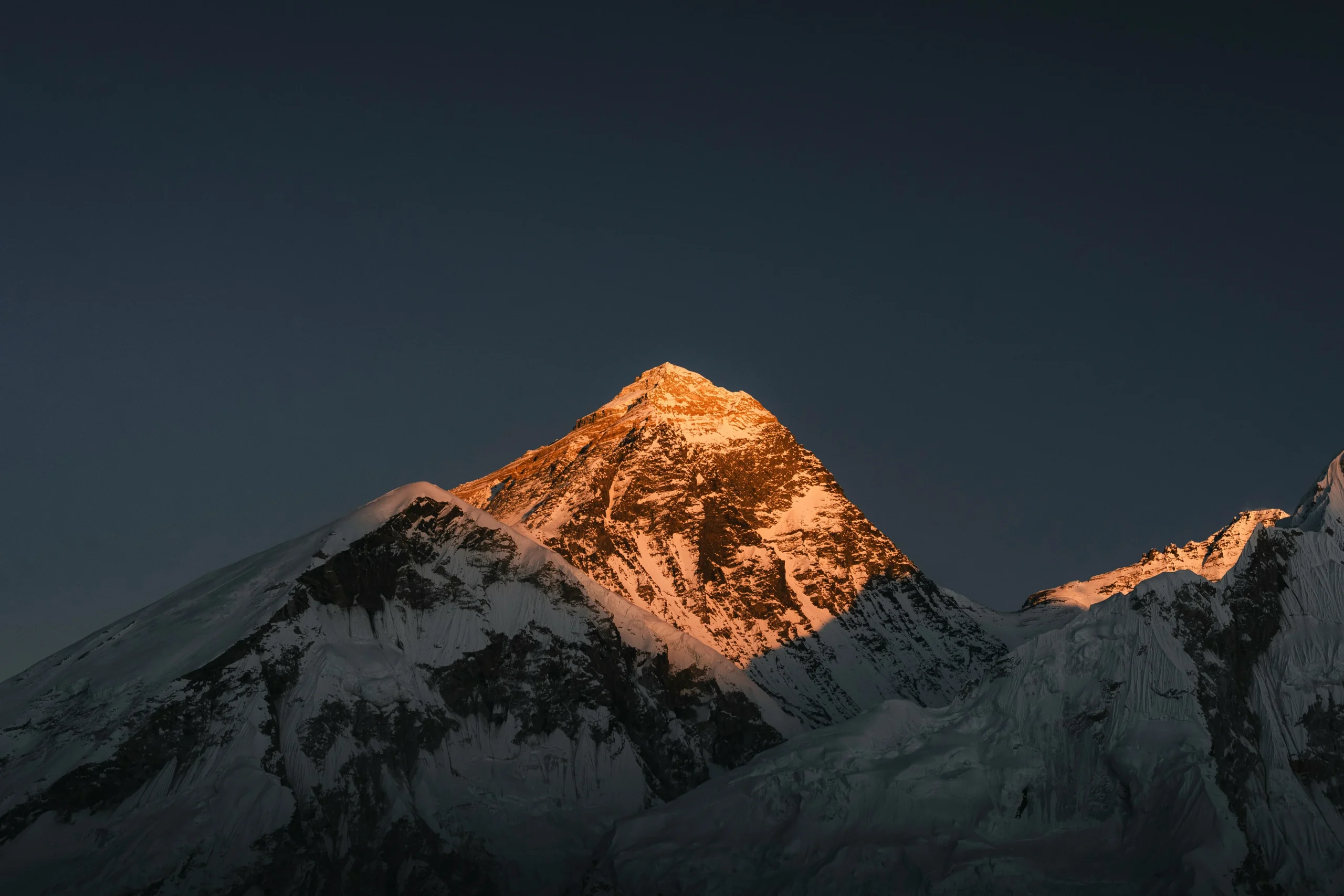
As the sun rises, the peaks gradually catch the first light of the morning. The snow and rock faces begin to show their shape, and Mount Everest emerges from the surrounding landscape.
This changing light is one of the biggest reasons the Kala Patthar sunrise is so memorable.
It is also a major attraction for photographers.
The mountain can look completely different within a few minutes as shadows move and sunlight reaches different faces.
Of course, mountain weather is unpredictable.
A sunrise hike does not guarantee a perfectly clear view. Clouds, wind, snow and visibility can all change the experience.
That uncertainty is part of high-altitude trekking.

Everest Base Camp and Gokyo Lakes Trek with Heli Return – 15 days
The Everest Base Camp and Gokyo Lakes Trek with Helicopter Return is a spectacular 15-day Himalayan adventure that combines...
Duration:
15 days
Max altitude:
5,545 m at Kalapatthar
What Can You See From Kala Patthar?
The viewpoint provides a broad panorama of the Everest region.
Mount Everest is the obvious attraction, but it is far from the only mountain visible from the ridge.
Depending on weather and visibility, trekkers can see:
* Mount Everest
* Nuptse
* Lhotse
* Pumori
* Ama Dablam
* Other peaks of the Khumbu Himalayas
The surrounding terrain is equally important.
The high ridges, glaciers and valleys reveal just how enormous the Everest region really is. From this elevation, the landscape feels almost completely different from the green hills encountered during the early days of the trek.
This contrast is one of the most rewarding parts of the journey.
You begin in a landscape of forests, rivers and villages.
Several days later, you are standing above 5,500 meters surrounded by rock, snow and ice.
The viewpoint becomes a natural marker of just how far you have travelled.
How Difficult Is the Kala Patthar Hike?
The climb is demanding primarily because of altitude.
It does not normally require technical mountaineering skills on the standard trekking route, but that should not make you underestimate it.
You are starting from Gorakshep, already at a very high elevation, and climbing even higher.
The trail contains steep and rocky sections, and the cold before sunrise can make the climb more uncomfortable.
The best approach is to walk slowly and consistently.
There is no benefit in trying to reach the top as quickly as possible. At this altitude, conserving energy is far more useful than proving how fast you can climb.
Some trekkers find the final section mentally challenging because the summit can appear closer than it actually feels.
This is where patience becomes important.
Take small steps.
Control your breathing.
Drink regularly.
Listen to your guide.
And remember that the objective is to enjoy the view, not to turn the climb into a race.
What Is the Route From Gorakshep?
Gorakshep is the usual starting point for the early-morning climb.
The settlement is the last major overnight stop before Everest Base Camp, and Nepal Tourism Board notes that the final section to Base Camp continues across the glacier from here.
The route toward Kala Patthar climbs above the settlement through rocky terrain.
Because the climb is normally done before sunrise, a headlamp is essential.
As you gain altitude, the surrounding mountains become increasingly visible once daylight begins to appear.
Eventually, the trail reaches the high ridge that forms the viewpoint.
There is no need to imagine a large observation platform or developed tourist attraction.
The experience is much more natural.
You arrive at a high Himalayan ridge, find a safe place to stand, and look across one of the most famous mountain landscapes in the world.
Kala Patthar and Everest Base Camp: What Is the Difference?
Many first-time trekkers assume that reaching Everest Base Camp automatically provides the best Everest view.
The reality is more nuanced.
At Base Camp, you are experiencing the destination itself. You can see the Khumbu Glacier, the surrounding terrain and the famous Base Camp area used during Everest climbing seasons.
At Kala Patthar, the emphasis is different.
You are gaining a higher vantage point and looking across the mountains.
That is why the two locations complement each other.
Nepal Tourism Board places the viewpoint above Gorakshep and describes it as a popular place for viewing Everest, while the route to Base Camp continues separately across the glacier.
If your itinerary allows both, there is little reason to think of them as competing experiences.
They show different sides of the same mountain journey.
What Makes the Sunrise Special?
Imagine arriving at the summit while the mountains are still dark.
You have spent several hours or several days, depending on how you think about the journey walking toward this moment.
The wind is cold.
Your gloves are on.
Your headlamp is still shining.
Then the first light appears.
The mountains begin to change.
Pumori catches the morning light. Nuptse becomes more defined. The ridges around the Khumbu begin to separate from the darkness.
And eventually, Mount Everest begins to glow.
That is the appeal of the Kala Patthar sunrise.
It is not simply about seeing Everest.
It is about seeing the mountain change in real time.
For photographers, this creates a short window of constantly changing light. For trekkers without a camera, it is simply an opportunity to stop and watch.
Sometimes that is enough.
What Should You Wear for the Early-Morning Climb?
Temperatures before sunrise can be extremely cold at this elevation.
Your clothing should therefore be based on layers so you can adjust as conditions change.
A practical system includes:
* Thermal base layer
* Insulating mid-layer
* Warm down or synthetic jacket
* Windproof outer shell
* Warm gloves
* Thermal socks
* Warm hat or beanie
* Sunglasses
* Headlamp
Keep these items accessible in your daypack.
There is no point having a warm jacket buried underneath everything else when you are standing at 5,500 meters in the cold.
Good footwear is equally important because the trail can be rocky and uneven.
Trekking poles can also provide useful stability during both the ascent and descent.
What About Altitude Sickness?
Altitude is the most important safety consideration during the climb.
At more than 5,500 meters, the body is operating in a very demanding environment.
Nepal Tourism Board emphasizes the need for proper acclimatization in the Everest region because altitude increases rapidly along the route.
Symptoms such as headache, nausea, unusual fatigue, dizziness or difficulty sleeping should not simply be ignored.
More serious symptoms, particularly confusion, severe breathlessness at rest or loss of coordination, require immediate attention and may mean descending to a lower elevation.
This is why a properly designed itinerary matters.
You should not arrive at Gorakshep after rushing through the lower sections and expect your body to simply cooperate with a 5,545-meter climb.
Altitude has its own schedule.
When Is the Best Time for the Climb?
The most popular trekking periods in the Everest region are generally spring and autumn.
Nepal Tourism Board lists October–November and March–May among the principal periods for visiting the Everest region, while its broader Everest-region information also notes winter conditions and colder temperatures at higher elevations.
For sunrise photography, visibility matters more than simply choosing a particular month.
A clear morning can produce spectacular views.
A cloudy morning can hide the peaks.
Weather at high altitude can change quickly, so your guide should assess the conditions before departure.
It is also worth remembering that sunrise temperatures can be significantly colder than daytime conditions.
Do not judge what to wear based only on the weather you experienced in Gorakshep the previous afternoon.
Is Kala Patthar Worth the Extra Effort?
After reaching Everest Base Camp, you might reasonably ask whether another uphill climb is necessary.
For many trekkers, the answer comes from the view.
The climb adds another demanding section to an already challenging itinerary, but it also provides a perspective that you cannot get simply by standing at Base Camp.
The experience combines altitude, sunrise, landscape and the psychological satisfaction of reaching one of the highest points on the standard Everest Base Camp route.
This is why many trekking itineraries deliberately include it.
Silver Moon Adventure’s Everest Base Camp itinerary, for example, includes an early-morning hike toward Kala Patthar before descending toward Pheriche.
For travelers who want to see more of the Everest region, the Everest Base Camp with Gokyo Lake Trek combines Base Camp with the Gokyo Valley.
Those looking for a more demanding high-altitude route can explore the Everest Base Camp with Cho La Pass Trek, which adds the Cho La crossing to the journey.
The important thing is to choose an itinerary that gives your body enough time to acclimatize rather than simply choosing the shortest possible schedule.
Planning Your Everest Trek Around the Viewpoint
The climb should not be considered separately from the rest of your Everest Base Camp itinerary.
The preparation begins several days earlier.
Namche Bazaar provides an important acclimatization stop. Dingboche provides another opportunity to adjust before moving toward Lobuche and Gorakshep.
This gradual progression is one of the reasons itinerary planning matters so much.
By the time you reach the high section, you should already have spent several days adapting to increasing elevation.
A well-planned trek also gives you enough time to recover after the early-morning climb.
Trying to combine too many demanding activities into a single day can turn an enjoyable experience into an exhausting one.
The goal is not simply to collect destinations.
It is to have enough energy to actually experience them.
A View That Comes After the Destination
There is something unusual about Kala Patthar.
Everest Base Camp is technically the famous destination, yet the viewpoint can become one of the most memorable parts of the entire trek.
Perhaps it is because you have to work for the view.
You leave Gorakshep in the dark.
You climb while the mountains are hidden.
You wait in the cold.
Then, slowly, Everest appears in the morning light.
After days of seeing the mountain from different parts of the Khumbu, you finally reach a perspective that allows you to take in the wider landscape.
That moment is difficult to reproduce anywhere else.
FAQs About Kala Patthar
1. What is Kala Patthar famous for?
It is famous for its panoramic perspective of Mount Everest and the surrounding peaks. Nepal Tourism Board specifically identifies the summit as a viewpoint from which much of Everest is clearly visible.
2. How high is Kala Patthar?
Nepal Tourism Board lists the summit at approximately 5,545 meters above sea level.
3. Can you see Mount Everest from Kala Patthar?
Yes. The viewpoint is particularly well known for its perspective of Mount Everest, along with surrounding Himalayan peaks.
4. Why do trekkers climb before sunrise?
The early start allows trekkers to watch the first sunlight illuminate Everest and the surrounding peaks. The changing morning light also creates excellent photographic conditions.
5. Is the Kala Patthar hike difficult?
It is physically demanding because of the high altitude, steep sections and cold conditions. The standard route does not normally require technical climbing skills, but good acclimatization is essential.
6. How do you reach Kala Patthar?
Trekkers normally approach the viewpoint from Gorakshep after reaching the high-altitude section of the Everest Base Camp route.
7. Is Kala Patthar higher than Everest Base Camp?
Yes. The viewpoint is at approximately 5,545 meters, while Everest Base Camp is lower, although the exact elevation cited for Base Camp can vary depending on the location and measurement used.
8. What mountains can you see from Kala Patthar?
Depending on visibility, the panorama includes Mount Everest, Nuptse, Lhotse, Pumori, Ama Dablam and other peaks of the Khumbu region.
9. Do you need acclimatization before climbing Kala Patthar?
Yes. Proper acclimatization is essential because the viewpoint is above 5,500 meters. Nepal Tourism Board specifically advises trekkers to allow sufficient time to adjust to rapid altitude gains.
10. Is the viewpoint included in Everest Base Camp treks?
Many standard Everest Base Camp itineraries include the climb as part of the journey. The exact timing depends on the itinerary, weather and trekking conditions.
When the Himalayas Catch the First Light
The Everest Base Camp trek is often described as a journey toward the world’s highest mountain.
But the journey is not only about reaching a particular point on a map.
It is about watching the landscape change as you climb higher.
Forests disappear.
Villages become smaller.
The air becomes thinner.
The mountains become larger.
And eventually, after reaching Gorakshep, you make one final climb into the darkness.
At 5,545 meters, the summit of Kala Patthar offers a perspective that brings the scale of the Everest region into focus. Nepal Tourism Board’s own description emphasizes its outstanding views of Mount Everest.
You may arrive hoping for a photograph.
You may leave remembering the silence.
Because sometimes the most powerful part of seeing Everest is not standing at its base.
It is standing high above the valley, watching the first light touch the mountain.

Similar Blogs
View all
13/10/2026
Manaslu Circuit Trek After the October 2026 Floods: Trail Conditions, Safety and Travel Updates
The Manaslu Circuit Trek is one of Nepal’s most rewarding Himalayan journeys, taking trekkers through traditional...
Read more
13/10/2026
Your Nepal Trek Is Booked, but the Trail Is Closed: What Now?
Imagine arriving in Nepal with your trekking boots ready, your flights booked, your bags packed, and...
Read more