The Annapurna Base Camp Trek via Ghandruk Village is a classic Himalayan trek that combines dramatic mountain scenery, authentic village culture, and a well-paced route.
OverviewAnnapurna Base Camp Trek via Ghandruk Village- 10 days



USD 620PP
Why book with us?
- Local Guides & Porters
- 98% Success Trip Rate
- Comfort Priority and Saftey Trip
- Satisfied Client
-
Group Size Discounts
Discounts are solely based on your group size. We don’t add anyone to the group.
No. of people Price per person 1 pax USD 710 2-6 pax USD 620 7+ pax USD 580
Send Quick Email

Duration
10 Days

Max Alitiude
4,130 meters at Annapurna Base Camp

Transportation
Tourist Bus & Shared Jeep

Trip Grade
Moderate

Activity
Trekking

Start/End Point
Killu / Jhinu

Best Season
Spring (March–May) & Autumn (September–November)

Meals
Full board during trek (Breakfast, Lunch, Dinner)

Accommodation
Hotels (Kathmandu & Pokhara), Teahouses during trek
Trip Overview
The Annapurna Base Camp Trek via Ghandruk Village is a classic Himalayan trek that combines dramatic mountain scenery, authentic village culture, and a well-paced route into a single 10-day adventure. This itinerary is carefully designed to offer a complete experience of the Annapurna region without requiring extreme trekking experience or technical skills.
Your trip starts in Kathmandu and, with a scenic drive, will take you to Pokhara, a peaceful lakeside city known as the gateway to the Himalayas. But the actual trek officially begins after a short drive to the trailhead near Killu.
Annapurna Base Camp Trek via Ghandruk Route
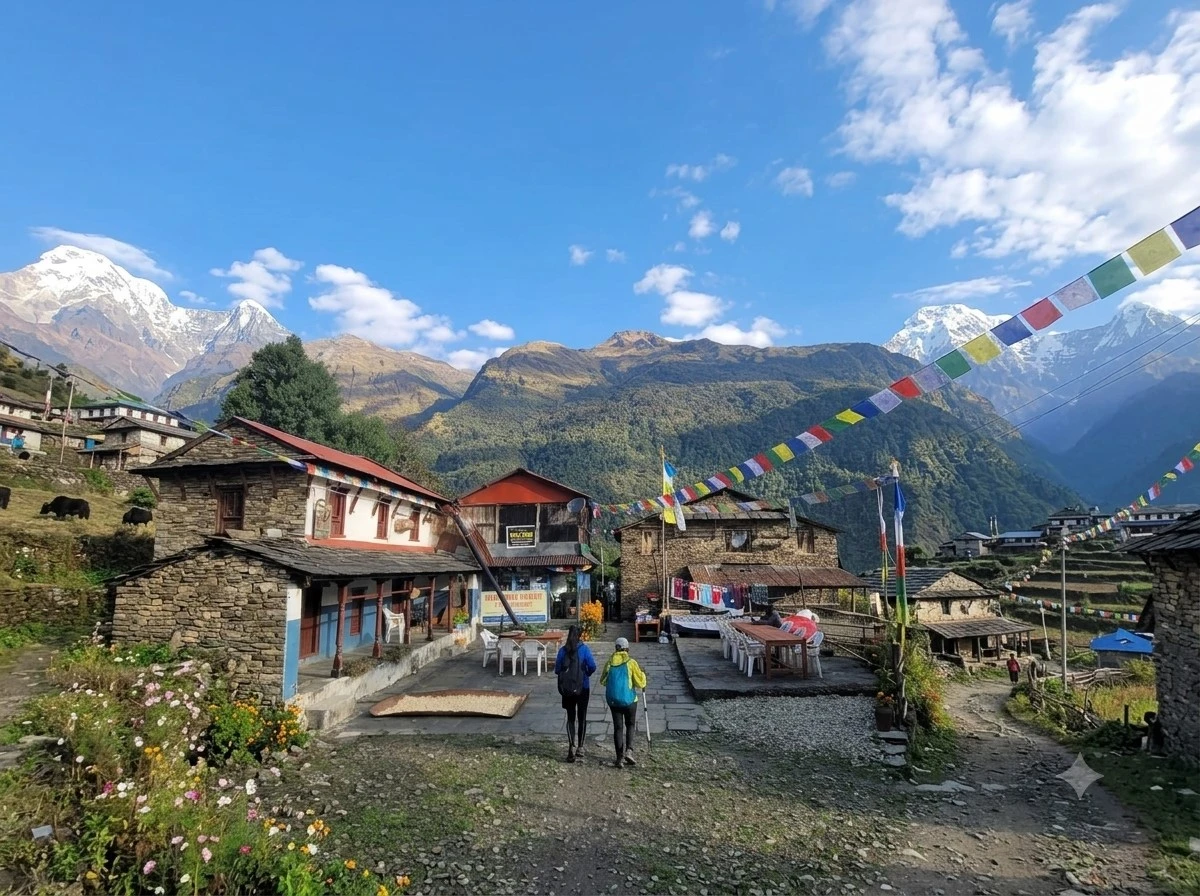
From the very first walking day, the route gradually introduces you to the beauty of the Himalayas, passing through terraced fields, traditional settlements, and forested hillsides. One of the most culturally rich highlights is Ghandruk Village. In this well-preserved mountain village, you can experience local Gurung culture, stone-built architecture, and wide panoramic views of Annapurna South and Machapuchare. Also, you will get to wear the traditional dress of the Gurung community and feel very real.
The terrain changes dramatically as the walk goes on. You pass through scenic hiking villages like Chhomrong, Bamboo, and Deurali. You will shift from verdant woods and river valleys into more isolated alpine territory.
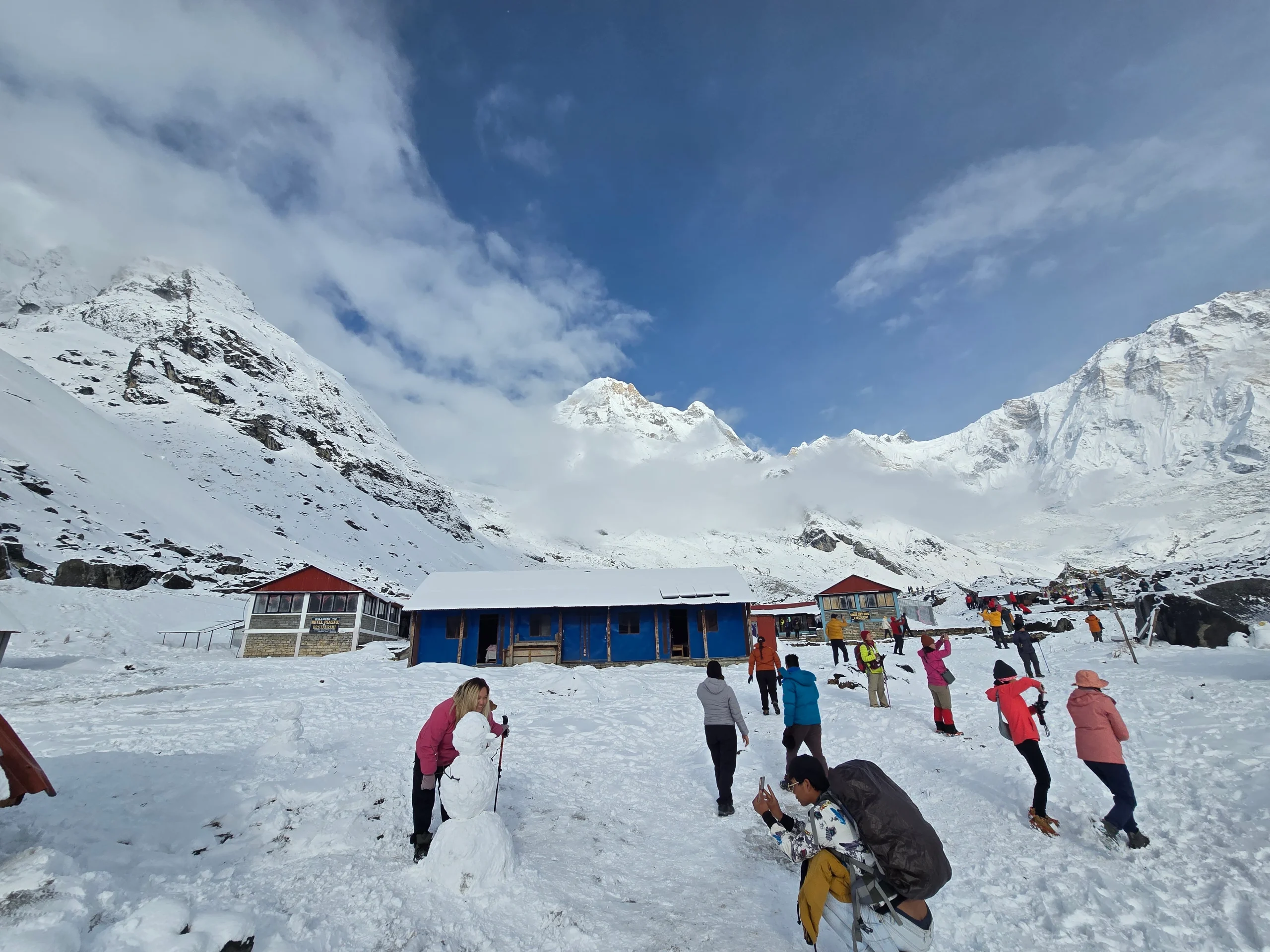
The ultimate destination of the trek is Annapurna Base Camp at 4,130 meters. You will be standing at base camp, witnessing a rare 360-degree view of the mountains that is both powerful and unforgettable. This spectacular natural amphitheater is surrounded by towering Himalayan peaks, including Annapurna I (8,091m), Annapurna South (7,219m), Hiunchuli (6,441m), Machapuchare / Fishtail (6,993m, Gangapurna (7,455m), and Singu Chuli (6,501m).
This trek is ideal for first-time trekkers, couples, solo travelers, and small groups seeking a well-organized Himalayan experience that blends nature, culture, and adventure. It is moderately challenging but highly rewarding, making it one of the most popular trekking routes in Nepal.
Overall, this trip is among the greatest short trekking experiences in the Himalayas since it provides the ideal blend of visual beauty, cultural immersion, and attainable adventure.
Trip Highlights
- Witness sunrise and 360° Himalayan views from Annapurna Base Camp
- Explore the cultural beauty of Ghandruk Village, home of the Gurung community
- Trek through lush forests filled with rhododendrons and bamboo
- Relax in natural hot springs at Jhinu Danda
- Enjoy spectacular views of peaks like Annapurna I, Machapuchare, and Hiunchuli
- Experience authentic teahouse trekking in Nepal
- Scenic drive between Kathmandu and Pokhara
When to visit
J
F
M
A
M
J
J
A
S
O
N
D
- Average time to visit
- Best time to visit
- Good time to visit
Outline Itinerary
- Day 01: Arrive at Tribhuwan International Airport and transfer to the hotel.
- Day 02: Drive to Pokhara by tourist bus.
- Day 03: Drive to Killu by private car and trek to Ghandruk village.
- Day 04: Trek to Chhomrong.
- Day 05: Trek to the Himalaya.
- Day 06: Trek to Annapurna Base Camp.
- Day 07: Trek Back to Bamboo.
- Day 08: Trek to Jhinu and drive to Pokhara by sharing a jeep
- Day 09: Drive to Kathmandu by tourist bus
- Day 10: Departure
Trip Itinerary
-
Day 01
Arrive at Tribhuwan International Airport and transfer to the hotel.
Upon arrival at Tribhuvan International Airport, you will be warmly welcomed by our representative and transferred to your hotel in Kathmandu.
After check-in, you will have time to rest or explore the surrounding area, depending on your arrival schedule.
You will be informed of route details, safety guidelines, and preparation tips in the evening. Also, make sure you pack everything for the trek, and if you forgot anything, don’t worry, you can buy it in Pokhara too.
Overnight in Kathmandu.
-

Max. Altitude: 1,400m (4,600 feet)
-

Accommodation: Standard Hotel
-
Meals: Dinner
-
-
Day 02
Drive to Pokhara by tourist bus.
After breakfast, you will take a scenic bus ride to Pokhara. The journey follows river valleys, passing through rural settlements, terraced fields, and picturesque landscapes.
Upon arrival in Pokhara, you will be transferred to your hotel. The rest of the day is free to relax or explore the lakeside area. Also, you can buy trek essentials if you forgot to pack.
Overnight in Pokhara.
-
Max. Altitude: 822m (2,697 feet)
-
Accommodation: Standard Hotel
-
Meals: Breakfast, Lunch, Dinner
-
Drive duration: 6-7 hours’ drive
-
-
Day 03
Drive to Killu by private car and trek to Ghandruk village.
Today, you will drive to Killu (approx. 2 hours), the starting point of your trek. From here, you begin to ascend through terraced farmland and local villages.
As you go, the walk alternates between steep trails and stone stairs, passing through little towns where you can see the way of life of the local farmers. As the path progressively rises in elevation, you can see Annapurna South and Machapuchare on clear days.
After 3–4 hours of trekking, you will reach Ghandruk Village, a well-known Gurung settlement offering panoramic views of Annapurna South and Machapuchare. You will find the stone houses around and love the culture they hold. You can explore the village and visit the local museum in the evening.
Overnight in Ghandruk.
-
Max. Altitude: 2,012m (6,601 feet)
-
Accommodation: Teahouse or Lodge
-
Meals: Breakfast, Lunch, Dinner
-
Drive duration: 2 hours’ drive
-

Trek Duration: 3-4 hours trek
-
-
Day 04
Trek to Chhomrong.
You will have an early breakfast and start trekking towards Chhomrong. You will descend towards the Kimrong Khola. As you leave the Ghandruk, you will step down through a forested area filled with rhododendron and oak trees.
Continuing downhill, you will hear the sound of the river before reaching the Kimrong Khola. You will cross a suspension bridge from where you will start ascending.
The trail is through dense forest, with a mix of stone steps and natural trails. The ascent is gradual but continuous, allowing you to maintain a comfortable pace. Along the way, you will get to witness the distant mountain peaks.
Before reaching Chhomrong, you will walk through a series of stone steps. This last walk can feel a bit challenging, but it’s worth it for the astonishing landscape view.
Chhomrong is a beautiful hillside settlement, with traditional houses spread across the slope and impressive views of Machapuchare. It serves as the main gateway into the Annapurna Sanctuary and is one of the most important stops along the route.
Overnight in Chhomrong.
-
Max. Altitude: 2,170m (7,119 feet)
-
Accommodation: Teahouse or Lodge
-
Meals: Breakfast, Lunch, Dinner
-
Trek Duration: 4-5 hours trek
-
-
Day 05
Trek to the Himalaya.
You begin the day with a descent down a long stone staircase to the Chhomrong Khola. After crossing a suspension bridge, the trail climbs steadily uphill toward Sinuwa.
After passing Sinuwa, the trail enters a thick bamboo and rhododendron forest. The path becomes more shaded and follows a narrow valley alongside a river. Along the way, you pass small stops like Bamboo and Dovan, where you can take a break or stop for lunch.
As you continue, the trail gradually ascends through forest and rocky terrain until you reach the Himalaya. This part of the trek feels quieter and more remote, with fewer settlements and more natural surroundings.
Overnight in the Himalaya.
-
Max. Altitude: 2,920m (9,580 feet)
-
Accommodation: Teahouse or Lodge
-
Meals: Breakfast, Lunch, Dinner
-
Trek Duration: 6-7 hours trek
-
-
Day 06
Trek to Annapurna Base Camp.
Today is the most important day of the trek, as we will reach the destination. From Himalaya, the trail ascends above the tree line. The forest slowly disappears, and the surroundings become more open and rockier.
You will first reach Deurali, walking along a narrow valley beside the river. This area passes through steep slopes and areas where avalanches can occur in winter and early spring, so the route is crossed carefully and without stopping.
After Deurali, the trail continues to ascend gradually, bringing you closer to the Machapuchare Base Camp. The valley widens slightly as you approach MBC.
At MBC, you can take a short rest. From here, you get clear and close views of Machapuchare and surrounding peaks, giving you a strong sense of being deep inside the mountains.
From MBC, the trail climbs gently on alpine terrain toward Annapurna Base Camp. When you arrive at Annapurna Base Camp, the entire valley opens up into a wide mountain basin surrounded by high snow-covered peaks on all sides. The view feels complete and enclosed, with mountains rising in every direction.
From the ABC, you will witness the massive Annapurna I (8,091m), Annapurna South (7,219m), Hiunchuli (6,441m), Machapuchare / Fishtail (6,993m, Gangapurna (7,455m), and Singu Chuli (6,501m).
Overnight in Annapurna Base Camp.
-
Max. Altitude: 4130m (13,550 feet)
-
Accommodation: Teahouse or Lodge
-
Meals: Breakfast, Lunch, Dinner
-
Trek Duration: 5-6 hours trek
-
-
Day 07
Trek Back to Bamboo.
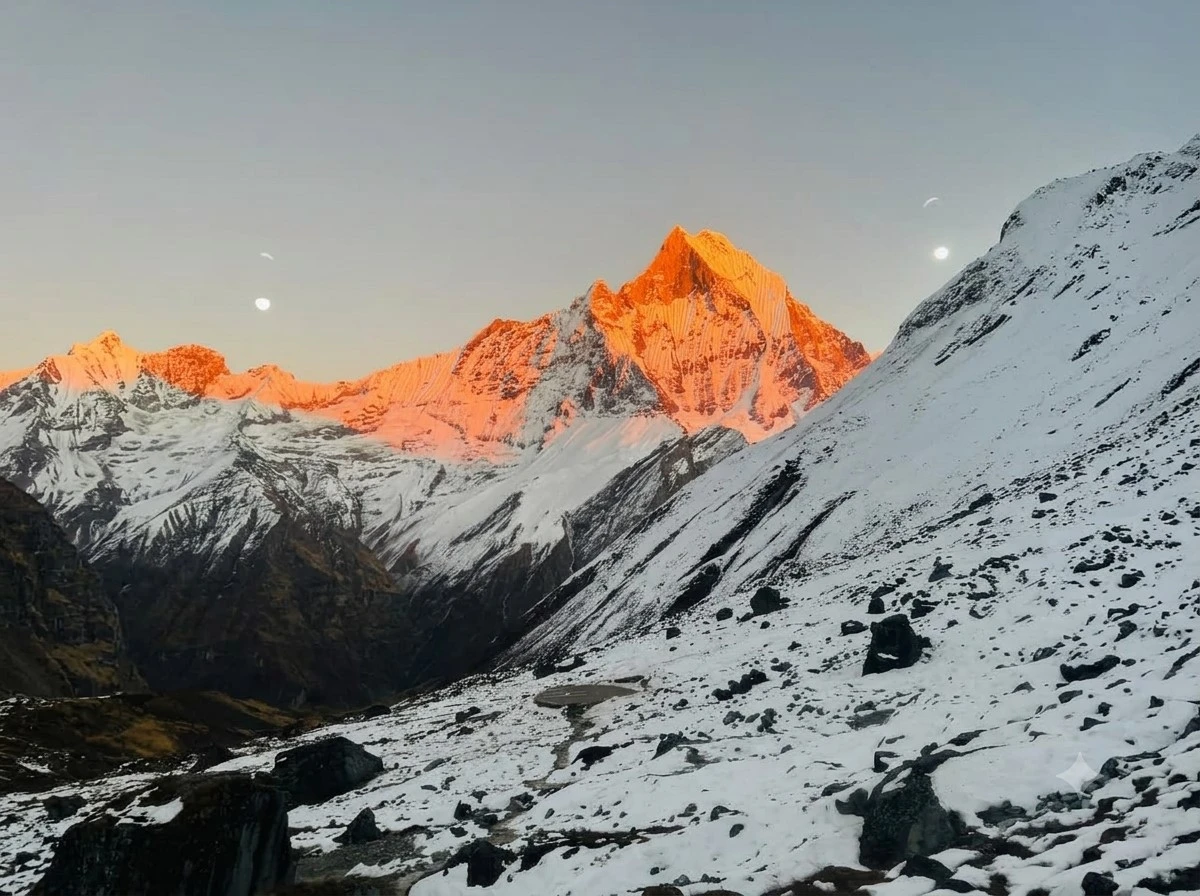
Early in the morning, you can enjoy sunrise views from Annapurna Base Camp, when the first light slowly touches the surrounding peaks and changes the color of the entire mountain basin.
After breakfast, you will descend to Machapuchare Base Camp, and then continue through Deurali, where the landscape gradually shifts from open alpine terrain back into narrower valleys.
As you descend further, you pass through the Himalaya and re-enter forested areas filled with bamboo and rhododendron. The trail continues steadily downhill until you reach Bamboo, a quiet forest settlement surrounded by greenery.
Overnight in Bamboo.
-
Max. Altitude: 2,310 meters (7,579 feet)
-
Accommodation: Teahouse / Lodge
-
Meals: Breakfast, Lunch, Dinner
-
Trek Duration: 6-7 hours trek
-
-
Day 08
Trek to Jhinu and drive to Pokhara by sharing a jeep
From Bamboo, you begin your trek by walking through forested trails as you gradually make your way back toward Sinuwa and then Chhomrong. After crossing Sinuwa, you have to ascend the stone steps, then descend again to Chhomrong.
After reaching Chhomrong, you continue the descent toward Jhinu. The trail becomes steeper in parts, with long stone staircases leading down through terraced slopes and small settlements until you reach the river valley.
You have time to explore the natural hot springs at Jhinu, which are a short stroll beside the river. This is the famous spot among trekkers after such a long trek at a higher altitude.
Later in the day, you will drive back to Pokhara by shared jeep. Upon arrival, you will be transferred to your hotel, where you can enjoy a comfortable evening, rest, and celebrate the completion of the unforgettable trek.
Overnight in Pokhara.
-
Max. Altitude: 2,310 meters (7,579 feet)
-
Accommodation: Standard Hotel
-
Meals: Breakfast, Lunch, Dinner
-
Drive duration: 3-4 hours’ drive
-
Trek Duration: 5-6 hours trek
-
-
Day 09
Drive to Kathmandu by tourist bus
After breakfast, you will begin your return journey to Kathmandu by tourist bus. The scenic drive follows running alongside rivers, hillside settlements, and terraced landscapes. There are short stops for refreshments and rest breaks during the journey.
Upon arrival in Kathmandu, you will be transferred to your hotel. The rest of the day is free for relaxation, last-minute shopping, or a farewell dinner in the city.
Overnight in Kathmandu.
-
Accommodation: Standard Hotel
-
Meals: Breakfast, Lunch, Dinner
-
Drive duration: 6-7 hours’ drive
-
-
Day 10
Departure
After breakfast, you will be transferred to Tribhuvan International Airport for your final departure. Our representative will assist you with the transfer and ensure a smooth end to your journey.
This marks the conclusion of your Annapurna Base Camp Trek, leaving you with lasting memories of the Himalayas, mountain villages, and the journey through the Annapurna Sanctuary.
-
Meals: Breakfast (Lunch depending on the schedule)
-


Trip notes
The ABC trek involves daily walking on stone steps and uphill trails, so a steady pace is important. Weather can change quickly at higher elevations, so carry warm layers and a rain jacket at all times.
As you go higher, accommodation becomes more basic with simple rooms and limited facilities. Stay hydrated and take it slow to adjust to altitude, especially near MBC and ABC.
Wi-Fi and charging are available in many teahouses, but may be slow or cost extra. Carry enough Nepali cash, as there are no ATMs on the route. Starting early each day helps avoid bad weather and gives clearer mountain views.
Cost Includes
- Private, comfortable hotel transfers to and from Kathmandu’s Tribhuvan International Airport, pick and drop.
- 2 Nights 3-star hotel stays in Kathmandu on a twin-sharing basis, including breakfast.
- Certified and experienced English-speaking Trekking Guide
- Teahouse and lodge accommodation throughout the trekking duration
- 2- Night accommodation in Pokhara (Hidden Kingdom or similar) on a twin-sharing basis with breakfast.
- Full Board meals during the trek: Breakfast, Lunch, Dinner (One main course as per menu)
- Tea/ Coffee: 3 cups per person per day.
- All necessary entry permits, including the Annapurna Conservation Area Project (ACAP) permit.
- Guide’s salary, insurance, food, lodging, and transport.
- All government taxes, local fees, and company service charges included.
- Complementary seasonal fresh fruits are served every evening during the trek
- Kathmandu to Pokhara: both-ways tourist bus transportation (Sofa seat)
- Lunch both ways, Kathmandu to Pokhara buffet lunch.
- Private transportation to the trek start point ( Kilu) and public jeep from the trek end point( Jhinu).
- A complimentary farewell dinner in Kathmandu featuring authentic Nepali cuisine and a live cultural dance performance.
- Comprehensive first-aid kit equipped with a digital oximeter to monitor oxygen saturation levels at higher elevations.
- Prompt arrangement of emergency rescue and medical evacuation services if required (costs to be covered by your travel insurance).
- Complimentary Silver Moon Adventure Trek cap and T-shirt.
- Sleeping bag and down jacket provided for the duration of the trek (to be returned upon completion).
- Duffle bag provided for every trekker (to be carried by a porter, if hired)
- Complimentary secure luggage storage facility at the Silver Moon Adventure Trek office in Kathmandu or in the hotel while you are on the trail.
- An assistant guide will be provided to ensure extra care and safety for groups of 5 or more trekkers.
- Water purification tablets are provided daily for safe drinking water during the trek.
- Nepal Telecom Sim Card with 10 GB Data valid for 28 Days
- Trip Completion Silver Moon Adventure Certificate.
- One hour complimentary Trekkers Massage in Pokhara for each trekker. (if required )
Cost Excludes
- International Flights to and from your home country or next destination
- Nepal Entry Visa: Fees payable upon arrival at Kathmandu’s Tribhuvan International Airport.
- Kathmandu and Pokhara Meals: Lunch and dinner before and after the trekking portion of the trip.
- Extra Stays: Any additional hotel nights in Kathmandu or Pokhara outside the planned itinerary (e.g., due to flight delays or early arrivals).
- Trekking Insurance: High-altitude travel insurance (covering up to 5,500 meters) that explicitly includes emergency medical helicopter evacuation.
- Tipping: Gratuities for trekking guides and porters (highly recommended as a gesture of appreciation).
- Personal Expenditures: Souvenirs, laundry, personal trekking gear, and snacks.
- Beverages: Alcohol, soft drinks, bottled mineral water, and specialty coffees.
- Hot shower during the trek
- Any extra expenses resulting from itinerary changes or unforeseen delays.
- Any services or items not explicitly mentioned in the “Includes” section.
Gears and Equipment
You are seeing the list of gears and equipment needed for this trip. Please check the items carefully and make sure you pack everything required for the journey.
The equipment may vary depending on the weather, location, altitude, and activities included in the itinerary. Some special gear may be provided or available for rent if needed.

Head & Face Protection
- Sun cap or hat
- Warm beanie (wool/fleece)
- Neck gaiter/buff
- UV-protection sunglasses (Category 3 or 4)
- Headlamp with spare batteries

Upper Body Clothing (Layer System)
- Moisture-wicking base layer (2–3 sets)
- Fleece or light warm mid-layer
- Insulated down jacket (cold-weather essential)
- Waterproof + windproof outer shell jacket
- Quick-dry trekking t-shirts

Lower Body Clothing
- Trekking pants (lightweight, stretchable)
- Thermal base layer leggings
- Waterproof rain pants

Backpack & Carrying Gear
- Main backpack (40–50L) with rain cover
- Daypack (optional if using porter)
- Dry bags / plastic bags for organization

Footwear & Socks
- Waterproof trekking boots (ankle support, broken-in)
- Camp shoes/sandals
- Warm trekking socks (2–4 pairs)
- Liner socks (blister prevention)

Hygiene & Personal Care
- Sunscreen (high SPF)
- Lip balm with SPF
- Wet wipes
- Hand sanitizer
- Quick-dry towel
- Toilet paper/tissues
- Toothbrush & basic toiletries

Hand Protection
- Lightweight inner gloves
- Warm insulated gloves (preferably waterproof)

Trekking Essentials
- Trekking poles
- Reusable water bottles (2–3L total) or hydration bladder
- Sleeping bag (-5°C to -10°C comfort rating)
- Power bank (10,000–20,000 mAh)
- First aid kit (basic medicines + blister care)
- Water purification tablets or filter

Seasonal Add-ons (Only if needed)
- Winter / High Altitude Treks
- Thicker down jacket
- Warmer sleeping bag (-15°C recommended)
- Microspikes (icy trails)
- Monsoon Season
- Extra rain covers or poncho
- Quick-dry everything
- Waterproof shoe protection

Extra Useful Items
- Snacks/energy bars/electrolytes
- Cash (Nepalese rupees only in most places)
- Phone + camera + charger cables
- Zip-lock bags / dry bags
- Small notebook (optional)
- Earplugs (useful in teahouses)
Trip Map

Additional information
Trekking Permits
We’ll arrange the permits needed for your trek in the Annapurna region, including the ACAP and TIMS, or any other registration required at the time.
Please keep your original passport with you throughout the trek. You may be asked to show it at checkpoints along the way.
Fitness and Preparation
Annapurna Base Camp is 4,130 meters high so that altitude can be a concern. You won’t go straight to the high elevations. The trail climbs little by little as you pass through the villages, giving you time to get used to the higher altitude.
The first few days around Ghandruk and Chhomrong mix village trails, stone steps, and forest paths. Later, the route becomes more demanding as you gain altitude toward Annapurna Base Camp.
If you regularly walk, hike, climb stairs, or do basic cardio exercise before the trek, you will be better prepared for the trail. There is no need to rush. A comfortable, steady pace will help you enjoy the trek and conserve energy for the higher sections.
Altitude and Acclimatization
Annapurna Base Camp is 4,130 meters high, so you’ll notice the altitude as you get higher. The trail rises gradually from the lower villages, giving you time to adjust to the altitude change.
You may notice the air becoming thinner and colder as you move above the Himalayas and toward Machhapuchhre Base Camp. Stay hydrated, eat regularly, get enough sleep, and avoid walking too quickly.
If you experience a persistent headache, dizziness, nausea, unusual tiredness, or difficulty breathing, tell your guide right away. Your guide will monitor your condition and can adjust the walking plan if needed.
Weather and Trail Conditions
You’ll notice the temperature drop as you go higher. Ghandruk is usually fairly mild, but it can be very cold around Machhapuchhre Base Camp and Annapurna Base Camp. Nights and early mornings are the coldest, so bring enough warm clothing for those parts of the trek.
Spring and autumn are generally the best seasons for this route. Spring brings rhododendron blooms to the forests, while autumn usually offers clear skies and good mountain visibility.
The monsoon months can bring heavy rain, muddy trails, and slippery stone steps. Winter is colder, and snow may affect the higher parts of the route.
Even during the main trekking seasons, mountain weather can change quickly, so keep a waterproof layer and warm clothing easily accessible.
Accommodation
You will stay in a standard tourist-category hotel in Kathmandu and Pokhara and in local teahouses or lodges during the trek.
Ghandruk has plenty of teahouses and lodges to choose from. As you head further into the Annapurna Sanctuary, the options become more basic. Rooms are usually simple but comfortable, and shared bathrooms are common at the higher stops.
Some lodges may offer hot showers, Wi-Fi, and charging facilities for an additional fee.
Meals and Drinking Water
Breakfast, lunch, and dinner are included during the trekking portion of the trip. Teahouses along the route serve familiar trekking meals such as dal bhat, noodles, rice, pasta, soup, vegetables, eggs, potatoes, and other local dishes.
Food choices are generally more limited at higher elevations, but there are usually enough options to keep you well fed during the trek.
You can buy filtered or treated drinking water at teahouses. Bring a reusable bottle or hydration system, and consider carrying water-purification tablets or a filtration method for additional convenience.
Ghandruk and Local Culture
Ghandruk is more than an overnight stop on this trek. It is one of the best places along the route to experience Gurung culture and traditional mountain life.
The village is known for its stone-built houses, narrow paths, traditional architecture, and views toward Annapurna South and Machhapuchare. You can explore the village, visit the local museum, and learn more about the Gurung community’s history and traditions.
Please be respectful when visiting homes, cultural sites, and local community spaces. If you would like to photograph local people, please ask permission first.
Electricity, Charging and Wi-Fi
Electricity is available in many of the teahouses along the route, although charging facilities may be shared or limited during busy periods. Some lodges charge an additional fee for charging electronic devices.
Wi-Fi is available in several villages, but the connection becomes less reliable as you gain altitude. Mobile network coverage also varies by location.
A power bank is recommended, especially if you use your phone for photographs, communication, or navigation.
Cash and Personal Expenses
It is best to withdraw enough Nepali cash in Pokhara before starting the trek. There are no reliable ATM facilities along the main trekking route, so you should carry enough for personal expenses.
You may need cash for hot showers, charging, Wi-Fi, snacks, drinks, and other services that are not included in the package.
Keeping some extra cash for unexpected expenses is always a good idea.
Porter and Baggage
One porter is provided for every two trekkers. Your porter carries the main trekking luggage, while you carry a smaller daypack with the things you need during the day.
Keep your passport, money, medications, valuables, electronics, water, and other important items in your daypack.
Pack thoughtfully and avoid unnecessary belongings. A lighter bag makes the walking more comfortable and also reduces the load carried by your porter.
Travel Insurance
Travel insurance is strongly recommended for this trek. Your policy should cover trekking up to at least 4,130 meters and include emergency medical treatment and evacuation if required.
Before purchasing your policy, check the conditions carefully to make sure high-altitude trekking is covered.
Safety and Emergency Support
Your guide will accompany you throughout the trekking section and monitor weather, trail conditions, altitude, and the group’s overall condition.
Some sections of the trail, particularly around Deurali and the higher parts of the sanctuary, require extra care because of steep terrain and changing mountain conditions.
If someone becomes unwell or injured, the trekking team will coordinate appropriate assistance. Depending on the circumstances, the itinerary may be adjusted, a lower overnight stop may be arranged, or an evacuation may be organized.
Safety takes priority over maintaining the exact published schedule.
What to Pack
Your packing list will vary slightly depending on the season, but the following items are recommended:
- Comfortable trekking boots with good grip
- Trekking trousers and lightweight hiking clothes
- Thermal base layers
- Fleece or warm insulated jacket
- Waterproof and windproof jacket
- Warm hat and gloves
- Sun hat or cap
- Sunglasses with UV protection
- Sunscreen and lip balm
- Reusable water bottle or hydration bladder
- Headlamp with spare batteries
- Power bank and charging cables
- Personal toiletries and basic medication
- Small first-aid kit
- Sleeping bag suitable for cold mountain conditions
- Trekking poles
- Comfortable daypack
- Passport and travel documents
- Travel insurance details
- Nepali cash for personal expenses
A good warm jacket is especially important for nights at Machhapuchhre Base Camp and Annapurna Base Camp, as well as for early mornings at ABC.
Jhinu Danda Hot Springs
Jhinu Danda is a welcome stop near the end of the trek. The natural hot springs sit beside the Modi Khola and are a short downhill walk from the village.
After several days on the trail, spending some time in the warm water is a pleasant way to relax before continuing to Pokhara. Bring suitable clothing if you plan to use the hot springs.
Responsible Trekking
The Annapurna region is home to many local communities, forests, rivers, wildlife, and cultural sites. Please respect local customs as you travel. Keep the noise down in villages, and be respectful when visiting temples, monasteries, and other religious sites.
Carry your rubbish with you until you find a proper disposal point, avoid unnecessary single-use plastics, and use refillable water bottles where possible.
The trail passes through communities where people live and work, so treating residents, guides, porters, and other trekkers with respect is an important part of the journey.
Tipping
Tipping is common in Nepal’s trekking industry and is a way to thank your guide and porter for their work and support. It is not compulsory, and there is no fixed amount.
If you are pleased with the service, you can give a tip at the end of the trek based on the length of the journey, the service you received, and your personal preference.
Itinerary Flexibility
The itinerary gives you an idea of the planned route, but things can change in the mountains. Bad weather, trail conditions, landslides, illness, or problems finding accommodation may mean we have to change the schedule. Other unexpected situations can also affect the trek.
Your guide and trekking company will make any necessary adjustments with safety as the main consideration. Walking times or overnight stops may occasionally change while keeping the trek’s main objectives intact.
Best Time to Trek
The most favorable seasons for the Annapurna Base Camp Trek via Ghandruk are spring and autumn.
March to May: The forests around Ghandruk and the lower trail sections are especially colorful when the rhododendrons are in bloom. Days are generally pleasant for walking.
June to August: Monsoon conditions bring more rain, cloud, and slippery trails. Mountain views can also be limited during this period.
September to November: Generally clear skies, good mountain visibility, and comfortable daytime temperatures make autumn a popular time for the trek.
December to February: Higher sections can be very cold, particularly at night. Snow may affect the trail around the upper parts of the Annapurna Sanctuary.
A few things to keep in mind
The route through Ghandruk gives you a gradual introduction to the Annapurna region, but the trail becomes more demanding as you move deeper into the sanctuary. The long stone steps around Chhomrong and the higher-altitude sections toward ABC are where you will notice the physical side of the trek most.
Take it easy at the start of each day and walk at a comfortable pace. Drink water regularly, and keep your warm clothes and rain gear within easy reach. If the weather or trail gets difficult, your guide will let you know what to do.
One strength of this route is the variety it offers in a relatively short journey: Gurung culture and village life around Ghandruk, forests and river valleys on the way to the sanctuary, and finally the high mountain landscape around Annapurna Base Camp.
FAQs for this trip
Getting Started
-
What is the Annapurna Base Camp with Ghandruk Trek?
This trek combines the iconic journey to Annapurna Base Camp with a visit to Ghandruk, one of the most beautiful traditional Gurung villages in the Annapurna region. It offers a perfect mix of mountain scenery, local culture, and Himalayan adventure.
-
Why do trekkers choose this route?
This route has everything a trekker would love. You would get to witness stunning mountain landscapes, diverse forests, and traditional villages, and reach the heart of the Annapurna Sanctuary.
-
Is the Annapurna Base Camp with Ghandruk Trek worth it?
Absolutely. You will witness the close-up views of some of Nepal’s most famous mountains, and also get to experience authentic mountain culture along the way.
-
How many days does the trek take?
Most itineraries range from 7 to 12 days, but the whole trek duration depends on the route, walking pace, and starting point.
-
Is this trek suitable for first-time trekkers?
Yes. This trek is highly suitable for first-time trekkers with a basic level of physical fitness. Although it demands some effort, it doesn’t have the same technical difficulties or serious altitude hazards as longer Himalayan climbs.
Difficulty and Physical Fitness
-
How difficult is the Annapurna Base Camp with the Ghandruk Trek?
The trek is generally considered moderately challenging due to the daily walking distances, numerous stone staircases, and the gradual elevation gain.
-
Do I need previous trekking experience?
No. If you have previous hiking experience, then it is helpful but not essential for completing the trek. Many choose this trek as their first. Here, the trail is well-defined, wide, and often traveled.
-
How many hours do I have to walk each day?
You will need to walk for five to seven hours per day on average. The specific section of the route and your pace will determine how long it takes.
-
What is the most demanding part of the trek?
The challenging ascent of the Chhomrong Stone Steps (often called the “Chhomrong Stairs”) is the most difficult part of the journey.
Most trekkers often agree that the area surrounding Chhomrong village is the most physically challenging and exhausting.
-
Should I train before the trek?
Yes. Regular walking, hiking, stair climbing, and cardiovascular exercise can improve your trekking experience.
Annapurna Base Camp Questions
-
Why is Annapurna Base Camp famous?
Annapurna Base Camp is known for its spectacular location within the Annapurna Sanctuary, surrounded by towering Himalayan peaks on all sides.
In contrast to other deep mountain excursions that require weeks of arduous high-altitude trek, ABC lets regular trekkers reach the base of one of the world’s highest mountains in less than a week.
-
What is the elevation of Annapurna Base Camp?
Annapurna Base Camp sits at approximately 4,130 meters (13,549 feet) above sea level.
-
Is reaching Annapurna Base Camp difficult?
No. The trek to the base camp does not require technical climbing or mountaineering skills, but it does require determination and endurance.
-
What makes Annapurna Base Camp special?
ABC is special because it is a natural mountain amphitheater, which lets you reach an 8,000-meter summit more quickly than nearly any other journey on Earth.
-
Is sunrise at Annapurna Base Camp worth seeing?
Absolutely. The sunrise at Annapurna Base Camp is certainly worth witnessing and is the best moment of the whole trek.
Actually, the entire trek is planned around getting to base camp in the afternoon so you can see this breathtaking spectacle as the sun comes up.
Ghandruk Village
-
Why is Ghandruk included in the trek?
Ghandruk is an excellent cultural acclimatization stop, the quickest and most picturesque entryway to the sanctuary. This settlement helps you to experience the traditional Gurung culture and their way of life.
-
Is Ghandruk worth visiting?
Definitely, Ghandruk is regarded as one of the most stunning and culturally rich historical villages in Nepal, offering beautiful stone houses, local Gurung culture, and impressive views of the Annapurna range.
Ghandruk stands out as a top destination for its breathtaking mountain vistas and profound cultural immersion, even if you didn’t reach Annapurna Base Camp.
-
What mountains can be seen from Ghandruk?
You will witness a broad panorama of the Annapurna Massif and several other notable Himalayan giants, including Annapurna South (7,219m / 23,684 ft), Machhapuchhre (6,993m / 22,943 ft), Hiunchuli (6,441m / 21,132 ft), Gangapurna (7,455m / 24,458 ft), and Annapurna I (8,091m / 26,545 ft).
-
Can I learn about Gurung culture in Ghandruk?
Yes. Ghandruk is one of the best places in Nepal to experience traditional Gurung customs, architecture, and hospitality. The village has actively preserved its history, customs, and architecture for many centuries.
-
Is Ghandruk one of the most famous villages in the Annapurna region?
Indeed, Ghandruk is unquestionably one of the most well-known communities in the Annapurna region.
This village stands among a few renowned communities that characterize the Himalayan hiking experience, and it is often regarded as the cultural crown jewel of the foothills.
Mountain Views and Scenic Highlights
-
Which mountains can I see during the trek?
You will enjoy the views of Annapurna I, Annapurna South, Machhapuchhre, Hiunchuli, Gangapurna, and several surrounding Himalayan peaks.
-
Is Machhapuchhre visible throughout the trek?
No, Machhapuchhre is not visible throughout the walk, as steep canyon walls and dense jungle intermittently obscure it.
Although it is the most consistently visible peak along the route, your view of it varies over time and eventually vanishes entirely during the walk.
-
Where are the best viewpoints during the trek?
Below are the best viewpoints during the trek:
Annapurna Base Camp (4,130m): Witness a 360-degree panorama of the Annapurna Massif, and nearby other Himalayan Giants.
Machhapuchhre Base Camp (3,700m): Witness the most dramatic, intimate look at Machhapuchhre (Fishtail).
Chhomrong Village (2,170m): Witness the most breathtaking views in the surrounding region, including Hiunchuli (6,441m), Machapuchare (Fishtail Peak) (6,993m), and Annapurna South (7,219m).
Ghandruk Village (1,940m): Witness a broad, unhindered vista of Annapurna South, Hiunchuli, and Machhapuchhre.
Sinuwa (2,360m): Looking back, you can see the expansive vista of Chhomrong village, which is stretched over the opposite mountain wall and like a massive stairway of little cottages strewn across the verdant slopes.
-
Does the scenery change throughout the journey?
Yes. You will experience the gradual change in the scenery as the trail passes through forests, river valleys, bamboo groves, alpine terrain, and high mountain landscapes.
-
Is photography popular on this trek?
Absolutely. The Annapurna Base Camp trek is a photographer’s dream.
Along the way, you will have plenty of photo opportunities. From traditional Gurung houses and terraced fields in Ghandruk to forests, suspension bridges, and dramatic mountain views, all shots are worthy of clicks.
The highlight is Annapurna Base Camp itself, where you can capture stunning 360° Himalayan scenery, including Annapurna I, Machhapuchhre, Hiunchuli, and Annapurna South. Sunrise at ABC is especially famous for photography because of the golden light on the surrounding peaks.
Nature and Wildlife
-
What types of forests are found along the trail?
You will find warm subtropical oak trees next to Ghandruk, thick bamboo and blossoming rhododendron jungles in the canyon, and bleak alpine plants close to the base camp.
-
When do rhododendrons bloom?
The rhododendrons bloom from March to May, but to witness the spectacular view, you need to go in late March to mid-April.
As spring warms the mountain, the blooming season moves higher up the trail, which climbs more than 2,000 meters.
-
Can I see wildlife during the trek?
Yes, you can see wildlife during the Annapurna Base Camp Trek via Ghandruk, as much of the trail passes through the Annapurna Conservation Area.
Common wildlife sightings include Himalayan tahr, Langur monkeys, barking deer, and a wide range of bird species. You may spot the Danphe, Nepal’s colorful national bird, along with pheasants, eagles, and other mountain birds.
Also, there’s a lower chance of seeing the rarer species, such as the Snow leopard and the Himalayan black bear.
-
Is the Annapurna Sanctuary environmentally unique?
Yes. The Annapurna Sanctuary’s remarkable biodiversity, dramatic microclimates, and community-first conservation approach make it an environmentally unique place.
-
Are the landscapes diverse?
Indeed, the landscapes are quite varied, condensing several different ecosystems into a few walking days.
Every 24 to 48 hours, the trail’s landscape drastically shifts as it ascends from a balmy valley to a high-altitude glacier basin.
Accommodation and Food
-
What type of accommodation is available?
During the trek, tea houses are available, and the route is so popular that you will find decent accommodation.
-
Are private rooms available?
Yes, there are plenty of private twin-sharing rooms available throughout most of the trek, but the higher you go, the harder it is to find them.
-
Do tea houses have hot showers?
Yes, practically every teahouse has a hot shower; the cost and operation of these showers vary depending on altitude.
-
Is Wi-Fi available during the trek?
Yes, practically every teahouse along the route has Wi-Fi, but the higher you go, the slower, more costly, and unstable it gets.
-
What food is available on the trail?
The Annapurna Base Camp trip offers a surprisingly wide variety of traditional Nepali, Tibetan, and Western meals. Commonly available are dal, noodles, pasta, soups, fried rice, potatoes, eggs, pancakes, tea, and coffee.
You will find comparable alternatives at nearly every teahouse, as they all follow a standardized menu set by the local conservation committee.
Best Time to Trek
-
What is the best season for the Annapurna Base Camp with Ghandruk Trek?
Autumn (September to November) and spring (March to May) are the ideal times of year to visit the Annapurna Base Camp with the Ghandruk Trek.
These two windows provide the most consistent weather, ideal temperatures, and unobstructed views of the mountains.
-
Why is spring popular?
Spring (Mar-May) is the best time for trekking because it’s the time for the blooming of rhododendron forests. You will also find moderate temperatures and colorful landscapes.
-
Why do trekkers prefer autumn?
Autumn is the best time of year for trekkers, as it offers the most consistent weather and the clearest mountain views.
-
Can I trek during winter?
Yes. Winter trekking is possible, though temperatures can drop at higher elevations. So, it’s a far more difficult journey that calls for thorough planning and a knowledgeable local guide.
-
Is monsoon trekking recommended?
No, not much. But trekking can still be done. The rain and clouds may affect the visibility of the scenery and the whole trail.
Route and Logistics
-
Where does the trek begin?
Most itineraries start after a drive from Pokhara to a trailhead such as Nayapul, Kimche, or Ghandruk.
-
How long is the drive from Pokhara?
The drive may take a few hours. It depends on the starting point and road conditions.
-
Can the trek start directly from Ghandruk?
Yes. If you are on a short vacation, you can start in Ghandruk to shorten the overall trek. Many modern itineraries follow this practice.
-
Where does the trek end?
The trek mostly ends in a road-accessible village from where you can drive back to Pokhara.
-
Can the itinerary be customized?
Yes. The itinerary may be fully tailored to accommodate your budget, physical fitness level, and unique schedule.
You can easily change the itinerary in several ways, as the Annapurna region has a well-linked network of trails and jeep roads.
FAQs by First-Time Trekkers
-
Is Annapurna Base Camp with Ghandruk suitable for beginners?
Yes. It is. Many beginners choose this route. If you are planning to do the ABC trek, then you definitely choose this route because it combines achievable trekking goals with spectacular scenery.
-
Is altitude sickness a concern?
The risk exists because Annapurna Base Camp exceeds 4,000 meters, but proper pacing and acclimatization help reduce the likelihood of problems.
-
What surprises trekkers most about this route?
Many visitors are amazed by how quickly the landscape changes from traditional villages and forests to high alpine mountain terrain.
-
Why is this trek one of Nepal’s most popular adventures?
It combines culture, nature, mountain scenery, and a world-famous base camp destination within a relatively manageable itinerary.
-
What makes the Annapurna Base Camp with Ghandruk Trek unique?
Few treks offer the opportunity to experience a traditional Gurung village, walk through diverse mountain landscapes, and stand beneath a ring of towering Himalayan peaks in the heart of the Annapurna Sanctuary.







USD 620PP
Why book with us?
- Local Guides & Porters
- 98% Success Trip Rate
- Comfort Priority and Saftey Trip
- Satisfied Client
-
Group Size Discounts
Discounts are solely based on your group size. We don’t add anyone to the group.
No. of people Price per person 1 pax USD 710 2-6 pax USD 620 7+ pax USD 580
Send Quick Email
Similar trips
View all trips
A Peaceful Journey to Renjo La Pass Trek
Explore Gokyo Lakes, Renjo La Pass, Sherpa culture, and Everest views.
Jamacho One Day Hiking
Jamacho One Day Hiking Peaceful forest trail with valley views and monastery experience.
Price from USD 77
11 Days /
Luxury Trek
in
Nepal
Everest Panorama Luxury Trek – 11 days
A premium Himalayan escape offering breathtaking Everest views, Sherpa culture, luxury mountain lodges, and unforgettable trekking experiences in the heart of the Khumbu region.