The Everest 2 Passes Trek is one of the most exciting and complete trekking adventures in the Everest region of Nepal, designed for trekkers who want to explore more than just Everest Base Camp.
OverviewEverest Two Passes Trek – 18 days
USD 1,717PP
Why book with us?
- Local Guides & Porters
- 98% Success Trip Rate
- Comfort Priority and Saftey Trip
- Satisfied Client
-
Group Size Discounts
Discounts are solely based on your group size. We don’t add anyone to the group.
No. of people Price per person 1 pax USD 1995 2-6 pax USD 1717 7+ pax USD 1696
Send Quick Email

Duration
18 Days

Max Alitiude
5,555 meters at Kala Patthar

Transportation
Tourist Bus & Flight

Trip Grade
Moderate to Challenging

Activity
Trekking

Start/End Point
Lukla / Lukla

Best Season
Spring (March - May) & Autumn (late September - November)

Meals
Full board during trek (Breakfast, Lunch, Dinner)

Accommodation
Hotels (Kathmandu), Teahouses during trek
Trip Overview
The Everest two Passes Trek is one of the most exciting and complete trekking adventures in the Everest region of Nepal. This journey is designed for trekkers who want to explore more than just Everest Base Camp and experience the real beauty of the Himalayas. Along the way, you will walk through traditional Sherpa villages, cross high mountain passes, visit Everest Base Camp, enjoy the famous Gokyo Lakes, and witness some of the best mountain views in the world.
This 18-day trek takes you deep into the Khumbu region, home of the Sherpa people and the gateway to Mount Everest. The journey begins with a scenic flight to Lukla, followed by trekking through peaceful forests, across suspension bridges, along riverside trails, and through traditional mountain villages.
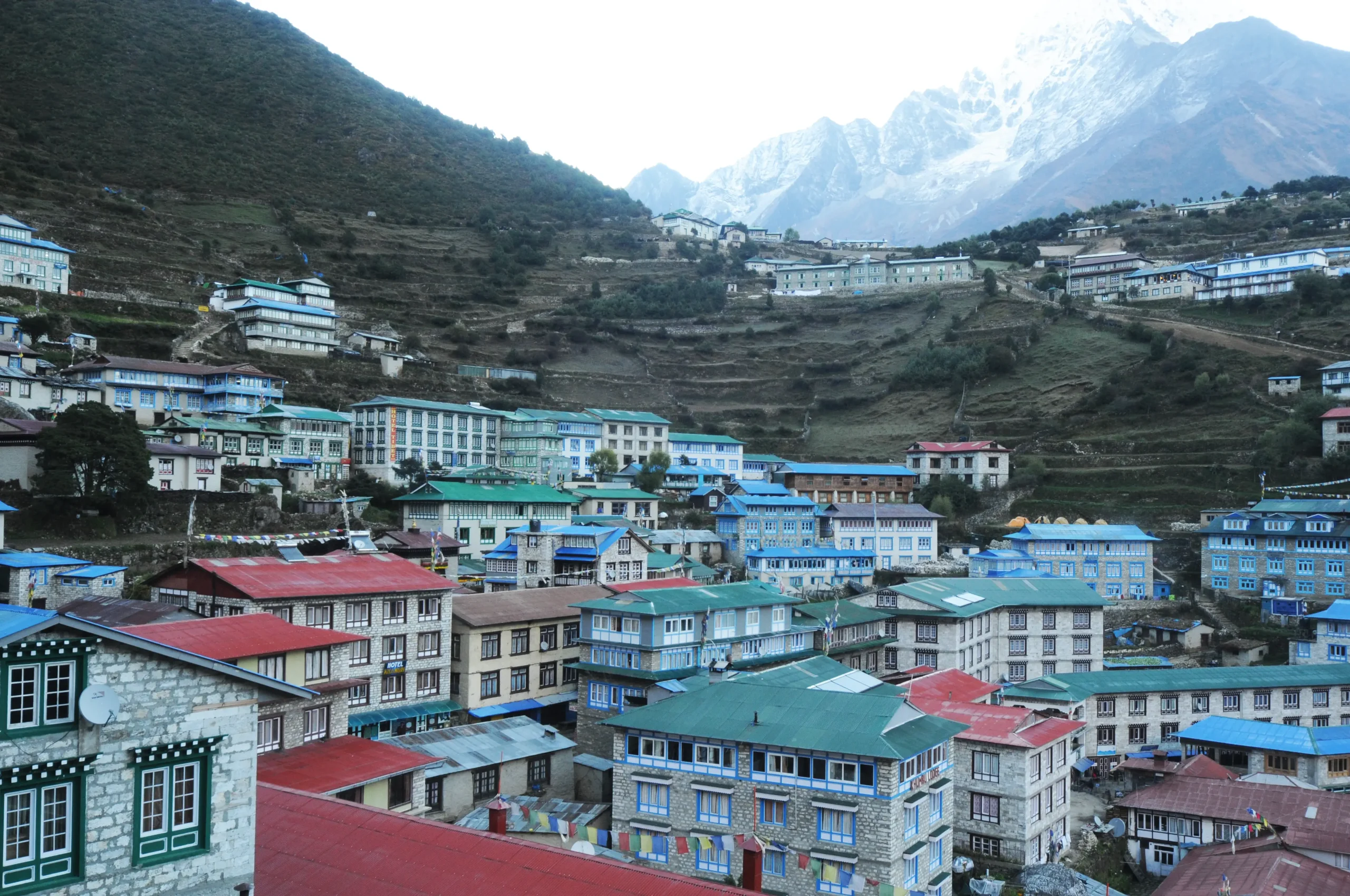
As you gain altitude, you will see changes in the surroundings, from green hills and pine forests to rugged alpine terrain and snow-covered peaks. One of the first major stops during this trek is Namche Bazaar. Namche Bazaar is the lively Sherpa town and trading hub known as the gateway to Everest. Here, you can explore local cafes, bakeries, shops, and museums while adjusting to the altitude.
The trek then continues toward Tengboche, famous for its beautiful monastery and stunning mountain views, especially Ama Dablam. As the journey moves higher, you will pass through Dingboche and Lobuche before reaching Everest Base Camp (5,364m). Walking beside the Khumbu Glacier and standing at the base of Mount Everest are among the biggest highlights of the trek.
Another unforgettable experience is the early morning hike to Kala Patthar (5,555m), the highest point of the trek. From here, you will get a chance to enjoy breathtaking sunrise views over the Everest, Lhotse, Nuptse, Pumori, and other Himalayan peaks.
Yes, this trek is more adventurous than the classic Everest Base Camp trek because you will cross two high mountain passes, Cho La Pass and Renjo La Pass. During the time of crossing the pass, you will witness the dramatic mountain scenery, glacier trails, rocky landscapes, and panoramic Himalayan views of the towering peaks, including Everest, Lhotse, Cholatse, Nuptse, Ama Dablam, Makalu, and more.
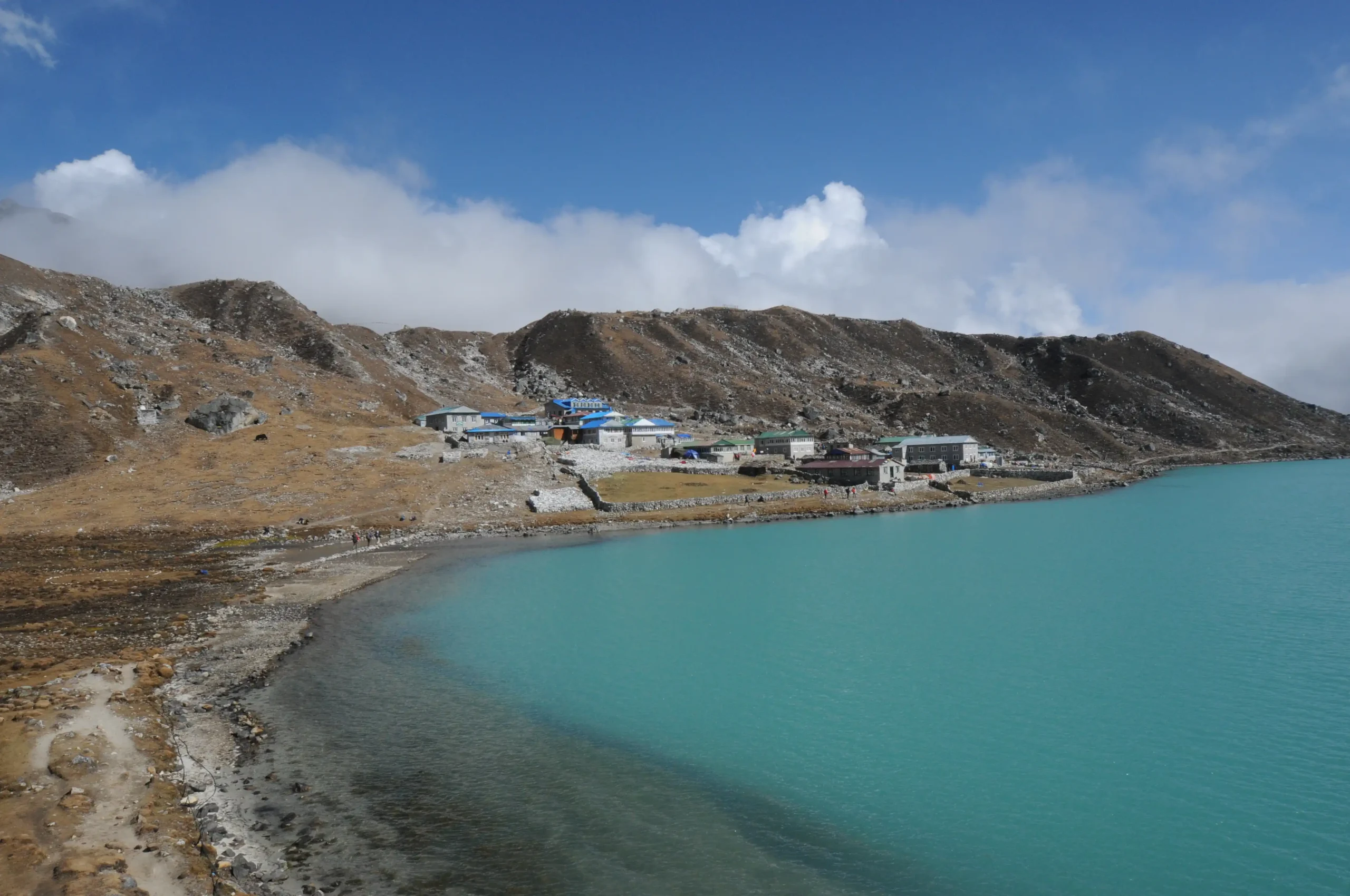
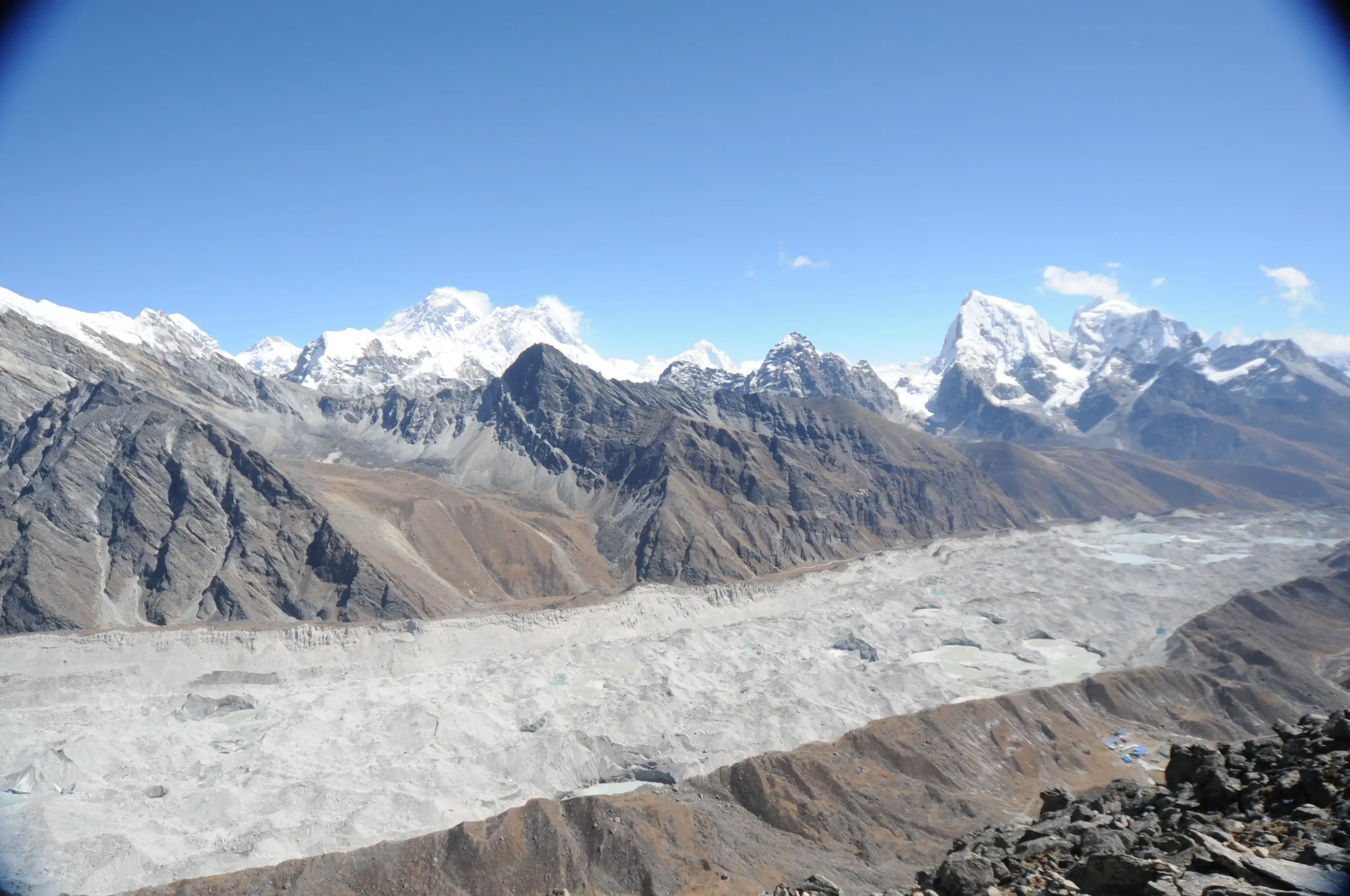
After crossing Cho La Pass, the trail enters the beautiful Gokyo Valley, famous for its turquoise glacial lakes and peaceful surroundings. A hike to Gokyo Ri rewards you with incredible panoramic views of Everest, Cho Oyu, Makalu, Lhotse, and the massive Ngozumpa Glacier.
Why Choose Everest Two Passes Trek?
Throughout the trek, you will stay in local teahouses and lodges run by Sherpa families. You will have the opportunity to experience warm hospitality, local food, and the traditional mountain lifestyle of the Everest region.
The Everest 2 Passes Trek is considered challenging due to the high altitude, long walking days, and mountain pass crossings. However, the itinerary is curated to give you the proper acclimatization days to help your body adjust safely to the altitude. With good preparation, a positive mindset, and a reasonable fitness level, the trek becomes an incredibly rewarding experience.
If you are looking for a complete Everest adventure with Everest Base Camp, Kala Patthar, Gokyo Lakes, Sherpa culture, glacier trails, and high Himalayan passes, the Everest 2 Passes Trek is one of the best trekking experiences Nepal has to offer. It is a journey filled with adventure, natural beauty, cultural experiences, and unforgettable memories in the heart of the Himalayas.
Trip Highlights
- Reach Everest Base Camp (5,364m), the base of the world’s highest mountain.
- Visit Namche Bazaar (3,440m), the famous Sherpa town and gateway to Everest.
- Hike to Kala Patthar (5,555m), the highest point of the trek, and enjoy a breathtaking sunrise view.
- Witness panoramic views of Mount Everest (8,848m), Lhotse (8,516m), Makalu (8,485m), Cho Oyu (8,188m), Ama Dablam (6,812m), Nuptse (7,861m), and Pumori (7,161m), and more.
- Cross the scenic Cho La Pass (5,420m) and Renjo La Pass (5,360m).
- Explore Tengboche Monastery (3,860m), the largest monastery in the Everest region.
- Hike to Gokyo Ri (5,360m) for panoramic Himalayan views.
- Explore the beautiful turquoise Gokyo Lakes and Gokyo Valley.
- Walk beside the Khumbu Glacier and the massive Ngozumpa Glacier.
When to visit
J
F
M
A
M
J
J
A
S
O
N
D
- Average time to visit
- Best time to visit
- Good time to visit
Outline Itinerary
- Day 01: Arrival in Kathmandu and transfer to the hotel.
- Day 02: Fly to Lukla & trek to Phakding.
- Day 03: Trek to Namche Bazaar.
- Day 04: Acclimatization Day at Namche. Hike to Hotel Everest View and back.
- Day 05: Trek to Tengboche.
- Day 06: Trek to Dingboche.
- Day 07: Acclimatization Day at Dingboche. Hike to Nangkartsang Peak and back.
- Day 08: Trek to Lobuche.
- Day 09: Trek to Everest Base Camp and then back to Gorak Shep (5,190 m/17,028 ft).
- Day 10: Early morning Hike to Kala Patthar and trek to Dzongla (4,830m).
- Day 11: Trek to Thangnak (4,850m) via Chola Pass.
- Day 12: Trek to Gokyo Lake.
- Day 13: Acclimatization day at Gokyo and hike to Gokyo Ri for sunrise view.
- Day 14: Trek to Lungden (4,380m) via Renjo La Pass.
- Day 15: Trek to Namche Bazaar via Thame village (3440m), and visit the Thame monastery.
- Day 16: Trek to Lukla.
- Day 17: Fly back to Kathmandu.
- Day 18: Departure from Nepal.
Trip Itinerary
-
Day 01
Arrival in Kathmandu and transfer to the hotel.
Upon your arrival at Tribhuvan International Airport in Kathmandu, our representative will warmly welcome you and transfer you to your hotel. Kathmandu, the vibrant capital city of Nepal, offers a fascinating blend of ancient temples, bustling streets, colorful markets, and rich culture.
In the evening, you will attend a short trek briefing where you’ll meet your guide and receive important information regarding the upcoming journey.
Overnight in Kathmandu.
-

Max. Altitude: 1,400m (4,600 feet)
-

Accommodation: 3-star Hotel
-
Meals: Dinner
-
-
Day 02
Fly to Lukla & trek to Phakding.
Your adventure officially begins with an early morning flight to Tenzing-Hillary Airport, Lukla, one of the world’s most thrilling mountain airports. The scenic flight offers unforgettable views of snow-covered Himalayan peaks.
After landing at Lukla, you’ll begin trekking through beautiful Sherpa villages, prayer wheels, mani stones, and lush pine forests toward Phakding.
The trail is relatively easy today, allowing your body to adapt to the increasing altitude gradually. The route passes through beautiful Sherpa villages, including Chheplung and Ghat. You’ll walk beside the Dudh Koshi River while crossing suspension bridges. Eventually, you will reach Phakding.
Overnight in Phakding.
Note: Depending on the trekking season and flight schedule, you’ll either fly directly from Kathmandu or drive to Manthali Airport before boarding a short mountain flight to Lukla.
Flight Duration: 20 minutes
-
Max. Altitude: 2,610m (8,563 feet)
-
Accommodation: Standard Hotel
-
Meals: Breakfast, Lunch, Dinner
-
Drive duration: 5-6 hours’ drive
-

Trek Duration: 3-4 hours trek
-

Flight Duration: 20 minutes flight
-
-
Day 03
Trek to Namche Bazaar.
Today, you’ll walk along the Dudh Koshi River and cross several suspension bridges. The trail passes through small villages like Toktok, Benkar, Monjo, and Jorsalle.
At Monjo, you will officially enter Sagarmatha National Park, a UNESCO World Heritage Site known for its incredible mountain scenery and unique Himalayan wildlife.
From the Jorsalle, the trail becomes steeper. The ascent toward Namche Bazaar is one of the most physically challenging. As you ascend through pine forests, there may be opportunities to catch your very first glimpse of Mount Everest if the weather is clear.
Eventually, you will reach Namche Bazaar, the bustling Sherpa town known as the gateway to Everest.
Overnight in Namche Bazaar.
-
Max. Altitude: 3,440m (11,286 feet)
-
Accommodation: Teahouse or Lodge
-
Meals: Breakfast, Lunch, Dinner
-
Trek Duration: 5-6 hours trek
-
-
Day 04
Acclimatization Day at Namche. Hike to Hotel Everest View and back.
After breakfast, you’ll hike uphill toward Syangboche, and then to the famous Hotel Everest View, one of the highest luxury hotels in the world.
The trail offers incredible panoramic views of Everest, Lhotse, Ama Dablam, and the surrounding Himalayan peaks. If time permits, you can visit Khumjung Village, Hillary School, and Khumjung Monastery.
After enjoying the scenery, you’ll return to Namche Bazaar. You can rest for the remainder of the day or visit local museums, bakeries, cafes, and traditional Sherpa markets in the Namche Bazaar.
Overnight in Namche Bazaar.
-
Max. Altitude: 3,880m (12,730 feet)
-
Accommodation: Teahouse or Lodge
-
Meals: Breakfast, Lunch, Dinner
-
Trek Duration: 4-5 hours trek
-
-
Day 05
Trek to Tengboche.
Today, you will leave the Namche Bazaar behind and walk towards the Tengboche. The trail descends to Phunki Tenga beside the river, and then climbs uphill through rhododendron forests. During spring, these forests bloom with colorful rhododendron flowers.
Eventually, you’ll reach Tengboche, one of the most beautiful locations in the Everest region. This place is also famous for its beautiful monastery, the largest monastery in the Khumbu region.
Overnight in Tengboche.
-
Max. Altitude: 3,860m (12,664 feet)
-
Accommodation: Teahouse or Lodge
-
Meals: Breakfast, Lunch, Dinner
-
Trek Duration: 6-7 hours trek
-
-
Day 06
Trek to Dingboche.
Today’s trail gradually ascends above the tree line as the landscape becomes more rugged and alpine.
Then you will descend through forests, cross the Imja Khola River, and continue toward Pangboche village, one of the oldest Sherpa settlements in the region.
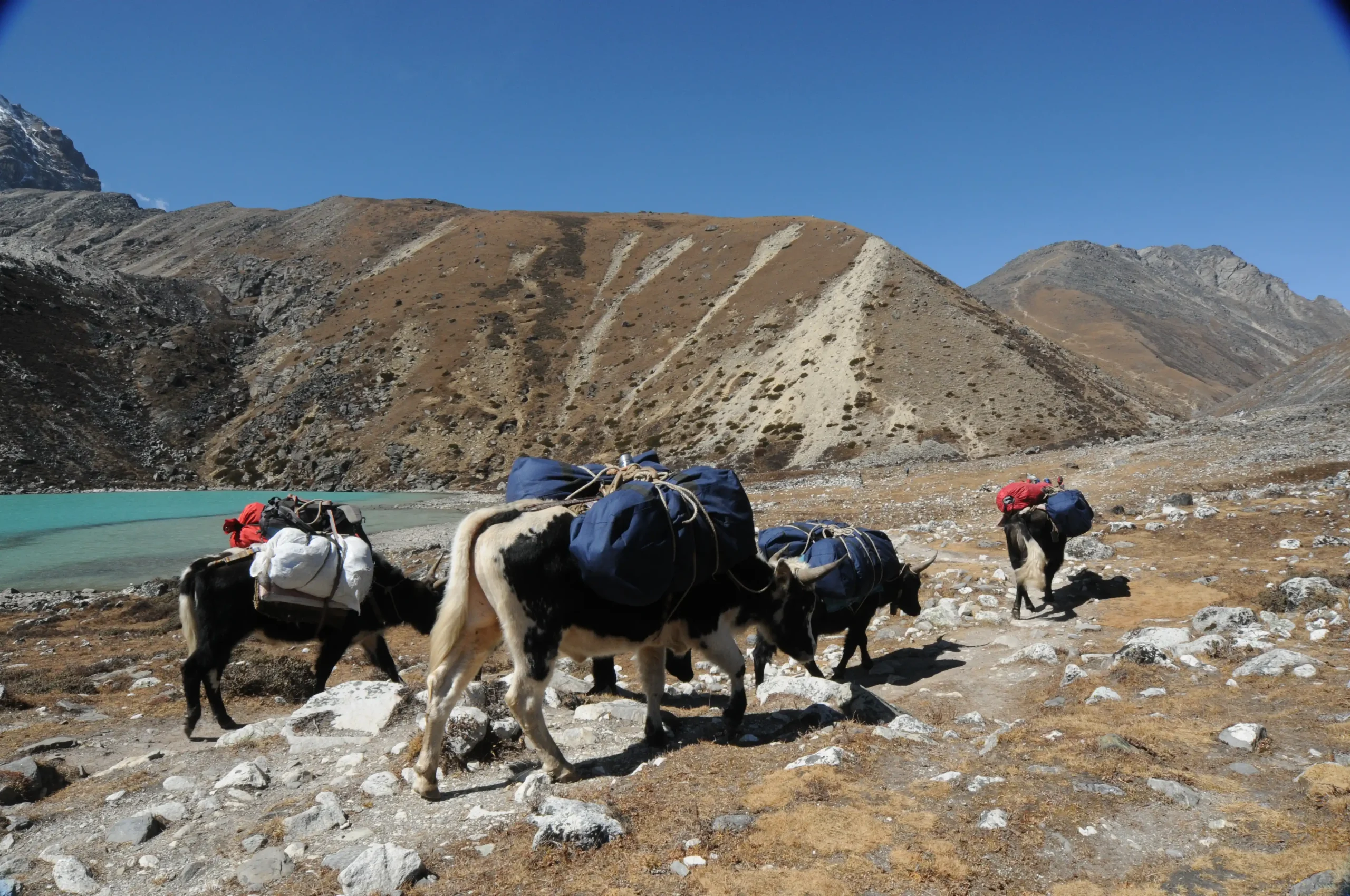
Ama Dablam appears incredibly close and dominates the surrounding landscape. The trail continues through yak pastures and stone-walled farming fields before reaching Dingboche.
Dingboche is beautifully located beneath towering Himalayan peaks and is surrounded by dramatic mountain scenery.
Overnight in Dingboche.
-
Max. Altitude: 4,410m (14,469 feet)
-
Accommodation: Teahouse or Lodge
-
Meals: Breakfast, Lunch, Dinner
-
Trek Duration: 5-6 hours trek
-
-
Day 07
Acclimatization Day at Dingboche. Hike to Nangkartsang Peak and back.
Another important acclimatization day helps your body prepare for higher elevations. Today, you will hike to Nangkartsang Peak, which offers breathtaking views of Makalu, Lhotse, Island Peak, and Ama Dablam.
After spending time at the viewpoint, you’ll descend back to Dingboche.
Overnight at Dingboche.
-
Max. Altitude: 5,083 meters (16,676 feet)
-
Accommodation: Teahouse or Lodge
-
Meals: Breakfast, Lunch, Dinner
-
Trek Duration: 4-5 hours trek
-
-
Day 08
Trek to Lobuche.
The trek today enters a harsher and more rugged Himalayan environment. After walking through alpine meadows and rocky landscapes, you’ll arrive at Dughla. From here, a steep climb leads to memorial sites dedicated to climbers who lost their lives on Everest expeditions. Beyond the memorial area, the trail follows the edge of the Khumbu Glacier.
Eventually, you will reach Lobuche.
Overnight in Lobuche.
-
Max. Altitude: 4,910m (16,109 feet)
-
Accommodation: Teahouse / Lodge
-
Meals: Breakfast, Lunch, Dinner
-
Trek Duration: 5-6 hours trek
-
-
Day 09
Trek to Everest Base Camp and then back to Gorak Shep (5,190 m/17,028 ft).
Today is one of the most exciting days of the trek. You begin with a hike to Gorak Shep, the final settlement before Everest Base Camp. After a short rest, you’ll continue toward Base Camp. The trail follows rocky glacier paths beside the Khumbu Glacier. The high altitude makes walking slower and more physically demanding.
You will walk alongside the Khumbu Glacier and finally reach Everest Base Camp. Everest Base Camp is the dream destination for every trekker around the world.
During climbing season, you will see the colorful expedition tents on the glacier as climbers prepare to summit Mount Everest.
After spending quality time in the base camp, taking photographs, and admiring the scenery, you’ll trek back to Gorak Shep.
Overnight in Gorakshep.
-
Max. Altitude: 5,364 meters (17,598 feet)
-
Accommodation: Teahouse / Lodge
-
Meals: Breakfast, Lunch, Dinner
-
Trek Duration: 8-9 hours trek
-
-
Day 10
Early morning Hike to Kala Patthar and trek to Dzongla (4,830m).
Today begins very early, usually before sunrise, for the hike to Kala Patthar, which is the most famous viewpoint in the Everest region.
When the sun rises over the Himalayas, you will witness the Everest and the surrounding peaks glowing in beautiful shades of gold and orange. From Kala Patthar, you’ll enjoy stunning panoramic views of Mount Everest, Nuptse, Pumori, Lhotse, and other nearby peaks.
After spending time taking photographs and enjoying the sunrise, you’ll descend back to Gorak Shep for breakfast. After breakfast, you will walk towards the Dzongla. The trail crosses rugged high-altitude terrain beneath towering mountain walls.
You will cross several small streams and rocky paths before reaching the isolated settlement of Dzongla.
Overnight in Dzongla.
-
Max. Altitude: 5,555 meters (18,225 feet)
-
Accommodation: Teahouse / Lodge
-
Meals: Breakfast, Lunch, Dinner
-
Trek Duration: 5-6 hours trek
-
-
Day 11
Trek to Thangnak (4,850m) via Chola Pass.
Today is one of the most challenging and adventurous days of the trek. The trail crosses the icy Cho La Pass at 5,420 meters. The day starts early, before sunrise, because crossing Cho La Pass is safer during stable morning weather conditions.
The trail immediately begins climbing steep rocky slopes above Dzongla. As the altitude increases, the landscape becomes increasingly barren and icy. The final climb to the top of the pass is steep and demanding.
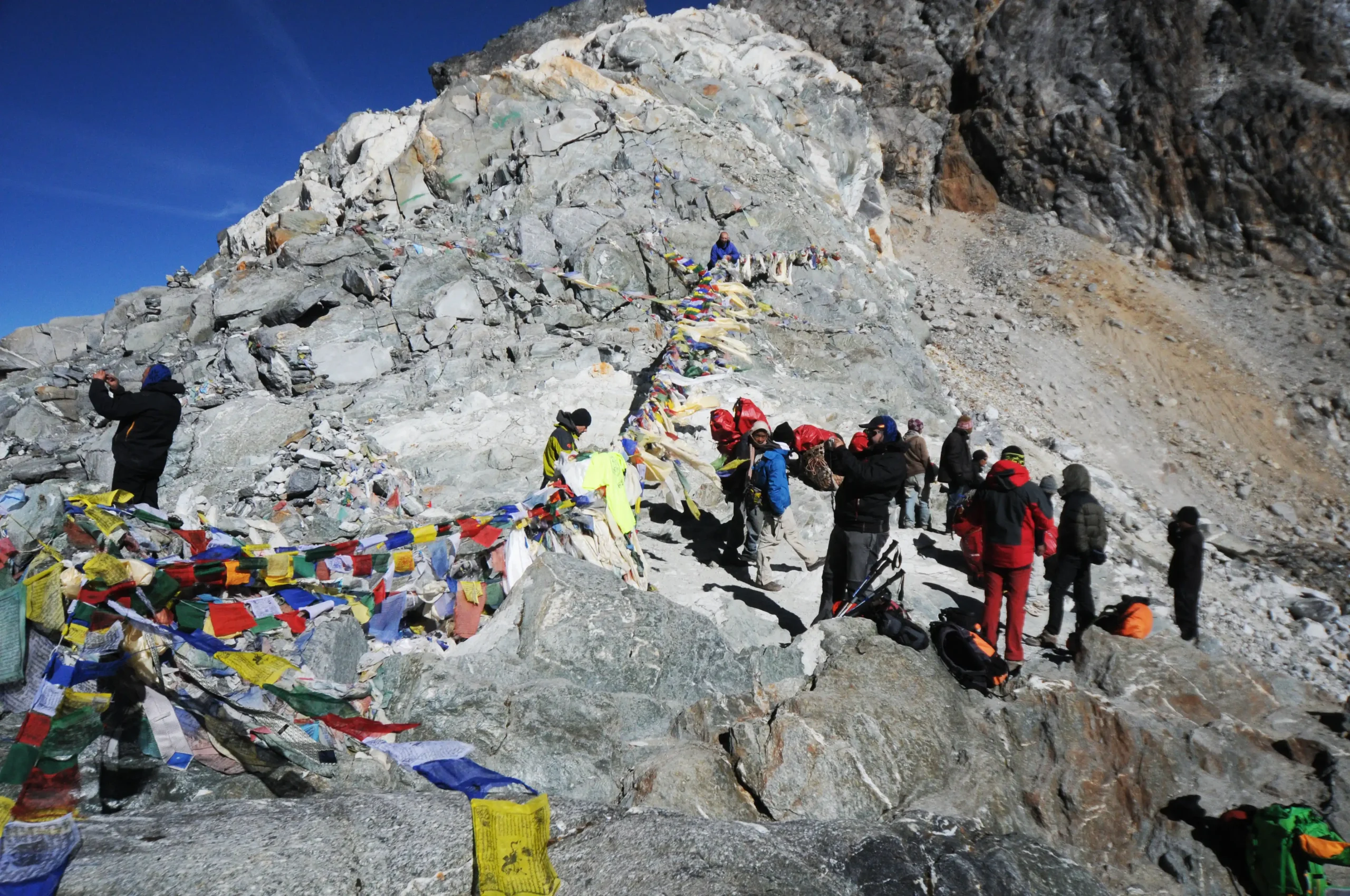
Upon reaching Cho La Pass, you are rewarded with spectacular panoramic views across the Himalayas. Prayer flags cover the pass while snow-covered peaks rise in every direction. You will witness the views of Ama Dablam, Cholatse, Lobuche East, Baruntse, and Gokyo Valley in the distance.
After spending time at the pass, the descent begins carefully across steep, rocky, and icy terrain. The downhill section can be slippery and tiring, especially near the glacier crossing.
Eventually, the trail reaches flatter terrain near the Ngozumpa Glacier before arriving at the small settlement of Thangnak. Thangnak is a quiet mountain village located beside the glacier and surrounded by enormous Himalayan peaks.
Overnight in Thangnak.
-
Max. Altitude: 5,420 meters (17,782 feet)
-
Accommodation: Teahouse / Lodge
-
Meals: Breakfast, Lunch, Dinner
-
Trek Duration: 7-8 hours trek
-
-
Day 12
Trek to Gokyo Lake.
The trail gradually ascends through the Ngozumpa Glacier, Nepal’s largest glacier. The route includes several small ascents and descents over uneven glacial terrain.
As you approach the Gokyo Valley, the scenery suddenly transforms into one of the most beautiful landscapes in the Everest region.
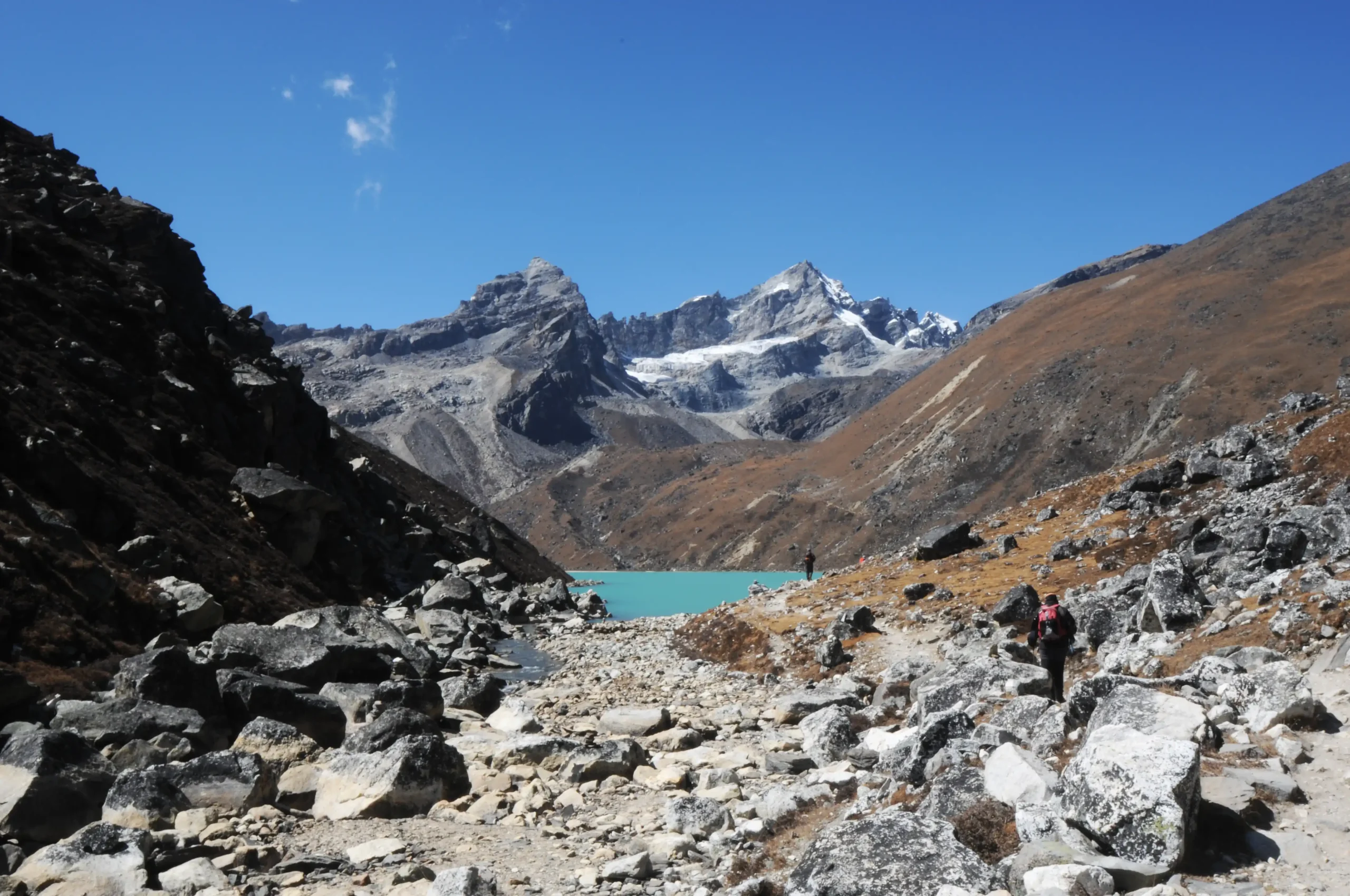
The first of the famous Gokyo Lakes appears beneath towering snow-covered mountains. The lakes are known for their stunning turquoise color created by glacial meltwater.
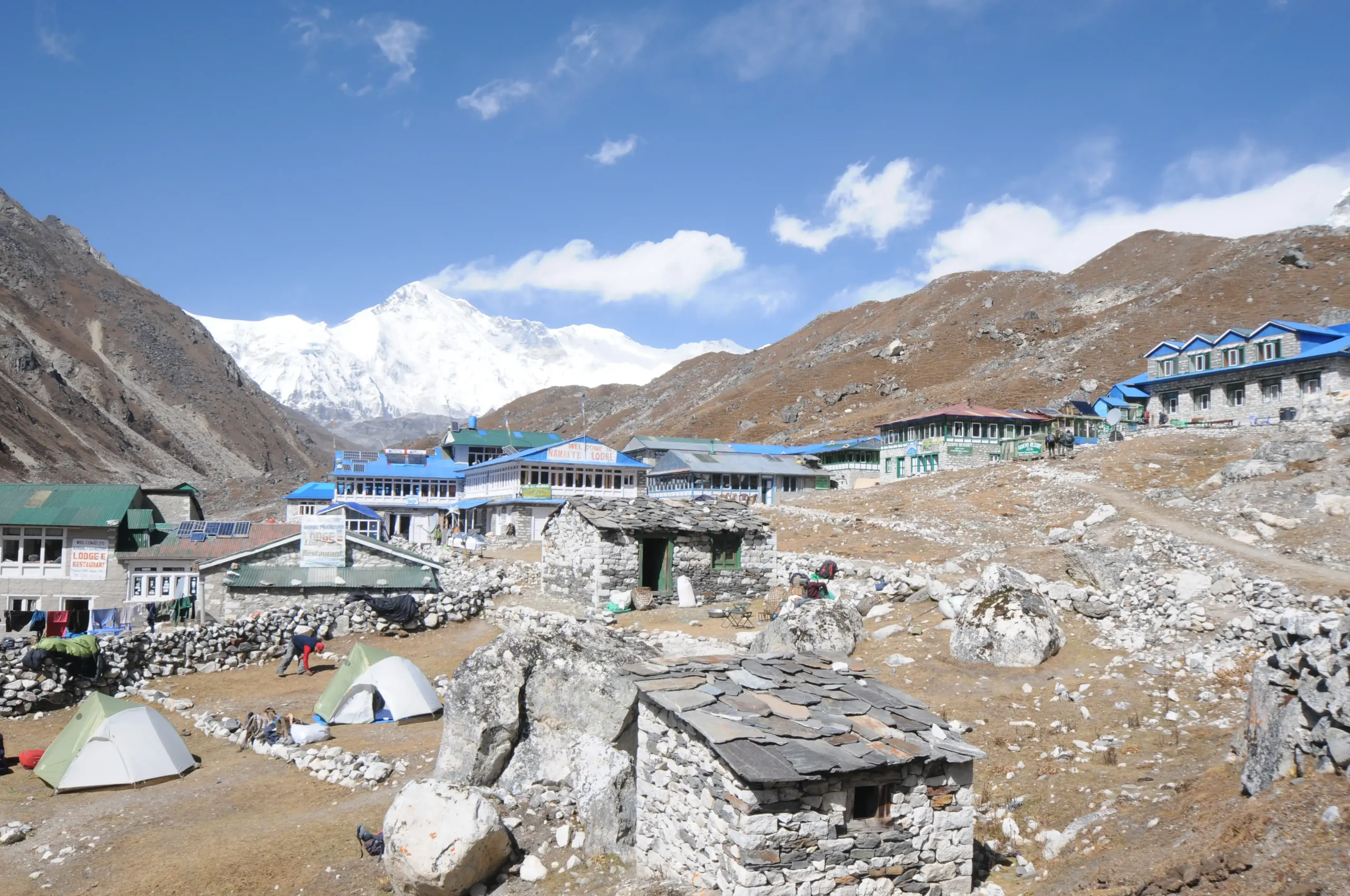
The trail passes beside multiple lakes before reaching Gokyo Village, located on the shore of the third and largest Gokyo Lake.
Overnight in Gokyo village.
-
Max. Altitude: 4,800 meters (15,748 feet)
-
Accommodation: Teahouse / Lodge
-
Meals: Breakfast, Lunch, Dinner
-
Trek Duration: 4-5 hours trek
-
-
Day 13
Acclimatization day at Gokyo and hike to Gokyo Ri for sunrise view.
Today is one of the most scenic days of the entire trek.
Before sunrise, you will begin the steep climb to Gokyo Ri, the famous viewpoint overlooking the Gokyo Lakes and surrounding Himalayan giants. Although the hike is challenging due to the altitude, your eyes will be filled with stunning scenery around every step.
As the sun rises, golden light spreads across the peaks of Everest, Cho Oyu, Lhotse, Makalu, Nuptse, and Pumori. Far below, the turquoise Gokyo Lakes shine beautifully against the dark rocky valley. The panoramic mountain view from Gokyo Ri is often considered one of the finest in all of Nepal.
After spending time at the summit for photography and rest, you’ll descend back to Gokyo Village for breakfast.
You can spend the remainder of the day relaxing beside the lake or exploring nearby glacial areas around the village.
Overnight in Gokyo village.
-
Max. Altitude: 5,360m (17,585 feet)
-
Accommodation: Teahouse / Lodge
-
Meals: Breakfast, Lunch, Dinner
-
Trek Duration: 3-4 hours trek
-
-
Day 14
Trek to Lungden (4,380m) via Renjo La Pass.
Today is another major highlight of the Everest Two Passes Trek, the crossing of Renjo La Pass. This high mountain pass offers one of the finest panoramic views in the entire Everest region.
The day begins early in the morning before sunrise. After breakfast, the trail gradually climbs out of Gokyo Village beside the turquoise glacial lakes.
As you continue climbing, you will find the trail steeper and rougher, so you should be more careful. You have to walk along the stone steps and rocky paths toward the pass. The pass altitude is above 5,000 meters, so the climb is challenging, and you should usually walk slowly and take short breaks along the way.
At the top of Renjo La Pass, colorful prayer flags flutter in the cold Himalayan wind, and your eyes will be filled with some of the world’s highest mountains rising in every direction. You will witness the towering peaks, including Everest, Lhotse, Makalu, and more.
After enjoying the scenery and taking photographs, you will descend toward Lungden through rocky terrain, glacial valleys, and isolated yak-grazing areas.
Overnight in Lungden.
-
Max. Altitude: 5,360m (17,585 feet)
-
Accommodation: Teahouse / Lodge
-
Meals: Breakfast, Lunch, Dinner
-
Trek Duration: 6-7 hours trek
-
-
Day 15
Trek to Namche Bazaar via Thame village (3440m), and visit the Thame monastery.
After several days in remote high-altitude valleys, today’s trek gradually returns toward the greener and more populated parts of the Khumbu region.
Today’s trail passes through the traditional Sherpa village of Thame, known for its ancient monastery and rich mountaineering history. Many famous mountaineers, including several Everest summiteers, were born in this region.
After leaving Thame, the trail continues through pine forests, riverside paths, suspension bridges, and traditional villages. Eventually, you will reach Namche Bazaar.
Overnight in Namche Bazaar.
-
Max. Altitude: 3,440m (11,286 feet)
-
Accommodation: Teahouse / Lodge
-
Meals: Breakfast, Lunch, Dinner
-
Trek Duration: 6-7 hours trek
-
-
Day 16
Trek to Lukla.
Today is the final trekking day of the Everest Two Passes trek. After breakfast, you will descend steeply from Namche Bazaar through pine forests toward the Dudh Koshi River.
Along the way, you will pass through villages you encountered earlier in the trek, including Monjo, Jorsalle, Benkar, Phakding, etc. Although most of today’s route is downhill, there are still several uphill sections that can feel tiring after many days of trekking.
Finally, after several hours of trekking, you’ll arrive back in Lukla. This marks the successful completion of one of Nepal’s most challenging and rewarding treks.
Overnight in Lukla.
-
Max. Altitude: 2,840m (9,318 feet)
-
Accommodation: Teahouse / Lodge
-
Meals: Breakfast, Lunch, Dinner
-
Trek Duration: 7 hours trek
-
-
Day 17
Fly back to Kathmandu.
Early in the morning, you’ll head to Lukla Airport for the scenic flight back to Kathmandu. As you take off from Lukla, you’ll enjoy one final aerial view of the Himalayas, deep valleys, and mountain villages below.
Upon arrival, you’ll be transferred to your hotel. You can rest for the remainder of the day or explore around the cultural sites of Kathmandu or the vibrant streets of Thamel.
Overnight in Kathmandu.
Flight Duration: 20 minutes
-
Max. Altitude: 1,400m (4,600 feet)
-
Accommodation: 3-star Hotel
-
Meals: Breakfast, Lunch, Dinner
-
Drive duration: 45 minutes’ drive
-
Flight Duration: 20 minutes flight
-
-
Day 18
Departure from Nepal.
Your unforgettable Everest Two Passes Trek comes to an end today.
Depending on your international flight schedule, our representative will transfer you to Tribhuvan International Airport for your departure.
As you leave Nepal, you take with you your incredible memories of Everest Base Camp, the sunrise from Kala Patthar, the thrilling crossings of Cho La and Renjo La Passes, the turquoise Gokyo Lakes, traditional Sherpa villages, ancient monasteries, and the breathtaking beauty of the Himalayas.
-
Meals: Breakfast (Lunch depending on the schedule)
-


Trip notes
It is strongly advised to include additional buffer days in Kathmandu, as the weather in the Himalayas can change rapidly and flights to Tenzing-Hillary Airport are frequently delayed. Travel insurance covering high-altitude trekking and emergency evacuation is strongly recommended.
Trekking poles may make long descents considerably easier on the knees, and packing light with appropriate clothing is preferable to lugging heavy gear. Before departing Kathmandu, make sure you have enough Nepalese currency, as ATMs outside Namche Bazaar are unreliable.
Cost Includes
- Airport picks up and drops off.
- All necessary trekking permits (Sagarmatha National Park Entry Permit, Pasang Lhamu Rural Municipality fee, or equivalent).
- Round-trip airfare between Manthali/Kathmandu and Lukla.
- Hotel accommodation in Kathmandu (3-star, twin sharing)
- Teahouse/Lodge accommodation during the trek twin sharing bed room.
- Three meals a day (breakfast, lunch, dinner) during the trek.
- Tea/ coffee 2 times per person per day.
- Professional trekking guide and porter (1 porter for two trekkers).
- Guide insurance, salary, food, transport and lodging.
- All government and local taxes.
Cost Excludes
- International airfares.
- Nepal entry visa fees.
- All personal expenses, including mineral bottled water, alcohol & other beverages, trekking equipment, travel insurance, and more.
- Extra expenses during the trek, like hot shower charge, battery charging, Wi-Fi, and any others.
- Tips for the trekking guides and porters.
- Additional hotel stays in Kathmandu if not on the planned itinerary.
- Porter (1 porter for every two trekker will be provided (if hired maximum 25kg total weight)
- Any expenses not mentioned in the “Includes” section.
Gears and Equipment

Head & Face Protection
- Sun cap or hat
- Warm beanie (wool/fleece)
- Neck gaiter/buff
- UV-protection sunglasses (Category 3 or 4)
- Headlamp with spare batteries

Upper Body Clothing (Layer System)
- Moisture-wicking base layer (2–3 sets)
- Fleece or light warm mid-layer
- Insulated down jacket (cold-weather essential)
- Waterproof + windproof outer shell jacket
- Quick-dry trekking t-shirts

Lower Body Clothing
- Trekking pants (lightweight, stretchable)
- Thermal base layer leggings
- Waterproof rain pants

Footwear & Socks
- Waterproof trekking boots (ankle support, broken-in)
- Camp shoes/sandals
- Warm trekking socks (2–4 pairs)
- Liner socks (blister prevention)

Hand Protection
- Lightweight inner gloves
- Warm insulated gloves (preferably waterproof)

Backpack & Carrying Gear
- Main backpack (40–50L) with rain cover
- Daypack (optional if using porter)
- Dry bags / plastic bags for organization

Hygiene & Personal Care
- Sunscreen (high SPF)
- Lip balm with SPF
- Wet wipes
- Hand sanitizer
- Quick-dry towel
- Toilet paper/tissues
- Toothbrush & basic toiletries

Trekking Essentials
- Trekking poles
- Reusable water bottles (2–3L total) or hydration bladder
- Sleeping bag (-5°C to -10°C comfort rating)
- Power bank (10,000–20,000 mAh)
- First aid kit (basic medicines + blister care)
- Water purification tablets or filter

Seasonal Add-ons (Only if needed)
- Winter / High Altitude Treks
- Thicker down jacket
- Warmer sleeping bag (-15°C recommended)
- Microspikes (icy trails)
- Monsoon Season
- Extra rain covers or poncho
- Quick-dry everything
- Waterproof shoe protection

Extra Useful Items
- Snacks/energy bars/electrolytes
- Cash (Nepalese rupees only in most places)
- Phone + camera + charger cables
- Zip-lock bags / dry bags
- Small notebook (optional)
- Earplugs (useful in teahouses)
Trip Map

Additional information
Trekking Permits and Documents
The trek requires permits to enter Sagarmatha National Park and the local Khumbu region. The package includes the required permits and local fees, based on the current itinerary.
Keep your passport and other important travel documents safe throughout the trek. It is also useful to carry copies or digital backups of your passport, insurance policy, emergency contacts, and other important documents.
Permit checks can take place at checkpoints along the route, particularly when entering Sagarmatha National Park.
Understanding the Trek Difficulty
The Everest Two Passes Trek is listed as a moderate-to-challenging trek. The difficulty comes from a combination of high altitude, long walking days, steep ascents and descents, rocky terrain, and the Cho La and Renjo La crossings.
Some days are considerably more demanding than others. The Everest Base Camp section, Kala Patthar climb, Cho La crossing, and Renjo La crossing require extra effort because of the elevation.
You don’t need technical mountaineering experience for the standard itinerary, but you should be comfortable with long-distance mountain walking and prepared for changing trail conditions.
Physical Preparation Before the Trek
Start preparing several weeks before your trek. Regular hiking, walking, stair climbing, jogging, cycling, and leg-strengthening exercises can help build the endurance required for the journey. Try to include longer walks on consecutive days so your body becomes accustomed to repeated activity.
The goal is not to walk extremely fast. A steady pace that you can maintain for several hours is much more useful in the mountains.
Altitude and Acclimatization
Altitude is one of the most important factors throughout the Everest Two Passes Trek. The itinerary includes acclimatization days at Namche, Dingboche, and Gokyo, but you should still monitor how you feel every day.
Possible symptoms of altitude sickness include headache, nausea, dizziness, unusual tiredness, loss of appetite, or difficulty sleeping.
Never ignore symptoms or try to hide them from your guide. If symptoms become serious or worsen, you may need to descend to a lower elevation.
Walk slowly, stay hydrated, eat properly, and allow enough time to acclimatize.
Accommodation Along the Trail
Accommodation is provided in local teahouses and lodges during the trekking section, with hotel accommodation in Kathmandu. Teahouses are generally simple and comfortable, but facilities become more basic at higher elevations.
Rooms may be shared or private depending on availability, while shared bathrooms are common in some high-altitude settlements. Hot showers, charging, and Wi-Fi may be available at additional cost, particularly in higher villages.
Food and Drinking Water
Full-board meals are included during the trek, covering breakfast, lunch, and dinner.
Common meals include dal bhat, noodles, fried rice, pasta, potatoes, soup, eggs, pancakes, and other simple dishes.
Dal bhat is particularly useful during long trekking days because it provides carbohydrates and protein and can usually be refilled.
Drink plenty of water throughout the day. Use boiled or properly purified water rather than untreated stream water.
A reusable bottle or hydration bladder with approximately 2–3 liters of capacity is recommended.
What to Pack
Because the trek reaches above 5,500 meters and crosses two high passes, packing should be taken seriously.
Important items include:
- Waterproof trekking boots
- Warm trekking socks
- Thermal base layers
- Fleece or insulating mid-layer
- Down or insulated jacket
- Waterproof and windproof outer shell
- Thermal leggings
- Waterproof trousers or rain pants
- Warm hat and neck gaiter
- Inner and insulated gloves
- UV-protection sunglasses
- Headlamp with spare batteries
- Trekking poles
- Sunscreen and SPF lip balm
- Personal toiletries
- Personal medication
- First-aid and blister-care supplies
- Reusable water bottles or hydration bladder
- Water purification tablets or filter
- Power bank
- Dry bags
- Quick-dry clothing
- Sleeping bag suitable for cold high-altitude nights
- Nepalese cash
- Camera or phone
If the Cho La trail is snowy or icy, appropriate traction equipment may be recommended depending on current conditions.
Porter and Baggage
Porter support can make a significant difference on a trek of this difficulty.
Carry only your daily essentials in your daypack, including water, snacks, warm layers, rain protection, sunscreen, medication, documents, and valuables.
Keep your main luggage organized and protected from rain or snow using dry bags or waterproof covers.
Avoid unnecessary items because every extra kilogram becomes more noticeable during steep climbs and high-altitude days.
Electricity, Wi-Fi and Mobile Connectivity
Electricity and charging facilities are available in many teahouses, but they are less reliable at higher elevations.
Charging normally costs extra, and Wi-Fi can be slow or intermittent.
Mobile coverage also varies considerably along the route. Some areas around Namche and larger settlements have better connectivity, while remote valleys and high passes may have little or no signal.
A power bank is highly recommended.
Money and Personal Expenses
Carry sufficient Nepalese cash before heading into the higher Everest region.
Namche Bazaar has ATM facilities, but you should not rely on ATMs being available or working throughout the route.
Additional expenses may include charging, Wi-Fi, hot showers, snacks, drinks, personal purchases, and tips.
It is useful to carry smaller notes for purchases in mountain villages.
Travel Insurance and Emergency Evacuation
Travel insurance is strongly recommended for this trek.
Your policy should specifically cover high-altitude trekking, medical treatment, and emergency helicopter evacuation. Since the itinerary reaches 5,555 meters and crosses two high mountain passes, check the altitude limits and activity exclusions of your policy carefully.
If you develop serious altitude symptoms or another medical problem, tell your guide immediately.
Helicopter evacuation may be possible when required, but operations depend on weather, visibility, aircraft availability, and the specific location.
Weather and Trail Conditions
Mountain weather can change quickly throughout the Everest region.
Spring and autumn are the main recommended seasons because they generally provide better trekking conditions and clearer mountain views.
Winter can bring snow and very cold temperatures, especially around Cho La and Renjo La. Monsoon conditions can bring rain, cloud, wet trails, and potential flight disruptions.
The condition of the two passes should always be considered before crossing. A trail that is dry and rocky in one season may be snowy or icy at another time.
Lukla Flight Delays and Itinerary Flexibility
Flights to and from Lukla are affected by weather and visibility.
During busy trekking seasons, flights may operate through Manthali/Ramechhap rather than directly from Kathmandu.
Delays can affect the beginning or end of the trek, so it is sensible to keep some buffer time in your travel schedule.
Avoid arranging an international flight immediately after your expected Lukla arrival if possible.
Photography and Mountain Views
The Everest Two Passes Trek offers an exceptional variety of landscapes for photography.
You can capture traditional Sherpa villages, monasteries, suspension bridges, forests, glaciers, Everest Base Camp, Kala Patthar, Gokyo Lakes, Cho La, Renjo La, and the mountain valleys around Thame.
Sunrise and early morning generally provide some of the clearest mountain views.
Protect cameras, phones, batteries, and other electronics from cold and moisture.
Respecting Sherpa Culture
The Khumbu region is home to Sherpa communities with a strong Buddhist cultural heritage.
Throughout the trek, you will see mani walls, prayer wheels, chortens, monasteries, prayer flags, and other religious symbols.
Walk around religious monuments respectfully, avoid unnecessarily touching sacred objects, and ask permission before taking close-up photographs of people.
When visiting monasteries, follow local instructions and keep noise to a minimum.
Responsible Trekking
The Everest region receives many trekkers every year, so responsible travel is important.
Carry reusable bottles, reduce single-use plastic, avoid leaving waste on the trail, and use designated disposal facilities where available.
Stay on established trails and avoid disturbing wildlife or damaging vegetation.
Supporting locally owned teahouses, guides, porters, and small businesses also helps tourism benefit communities throughout the Khumbu.
Tipping Guides and Porters
Tipping is not normally a fixed mandatory payment, but it is a common way for trekkers to show appreciation for good service.
You can decide the amount based on the quality of service, length of the trek, and your personal budget.
Prepare some Nepalese cash before the final days of the trek because digital or card payments may not be practical in remote areas.
Who Is This Trek Suitable For?
The Everest Two Passes Trek is best suited to trekkers with good physical fitness and a willingness to spend many days at high altitude.
Previous high-altitude trekking experience is helpful, particularly because of the Cho La and Renjo La crossings.
First-time high-altitude trekkers may also consider the route if they prepare properly, understand the difficulty, and follow their guide’s advice closely.
This is not the ideal itinerary for someone looking for a relaxed or short Himalayan walk.
Best Time for the Everest Two Passes Trek
Spring, from March to May, and autumn, from late September to November, are the main recommended seasons.
Spring offers warmer conditions and colorful rhododendron forests at lower elevations, while autumn is known for generally clear skies and excellent mountain visibility.
Winter can provide clear mountain views but brings very cold conditions and possible snow on the high passes.
Monsoon trekking is possible but can be more unpredictable because of rain, cloud cover, wet trails, and flight disruptions.
A Few Things to Keep in Mind
The Everest Two Passes Trek is a demanding journey, but its variety makes it memorable. You experience the classic Everest Base Camp trail, the dramatic sunrise from Kala Patthar, the turquoise Gokyo Lakes, the high crossings of Cho La and Renjo La, and the quieter landscapes around Thame.
Do not rush the high-altitude sections. Maintain a steady pace, stay hydrated, eat well, and communicate honestly with your guide about how you feel.
Weather and trail conditions can change, so flexibility is part of trekking in the Himalayas. The goal isn’t to complete every kilometer exactly as planned, but to experience the Everest region safely and responsibly.
With proper preparation, suitable equipment, appropriate acclimatization, and a patient approach to the mountains, the Everest Two Passes Trek can become one of the most rewarding high-altitude journeys in Nepal.
FAQs for this trip
General
-
How long is the Everest Two Passes Trek?
The trek takes 18 days, including arrival, departure, flights, acclimatization days, and trekking.
-
What is the highest point of the trek?
The highest point is Kala Patthar (5,555 m). The trek also crosses Cho La Pass (5,420 m) and Renjo La Pass (5,360 m).
-
Is this trek suitable for beginners?
This trek is recommended for trekkers with good fitness. Previous trekking experience is helpful because of the high altitude and challenging mountain passes.
-
Why choose the Everest Two Passes Trek?
This trek combines Everest Base Camp, Kala Patthar, Gokyo Lakes, Cho La Pass, and Renjo La Pass in one journey. It offers quieter trails, incredible mountain views, and a more complete Everest experience.
Difficulty and Physical Fitness
-
How difficult is the Everest Two Passes Trek?
The trek is challenging because of the high altitude, long walking days, and crossing two mountain passes above 5,300 meters.
-
How many hours do we walk each day?
You will usually walk 5 to 8 hours each day. Pass-crossing days may take longer.
-
Do I need previous trekking experience?
Yes. Previous trekking experience is recommended, especially if you have hiked at high altitude before.
-
How should I prepare for the trek?
Regular hiking, walking, jogging, cycling, stair climbing, and strength training before your trip will help build stamina.
-
Are Cho La Pass and Renjo La Pass difficult?
Yes. Both passes involve steep climbs, rocky trails, and sometimes snow or ice, depending on the season.
Altitude and Health
-
Can I get altitude sickness?
Yes. Since the trek reaches 5,555 meters, altitude sickness is possible.
-
How can I avoid altitude sickness?
Walk slowly, drink plenty of water, eat well, and follow your guide’s advice throughout the trek.
-
Are acclimatization days included?
Yes. The itinerary includes acclimatization days at Namche Bazaar and other key locations to help your body adjust safely.
-
Do I need travel insurance?
Yes. Travel insurance that covers high-altitude trekking and emergency helicopter evacuation is highly recommended.
-
What should I do if I feel unwell?
Tell your guide immediately. They will monitor your condition and arrange medical assistance or evacuation if necessary.
Route and Itinerary
-
Where does the trek start and end?
The trek starts and ends in Lukla, with scenic flights from and back to Kathmandu or Manthali during peak season.
-
Which places do we visit?
The trek passes through Lukla, Phakding, Namche Bazaar, Tengboche, Dingboche, Everest Base Camp, Kala Patthar, Cho La Pass, Gokyo Lakes, Renjo La Pass, Thame, and back to Lukla.
-
Do we visit Everest Base Camp?
Yes. You’ll trek to Everest Base Camp and hike to Kala Patthar for one of the best views of Mount Everest.
-
Do we visit Gokyo Lakes?
Yes. You’ll explore the beautiful turquoise Gokyo Lakes and enjoy stunning views from Gokyo Valley.
-
Can the itinerary be customized?
Yes. The itinerary can be customized based on your fitness level, available time, and travel preferences.
Accommodation
-
Where will I stay during the trek?
You’ll stay in 3-star hotels in Kathmandu and comfortable teahouses during the trek.
-
Are private rooms available?
Private rooms are available in many villages but may be limited at higher elevations.
-
Are hot showers available?
Yes. Most teahouses offer hot showers for an additional charge.
-
Do I need a sleeping bag?
Yes. A warm sleeping bag is recommended for cold nights at higher elevations.
Food and Drinks
-
What meals are available?
You’ll enjoy Dal Bhat, noodles, fried rice, pasta, soup, potatoes, eggs, pancakes, tea, coffee, and other local dishes.
-
Is vegetarian food available?
Yes. Vegetarian meals are available at almost every teahouse.
-
Is drinking water safe?
Drink boiled or purified water instead of untreated tap water.
-
Can I buy snacks during the trek?
Yes. Most villages have small shops selling chocolates, biscuits, energy bars, and soft drinks.
Weather and Best Time
-
When is the best time for the Everest Two Passes Trek?
The best seasons for clear skies and excellent mountain views are spring (March to May) and autumn (September to November).
-
Can I trek during winter?
Yes. Winter trekking is possible, but snow can make the mountain passes more difficult.
-
Is the trek possible during the monsoon?
Yes, but rain, slippery trails, and cloudy weather can make trekking more challenging.
-
How cold does it get?
Temperatures at higher elevations can fall below -15°C, especially during the night.
Permits and Regulations
-
What permits are required?
You need the Sagarmatha National Park Entry Permit and the Khumbu Pasang Lhamu Rural Municipality Permit.
-
Are permits included in the package?
Yes. All required trekking permits are included in the package.
-
Do I need a guide?
Yes. A licensed guide is highly recommended for safety, especially when crossing Cho La and Renjo La Passes.
Flights and Transportation
-
How do I reach the trekking starting point?
You will take a scenic flight from Kathmandu or Manthali to Lukla.
-
How do I return after the trek?
After completing the trek, you’ll fly from Lukla back to Kathmandu.
-
Can Lukla flights be delayed?
Yes. Weather conditions in the Everest region can delay or cancel flights, so it’s a good idea to keep one or two extra days in your travel plan.
Equipment and Packing
-
What should I pack?
Bring warm layered clothing, trekking boots, a down jacket, waterproof clothing, gloves, a warm hat, sunglasses, sunscreen, trekking poles, and a reusable water bottle.
-
Can I rent trekking gear?
Yes. Sleeping bags, down jackets, and trekking poles can be rented in Kathmandu.
-
Do I need trekking poles?
Yes. Trekking poles are highly recommended for steep climbs, glacier trails, and long descents.
-
Should I carry a first-aid kit?
Yes. Bring your personal medications and a basic first-aid kit.
Connectivity and Electricity
-
Is Wi-Fi available?
Yes. Many teahouses provide Wi-Fi, but the connection may be slow at higher elevations.
-
Can I charge my phone or camera?
Yes. Charging facilities are available in most villages, usually for an additional fee.
-
Is there mobile network coverage?
Yes. Nepal Telecom and Ncell have coverage in many parts of the Everest region, but the signal may be weak in remote areas.
Guides and Porters
-
Is a guide included?
Yes. A professional licensed trekking guide is included in the package.
-
Can I hire a porter?
Yes. Porters are available to carry your luggage, making the trek easier and more enjoyable.
-
Why should I hire a porter?
A porter helps reduce your physical effort, allowing you to enjoy the trek while supporting local mountain communities.
Cost and Booking
-
What is included in the package?
The package includes airport transfers, domestic flights, hotel accommodation in Kathmandu, teahouse accommodation during the trek, meals, permits, a professional guide, porter service, and government taxes.
-
What is not included?
International flights, Nepal visa fees, travel insurance, personal expenses, drinks, hot showers, Wi-Fi charges, charging fees, and tips are not included.
-
When should I book this trek?
Booking 2 to 3 months in advance is recommended, especially during the spring and autumn trekking seasons.
Photography and Experience
-
Is the Everest Two Passes Trek good for photography?
Yes. The trek offers breathtaking views of glaciers, turquoise lakes, Sherpa villages, monasteries, suspension bridges, and some of the world’s highest mountains.
-
Which mountains can I see?
You can enjoy spectacular views of Mount Everest, Lhotse, Nuptse, Ama Dablam, Makalu, Cho Oyu, Pumori, Cholatse, Thamserku, and many other Himalayan peaks.
-
What makes this trek special?
The Everest Two Passes Trek combines Everest Base Camp, Kala Patthar, Cho La Pass, Renjo La Pass, and Gokyo Lakes into one adventure, offering a quieter and more diverse experience than the classic Everest Base Camp Trek.
-
What are the highlights of the trek?
The main highlights include Everest Base Camp, Kala Patthar sunrise, Cho La Pass, Renjo La Pass, Gokyo Lakes, Namche Bazaar, Thame Monastery, Sherpa culture, and spectacular Himalayan scenery.







USD 1,717PP
Why book with us?
- Local Guides & Porters
- 98% Success Trip Rate
- Comfort Priority and Saftey Trip
- Satisfied Client
-
Group Size Discounts
Discounts are solely based on your group size. We don’t add anyone to the group.
No. of people Price per person 1 pax USD 1995 2-6 pax USD 1717 7+ pax USD 1696
Send Quick Email
Similar trips
View all trips
Makalu Base Camp Trek – 20 Days
Explore the Makalu Base Camp Trek in Nepal with our 20-day Himalayan adventure package.
Royal Trek Nepal – 10 Day Trekking Package
Explore Royal Trek Nepal with Himalayan scenery, cultural sightseeing, and authentic village experiences.
Nar Phu Valley Trek
Experience remote Nar Phu Valley with Kang La Pass, culture, and Himalayan adventure.