The Everest Base Camp with Gokyo Lake Trek is one of the most beautiful trekking experiences in Nepal combining the famous Everest Base Camp trail with the stunning Gokyo Lakes, and Cho La Pass.
OverviewEverest Base Camp with Gokyo Lake Trek- 16 days
USD 1,565PP
Why book with us?
- Local Guides & Porters
- 98% Success Trip Rate
- Comfort Priority and Saftey Trip
- Satisfied Client
-
Group Size Discounts
Discounts are solely based on your group size. We don’t add anyone to the group.
No. of people Price per person 1 pax USD 1750 2-6 pax USD 1565 7+ pax USD 1500
Send Quick Email

Duration
16 Days

Max Alitiude
5,555 meters at Kala Patthar

Transportation
Tourist Bus & Flight

Trip Grade
Moderate to Challenging

Activity
Trekking

Start/End Point
Lukla / Lukla

Best Season
Spring (March - May) & Autumn (late September - November)

Meals
Full board during trek (Breakfast, Lunch, Dinner)

Accommodation
Hotels (Kathmandu), Teahouses during trek
Trip Overview
The Everest Base Camp with Gokyo Lake Trek is one of the most beautiful and rewarding trekking experiences in Nepal. It combines the famous Everest Base Camp trail with the peaceful Gokyo Valley, the stunning Gokyo Lakes, and the exciting Cho La Pass crossing. This trek is perfect for people who want more than the classic Everest Base Camp route and wish to experience both adventure and the quieter side of the Himalayas. Along the way, you will enjoy magnificent views of Mount Everest, Lhotse, Makalu, Cho Oyu, Ama Dablam, Nuptse, and many other Himalayan giants.
The trek actually starts in Lukla so that you will take a scenic flight from Kathmandu. From Lukla, the trail passes through Sherpa villages, green forests, and suspension bridges with colorful prayer flags. You’ll walk beside the Dudh Koshi River and slowly head toward Namche Bazaar, the main town of the Everest region. Here, you can rest, adjust to the altitude, and enjoy amazing views of Everest, Ama Dablam, and other Himalayan mountains.
From Namche, the route leaves the busier Everest trail and heads into the quieter Gokyo Valley. Passing through small mountain villages, glacial streams, and rugged alpine landscapes, you slowly gain altitude toward the stunning Gokyo Lakes, whose turquoise waters sit beneath towering snowy peaks and vast glaciers.
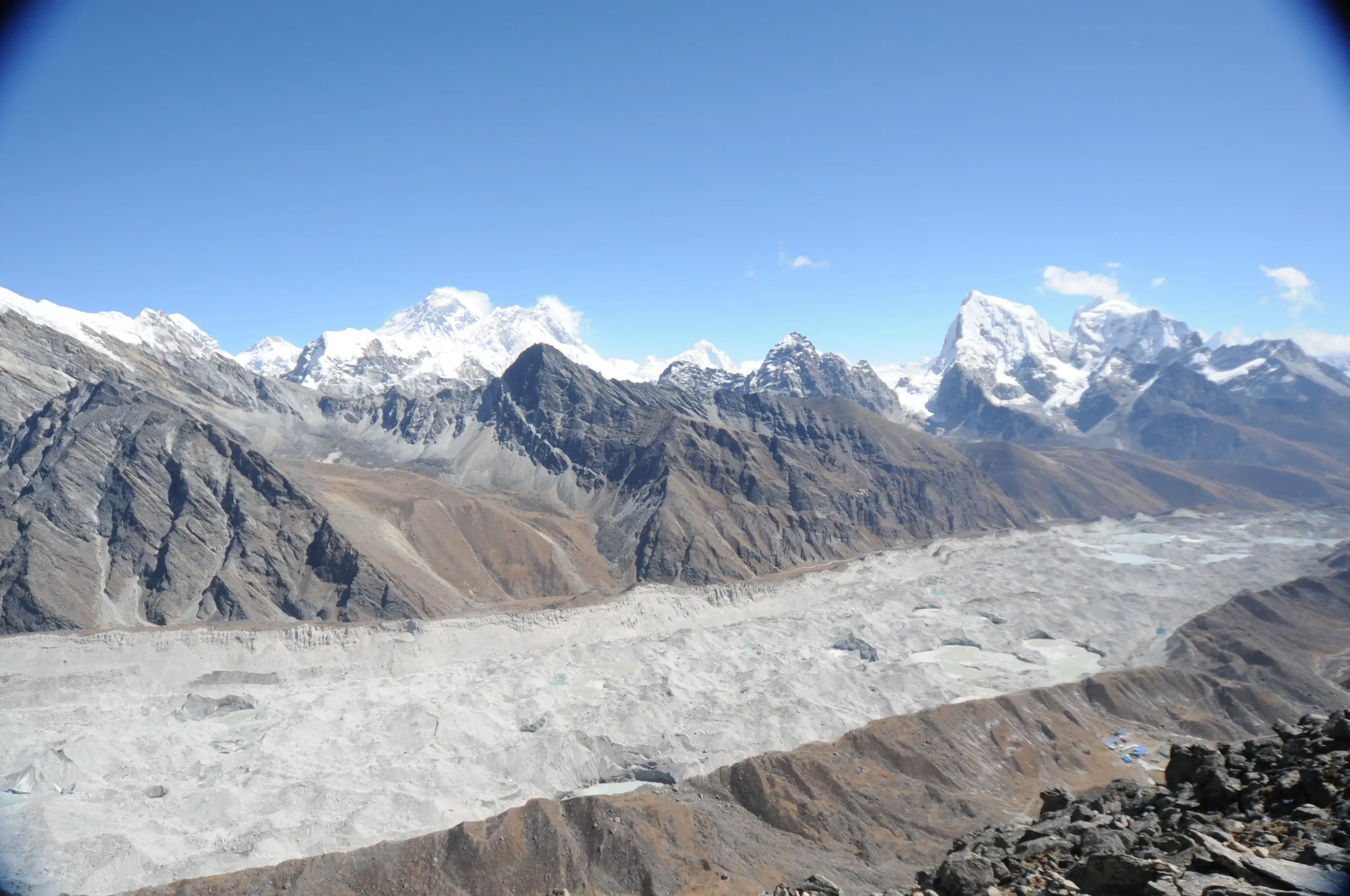
A sunrise hike to Gokyo Ri offers one of the best panoramic views in the Himalayas, with Everest, Lhotse, Makalu, and Cho Oyu rising above the valley below. The adventure continues across the challenging Cho La Pass, where rocky trails, snow, and icy sections add a true sense of high-altitude adventure.
After crossing the pass, the trail rejoins the classic Everest Base Camp route near Lobuche. You will walk beside the Khumbu Glacier, and continue toward Gorakshep and finally reach Everest Base Camp. You will witness the moment surrounded by glaciers, icefalls, and some of the world’s highest mountains.
The next morning, you will do an early hike to Kala Patthar. When you reach there, your eyes will be rewarded with a breathtaking sunrise view over Mount Everest and the surrounding Himalayan range. This Kala Patthar is the last destination of this 16-day trek to Everest Base Camp and Gokyo Lake. From here, you will start descending through the Khumbu region and reach Lukla. From Lukla, you will take a flight back to Kathmandu, leaving the stunning, unforgettable journey through the Himalayas behind.
Everest Base Camp with Gokyo Lake Trek overview
The Everest Base Camp with Gokyo Lake Trek is more than just a trek in Nepal. It is a journey through some of the world’s most beautiful mountain landscapes. It combines adventure, nature, culture, and unforgettable scenery into one incredible experience.
If you are looking for the ultimate Everest adventure in Nepal, this trek promises memories that will last long after the journey ends. Contact us today to start planning your Himalayan adventure and experience the magic of Everest and Gokyo.
Trip Highlights
- Experience the iconic Everest Base Camp Trek with the beautiful Gokyo Valley route.
- Witness breathtaking Himalayan panoramas including Mount Everest, Lhotse, Makalu, Cho Oyu, and Ama Dablam.
- Explore the stunning turquoise Gokyo Lakes, among the highest freshwater lake systems in the world.
- Hike to Gokyo Ri (5,360m) for one of the best panoramic viewpoints in the Everest region.
- Cross the adventurous Cho La Pass (5,420m), a thrilling Himalayan high pass.
- Reach Everest Base Camp (5,364m), the base of the world’s highest mountain.
- Climb Kala Patthar (5,555m) for close-up sunrise views of Mount Everest.
- Experience authentic Sherpa culture, monasteries, prayer flags, and Himalayan hospitality.
- Stay in traditional mountain teahouses surrounded by snow-capped peaks.
- Trek through Sagarmatha National Park, a UNESCO World Heritage Site.
- Enjoy scenic flights to and from Lukla, one of the world’s most exciting mountain airports.
When to visit
J
F
M
A
M
J
J
A
S
O
N
D
- Average time to visit
- Best time to visit
- Good time to visit
Outline Itinerary
- Day 01: Arrival in Kathmandu and transfer to the hotel.
- Day 02: Fly to Lukla & trek to Phakding.
- Day 03: Trek to Namche Bazaar.
- Day 04: Acclimatization Day at Namche. Hike to Hotel Everest View and back.
- Day 05: Trek to Dole.
- Day 06: Trek to Machhermo.
- Day 07: Trek to Gokyo Lake.
- Day 08: Hike to Gokyo Ri & trek to Thangnak (4,850m).
- Day 09: Trek to Dzongla (4,830m) via Chola Pass.
- Day 10: Trek to Lobuche.
- Day 11: Trek to Gorakshep & hike to Everest Base Camp.
- Day 12: Hike to Kala Patthar & trek to Pheriche (4,371m).
- Day 13: Trek to Namche Bazaar.
- Day 14: Trek to Lukla.
- Day 15: Fly back to Kathmandu.
- Day 16: Departure from Nepal.
Trip Itinerary
-
Day 01
Arrival in Kathmandu and transfer to the hotel.
Upon arrival at Tribhuvan International Airport in Kathmandu, our representative will welcome you and transfer you to your hotel.
After check-in, you can relax after a tiring journey. Or, you can also take a leisurely walk around Thamel. Thamel is the city’s lively tourist hub known for its bustling streets, cozy cafés, souvenir shops, restaurants, and vibrant nightlife.
Overnight in Kathmandu.
-

Max. Altitude: 1,400m (4,600 feet)
-

Accommodation: 3-star Hotel
-
Meals: Dinner
-
-
Day 02
Fly to Lukla & trek to Phakding.
Early in the morning, you will transfer to the domestic airport for a scenic mountain flight to Lukla. During the flight, enjoy spectacular aerial views of the Himalayan ranges, green hills, and deep valleys.
After landing at Tenzing-Hillary Airport, one of the world’s most thrilling airports, in Lukla, you will meet the rest of the trekking crew and begin your trek. The first trekking day is relatively easy and helps your body gradually adapt to the altitude.
The trail passes through charming Sherpa villages, Buddhist prayer stones, and mani walls. Along the way, you will cross suspension bridges over the Dudh Koshi River and walk through peaceful pine forests and small settlements.
After several hours of trekking, you will finally reach Phakding, a beautiful village surrounded by the peaceful atmosphere of the Himalayas.
Overnight in Phakding.
-
Max. Altitude: 2,610m (8,563 feet)
-
Accommodation: Standard Hotel
-
Meals: Breakfast, Lunch, Dinner
-
Drive duration: 5-6 hours’ drive
-

Trek Duration: 3-4 hours trek
-

Flight Duration: 20 minutes
-
-
Day 03
Trek to Namche Bazaar.
Today is one of the most exciting trekking days as you enter the heart of the Khumbu region. The trail follows the Dudh Koshi River and crosses several suspension bridges decorated with colorful prayer flags. Along the route, you will pass through small Sherpa settlements, pine forests, and scenic river valleys surrounded by towering peaks.
In a while, you will reach Monjo, from where you will officially enter Sagarmatha National Park. Here, your permits will be checked by the officials. The Sagarmatha National Park is a UNESCO World Heritage Site, famous for its unique Himalayan ecosystem and rare wildlife, including Himalayan tahr, musk deer, and colorful pheasants.
Continuing, the trail becomes steeper and more challenging. Following the trail, you will reach the famous market of the Khumbu Region, Namche Bazaar. Along the way, if the weather permits, you will get to witness the first distant view of Mount Everest.
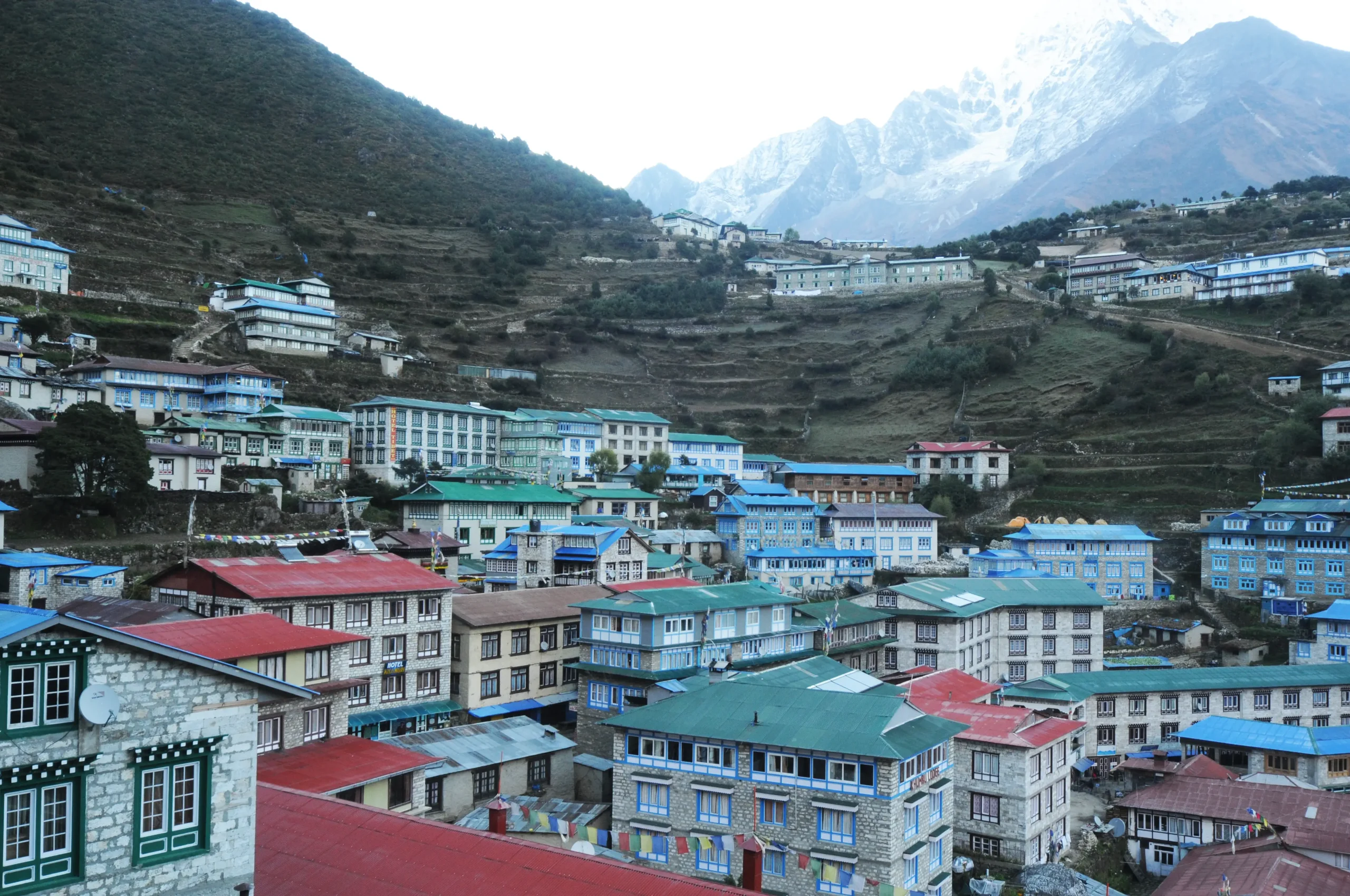
Namche Bazaar is the main trading and cultural center of the Everest region. The town is built into a mountainside amphitheater and offers cafes, bakeries, gear shops, museums, and beautiful mountain views.
Overnight in Namche Bazaar.
-
Max. Altitude: 3,440m (11,286 feet)
-
Accommodation: Teahouse or Lodge
-
Meals: Breakfast, Lunch, Dinner
-
Trek Duration: 5-6 hours trek
-
-
Day 04
Acclimatization Day at Namche. Hike to Hotel Everest View and back.
Today is the acclimatization day at Namche Bazaar, which will help reduce the risk of altitude sickness and help your body adjust.
After breakfast, you will do a short hike to Hotel Everest View, one of the highest luxury hotels in the world. The viewpoint offers incredible panoramic views of Mount Everest, Ama Dablam, Lhotse, Nuptse, and Thamserku.
You may also visit the Sherpa Culture Museum or explore nearby villages such as Khumjung, famous for its monastery and “Yeti scalp” legend.
After spending some quality time up there, you will return to Namche Bazaar, and you can spend the remainder of the day resting. Or you can enjoy coffee shops, bakeries, and local markets around.
Overnight in Namche Bazaar.
-
Max. Altitude: 3,880m (12,730 feet)
-
Accommodation: Teahouse or Lodge
-
Meals: Breakfast, Lunch, Dinner
-
Trek Duration: 4-5 hours trek
-
-
Day 05
Trek to Dole.
Today, you will leave the classic Everest Base Camp trail and head toward the beautiful, less crowded Gokyo Valley.
The trail initially climbs gradually with incredible views of Everest, Ama Dablam, and Thamserku. You will pass through Mong La Pass before descending into forests filled with rhododendron, pine, and juniper trees.
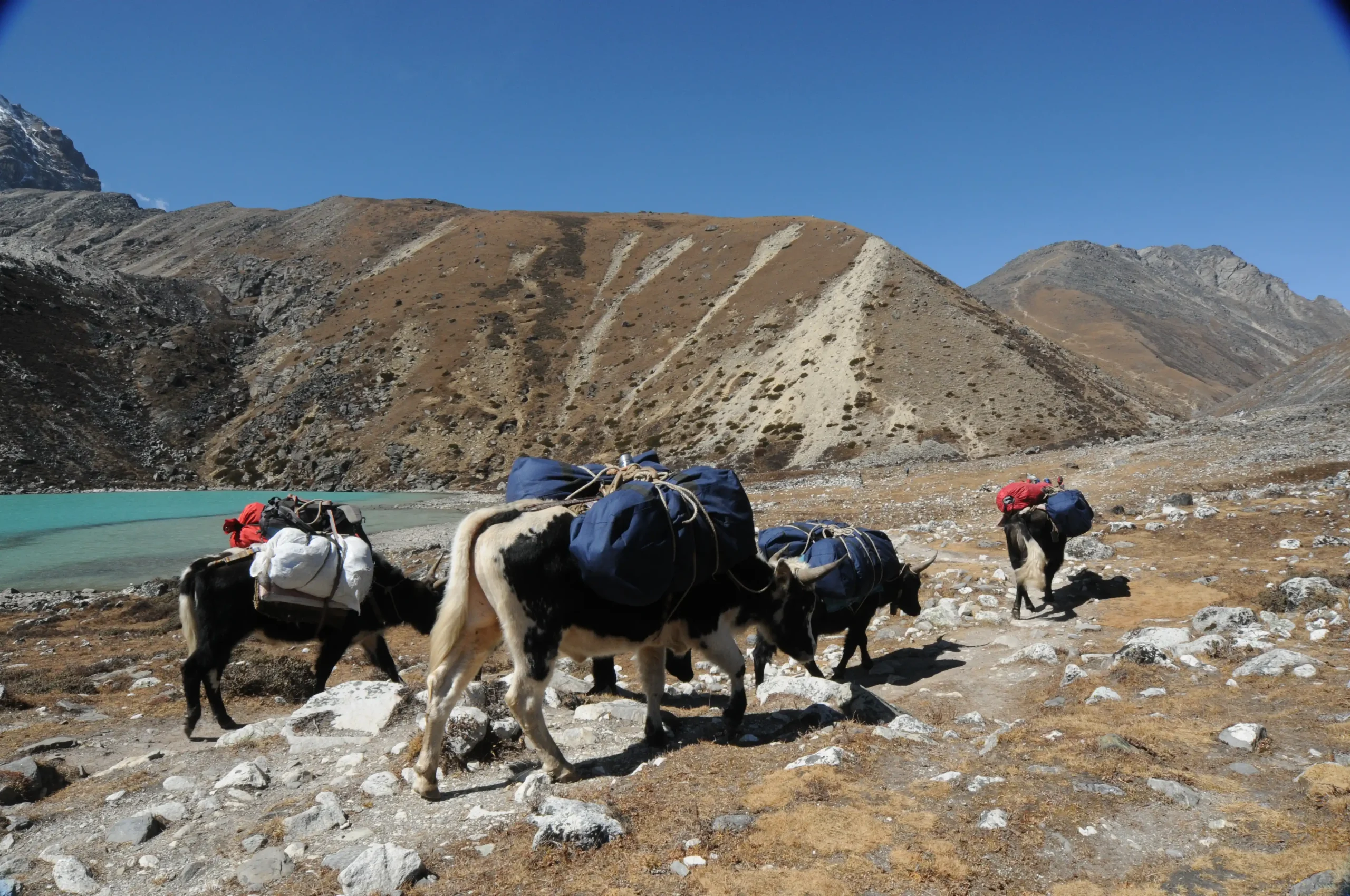
Along the way, you will pass small Sherpa villages, prayer flags, and yak caravans carrying supplies through the mountains. As you gain altitude, the landscape becomes more rugged and alpine, with fewer trees and wider views of the mountains.
After several hours of trekking through peaceful Himalayan scenery, you will reach the quiet village of Dole.
Overnight in Dole.
-
Max. Altitude: 4,200m (13,780 feet)
-
Accommodation: Teahouse or Lodge
-
Meals: Breakfast, Lunch, Dinner
-
Trek Duration: 6-7 hours trek
-
-
Day 06
Trek to Machhermo.
Today’s trek offers spectacular Himalayan scenery with incredible views of Cho Oyu, the world’s sixth-highest mountain. Along the trail, you will also see dramatic glaciers, rocky hillsides, and wide alpine landscapes.
The trail gradually ascends through small settlements, including Luza and Lhafarma. As you gain altitude, the environment becomes more rugged and barren, with fewer trees and more high-altitude vegetation.
Later, you will arrive at Machhermo. Machhermo is known for its beautiful valley scenery and stunning mountain backdrop. This village is also an important stop for acclimatization before continuing higher into the Gokyo region.
Overnight in Machhermo.
-
Max. Altitude: 4,470m (14,665 feet)
-
Accommodation: Teahouse or Lodge
-
Meals: Breakfast, Lunch, Dinner
-
Trek Duration: 4-5 hours trek
-
-
Day 07
Trek to Gokyo Lake.
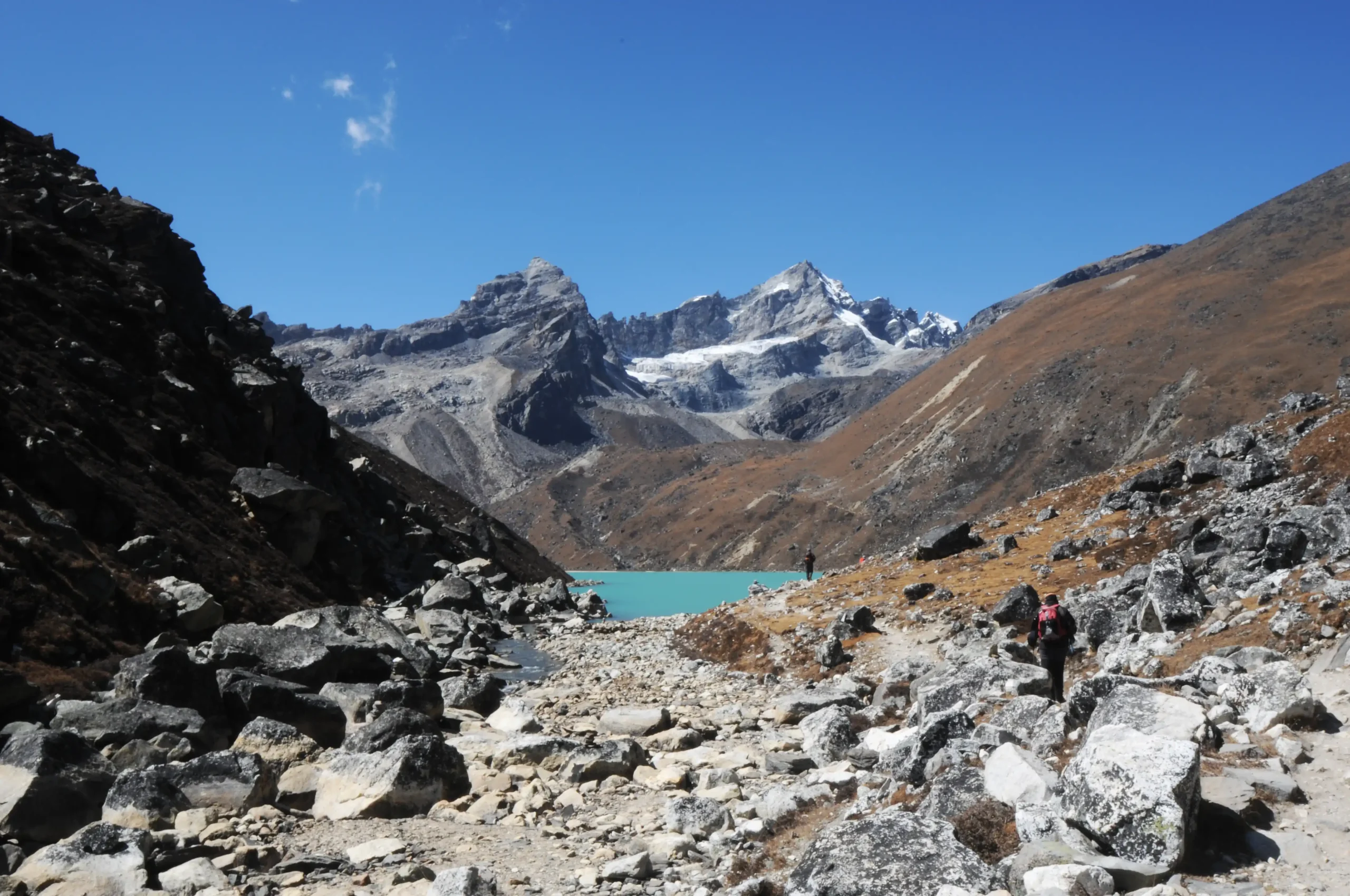
Today is one of the most scenic days of the trek. The route climbs past glacial streams and moraines before reaching the stunning Gokyo Lakes.
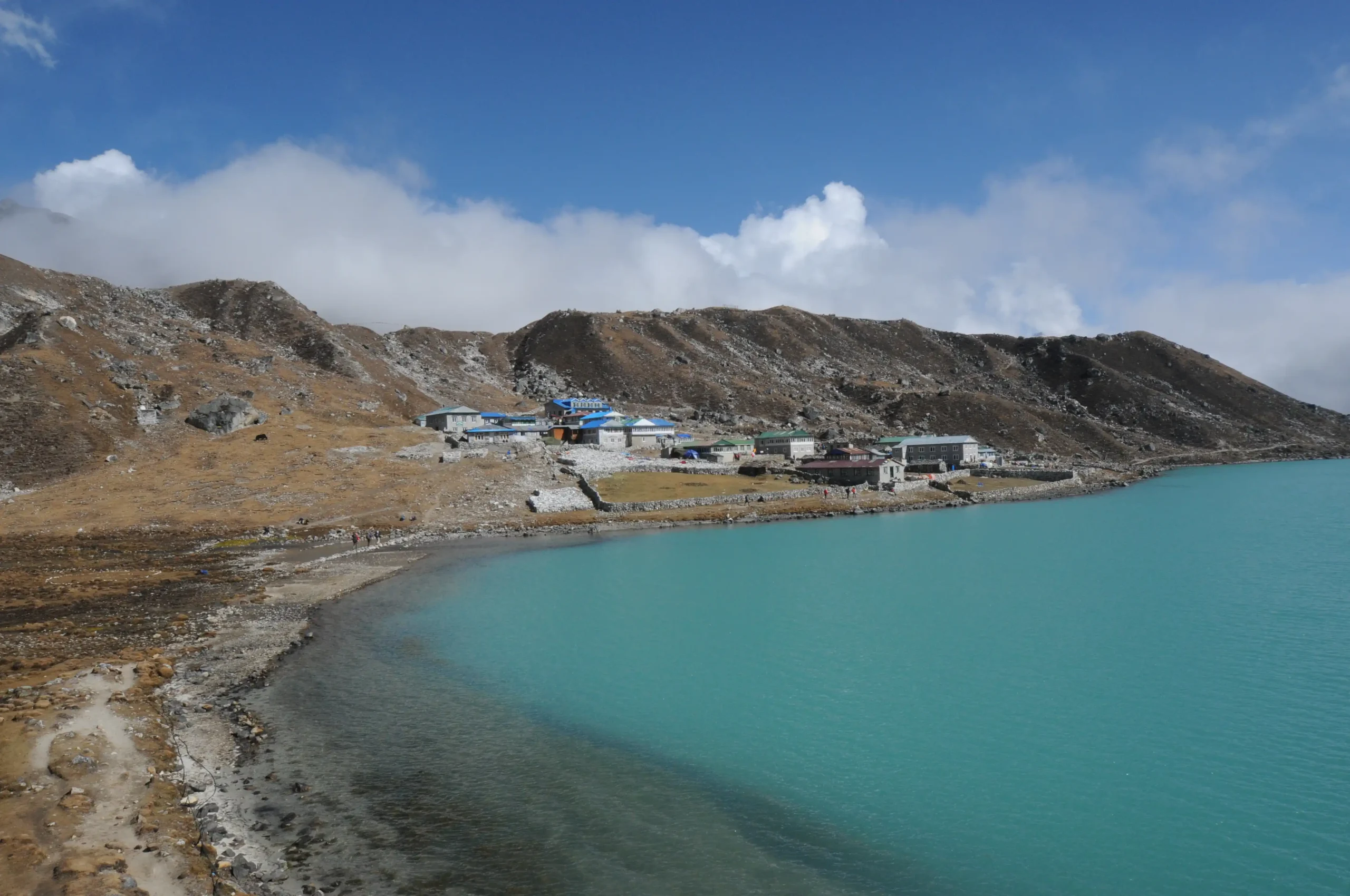
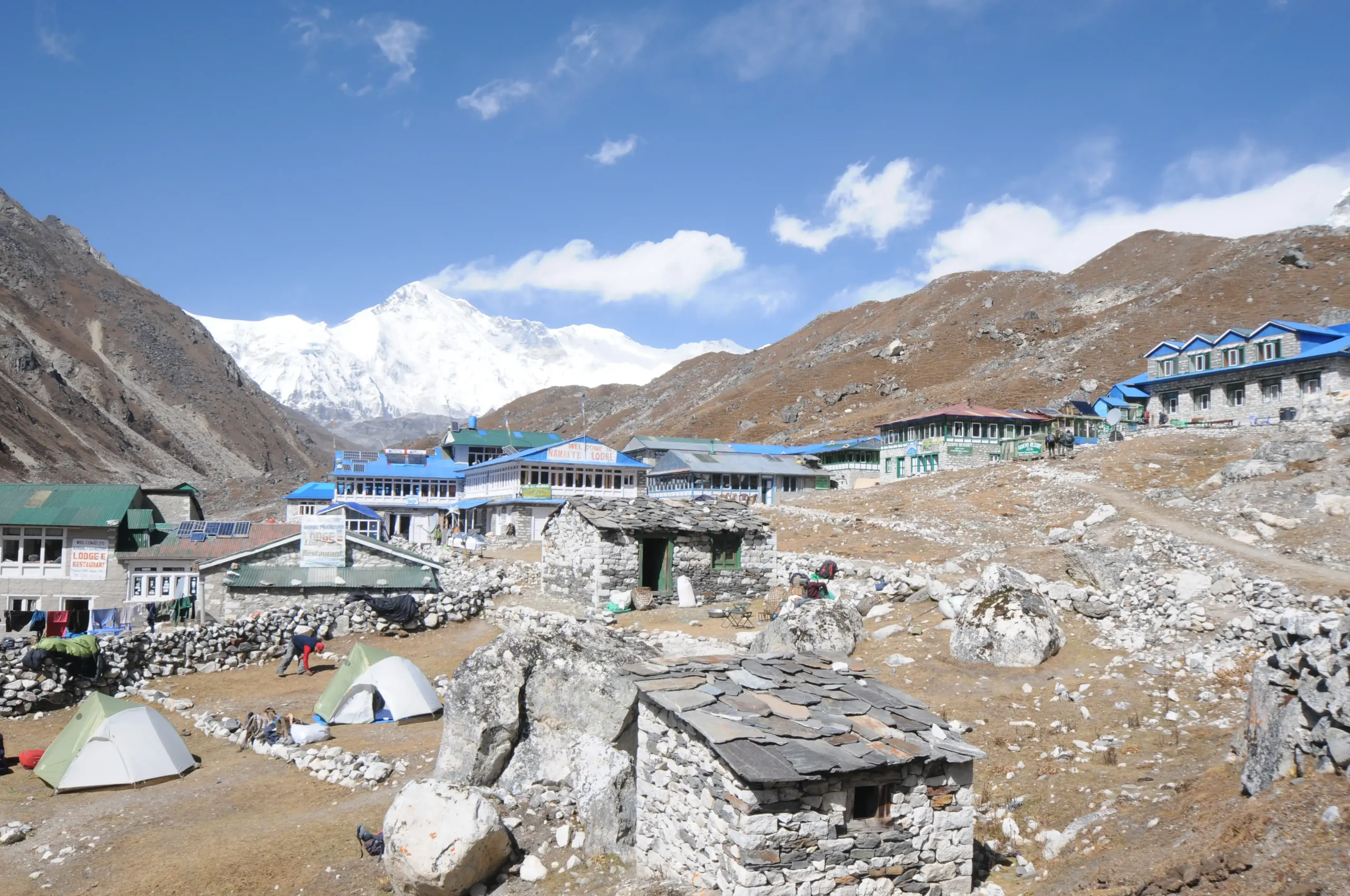
As you approach Gokyo, you will witness turquoise glacial lakes surrounded by towering snow-covered peaks. The contrast between the blue lakes and the white mountains creates some of the most spectacular scenery in the Everest region.
Gokyo village sits beside the third Gokyo Lake and offers magnificent views of Cho Oyu and the massive Ngozumpa Glacier, Nepal’s longest glacier. The trek to Gokyo Lake is also considered one of the most beautiful destinations in the Himalayas.
Overnight at Gokyo.
-
Max. Altitude: 4,800 meters (15,748 feet)
-
Accommodation: Teahouse or Lodge
-
Meals: Breakfast, Lunch, Dinner
-
Trek Duration: 3-4 hours trek
-
-
Day 08
Hike to Gokyo Ri & trek to Thangnak (4,850m).
Early in the morning, you will hike to Gokyo Ri, one of the finest viewpoints in the Everest region. The climb is steep but extremely rewarding.
From the summit, enjoy panoramic views of Everest, Lhotse, Makalu, Cho Oyu, and countless Himalayan peaks. The sunrise views over the Gokyo Lakes and glaciers are unforgettable. As the first golden light slowly touches the peaks, it turns the snow-covered mountains into shades of orange, pink, and gold. The combination of sunlight, lakes, and glaciers creates one of the most beautiful landscapes in the world.
After enjoying quality time at the RI, you then return to Gokyo village and have breakfast. Later, you will trek across the rugged terrain of the Ngozumpa Glacier, and in a few hours through rocky and uneven terrain with icy sections and moraine fields, you reach Thangnak.
Overnight in Thangnak.
-
Max. Altitude: 5,360m (17,585 feet)
-
Accommodation: Teahouse / Lodge
-
Meals: Breakfast, Lunch, Dinner
-
Trek Duration: 6-7 hours trek
-
-
Day 09
Trek to Dzongla (4,830m) via Chola Pass.
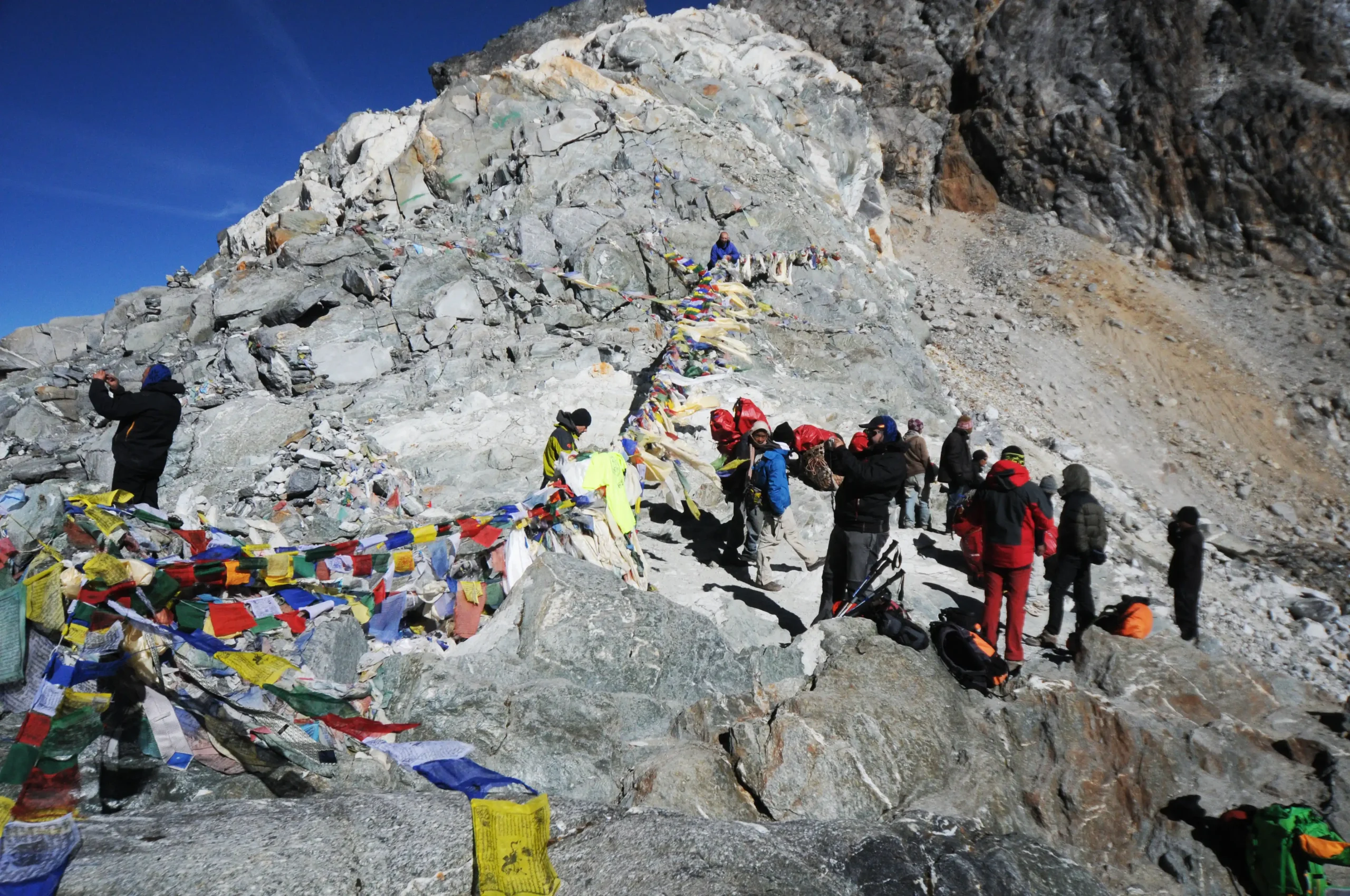
Today is the most challenging and adventurous part of the trek. You will cross the famous Cho La Pass, one of the highest and most exciting mountain passes in the Everest region.
You will start very early in the morning to avoid strong afternoon winds and unstable weather. The trail starts with a steep uphill climb over rocky, loose-stone paths. As you gain altitude, the air becomes thinner, making the walk more physically demanding. You may also cross glacier terrain, where the trail can be slippery and uneven.
Although the climb is difficult, once you reach the top of the Cho La Pass, the view is unforgettable. Dramatic Himalayan peaks, frozen lakes, and stunning glacier views will surround you.
After spending some time at the pass for photos and rest, the trail descends carefully toward Dzongla. Upon arrival in Dzongla, you can relax and enjoy a well-deserved rest after an adventurous day in the Himalayas.
Overnight in Dzongla.
-
Max. Altitude: 5,420 meters (17,782 feet)
-
Accommodation: Teahouse / Lodge
-
Meals: Breakfast, Lunch, Dinner
-
Trek Duration: 7-8 hours trek
-
-
Day 10
Trek to Lobuche.
Today is a shorter trekking day, allowing time for rest and recovery after crossing Cho La Pass.
The trail gradually descends before joining the classic Everest Base Camp route near Lobuche. Along the trail, you will be treated to magnificent views of towering peaks such as Nuptse, Lobuche Peak, and several other snow-covered mountains.
As you approach Lobuche, the landscape becomes more dramatic, with glaciers, rocky ridges, and wide mountain valleys.
Overnight in Lobuche.
-
Max. Altitude: 4,940m (16,207 feet)
-
Accommodation: Teahouse / Lodge
-
Meals: Breakfast, Lunch, Dinner
-
Trek Duration: 2-3 hours trek
-
-
Day 11
Trek to Gorakshep & hike to Everest Base Camp.
Today is one of the biggest highlights of the entire journey. The trail follows rocky glacial terrain toward Gorakshep, the final settlement before Everest Base Camp.
Continuing, you will reach Gorakshep, where you will have lunch and take a short break before continuing to Everest Base Camp.
Later, you will continue toward Everest Base Camp itself. The trail passes beside the Khumbu Glacier with breathtaking mountain scenery all around.
Standing at the foot of the world’s highest mountain is an unforgettable experience and one of the proudest moments of the entire adventure. You will have time to enjoy the atmosphere, take photographs, and celebrate this remarkable accomplishment before returning to Gorakshep.
Overnight in Gorakshep.
-
Max. Altitude: 5,364 meters (17,598 feet)
-
Accommodation: Teahouse / Lodge
-
Meals: Breakfast, Lunch, Dinner
-
Trek Duration: 7-8 hours trek
-
-
Day 12
Hike to Kala Patthar & trek to Pheriche (4,371m).
Early in the morning, before sunrise, you will begin the walk to Kala Patthar, the highest point of the trek and one of the best viewpoints in the Everest region. The climb is steep and challenging because of the high altitude.
As the sun rises over the Himalayas, you will witness breathtaking panoramic views of Mount Everest, Nuptse, Pumori, and many surrounding snow-covered peaks. The golden morning light shining on the mountains creates one of the most spectacular scenes of the entire journey and offers excellent opportunities for photography.
After spending time at Kala Patthar, you will descend back to Gorakshep for breakfast. Later, the trek continues downhill through rocky mountain trails and alpine landscapes toward Pheriche.
Overnight in Pheriche.
-
Max. Altitude: 5,555 meters (18,225 feet)
-
Accommodation: Teahouse / Lodge
-
Meals: Breakfast, Lunch, Dinner
-
Trek Duration: 7-8 hours trek
-
-
Day 13
Trek to Namche Bazaar.
Today is a long but enjoyable trekking day as the trail gradually descends through beautiful alpine valleys, rhododendron forests, and traditional Sherpa villages. The route offers changing landscapes and impressive mountain scenery throughout.
Along the way, you will pass through Tengboche, a peaceful mountain village famous for the historic Tengboche Monastery. This monastery is one of the most important Buddhist monasteries in the Everest region and offers stunning Himalayan views. If time allows, you may have the opportunity to explore the monastery and experience its calm spiritual atmosphere.
As the trek continues downhill, the air becomes richer in oxygen, making breathing easier and walking more comfortable. Later, you will reach Namche Bazaar.
Overnight in Namche Bazaar.
-
Max. Altitude: 3,440m (11,286 feet)
-
Accommodation: Teahouse / Lodge
-
Meals: Breakfast, Lunch, Dinner
-
Trek Duration: 7-8 hours trek
-
-
Day 14
Trek to Lukla.
Today is the final trekking day of your Everest adventure. The trail follows the scenic route alongside the Dudh Koshi River as you make your way back to Lukla.
You will cross suspension bridges, pass through familiar Sherpa villages, and celebrate the successful completion of your Himalayan adventure with your trekking crew.
Overnight in Lukla.
-
Max. Altitude: 2,840m (9,318 feet)
-
Accommodation: Teahouse / Lodge
-
Meals: Breakfast, Lunch, Dinner
-
Trek Duration: 7 hours trek
-
-
Day 15
Fly back to Kathmandu.
Take an early morning flight from Lukla back to Kathmandu. During the flight, enjoy your final aerial views of the Himalayan mountains.
After returning to Kathmandu, you can relax, shop for souvenirs, or explore cultural sites around the city.
Overnight in Kathmandu.
-
Max. Altitude: 1,400m (4,600 feet)
-
Accommodation: 3-star Hotel
-
Meals: Breakfast, Lunch, Dinner
-
Drive duration: 45 minutes’ drive
-
Flight Duration: 20 minutes
-
-
Day 16
Departure from Nepal.
Depending on your flight schedule, you will be transferred to Tribhuvan International Airport for your departure.
Your unforgettable Everest Base Camp with Gokyo Lake adventure comes to an end, leaving you with lifelong memories of the Himalayas, Sherpa culture, and the world’s highest mountains.
-
Meals: Breakfast (Lunch depending on the schedule)
-


Trip notes
It is strongly advised to include additional buffer days in Kathmandu, as the weather in the Himalayas can change rapidly and flights to Tenzing-Hillary Airport are frequently delayed. Travel insurance covering high-altitude trekking and emergency evacuation is strongly recommended.
Trekking poles may make long descents considerably easier on the knees, and packing light with appropriate clothing is preferable to lugging heavy gear. Before departing Kathmandu, make sure you have enough Nepalese currency, as ATMs outside Namche Bazaar are unreliable.
Cost Includes
- Airport picks up and drops off.
- All necessary trekking permits (Sagarmatha National Park Entry Permit, Pasang Lhamu Rural Municipality fee, TIMS, or equivalent).
- Round-trip airfare between Manthali/Kathmandu and Lukla.
- Hotel accommodation in Kathmandu (3-star, twin sharing)
- Teahouse/Lodge accommodation during the trek.
- Three meals a day (breakfast, lunch, dinner) during the trek.
- Professional trekking guide and porter (1 porter for two trekkers).
- Guide and porter insurance, salary, food, and lodging.
- All government and local taxes.
Cost Excludes
- International airfares.
- Nepal entry visa fees.
- All personal expenses, including alcohol & other beverages, trekking equipment, travel insurance, and more.
- Extra expenses during the trek, like hot shower charge, battery charging, Wi-Fi, and any others.
- Tips for the trekking guides and porters.
- Additional hotel stays in Kathmandu if not on the planned itinerary.
- Any expenses not mentioned in the “Includes” section.
Gears and Equipment
You are seeing the list of gears and equipment needed for this trip. Please check the items carefully and make sure you pack everything required for the journey.
The equipment may vary depending on the weather, location, altitude, and activities included in the itinerary. Some special gear may be provided or available for rent if needed.

Head & Face Protection
- Sun cap or hat
- Warm beanie (wool/fleece)
- Neck gaiter/buff
- UV-protection sunglasses (Category 3 or 4)
- Headlamp with spare batteries

Upper Body Clothing (Layer System)
- Moisture-wicking base layer (2–3 sets)
- Fleece or light warm mid-layer
- Insulated down jacket (cold-weather essential)
- Waterproof + windproof outer shell jacket
- Quick-dry trekking t-shirts

Lower Body Clothing
- Trekking pants (lightweight, stretchable)
- Thermal base layer leggings
- Waterproof rain pants

Backpack & Carrying Gear
- Main backpack (40–50L) with rain cover
- Daypack (optional if using porter)
- Dry bags / plastic bags for organization

Hand Protection
- Lightweight inner gloves
- Warm insulated gloves (preferably waterproof)

Footwear & Socks
- Waterproof trekking boots (ankle support, broken-in)
- Camp shoes/sandals
- Warm trekking socks (2–4 pairs)
- Liner socks (blister prevention)

Hygiene & Personal Care
- Sunscreen (high SPF)
- Lip balm with SPF
- Wet wipes
- Hand sanitizer
- Quick-dry towel
- Toilet paper/tissues
- Toothbrush & basic toiletries

Trekking Essentials
- Trekking poles
- Reusable water bottles (2–3L total) or hydration bladder
- Sleeping bag (-5°C to -10°C comfort rating)
- Power bank (10,000–20,000 mAh)
- First aid kit (basic medicines + blister care)
- Water purification tablets or filter

Seasonal Add-ons (Only if needed)
- Winter / High Altitude Treks
- Thicker down jacket
- Warmer sleeping bag (-15°C recommended)
- Microspikes (icy trails)
- Monsoon Season
- Extra rain covers or poncho
- Quick-dry everything
- Waterproof shoe protection

Extra Useful Items
- Snacks/energy bars/electrolytes
- Cash (Nepalese rupees only in most places)
- Phone + camera + charger cables
- Zip-lock bags / dry bags
- Small notebook (optional)
- Earplugs (useful in teahouses)
Trip Map

Additional information
Trekking Permits and Documentation
The package includes the required trekking permits. Based on the current itinerary, these include the Sagarmatha National Park Entry Permit, Khumbu Pasang Lhamu Rural Municipality fee, and TIMS or an equivalent permit, where applicable.
Carry your passport, travel insurance information, emergency contacts, and copies of important documents during the trek.
Your guide will help with permit checks along the route. Permits are checked at entry points such as Monjo before you continue deeper into Sagarmatha National Park.
Understanding the Trek Difficulty
This is a moderate to challenging trek because of its length, high altitude, long walking days, and the Cho La Pass crossing.
Most trekking days involve approximately 5–8 hours of walking, while the Cho La section can take longer depending on trail and weather conditions. The terrain also changes considerably throughout the trek, from forest paths and suspension bridges to rocky trails, glacial landscapes, snow, and high mountain passes.
You do not need to be a mountaineer, but you should be physically prepared for consecutive days of trekking at high altitude.
Preparing Physically for the Trek
Start preparing several weeks before your trip. Regular walking, hiking, jogging, cycling, stair climbing, and strength exercises can help build the endurance required for the route.
Pay particular attention to your legs and cardiovascular fitness because the trek includes long ascents and descents.
If you have previous high-altitude trekking experience, you may find the route more manageable. For first-time high-altitude trekkers, proper preparation and following the guide’s instructions become especially important.
Accommodation Along the Trek
Accommodation is provided in local teahouses and lodges throughout the trekking section, while hotels are used in Kathmandu.
Teahouses are generally simple but comfortable enough for resting after a long day. Rooms are often basic, and shared bathrooms become more common as you move higher.
Many villages offer private rooms, though availability can be limited at higher elevations.
Hot showers and charging facilities are generally available for an additional fee.
Food and Drinking Water
The trek includes three meals a day. Typical meals include dal bhat, noodles, fried rice, pasta, soup, potatoes, eggs, pancakes, and other simple local dishes. Vegetarian food is widely available along the route.
At high altitude, eat enough even if your appetite decreases. For drinking water, use boiled or properly purified water rather than untreated tap or stream water. Carry a reusable bottle or hydration system with enough capacity for approximately 2–3 liters.
Water purification tablets or a suitable filter can be useful.
What to Pack
Packing for this trek requires preparation for a wide range of temperatures.
Essential items include:
- Waterproof and broken-in trekking boots
- Warm trekking socks
- Moisture-wicking base layers
- Fleece or warm mid-layer
- Insulated down jacket
- Waterproof and windproof shell
- Thermal leggings
- Waterproof trekking pants or rain pants
- Warm hat and neck gaiter
- Inner and insulated gloves
- Category 3 or 4 UV-protection sunglasses
- Headlamp and spare batteries
- Trekking poles
- Sunscreen and SPF lip balm
- Personal toiletries
- First-aid and blister-care supplies
- Reusable water bottles or hydration bladder
- Water purification tablets or filter
- Power bank
- Dry bags
- Nepalese cash
- Personal medication
- Sleeping bag suitable for cold high-altitude nights
The current gear list recommends a sleeping bag with approximately -5°C to -10°C comfort rating, with a warmer sleeping bag advisable for winter conditions.
Porter and Baggage
The package includes porter support, with one porter assigned for two trekkers according to the current package details.
Keep your daily essentials in a small daypack that you carry yourself. This should include water, snacks, warm layers, rain protection, sunscreen, camera/phone, documents, and any medication you may need during the day.
Avoid overpacking. A lighter daypack makes long uphill sections and high-altitude walking considerably more comfortable.
Electricity, Wi-Fi and Mobile Connectivity
Wi-Fi and charging facilities are available in many villages, but connectivity becomes less reliable at higher elevations.
Charging normally comes with an additional fee, and Wi-Fi can be slow or intermittent.
Nepal Telecom and Ncell provide coverage in parts of the Everest region, although the signal can weaken in remote sections.
Carry a power bank, especially if you use your phone for photography, communication, or navigation.
Money and Personal Expenses
Carry enough Nepalese cash before heading into the higher Khumbu region.
ATMs are available in Namche Bazaar, but you should not rely on finding reliable ATM services farther along the route.
Additional expenses can include hot showers, charging, Wi-Fi, snacks, drinks, personal purchases, and tips for guides and porters.
Having smaller Nepalese notes can make small purchases easier in mountain villages.
Travel Insurance and Emergency Evacuation
Travel insurance is strongly recommended for this trek and should specifically cover high-altitude trekking.
Because the itinerary reaches 5,555 meters and includes Cho La Pass, your insurance should also cover emergency medical treatment and helicopter evacuation where applicable.
Check the terms of your policy before traveling. Some insurance policies have altitude limits or exclusions for particular trekking activities.
If you feel seriously unwell during the trek, inform your guide immediately. Delaying medical attention at high altitude can make a situation more difficult.
Weather and Trail Conditions
Weather is an important factor throughout the Everest and Gokyo route.
Spring and autumn are the main recommended seasons because conditions are generally more stable and mountain visibility is often better.
Winter trekking is possible, but snow and ice can make Cho La more difficult. Temperatures at high elevations can fall well below freezing, particularly at night.
During the monsoon season, rain, cloudy conditions, wet trails, and possible flight disruptions can affect the journey.
The Cho La crossing should always be approached according to actual trail and weather conditions rather than a fixed expectation.
Lukla Flight Delays and Itinerary Flexibility
Flights to and from Lukla are highly dependent on weather and visibility.
The current itinerary recommends allowing additional buffer days in Kathmandu because flight delays can affect the overall schedule.
If you have an international flight immediately after returning from the mountains, avoid leaving yourself with no flexibility. A delayed Lukla flight can affect connecting travel plans.
Your trekking agency may also adjust the itinerary when weather, trail conditions, or safety require changes.
Photography and Battery Management
This trek offers a huge variety of photographic landscapes.
You can capture Sherpa villages, suspension bridges, monasteries, prayer flags, forests, Gokyo Lakes, glaciers, Cho La, Everest Base Camp, Kala Patthar, and numerous Himalayan peaks.
Early mornings are particularly valuable for mountain photography because visibility is often clearer.
Cold temperatures can reduce battery life, so keep spare batteries or your power bank protected from extreme cold when possible.
Respecting Sherpa Culture
The Everest region is not only a mountain destination but also the home of Sherpa communities with a rich Buddhist cultural tradition.
You will encounter prayer wheels, mani walls, monasteries, chortens, prayer flags, and other religious symbols throughout the route.
Walk around religious monuments in the appropriate direction, avoid touching religious objects unnecessarily, and ask before photographing people during religious activities.
Small acts of respect make your interaction with local communities more meaningful.
Responsible Trekking in Sagarmatha National Park
The route passes through Sagarmatha National Park, an area known for its high Himalayan environment and wildlife.
Help protect the region by avoiding single-use plastics where possible, carrying your personal waste, staying on established trails, and avoiding disturbance to wildlife.
Use water responsibly and avoid throwing waste into rivers, streams, or mountain landscapes.
Supporting local teahouses, guides, porters, and other businesses also contributes to the communities that support tourism in the Khumbu region.
Tipping Guides and Porters
Tipping is not generally a fixed compulsory payment, but it is commonly practiced by trekkers in Nepal. At the end of the trek, you may choose to tip your guide and porter based on the service they provided and your personal budget. Prepare Nepalese cash in advance because card payments are not always practical in mountain villages.
Who Is This Trek Suitable For?
This trek is best suited to travelers with good fitness who are prepared for long days at high altitude.
Previous trekking experience is helpful, particularly because of the Cho La Pass and the overall elevation reached during the journey. However, properly prepared trekkers without extensive previous experience may also undertake the route with appropriate guidance and preparation.
The important point is to understand that this is significantly more demanding than a standard low-altitude hiking trip.
Best Time for the Everest Base Camp with Gokyo Lake Trek
Spring from March to May and autumn from late September to November are the main recommended seasons.
Spring offers warmer conditions, improving trail conditions, and blooming rhododendrons in the lower valleys. Autumn generally brings clear mountain views and stable trekking conditions.
Winter can offer clear skies but requires preparation for severe cold and potentially snowy conditions around Cho La.
Monsoon trekking is possible, but rain, cloud cover, slippery trails, and flight disruptions can make the experience more unpredictable.
A Few Things to Keep in Mind
The Everest Base Camp with Gokyo Lake Trek is a demanding journey because it combines several major high-altitude destinations into one itinerary.
Give yourself time to acclimatize, walk at a comfortable pace, stay hydrated, eat properly, and communicate openly with your guide about how you are feeling.
Do not rush the high sections simply to stay ahead of the schedule. The Gokyo Lakes, Cho La, Everest Base Camp, and Kala Patthar are all important parts of the journey, but reaching them safely should remain the priority.
With good preparation, appropriate equipment, flexible travel plans, and responsible trekking habits, the route allows you to experience both the classic Everest landscape and the quieter beauty of the Gokyo Valley in one complete Himalayan adventure.
FAQs for this trip
General
-
How long is the trek?
The trek takes 16 days, including arrival, departure, flights, acclimatization days, and trekking.
-
What is the highest point of the trek?
The highest point is Kala Patthar (5,555 m). The trek also crosses Cho La Pass (5,420 m) and visits Gokyo Ri (5,357 m).
-
Is this trek suitable for beginners?
This trek is best for trekkers with good fitness. Previous trekking experience is helpful because of the high altitude and Cho La Pass crossing.
-
Why choose the Everest Base Camp with Gokyo Lake Trek?
This trek lets you experience Everest Base Camp, Kala Patthar, Gokyo Lakes, Gokyo Ri, and Cho La Pass in one unforgettable journey. It is more scenic and less crowded than the classic Everest Base Camp route.
Difficulty and Physical Fitness
-
How difficult is the Everest Base Camp with Gokyo Lake Trek?
The trek is moderate to challenging because of the high altitude, long walking days, and crossing of Cho La Pass.
-
How many hours do we walk each day?
You will usually walk 5 to 8 hours each day. The Cho La Pass day may take a little longer.
-
Do I need previous trekking experience?
It is recommended. While beginners can complete the trek with good preparation, previous trekking experience makes the journey easier.
-
How should I prepare for the trek?
Practice hiking, walking, jogging, cycling, or climbing stairs for several weeks before your trip. Building stamina and leg strength will help.
-
Is Cho La Pass difficult?
Yes. Cho La Pass is one of the most challenging parts of the trek because it includes steep, rocky, and sometimes snowy trails.
Altitude and Health
-
Can I get altitude sickness?
Yes. Since the trek reaches 5,555 meters, altitude sickness is possible.
-
How can I avoid altitude sickness?
Walk slowly, drink plenty of water, eat healthy meals, and follow your guide’s instructions.
-
Are acclimatization days included?
Yes. The itinerary includes acclimatization days at Namche Bazaar and Dingboche to help your body adjust safely.
-
Do I need travel insurance?
Yes. Travel insurance that covers high-altitude trekking and emergency helicopter evacuation is highly recommended.
-
What happens if I feel unwell?
Inform your guide immediately. They will monitor your condition and arrange medical assistance or evacuation if necessary.
Route and Itinerary
-
Where does the trek start and end?
The trek starts and ends in Lukla, with scenic flights from and back to Kathmandu.
-
Which places do we visit?
You’ll visit Lukla, Phakding, Namche Bazaar, Dole, Machhermo, Gokyo, Gokyo Ri, Cho La Pass, Dzongla, Lobuche, Gorakshep, Everest Base Camp, Kala Patthar, Pheriche, Tengboche, and Lukla.
-
Do we visit Everest Base Camp?
Yes. You’ll trek to Everest Base Camp and also hike to Kala Patthar for the best close-up view of Mount Everest.
-
Do we visit Gokyo Lakes?
Yes. You’ll explore the beautiful turquoise Gokyo Lakes and hike to Gokyo Ri for panoramic Himalayan views.
-
Can the itinerary be customized?
Yes. The itinerary can be customized based on your fitness level, schedule, and travel plans.
Accommodation
-
Where will I stay during the trek?
You’ll stay in hotels in Kathmandu and comfortable teahouses during the trek.
-
Are private rooms available?
Private rooms are available in many villages but may not always be available at higher elevations.
-
Are hot showers available?
Yes. Most teahouses offer hot showers for an additional fee.
-
Do I need a sleeping bag?
Yes. A warm sleeping bag is highly recommended, especially above 4,000 meters.
Food and Drinks
-
What meals are available?
You’ll enjoy Dal Bhat, noodles, fried rice, pasta, soup, potatoes, eggs, pancakes, tea, coffee, and other local meals.
-
Is vegetarian food available?
Yes. Vegetarian meals are available at almost every teahouse.
-
Is drinking water safe?
Drink boiled or purified water instead of untreated tap water.
-
Can I buy snacks during the trek?
Yes. Most villages have shops selling chocolates, biscuits, energy bars, and soft drinks, although prices increase with altitude.
Weather and Best Time
-
When is the best time for this trek?
The best seasons are spring (March to May) and autumn (September to November) when the weather is stable and mountain views are clear.
-
Can I trek during winter?
Yes. Winter trekking is possible, but snow can make Cho La Pass more difficult.
-
Is the trek possible during the monsoon?
Yes, but rain, slippery trails, cloudy skies, and possible Lukla flight delays can affect your trip.
-
How cold does it get?
Temperatures at higher elevations can fall below -15°C, especially during the night.
Permits and Regulations
-
What permits are required?
You need the Sagarmatha National Park Entry Permit and the Khumbu Pasang Lhamu Rural Municipality Permit.
-
Are permits included in the package?
Yes. All required trekking permits are included in the package.
-
Do I need a guide?
Yes. A licensed guide is highly recommended, especially for crossing Cho La Pass safely.
Flights and Transportation
-
How do I reach the trekking starting point?
You will take a scenic flight from Kathmandu (or Manthali during peak seasons) to Lukla.
-
How do I return after the trek?
After completing the trek, you’ll fly from Lukla back to Kathmandu.
-
Can Lukla flights be delayed?
Yes. Weather conditions in the Himalayas can sometimes delay or cancel flights, so it’s a good idea to keep one or two extra days in your travel plan.
Equipment and Packing
-
What should I pack?
Bring warm layered clothing, trekking boots, a down jacket, waterproof clothing, gloves, a warm hat, sunglasses, sunscreen, trekking poles, and a reusable water bottle.
-
Can I rent trekking gear?
Yes. Trekking gear such as sleeping bags, down jackets, and trekking poles can be rented in Kathmandu.
-
Do I need trekking poles?
Yes. Trekking poles are very helpful for steep climbs, descents, and crossing Cho La Pass.
Connectivity and Electricity
-
Is Wi-Fi available?
Yes. Many teahouses provide Wi-Fi, but the connection may be slow at higher elevations.
-
Can I charge my phone or camera?
Yes. Charging facilities are available in most villages, usually for an additional fee.
-
Is there mobile network coverage?
Yes. Nepal Telecom and Ncell have coverage in many parts of the Everest region, but the signal may be weak in remote areas.
Guides and Porters
-
Is a guide included?
Yes. A professional licensed trekking guide is included in the package.
-
Can I hire a porter?
Yes. Porters are available to carry your luggage and make the trek more comfortable.
-
Why should I hire a porter?
A porter reduces your physical effort, allowing you to enjoy the trek while supporting the local community.
Cost and Booking
-
What is included in the package?
The package includes airport transfers, domestic flights, accommodation, meals during the trek, permits, a professional guide, porter support, and government taxes.
-
What is not included?
International flights, Nepal visa fees, travel insurance, personal expenses, drinks, hot showers, Wi-Fi charges, and tips are not included.
-
When should I book this trek?
Booking 2 to 3 months in advance is recommended, especially for spring and autumn departures.
-
Is a deposit required?
Yes. A deposit is required to confirm your booking and arrange permits and flights.
Photography and Experience
-
Is the Everest Base Camp with Gokyo Lake Trek good for photography?
Yes. The trek offers incredible views of snow-capped mountains, glaciers, turquoise lakes, Sherpa villages, monasteries, and suspension bridges.
-
Which mountains can I see?
You can enjoy spectacular views of Mount Everest, Lhotse, Makalu, Cho Oyu, Ama Dablam, Nuptse, Pumori, Thamserku, Cholatse, and many other Himalayan peaks.
-
What makes this trek special?
This trek combines Everest Base Camp, Gokyo Lakes, Gokyo Ri, Kala Patthar, and Cho La Pass in one adventure, giving you a more complete Everest experience than the standard EBC trek.
-
What are the highlights of the trek?
The main highlights include Everest Base Camp, Kala Patthar sunrise, Gokyo Lakes, Gokyo Ri, Cho La Pass, Namche Bazaar, Sherpa culture, and breathtaking Himalayan scenery.







USD 1,565PP
Why book with us?
- Local Guides & Porters
- 98% Success Trip Rate
- Comfort Priority and Saftey Trip
- Satisfied Client
-
Group Size Discounts
Discounts are solely based on your group size. We don’t add anyone to the group.
No. of people Price per person 1 pax USD 1750 2-6 pax USD 1565 7+ pax USD 1500
Send Quick Email
Similar trips
View all trips
Makalu Base Camp Trek – 20 Days
Explore the Makalu Base Camp Trek in Nepal with our 20-day Himalayan adventure package.
Royal Trek Nepal – 10 Day Trekking Package
Explore Royal Trek Nepal with Himalayan scenery, cultural sightseeing, and authentic village experiences.
Nar Phu Valley Trek
Experience remote Nar Phu Valley with Kang La Pass, culture, and Himalayan adventure.