Experience mountain trails, local culture, high-altitude landscapes, and the peaceful atmosphere of the Langtang Valley, with a scenic helicopter ride providing an exciting finish to the journey.
Langtang Valley Trek with Heli Return – 08 days
Why book with us?
- Local Guides & Porters
- 98% Success Trip Rate
- Comfort Priority and Saftey Trip
- Satisfied Client
Send Quick Email

Duration
08 Days

Max Alitiude
4,800m at Kyanjin Ri

Transportation
Tourist Bus / Shared Jeep and Helicopter

Trip Grade
Moderate

Activity
Heli Return

Start/End Point
Syabrubesi / Kyanjin Gompa

Best Season
Spring (March - April) & Autumn (October- November)

Meals
Full board during trek (Breakfast, Lunch, Dinner)

Accommodation
Hotels (Kathmandu), Teahouses during trek
Trip Overview
The Langtang Valley Trek with Heli Return is a great way to experience the Himalayas in just 9 days. The journey takes you from the busy streets of Kathmandu into quiet mountain trails, traditional villages, and the high alpine landscapes around Kyanjin Gompa. You’ll spend your days walking through changing scenery, meeting local people, and enjoying the slower pace of life in the mountains.
The adventure begins with a scenic drive from Kathmandu to Syabrubesi. From Syabrubesi, the trail follows the Langtang Khola through oak, pine, and rhododendron forests. As you walk, you will feel the gradual increase in elevation and pass through suspension bridges, waterfalls, and peaceful riverside sections.
During your whole trek period in the Langtang region, you’ll stay in local teahouses and experience the warm hospitality of the Tamang and Sherpa communities. Moments like sharing a simple meal, chatting with locals, and watching daily life unfold in small mountain settlements can be just as memorable as the mountain views. You will also pass through Langtang Village, which was devastated by the 2015 earthquake. Today, the resilient local community has rebuilt its homes and lives, bringing new life to this remote Himalayan valley.
As you climb higher, the forests slowly disappear, and the landscape becomes more open and rugged. Kyanjin Gompa is a highlight of the trek, with beautiful views of snow-covered peaks and glaciers. You can explore the area or take an optional hike to Kyanjin Ri or Tserko Ri for even better views of Langtang Lirung and the surrounding mountains.
The return journey is another memorable part of the trip. Instead of walking all the way back to Syabrubesi the same way, you’ll take a helicopter flight from the Kyanjin Gompa to Kathmandu. From the air, you can enjoy beautiful views of the forests, villages, valleys, and mountains you passed along the way.
Overall, this trek gives you a genuine taste of Himalayan trekking in Nepal without requiring a long itinerary. You’ll experience mountain trails, local culture, high-altitude landscapes, and the peaceful atmosphere of the Langtang Valley, with a scenic helicopter ride providing an exciting finish to the journey.
Trip Highlights
- Experience a memorable helicopter flight from Kyanjin Gompa to Kathmandu.
- Visit Langtang Village and learn about life in this remote Himalayan region.
- Enjoy a scenic drive from Kathmandu through Nepal’s beautiful hill country.
- Walk through peaceful forests filled with oak, rhododendron, pine, and other Himalayan vegetation.
- Experience the traditional lifestyle and warm hospitality of local Tamang and Sherpa communities.
- Explore the peaceful surroundings of Kyanjin Gompa.
- Choose between the scenic Kyanjin Ri hike or the more challenging Tserko Ri adventure.
- Enjoy spectacular views of Langtang Lirung and other Himalayan peaks from the Kyanjin Ri or Tserko Ri.
- See glaciers, high mountain valleys, and rugged Himalayan landscapes up close.
When to visit
J
F
M
A
M
J
J
A
S
O
N
D
- Average time to visit
- Best time to visit
- Good time to visit
Outline Itinerary
- Day 01: Arrive at Tribhuwan International Airport and transfer to the hotel.
- Day 02: Kathmandu to Syabrubesi (1,550m) by jeep/bus.
- Day 03: Trek to Lama Hotel.
- Day 04: Trek to Langtang Village.
- Day 05: Trek to Kyanjin Gompa.
- Day 06: Hike to Kyanjin Ri or Tserko Ri (4,800m-5,033m) and back to Kyanjin Gompa.
- Day 07: Fly back to Kathmandu by Helicopter.
- Day 08: Departure
Trip Itinerary
-
Day 01
Arrive at Tribhuwan International Airport and transfer to the hotel.
Welcome to Nepal!
Once you arrive at Tribhuvan International Airport, our representative will meet you outside the terminal and take you to your hotel in Kathmandu.
After checking in, you can relax for a while. Depending on your arrival time and energy level, you can also take a short walk around the nearby streets and get your first taste of Kathmandu.
Your guide will provide information about the trek and help you make any final preparations before heading to the Langtang region.
Overnight in Kathmandu.
-

Max. Altitude: 1,400m (4,600 feet)
-

Accommodation: 3-star Hotel
-
Meals: Dinner
-
-
Day 02
Kathmandu to Syabrubesi (1,550m) by jeep/bus.
After an early breakfast, you will leave Kathmandu and begin your journey toward Syabrubesi.
As you leave the Kathmandu Valley, the busy city gradually fades away, and you will pass through green hills, terraced farmland, small villages, rivers, and winding mountain roads.
The road becomes increasingly mountainous as you approach Syabrubesi. Although the drive can be bumpy in places, it gives you a wonderful introduction to the landscapes you’ll be exploring on foot over the coming days.
Once we reach Syabrubesi, check into your lodge, enjoy dinner, and get some rest before your first trekking day.
Overnight in Syabrubesi.
-
Max. Altitude: 1,550m (5,085 feet)
-
Accommodation: Teahouse / Lodge
-
Meals: Breakfast, Lunch, Dinner
-
Drive duration: 7-8 hours’ drive
-
-
Day 03
Trek to Lama Hotel.
Today, your trekking adventure officially begins.
After breakfast, we follow the trail along the Langtang Khola. The route gradually climbs through beautiful forests, and you’ll hear the sound of the river flowing below as you make your way deeper into the valley.
The trail passes through lush vegetation, suspension bridges, small settlements, and peaceful forest sections. Depending on the season, you may see colorful rhododendron flowers along the trail. As you gain altitude, the surroundings become quieter and more mountainous.
After several hours on the trail, you will arrive at Lama Hotel. Lama Hotel is a small settlement surrounded by dense forest, and it is your first night on the trekking trail. Here you will get to know the hospitality of the teahouses along the trail and also the people in your trekking group.
Overnight in Lama Hotel.
-
Max. Altitude: 2,470m (8,104 feet)
-
Accommodation: Teahouse or Lodge
-
Meals: Breakfast, Lunch, Dinner
-

Trek Duration: 6-7 hours trek
-
-
Day 04
Trek to Langtang Village.
Today, the landscape starts to change noticeably.
You will continue walking through the forest and follow the Langtang Khola river. The trail gradually climbs higher, and the valley begins to open as you leave the denser forest behind.
Along the way, you’ll pass small settlements and traditional teahouses where you can take a short break, enjoy a drink, and chat with local people.
As you approach Langtang Village, the surrounding mountains become more visible and impressive. Langtang Village is one of the most important settlements in the valley. The area is home to communities with strong Tamang and Tibetan cultural influences, and you’ll notice traditional architecture, prayer flags, mani walls, and other reminders of the region’s Himalayan heritage.
Overnight in Langtang Village.
-
Max. Altitude: 3,430m (11,253 feet)
-
Accommodation: Teahouse or Lodge
-
Meals: Breakfast, Lunch, Dinner
-
Trek Duration: 5-6 hours trek
-
-
Day 05
Trek to Kyanjin Gompa.
Today is a shorter trekking day, but it is one of the most scenic.
After breakfast, you will continue toward Kyanjin Gompa. As you walk higher, the landscape becomes increasingly alpine. The trees become smaller, the valley opens up, and the surrounding mountains appear much closer.
You’ll pass through small settlements and open mountain terrain before finally reaching Kyanjin Gompa. At around 3,870 meters, Kyanjin Gompa is surrounded by an impressive collection of Himalayan peaks.
Depending on the weather and visibility, you can see mountains such as Langtang Lirung and other snow-covered peaks rising around the valley.
Overnight in Kyanjin Gompa.
-
Max. Altitude: 3,870m (12,697 feet)
-
Accommodation: Teahouse or Lodge
-
Meals: Breakfast, Lunch, Dinner
-
Trek Duration: 3-4 hours trek
-
-
Day 06
Hike to Kyanjin Ri or Tserko Ri (4,800m-5,033m) and back to Kyanjin Gompa.
Today is likely to be one of the most memorable days of your entire trek.
You’ll wake up early and prepare for a high-altitude hike above Kyanjin Gompa.
You have two options:
Option 1: Kyanjin Ri – 4,800m
Kyanjin Ri is the more accessible of the two options.
The climb is still physically demanding due to the altitude, but you will enjoy an incredible panoramic view of the Langtang Valley and surrounding Himalayan peaks.
From this viewpoint, you can look across the rugged mountain landscape, glaciers, deep valleys, and snow-covered peaks.
You will spend your time at the viewpoint, enjoy the scenery, and capture some photographs. Then you start to descend back to camp.
Option 2: Tserko Ri – approximately 5,033m
If you are seeking a more challenging experience, Tserko Ri is the higher, more demanding option.
The ascent requires more effort and takes longer, especially at higher altitudes. However, on a clear day, the views from the top are spectacular.
From the summit area, you can enjoy a much wider perspective of the Langtang Himalayan range and surrounding high-altitude landscapes.
After spending time enjoying the views, you’ll descend carefully back to Kyanjin Gompa.
Overnight in Kyanjin Gompa.
-
Max. Altitude: 4,800m (15,748 feet)
-
Accommodation: Teahouse or Lodge
-
Meals: Breakfast, Lunch, Dinner
-
Trek Duration: 5-6 hours trek
-
-
Day 07
Fly back to Kathmandu by Helicopter.
Today, you can leave the trekking trail behind in style.
After breakfast, you’ll prepare for your helicopter flight to Kathmandu. Instead of walking and driving back along the same trail, the helicopter takes you directly to Kathmandu, offering a completely different perspective of the region.
As the helicopter rises above the valley, you’ll be able to look down over the forests, rivers, villages, trails, and dramatic Himalayan terrain you experienced on foot.
It’s a fantastic way to finish your Langtang adventure and gives you a chance to appreciate just how remote and spectacular the region really is.
After landing in Kathmandu, you’ll be transferred to your hotel.
The rest of the day is free to relax, enjoy a comfortable shower, explore Kathmandu, or rest after your trek.
Overnight in Kathmandu.
Note: Helicopter operations depend on weather, visibility, landing conditions, air traffic, and operational requirements. In the event of unsuitable conditions, the flight may be delayed, or an alternative arrangement may be necessary.
-
Max. Altitude: 1,400m (5,085 feet)
-
Accommodation: Standard Hotel
-
Meals: Breakfast, Lunch, Dinner
-

Flight Duration: 30–40 minutes Heli return
-
-
Day 08
Departure
Your Himalayan adventure comes to an end today.
After breakfast, our representative will transfer you to Tribhuvan International Airport in accordance with your flight schedule.
It’s time to say goodbye to Nepal, but hopefully not for long.
Take home your photographs, memories, and stories from the Langtang Valley, and perhaps start to plan your next Himalayan adventure.
-
Meals: Breakfast
-


Trip notes
The Langtang Valley Trek is moderately challenging, so good physical fitness and proper trekking gear are recommended. The weather in the mountains can change quickly, particularly at higher elevations, so it is advisable to start trekking early and follow the guide’s instructions. You should carry sufficient water, warm clothing, sun protection, and basic personal medicines.
The helicopter’s return from Kyanjin Gompa is subject to weather, visibility, and flight conditions; if conditions are unfavorable, the flight may be delayed or rescheduled. It is therefore recommended to keep some flexibility in the itinerary and follow the local guide’s advice throughout the trek.
Cost Includes
- Airport picks up and drops off.
- All necessary trekking permits (Langtang National Park Entry Permit, TIMS, or equivalent).
- Helicopter return from Kyanjin Gompa to Kathmandu as specified in the itinerary.
- Hotel accommodation in Kathmandu and Syabrubesi (twin sharing)
- Teahouse/Lodge accommodation during the trek.
- Three meals a day (breakfast, lunch, dinner) during the trek.
- Professional trekking guide and porter (1 porter for two trekkers).
- Guide and porter insurance, salary, food, and lodging.
- All government and local taxes.
Cost Excludes
- International airfares.
- Nepal entry visa fees.
- All personal expenses, including alcohol & other beverages, trekking equipment, travel insurance, and more.
- Extra expenses during the trek, like hot shower charge, battery charging, Wi-Fi, and any others.
- Tips for the trekking guides and porters.
- Additional hotel stays in Kathmandu, or Syabrubesi, if not on the planned itinerary.
- Any expenses not mentioned in the “Includes” section.
Additional information
Trekking Permits and Documentation
Langtang is protected by Langtang National Park, so trekkers need the applicable national park entry permit and local trekking documentation for the route.
Arrange the required permits and fees as part of your trekking preparation. Keep your passport and other important travel documents safe throughout the journey, as permit checks can occur along the route.
It is also useful to keep digital copies of your passport, travel insurance, emergency contacts, and other important documents.
Understanding the Langtang Valley Route
The classic Langtang Valley route generally follows the Langtang River from the lower hills toward the upper valley.
The trail passes through places such as Syabrubesi, Lama Hotel, Langtang Village, and Kyanjin Gompa. As you gain elevation, the landscape changes from dense forests and river valleys to alpine meadows, rocky terrain, glaciers, and high mountain surroundings.
The route is relatively close to Kathmandu compared with many other Himalayan trekking areas, but that does not mean the trek should be underestimated. The upper valley reaches significant altitude, and the final sections require proper pacing and acclimatization.
Walking Through the Langtang Forests
One of the most enjoyable parts of the Langtang trek is the gradual change in vegetation.
Lower sections of the trail pass through forests containing rhododendron, oak, bamboo, and other Himalayan vegetation. You will cross suspension bridges, walk alongside the Langtang River, and pass through small mountain settlements.
Depending on the season, the forest can look very different. Spring brings colorful rhododendron blooms, while the monsoon period creates particularly green landscapes.
Take your time through these sections rather than treating the trail only as a route toward the higher mountains.
Lama Hotel and the Gradual Climb
Lama Hotel is an important stop on the route and marks the transition from the lower forest environment to the higher Langtang Valley.
From this area, the trail continues to gain elevation. The walking can become more demanding, particularly where the path climbs steeply through the forest.
Maintain a comfortable pace and avoid trying to cover the trail too quickly. A slow and consistent rhythm is especially useful as you begin gaining altitude.
Langtang Village and Tamang Culture
Langtang Valley is home to Tamang communities whose traditions, language, architecture, Buddhist practices, and mountain lifestyle are an important part of the trekking experience.
Langtang Village provides an opportunity to see how local communities live in this high Himalayan environment.
As you walk through the villages, you may notice traditional stone houses, prayer flags, mani walls, chortens, and Buddhist symbols.
Treat these cultural elements with respect and ask permission before photographing people, homes, ceremonies, or religious activities.
Kyanjin Gompa and the Upper Langtang Valley
Kyanjin Gompa is one of the main highlights of the trek. Located at around 3,870 meters, the settlement is surrounded by dramatic Himalayan peaks and alpine landscapes.
The area provides views toward Langtang Lirung, Dorje Lakpa, Yala Peak, and other surrounding mountains.
The environment here is noticeably different from the lower sections of the trek. Trees become sparse, the terrain is more open, and the surrounding mountains feel much closer.
Kyanjin Ri and High-Altitude Hiking
Kyanjin Ri is one of the major viewpoints in the area and reaches approximately 4,800 meters.
The climb is optional and depends on your physical condition, weather, and the itinerary arranged by your trekking team. The higher you climb, the more noticeable the effects of altitude become.
Do not rush the ascent. Take regular breaks, drink water, and follow your guide’s advice. If you feel unwell, communicate immediately rather than trying to push through symptoms.
The reward is a panoramic view across the Langtang Valley and surrounding Himalayan peaks when weather conditions are clear.
Altitude and Acclimatization
Altitude is an important consideration even though the Langtang trek is shorter than many popular Himalayan treks.
The itinerary moves from Kathmandu to high mountain elevations within a limited number of days, so you need to pay attention to how your body responds.
Common mild altitude symptoms can include headache, tiredness, reduced appetite, dizziness, or disturbed sleep. More serious symptoms require immediate attention.
Walk slowly, stay hydrated, eat regular meals, and avoid unnecessary physical exertion at higher elevations.
Your guide should be informed about any unusual or worsening symptoms so that the trekking plan can be adjusted if necessary.
Physical Preparation
The Langtang Valley Trek does not require technical climbing skills, but you should be comfortable walking for several hours on consecutive days.
The trail includes uphill and downhill sections, stone steps, uneven paths, suspension bridges, and sections that can become slippery in wet or snowy conditions.
Before your trip, regular walking, hiking, stair climbing, and cardiovascular exercise can help improve your endurance.
If you are not accustomed to mountain walking, start preparing several weeks before your trek rather than relying on fitness gained during the journey.
Accommodation During the Trek
Accommodation along the Langtang route is generally provided in local teahouses and lodges.
Facilities are more basic than city hotels, particularly at higher elevations. Rooms are usually simple, and bathroom facilities may be shared depending on the location.
Some lodges provide hot showers, Wi-Fi, and charging facilities, but these services may cost extra and are not guaranteed everywhere.
The main advantage of staying in local teahouses is the opportunity to experience the hospitality and daily rhythm of Himalayan communities.
Food and Drinking Water
Meals during the trek are generally served at the teahouses along the route.
Common options include dal bhat, noodles, pasta, soups, potatoes, eggs, rice, bread, vegetables, and other simple trekking meals.
Dal bhat is particularly practical because it provides carbohydrates, protein, and energy for long walking days.
Drink enough water throughout the trek. Treated, filtered, or purified water is preferable to drinking directly from natural streams.
A reusable water bottle or hydration system is recommended.
Weather and Trail Conditions
Weather in Langtang can change quickly as you gain elevation.
Lower sections may be relatively warm during the day, while Kyanjin and higher viewpoints can be cold, particularly in the morning and evening.
Snow, rain, fog, wind, and slippery trails may occur depending on the season. Even during favorable trekking months, mountain weather is unpredictable.
Your guide may change the walking schedule or helicopter arrangements when weather conditions make the original plan unsuitable.
What to Pack
Because this trek reaches around 4,800 meters, proper clothing and equipment are important.
Your packing list should include:
- Comfortable trekking boots
- Warm thermal layers
- Fleece or insulating layer
- Warm/down jacket
- Waterproof jacket
- Trekking trousers
- Warm gloves
- Wool or thermal socks
- Warm hat and sun hat
- Sunglasses with UV protection
- Sunscreen and lip balm
- Headlamp
- Reusable water bottles
- Water purification tablets or filtration option
- Personal medicines
- Basic first-aid supplies
- Power bank
- Trekking poles
- Sleeping bag suitable for cold conditions
- Lightweight daypack
- Passport and permits
Pack according to the season, but always be prepared for cold weather at higher elevations.
Porter and Daypack
A porter can carry your larger trekking baggage, allowing you to walk with a lighter daypack.
Your daypack should contain the things you may need during the day, such as water, snacks, sunscreen, a camera, rain protection, warm layers, medicines, and important documents.
Keep valuables, electronics, passports, and other important personal items with you.
Electricity, Charging and Wi-Fi
Electricity is available in many Langtang teahouses, but access can be limited and charging may cost extra.
Wi-Fi or mobile connectivity may also be available in some villages, but the connection can be slow or unreliable.
Do not depend on the internet throughout the trek. Download important maps, documents, and travel information before leaving Kathmandu.
A power bank is highly recommended, especially if you use your phone for photography and navigation.
Money and Personal Expenses
Carry sufficient Nepali cash before heading into the Langtang region.
You may need additional money for hot showers, charging, Wi-Fi, snacks, drinks, extra accommodation expenses, or other personal purchases.
Do not assume that card payments or ATMs will be available in the upper valley.
Keep your cash divided between a few secure locations rather than storing everything in one place.
Helicopter Return from Langtang
The helicopter return is one of the main features of this itinerary.
After completing the trekking portion, the helicopter provides a much faster way to return toward Kathmandu compared with walking the entire route back to the roadhead.
It also offers a unique aerial perspective of the Langtang Valley, forests, ridges, villages, and Himalayan peaks.
However, helicopter flights are highly dependent on weather, visibility, wind, landing conditions, aircraft availability, and operational factors. A scheduled helicopter return should therefore not be treated as completely guaranteed at a specific time.
Your trekking team will coordinate the flight according to the actual conditions.
Helicopter Safety and Flexibility
Mountain helicopter operations require suitable weather and visibility. If conditions are not appropriate for flying, the flight may be delayed or rescheduled.
For this reason, maintaining some flexibility in your overall travel schedule is important.
If you have an international flight immediately after the expected helicopter return, allow sufficient time between the two arrangements.
Your safety should always take priority over maintaining an exact timetable.
Travel Insurance and Helicopter Evacuation
Travel insurance is strongly recommended for the Langtang Valley Trek.
Because the trek reaches approximately 4,800 meters, your policy should specifically cover high-altitude trekking at the maximum elevation of your itinerary.
It is also important to check whether emergency helicopter evacuation is covered and under what conditions.
Read the insurance policy carefully before departure and carry the policy details and emergency contact information during the trek.
Responsible Trekking in Langtang
Langtang is an environmentally and culturally sensitive Himalayan region.
Carry reusable bottles where possible and minimize single-use plastic. Never leave wrappers, bottles, tissues, batteries, or other waste on the trail.
Stay on established paths and avoid damaging vegetation. Do not remove rocks, plants, religious objects, or other natural and cultural materials from the region.
Responsible trekking helps protect the landscape for local communities and future visitors.
Respecting Tamang Communities
The cultural experience is one of the special aspects of Langtang.
Tamang villages have their own traditions, religious practices, architecture, and way of life. Treat local communities with the same respect you would expect in your own home.
Ask before taking photographs of people and avoid entering private homes or religious spaces without permission.
When visiting monasteries, chortens, and other sacred places, follow local customs and your guide’s instructions.
Photography in Langtang
Langtang offers excellent opportunities for photography throughout the journey.
You can photograph forests, suspension bridges, rivers, traditional villages, prayer flags, mountain landscapes, glaciers, and high viewpoints.
Early mornings often provide the clearest mountain conditions, but visibility is never guaranteed.
At higher elevations, protect your camera, phone, and batteries from cold temperatures. A power bank and spare battery are useful.
Tipping for Guides and Porters
Guides and porters are an important part of the trekking experience. They help with navigation, accommodation arrangements, baggage, communication, and practical support throughout the journey.
Tipping is not compulsory, but it is commonly used to show appreciation for good service in Nepal’s trekking industry.
The amount can depend on the length of the trek, group size, and level of service. You can discuss appropriate tipping arrangements with your trekking company or guide before the end of the journey.
Best Time for the Langtang Trek
Spring and autumn are generally popular periods for trekking in Langtang.
Spring (March–May) brings warmer conditions at lower elevations, flowering rhododendrons, and generally favorable trekking conditions.
Autumn (September–November) often provides clear mountain views and comfortable daytime temperatures after the monsoon.
Winter can bring snow and significantly colder conditions at higher elevations. The monsoon season can bring rain, cloud, muddy trails, and road disruptions, particularly around the lower access sections.
Regardless of the season, conditions in the mountains can change quickly, so preparation is essential.
Itinerary Flexibility
The Langtang region is affected by mountain weather, road conditions, trail conditions, and helicopter operating conditions.
The walking schedule may therefore need to change depending on actual circumstances. Road access to Syabrubesi can also be affected by weather and infrastructure conditions, so transportation arrangements should be reconfirmed before departure.
A flexible approach makes the journey much less stressful. Your trekking team can make practical adjustments when required while keeping the main objectives of the trek in mind.
A Few Things to Keep in Mind
The Langtang Valley Trek with Heli Return is shorter than many major Himalayan treks, but it still takes you into a high-altitude environment.
Be prepared for:
- Several hours of walking each day
- Steep and uneven trails
- Changing weather
- Cold temperatures at higher elevations
- Basic teahouse facilities
- Limited connectivity
- High-altitude conditions
- Possible helicopter delays
- Changing road conditions around the trekking access route
Take the trek at a comfortable pace rather than trying to finish each section quickly.
The real experience comes from the journey through the forests, Tamang villages, Langtang Valley, and Kyanjin area—not simply from reaching the highest viewpoint.
The helicopter return then adds a different dimension to the trip, allowing you to finish the adventure with an aerial view of the landscape you have just crossed on foot.
With proper preparation, responsible trekking, and flexibility around weather and transportation, the Langtang Valley Trek with Heli Return provides a compact but rewarding way to experience the mountains, culture, and natural beauty of the Langtang region.
FAQs for this trip
General
-
How many days is the Langtang Valley Trek with Heli Return?
The trek follows an 8-day itinerary. It includes the journey from Kathmandu to the Langtang region, several days of trekking toward Kyanjin Gompa, time to explore the upper valley and viewpoints, and a helicopter return.
-
What are the main highlights of this trek?
Highlights include the scenic drive to Syabrubesi, the forests of Langtang National Park, traditional Tamang villages, Langtang Village, Kyanjin Gompa, panoramic Himalayan views, and the helicopter flight back. The trek also provides opportunities to experience the local Buddhist and Himalayan culture.
-
Why choose a helicopter return instead of trekking back?
The helicopter return saves several days of walking compared with a traditional round-trip Langtang trek. It also offers memorable aerial views of the valleys, forests, mountains, and surrounding Himalayan landscapes while shortening the overall itinerary.
Difficulty and Physical Fitness
-
How difficult is the Langtang Valley Trek with Heli Return?
The trek is generally considered moderate because it involves several days of walking through changing elevations and mountain terrain. Although you return by helicopter, you still need to be comfortable walking several hours a day on uneven trails.
-
Do I need previous trekking experience?
Previous trekking experience helps but isn’t always necessary. Travelers with reasonable fitness who can walk for several hours on consecutive days can generally prepare with regular walking, hiking, or cardiovascular exercise.
-
How many hours do I walk each day?
Walking hours vary depending on the day’s destination, trail conditions, elevation gain, and pace. Some trekking days can involve several hours of walking, so maintaining a steady pace and taking regular breaks is important.
-
Is this trek suitable for beginners?
Fit beginners can consider this trek, especially with an experienced guide. However, the increasing altitude means that beginners should prepare properly and understand that the trek is more demanding than a low-altitude sightseeing trip.
Altitude and Health
-
What is the highest altitude reached during the trek?
The Silver Moon Adventure listing gives around 4,800 meters at Kyanjin Ri as the maximum altitude. The main trekking destination, Kyanjin Gompa, is lower, while Kyanjin Ri is an optional high viewpoint.
-
Is altitude sickness a concern on the Langtang Valley Trek?
Yes. Because the trek reaches above 4,000 meters, trekkers should take altitude-related illness seriously. Walk gradually, stay hydrated, get enough rest, and tell your guide about unusual symptoms.
-
How can I prepare for the altitude?
Build your fitness before the trek through regular walking, hiking, and cardiovascular exercise. During the trek, maintain a comfortable pace, drink enough water, avoid rushing to higher elevations, and allow your body time to adjust.
-
What happens if I become sick at high altitude?
Tell your guide immediately if you develop symptoms such as unusual headache, dizziness, nausea, extreme tiredness, or breathing difficulties. Your guide can assess the situation and help arrange an appropriate response, which may include descending to a lower elevation or arranging emergency assistance when necessary.
-
Is travel insurance necessary?
Travel insurance with appropriate trekking and emergency evacuation coverage is strongly recommended. Because the trek reaches high altitude and includes a remote mountain environment, your insurance should cover the activities and elevations included in your itinerary.
Route and Itinerary
-
What is the route of the Langtang Valley Trek with Heli Return?
The classic Langtang route begins with a drive from Kathmandu toward Syabrubesi, the traditional gateway to the Langtang region. From there, the trail generally continues through Lama Hotel and Langtang Village toward Kyanjin Gompa, followed by exploration around the upper valley and the helicopter return.
-
What is Syabrubesi?
Syabrubesi is the traditional starting point and gateway for the Langtang Valley Trek. It is located in Rasuwa district and provides access to the Langtang Valley trekking trail.
-
What can I see along the Langtang trail?
The trail passes through forests, rivers, mountain villages, traditional settlements, monasteries, and alpine landscapes. As you gain elevation, the scenery shifts from dense forests and green valleys to rugged Himalayan terrain and snow-covered peaks.
-
What is Kyanjin Gompa?
Kyanjin Gompa is one of the main destinations in the upper Langtang Valley. It is surrounded by dramatic Himalayan scenery and serves as a base for exploring nearby viewpoints such as Kyanjin Ri.
-
Is Kyanjin Ri included in the itinerary?
Kyanjin Ri can be included as a viewpoint or optional excursion depending on the itinerary, weather, fitness, and trail conditions. It reaches around 4,800 meters, so trekkers should only attempt the climb if they are properly acclimatized and feeling well.
-
Can the itinerary change?
Yes. Mountain weather, trail conditions, road conditions, health and safety considerations, and helicopter operations can affect the itinerary. Your guide and trekking company may adjust the schedule when necessary to keep the journey safe.
Accommodation
-
Where do I stay during the Langtang trek?
Accommodation during the trekking section is generally in local teahouses or mountain lodges. These provide basic but comfortable facilities and give you a chance to experience traditional hospitality in Himalayan villages.
-
What are teahouses like in Langtang?
Teahouses generally provide simple rooms, beds, blankets, and shared dining areas. Facilities become more basic as you travel higher, so trekkers should be prepared for a simpler mountain experience than in Kathmandu.
-
Will I have a private room?
Room arrangements depend on availability and the accommodation available at each overnight stop. Twin-sharing rooms are common during Himalayan trekking, while some lodges may offer private rooms.
-
Is heating available in the teahouses?
Many teahouses have a heated dining area, especially during colder periods. Bedrooms may not have individual heating, so bring warm clothing and a sleeping bag.
Food and Drinks
-
Are meals included during the trek?
The trekking package is based on meals at local teahouses, with exact inclusions depending on the confirmed package. Trekkers can generally find breakfast, lunch, and dinner along the main Langtang route.
-
What food can I expect during the trek?
Teahouses commonly serve Nepali, Tibetan-style, and simple international dishes. Dal bhat, noodles, soups, rice, pasta, potatoes, eggs, and other basic meals are commonly available along the trekking route.
-
Can vegetarian food be arranged?
Yes. Vegetarian food is widely available in the Langtang region. If you have allergies or specific dietary requirements, inform your guide and trekking company before and during the trek.
-
Is drinking water available?
You can generally get water from teahouses and local sources along the trail. Trekkers should treat or purify natural water before drinking it and carry enough water for each day’s walking.
-
Can I buy snacks during the trek?
Basic snacks and drinks are available at many teahouses and villages, although choices become more limited at higher elevations. It is useful to carry some preferred energy snacks from Kathmandu.
Weather and Best Time
-
What is the best time for the Langtang Valley Trek?
Spring and autumn are generally the most favorable seasons for trekking in Langtang. These periods usually offer more stable weather and better mountain visibility, although conditions can change quickly in the Himalayas.
-
Can I do the Langtang Trek during winter?
Yes, winter trekking is possible, but temperatures can be very cold at higher elevations and snowfall may affect trails. Trekkers visiting during winter should be properly equipped and prepared for changing conditions.
-
Can I trek Langtang during the monsoon?
The trek is possible during monsoon, but rain, slippery trails, clouds, and road conditions can make the journey more difficult. Mountain views may also be limited, and weather can affect transportation schedules.
-
Will I always get clear mountain views?
No. Mountain visibility depends on weather and cloud conditions. Clear mornings often provide better opportunities for Himalayan views, but visibility cannot be guaranteed.
-
Is the helicopter return affected by weather?
Yes. Helicopter operations depend on visibility, wind, cloud conditions, landing conditions, air traffic, and aviation requirements. Flights may be delayed, rescheduled, or adjusted when conditions are unsuitable.
Permits and Regulations
-
What permits are required for the Langtang Valley Trek?
Trekkers generally need the required Langtang National Park entry permit and applicable trekking registration or local permits. Permit requirements can change, so the trekking company should confirm the current requirements before departure.
-
Is a TIMS card required?
TIMS requirements can change based on current Nepal trekking regulations and the route you take. Your trekking agency should arrange or advise you about the applicable registration requirements before the trek.
-
Do I need a special permit for Langtang Valley?
The Langtang Valley route does not normally require the same restricted-area permit system used in destinations such as Manaslu or Upper Mustang. However, you still need the required national park and trekking registrations.
-
Are permits included in the package?
Required trekking permits and applicable government fees are generally included in the organized trek package. Confirm the exact inclusions with Silver Moon Adventure when making your booking.
Flights and Transportation
-
How do I reach the starting point of the trek?
The trekking route traditionally begins with a road journey from Kathmandu to Syabrubesi. The drive takes several hours and follows winding mountain roads through villages and hill landscapes.
-
Is transportation from Kathmandu to Syabrubesi included?
Transportation arrangements depend on the package you book. Confirm the exact vehicle type and transfer details with Silver Moon Adventure before departure.
-
How does the helicopter return work?
After completing the trekking section, a helicopter picks up trekkers from the designated landing location in the Langtang region and flies back toward Kathmandu. The flight offers an aerial view of the Himalayan landscape and significantly reduces the return travel time.
-
Is the helicopter flight guaranteed?
No. Helicopter flights are dependent on suitable weather, visibility, wind, landing conditions, air traffic, and operational requirements. If conditions are unsuitable, the flight may need to be delayed, rescheduled, or replaced with another arrangement.
-
Can the helicopter return be shared?
Depending on the booking and helicopter operation, the return may be operated on a shared basis. Confirm the exact arrangement at the time of booking.
Equipment and Packing
-
What should I pack for the Langtang Valley Trek?
Bring comfortable trekking shoes, warm layers, thermal clothing, waterproof outerwear, trekking trousers, gloves, a hat, sunglasses, sunscreen, a reusable water bottle, personal medication, and a headlamp. A good-quality backpack or duffle bag is also useful.
-
Do I need a sleeping bag?
A warm sleeping bag is recommended because temperatures can become cold at higher elevations. Even when teahouses provide blankets, a suitable sleeping bag adds warmth and comfort.
-
Do I need special equipment for Kyanjin Ri?
Kyanjin Ri is a high-altitude viewpoint rather than a technical climbing route, but good trekking shoes, warm clothing, gloves, and sun protection are important. Only attempt the climb on your guide’s advice and based on current conditions.
-
What should I pack for the helicopter return?
Keep your important personal belongings organized and secure before the flight. Your guide can advise you about baggage arrangements because helicopter flights have limited space and weight considerations.
-
Do I need trekking poles?
Trekking poles are optional but can be very useful on steep, rocky, or uneven sections of the Langtang trail. They can also reduce pressure on your knees during descents.
Connectivity and Electricity
-
Is mobile network available during the Langtang Trek?
Mobile connectivity is available in parts of the Langtang region but can become weak or unavailable in remote sections. Coverage depends on location, weather, and network conditions.
-
Is Wi-Fi available in the teahouses?
Some teahouses may offer Wi-Fi, usually for an additional charge, but the connection can be slow or unreliable at higher elevations. Treat connectivity as a convenience rather than something guaranteed throughout the trek.
-
Is electricity available?
Electricity is available in many villages and teahouses, but charging facilities can be limited and may cost extra. A power bank is strongly recommended.
-
Should I bring a local SIM card?
A Nepalese SIM card can be useful for communication where mobile coverage is available. However, do not rely on network coverage throughout the entire trekking route.
Guides and Porters
-
Do I need a guide for the Langtang Valley Trek?
A guide is strongly recommended for safety, route navigation, local knowledge, and logistical support. An experienced guide can also help monitor your condition as you gain altitude and assist if unexpected problems occur.
-
Are porters available?
Porter support can be arranged depending on the package and your requirements. A porter can carry your main trekking luggage, allowing you to walk with a lighter daypack.
-
What does the trekking guide do?
The guide manages the daily trekking schedule, helps with accommodation and local arrangements, explains the region’s culture and environment, and assists with safety and route decisions. They also coordinate with the team during the helicopter return.
-
Can solo travelers join this trek?
Yes. Solo travelers can arrange the trek with a guide and the required support. The overall cost may differ from a group booking depending on the number of travelers and services required.
Cost and Booking
-
How much does the Langtang Valley Trek with Heli Return cost?
The cost depends on group size, travel season, accommodation, helicopter arrangements, and other services included in the package. Because helicopter operations can also be affected by availability and conditions, it is best to request the current price directly when booking.
-
What is generally included in the trek package?
An organized package can include transportation, trekking accommodation, meals during the trek, a professional trekking guide, required permits, staff arrangements, and the helicopter return. The exact inclusions should always be checked in your booking confirmation.
-
What is generally excluded?
International airfare, Nepal visa fees, personal expenses, travel insurance, alcoholic beverages, additional drinks, tips, personal trekking equipment, and expenses not specifically listed in the package are generally excluded.
-
Can I customize the Langtang Heli Return Trek?
Yes. We can discuss the itinerary based on your available time, fitness level, preferred accommodation, group size, and interests. Optional viewpoints and additional activities may be possible depending on the schedule and conditions.
-
How far in advance should I book?
Booking in advance is recommended, particularly during spring and autumn when trekking demand is higher. Early booking also gives the company more time to arrange accommodation, guides, permits, transportation, and helicopter logistics.
Photography and Experience
-
Is the Langtang Valley Trek good for photography?
Yes. Langtang offers excellent opportunities for landscape, village, wildlife, cultural, and Himalayan photography. The changing scenery from green forests to alpine valleys and snow-covered mountains creates a wide range of subjects.
-
What are the best photography locations?
Langtang Village, Kyanjin Gompa, Kyanjin Ri, surrounding Himalayan viewpoints, traditional Tamang settlements, forests, and the helicopter flight itself can provide excellent photography opportunities.
-
Can I photograph local villages and people?
You can photograph villages and local landscapes, but it is respectful to ask permission before taking close-up photographs of people. Your guide can also help you understand local customs and appropriate behavior.
-
What can I see from the helicopter?
The helicopter return can provide a completely different perspective of the Langtang region. You may see deep valleys, forests, glaciers, mountain ridges, traditional settlements, and Himalayan peaks from above, subject to weather and visibility.
-
What makes the Langtang Valley Trek with Heli Return special?
The trek combines the authentic experience of walking through the Langtang Valley with the convenience and excitement of a helicopter return. You get to experience Tamang culture, mountain villages, forests, high Himalayan scenery, and Kyanjin Gompa without spending additional days retracing the same trail on foot.







Why book with us?
- Local Guides & Porters
- 98% Success Trip Rate
- Comfort Priority and Saftey Trip
- Satisfied Client
Send Quick Email
Similar trips
View all trips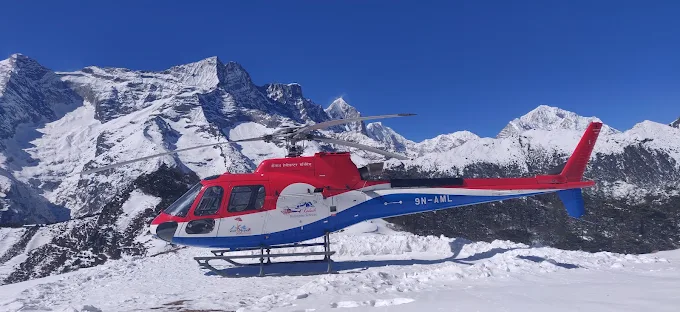
13 Days /
Heli Return
in
Nepal
Everest Base Camp Trek with Heli Return to Lukla or Kathmandu – 13 days
Experience the legendary Everest Base Camp trek, breathtaking Himalayan landscapes, Sherpa culture, and a scenic helicopter return from the heart of the Khumbu.

15 Days /
Heli Return
in
Nepal
Everest Base Camp and Gokyo Lakes Trek with Heli Return – 15 days
A 15-day Himalayan adventure combining Everest Base Camp, Kala Patthar, Cho La Pass, and the beautiful Gokyo Lakes, with a scenic helicopter return to Kathmandu.

11 Days /
Heli Return
in
Nepal
Annapurna Base Camp with Heli Return – 11 days
A beautiful Himalayan trek with Poon Hill sunrise, Annapurna Base Camp, and a helicopter ride back.
Price from USD 1,888