A 15-day Himalayan adventure combining Everest Base Camp, Kala Patthar, Cho La Pass, and the beautiful Gokyo Lakes, with a scenic helicopter return to Kathmandu.
Everest Base Camp and Gokyo Lakes Trek with Heli Return – 15 days
Why book with us?
- Local Guides & Porters
- 98% Success Trip Rate
- Comfort Priority and Saftey Trip
- Satisfied Client
Send Quick Email

Duration
15 Days

Max Alitiude
5,545 m at Kalapatthar

Transportation
Domestic Flight and Helicopter

Trip Grade
Challenging

Activity
Heli Return

Start/End Point
Lukla / Gokyo

Best Season
Spring (March - May) & Autumn (October- November)

Meals
Full board during trek (Breakfast, Lunch, Dinner)

Accommodation
Hotels (Kathmandu), Teahouses during trek
Trip Overview
The Everest Base Camp and Gokyo Lakes Trek with Helicopter Return is a spectacular 15-day Himalayan adventure that combines two of the most famous trekking routes in the Everest region. Instead of following the usual Everest Base Camp trail and returning the same way, this itinerary takes you through the Everest Base Camp route, crosses the challenging Cho La Pass, explores the beautiful Gokyo Lakes, and finishes with a scenic helicopter flight back to Kathmandu.
Your trek starts in Kathmandu before you head into the Everest region. Once you reach the mountains, the trail takes you through Sherpa villages, quiet valleys, forests, and eventually into the high-altitude landscape of the Khumbu. As you climb higher, the scenery changes from green hills to rocky trails, glaciers, and snow-covered mountains. Staying in local teahouses along the way also lets you experience everyday life in mountain villages.
A major moment comes when you reach Everest Base Camp at 5,364 meters (17,598 feet). From Lobuche, you’ll walk to Gorak Shep and then continue toward Base Camp across the rugged terrain of the Khumbu Glacier. Once you arrive, take some time to enjoy the surroundings, take a few photos, and appreciate the achievement.
The next morning, you’ll get up early for the hike to Kala Patthar at 5,555 meters (18,225 feet). The climb is worth it for the views, especially around sunrise when Everest, Nuptse, Pumori, and Lhotse stand out against the morning sky. After returning to Gorak Shep, you’ll have breakfast before continuing toward Dzongla.
From Dzongla, the route takes you over Cho La Pass at 5,420 meters (17,782 feet). It’s one of the tougher parts of the trek, but also one of the most memorable. Once across the pass, you’ll make your way toward the Gokyo Valley, where the landscape opens up around the beautiful Gokyo Lakes, with glaciers and high mountain peaks all around.
You’ll spend time in Gokyo for acclimatization and hike to Gokyo Ri at 5,357 meters (17,575 feet). From the summit, you can enjoy one of the finest panoramic views in the Everest region, with Everest, Cho Oyu, Lhotse, Makalu, and other impressive peaks visible on a clear day.
After completing the trekking portion of the journey, there’s no need to retrace the long trail back to Lukla. Instead, you’ll enjoy a scenic helicopter flight from Gokyo to Kathmandu, giving you a spectacular aerial view of the Himalayan landscape you’ve just explored on foot.
With Everest Base Camp, Kala Patthar, Cho La Pass, Gokyo Lakes, and Gokyo Ri all included, this trek offers a wonderful combination of adventure, natural beauty, mountain culture, and unforgettable Himalayan scenery. It is an ideal choice if you want to experience the highlights of both the Everest Base Camp and Gokyo Valley routes while saving time on the return journey with a helicopter flight.
Trip Highlights
- Enjoy a scenic helicopter flight from Gokyo to Kathmandu and enjoy a bird’s-eye view of the mountains, glaciers, and valleys.
- Trek to the iconic Everest Base Camp (5,364 m) and celebrate reaching the foot of the world’s highest mountain.
- Enjoy an unforgettable sunrise from Kala Patthar (5,555 m) with spectacular views of Everest and the surrounding peaks.
- Discover the stunning Gokyo Lakes, known for their beautiful turquoise waters and peaceful Himalayan setting.
- Hike to Gokyo Ri (5,357 m) for breathtaking panoramic views of Everest, Cho Oyu, Lhotse, Makalu, and other Himalayan giants.
- Take on the adventurous Cho La Pass (5,420 m), one of the most exciting and challenging sections of the trek.
- Walk through the dramatic landscapes of the Khumbu and Ngozumpa Glaciers, surrounded by towering snow-covered peaks.
- Explore charming Sherpa villages and experience the warm hospitality and traditional mountain lifestyle of the Everest region.
- Enjoy spectacular views of iconic peaks including Mount Everest, Lhotse, Nuptse, Pumori, Ama Dablam, Makalu, and Cho Oyu.
- Experience the peaceful beauty of Gokyo Valley, away from the busier sections of the main Everest Base Camp trail.
When to visit
J
F
M
A
M
J
J
A
S
O
N
D
- Average time to visit
- Best time to visit
- Good time to visit
Outline Itinerary
- Day 01: Arrive at Tribhuvan International Airport and transfer to the hotel.
- Day 02: Fly to Lukla & trek to Phakding.
- Day 03: Trek to Namche Bazaar.
- Day 04: Acclimatization Day at Namche. Hike to Hotel Everest View and return to Namche.
- Day 05: Trek to Tengboche.
- Day 06: Trek to Dingboche.
- Day 07: Acclimatization Day at Dingboche. Hike to Nangkartsang Peak and back.
- Day 08: Trek to Lobuche.
- Day 09: Trek to Everest Base Camp and then back to Gorak Shep (5,190 m/17,028 ft).
- Day 10: Early morning Hike to Kala Patthar and trek to Dzongla (4,830m).
- Day 11: Trek to Thangnak (4,700m) via Cho La Pass.
- Day 12: Trek to Gokyo Lake.
- Day 13: Acclimatization day at Gokyo and hike to Gokyo Ri for sunrise view.
- Day 14: Fly back to Kathmandu by helicopter.
- Day 15: Departure
Trip Itinerary
-
Day 01
Arrive at Tribhuvan International Airport and transfer to the hotel.
Welcome to Nepal!
Upon your arrival at Tribhuvan International Airport in Kathmandu, you will be warmly welcomed by our representative. After completing the airport formalities, including immigration and baggage collection, you will be transferred comfortably to your hotel.
Once you arrive at the hotel, check in and take some time to rest. The evening is free for you to relax and prepare for the days of adventure ahead.
In the evening, enjoy a delicious welcome dinner that gives you a chance to experience your first taste of Nepalese hospitality and local cuisine.
Overnight in Kathmandu.
-

Max. Altitude: 1,400m (4,593 feet)
-

Accommodation: Standard or 3-star Hotel
-
Meals: Dinner
-
-
Day 02
Fly to Lukla & trek to Phakding.
After an early breakfast at the hotel, your exciting Himalayan adventure officially begins. Today, you will take a scenic flight from Kathmandu to Lukla, the gateway to the Everest region. The flight takes about 20 minutes and offers spectacular views of the mountains and Nepal’s rolling hills as you approach Lukla.
After landing at Lukla Airport (2,840 m), you will meet your trekking crew and get ready for the first walk of your journey. Your trek begins with a relatively easy walk through the beautiful Dudh Koshi Valley. The trail passes through charming Sherpa villages, small farms, stone-paved paths, lush forests, and crosses several suspension bridges.
After approximately 3–4 hours of trekking, you will reach Phakding, a peaceful village situated along the Dudh Koshi River.
Overnight in Phakding.
-
Max. Altitude: 2,610m (8,563 feet)
-
Accommodation: Teahouse or Lodge
-
Meals: Breakfast, Lunch, Dinner
-

Trek Duration: 3-4 hours trek
-

Flight Duration: 20 minutes flight
-
-
Day 03
Trek to Namche Bazaar.
After breakfast, you will trek from Phakding to Namche Bazaar, the famous gateway to the Everest region and the main trading center of the Khumbu Valley.
You’ll walk alongside the Dudh Koshi River, passing through pine and rhododendron forests on the way. The trail goes through small Sherpa villages like Zamfute, Toktok, and Monjo. At Monjo, you’ll enter Sagarmatha National Park, a UNESCO World Heritage Site. From here, you continue to Jorsalle, crossing a few suspension bridges along the way, including the famous Hillary Suspension Bridge.
After crossing the final bridge, you’ll start a steady climb toward Namche Bazaar. The trail gets a little steeper here, but the forest, river, and mountain views make the climb enjoyable. As you get closer to Namche, the scenery opens up, and you’ll know you’re almost there.
After approximately 5–6 hours of trekking, you will finally arrive at Namche Bazaar. Namche Bazaar, a beautiful horseshoe-shaped mountain town surrounded by spectacular Himalayan peaks, is known for its colorful buildings, lively atmosphere, local markets, bakeries, trekking shops, and traditional Sherpa culture.
Overnight in Namche Bazaar.
-
Max. Altitude: 3,440m (11,286 feet)
-
Accommodation: Teahouse or Lodge
-
Meals: Breakfast, Lunch, Dinner
-
Trek Duration: 5-6 hours trek
-
-
Day 04
Acclimatization Day at Namche. Hike to Hotel Everest View and return to Namche.
Today is an important acclimatization day in Namche Bazaar, allowing your body to adjust to the increasing altitude before continuing to higher elevations in the Everest region. You will not stay inactive today; you will take a short daytime hike to gain altitude, then return to Namche to sleep at a lower elevation.
After breakfast, you will begin your hike toward Hotel Everest View (3,880 m). The trail climbs gradually above Namche through beautiful rhododendron and pine forests, with spectacular views of some of the region’s most famous peaks, including Mount Everest, Lhotse, Nuptse, Ama Dablam, and Thamserku, depending on weather and visibility.
Upon reaching Hotel Everest View, you can take time to enjoy the panoramic Himalayan scenery and have a refreshing break. The viewpoint offers one of the best early chances to see Mount Everest during the trek.
After spending some time at the viewpoint, you will descend back to Namche Bazaar. Also, you can use your free time to explore the local shops, visit a café, or enjoy the spectacular mountain views from Namche.
Overnight in Namche Bazaar.
-
Max. Altitude: 3,880m (12,730 feet)
-
Accommodation: Teahouse or Lodge
-
Meals: Breakfast, Lunch, Dinner
-
Trek Duration: 4-5 hours trek
-
-
Day 05
Trek to Tengboche.
After breakfast, you will leave Namche Bazaar and continue deeper into the Everest region toward the beautiful mountain village of Tengboche. Today’s trek takes you through some of the Khumbu Valley’s most scenic landscapes, with stunning views of Himalayan peaks along the way.
The trail initially follows a relatively comfortable path above the Dudh Koshi Valley. As you walk, you will enjoy spectacular views of Mount Everest, Lhotse, Nuptse, Ama Dablam, Thamserku, and Kantega. On a clear day, the views are particularly impressive.
As you continue, the trail gradually descends toward the Dudh Koshi River and passes through beautiful rhododendron, pine, and fir forests. After crossing the river, the trail begins a steady uphill climb toward Tengboche. Along the way, you may encounter local Sherpa people, trekkers, porters, and pack animals carrying supplies between the mountain villages.
After approximately 6–7 hours of trekking, you will reach Tengboche, one of the most important cultural and spiritual centers in the Everest region. The village is famous for Tengboche Monastery, the largest and one of the most significant Buddhist monasteries in the Khumbu.
If time and conditions permit, you can visit the monastery and experience its peaceful atmosphere. The monastery is surrounded by magnificent mountain scenery, with Ama Dablam rising dramatically in the background.
After exploring the area, check in at your teahouse or lodge and take some time to relax.
Overnight in Tengboche.
-
Max. Altitude: 3,860m (12,664 feet)
-
Accommodation: Teahouse or Lodge
-
Meals: Breakfast, Lunch, Dinner
-
Trek Duration: 6-7 hours trek
-
-
Day 06
Trek to Dingboche.
After breakfast, you will leave Tengboche and continue your trek toward Dingboche, a beautiful high-altitude settlement situated in the Imja Valley.
As you continue higher into the Khumbu Valley, the scenery slowly changes. The forests thin, and the mountains feel much closer. The trail passes through Deboche and follows the Imja Khola to Pangboche, one of the region’s oldest Sherpa villages.
Along the way, you’ll pass traditional mountain settlements and enjoy beautiful views of Ama Dablam, Lhotse, Nuptse, and Island Peak, depending on the weather. From Pangboche, the landscape becomes more open and rugged as you continue toward Dingboche.
By this point, you’ll be trekking above 4,000 meters so that the air will feel thinner. Take your time, walk at a comfortable pace, drink plenty of water, and take breaks when needed.
Overnight in Dingboche.
-
Max. Altitude: 4,410m (14,469 feet)
-
Accommodation: Teahouse or Lodge
-
Meals: Breakfast, Lunch, Dinner
-
Trek Duration: 5-6 hours trek
-
-
Day 07
Acclimatization Day at Dingboche. Hike to Nangkartsang Peak and back.
Today is another important acclimatization day in Dingboche. After breakfast, you will take a short but challenging hike to Nangkartsang Peak and return to Dingboche. This helps your body adjust to the high altitude before continuing toward Everest Base Camp.
The trail climbs steadily uphill through the rocky mountain landscape. The higher altitude can make the climb feel more difficult, but the scenery makes the effort worthwhile.
After a steady uphill climb, you will reach Nangkartsang Peak at around 5,083 meters (16,676 feet). From the peak, you will enjoy beautiful views of the surrounding Himalayan peaks, including Ama Dablam, Lhotse, Nuptse, Island Peak, and Makalu, depending on the weather.
After spending some time at the viewpoint, you will descend carefully back to Dingboche. You can spend the rest of the day resting, exploring the village, or preparing for the higher-altitude trekking days ahead.
Overnight at Dingboche.
-
Max. Altitude: 5,083 meters (16,676 feet)
-
Accommodation: Teahouse or Lodge
-
Meals: Breakfast, Lunch, Dinner
-
Trek Duration: 4-5 hours trek
-
-
Day 08
Trek to Lobuche.
After breakfast, you’ll leave Dingboche and begin your trek toward Lobuche, one of the last major settlements before Everest Base Camp. Today’s trail takes you deeper into the high Himalayas.
Leaving Dingboche, you’ll follow the trail toward Dugla, with the mountains getting bigger and closer as you gain altitude. After Dugla, the path climbs more steeply toward Dugla Pass. Along the way, you’ll pass several memorial stones and prayer flags placed in memory of climbers and trekkers who lost their lives in the Everest region.
After crossing this section, the trail levels out as you continue toward Lobuche. You’ll enjoy impressive views of Pumori, Nuptse, Khumbutse, and other snow-covered peaks.
After around 5–6 hours of trekking, you’ll reach Lobuche at 4,910 meters (16,109 feet). Once you arrive, check into your teahouse or lodge, enjoy a warm meal, and relax for the evening.
Overnight in Lobuche.
-
Max. Altitude: 4,910m (16,109 feet)
-
Accommodation: Teahouse / Lodge
-
Meals: Breakfast, Lunch, Dinner
-
Trek Duration: 5-6 hours trek
-
-
Day 09
Trek to Everest Base Camp and then back to Gorak Shep (5,190 m/17,028 ft).
Today is one of the most exciting and memorable days of your trek as you finally make your way to Everest Base Camp. After an early breakfast in Lobuche, you’ll begin walking toward Gorak Shep, the last settlement on the trail to Everest Base Camp.
The trail continues across the rugged terrain of the Khumbu Glacier, with impressive mountain views all around you. As you get closer to Gorak Shep, the landscape becomes more open and barren, with fewer signs of vegetation. You’ll really feel the change as you reach this remote, high-altitude part of the Everest region.
After reaching Gorak Shep at 5,190 meters (17,028 feet), you’ll take a short break before heading toward Everest Base Camp. The trail follows the glacier through rocky, uneven terrain, with surrounding peaks and ice formations making this one of the trek’s most memorable sections.
Eventually, you’ll reach Everest Base Camp at 5,364 meters (17,598 feet). You will spend some time celebrating this achievement, enjoying the incredible surroundings, and capturing photos of the famous Everest Base Camp area and Khumbu Glacier.
Later, you’ll retrace your steps and trek back to Gorak Shep. The return journey usually takes around 2–3 hours, depending on your pace and trail conditions.
Overnight in Gorakshep.
-
Max. Altitude: 5,364 meters (17,598 feet)
-
Accommodation: Teahouse / Lodge
-
Meals: Breakfast, Lunch, Dinner
-
Trek Duration: 8-9 hours trek
-
-
Day 10
Early morning Hike to Kala Patthar and trek to Dzongla (4,830m).
Today starts early with a pre-dawn hike to Kala Patthar, one of the best viewpoints in the Everest region. You’ll leave Gorakshep while it is still dark and slowly climb toward the summit. The trail is steep in places, so take your time and walk at a comfortable pace.
As you reach the top of Kala Patthar at around 5,555 meters (18,225 feet), you’ll be rewarded with breathtaking views of Mount Everest, Nuptse, Pumori, Lhotse, and the surrounding Himalayan peaks. If the weather is clear, watching the sunrise over Everest is unforgettable. You can take some time to enjoy the views and capture photos.
After spending some time at Kala Patthar, you’ll head back to Gorak Shep for breakfast and a short rest. Once you’re ready, you’ll set off toward Dzongla.
The trail takes you away from the busy Everest Base Camp route and into a quieter part of the valley. You’ll pass through rugged mountain terrain, open valleys, and beautiful high-altitude scenery with impressive views of the surrounding peaks.
After around 5–6 hours of trekking in total, you’ll arrive at Dzongla, a peaceful mountain settlement surrounded by spectacular peaks.
Overnight in Dzongla.
-
Max. Altitude: 5,555 meters (18,225 feet)
-
Accommodation: Teahouse / Lodge
-
Meals: Breakfast, Lunch, Dinner
-
Trek Duration: 5-6 hours trek
-
-
Day 11
Trek to Thangnak (4,700m) via Cho La Pass.
Today is one of the most challenging and rewarding days of the trek as you cross the famous Cho La Pass and enter the Gokyo valleys. After an early breakfast in Dzongla, you’ll begin the climb toward the pass.
From Dzongla, you’ll start the climb toward Cho La Pass. The trail is fairly steep in places and gets more rugged as you gain elevation. Depending on when you trek, you may also find snow or ice along the route. The climb takes some effort, so keep a steady pace and take breaks when you need them.
Once you reach Cho La Pass at 5,420 meters (17,782 feet), you’ll be greeted by wide views of Ama Dablam, Cholatse, Lobuche East, and the mountains around you. After the climb, there’s plenty of time to stop, take in the scenery, and enjoy the feeling of having crossed one of the trek’s toughest sections.
You will spend some time enjoying the incredible views and begin a steep descent toward the Thangnak Valley. The trail can be rocky and slippery, so watch your footing. As you descend, the landscape gradually becomes more open, and you’ll feel the altitude easing slightly.
After approximately 7–8 hours of trekking, you’ll reach Thangnak, a small and peaceful settlement near the Ngozumpa Glacier.
Overnight in Thangnak.
-
Max. Altitude: 5,420 meters (17,782 feet)
-
Accommodation: Teahouse / Lodge
-
Meals: Breakfast, Lunch, Dinner
-
Trek Duration: 7-8 hours trek
-
-
Day 12
Trek to Gokyo Lake.
After breakfast in Thangnak, you’ll begin today’s trek toward the beautiful Gokyo Valley. After the challenging crossing of Cho La Pass yesterday, today is a shorter and more relaxed day, giving you a chance to enjoy the stunning scenery along the way.
From Thangnak, you’ll walk toward Gokyo along the side of the Ngozumpa Glacier. The trail is mostly rocky and uneven, but the views make the walk enjoyable. As you get closer to Gokyo, you’ll start seeing the lakes and the mountains around the valley.
After about 4–5 hours, you’ll reach Gokyo Village, which sits beside the beautiful Gokyo Lakes at 4,750 meters (15,583 feet). Once you check into your teahouse, you can have lunch and take some time to relax. If you still have some energy, you can walk around the village and enjoy the views of the lakes and surrounding mountains.
Overnight in Gokyo village.
-
Max. Altitude: 4,750 meters (15,583 feet)
-
Accommodation: Teahouse / Lodge
-
Meals: Breakfast, Lunch, Dinner
-
Trek Duration: 4-5 hours trek
-
-
Day 13
Acclimatization day at Gokyo and hike to Gokyo Ri for sunrise view.
Today is an important acclimatization day in Gokyo, but you’ll still have the chance to enjoy one of the most spectacular viewpoints in the Everest region. You’ll wake up early and prepare for a sunrise hike to Gokyo Ri.
You’ll start the hike to Gokyo Ri before sunrise, leaving the village while it’s still quiet and dark. The trail climbs steadily above Gokyo, and the early part of the hike can be tiring at this altitude. As you climb, the views open up over the Gokyo Lakes, Ngozumpa Glacier, and the surrounding mountains.
After about 1.5–2 hours, you’ll reach Gokyo Ri at 5,357 meters (17,575 feet). If the weather is clear, you can watch the sun come up over the Himalayas, with Everest, Lhotse, Makalu, Cho Oyu, and other peaks lighting up in the morning. Take some time at the top before heading back down to Gokyo.
You can spend some time at the viewpoint enjoying the scenery and taking photographs. Then you will head back to Gokyo village. The descent is much easier.
If you have energy, then the rest of the day is free to relax around the village, explore the beautiful Gokyo Lakes, or enjoy the mountain views.
Overnight in Gokyo village.
-
Max. Altitude: 5,357 m (17,575 feet)
-
Accommodation: Teahouse / Lodge
-
Meals: Breakfast, Lunch, Dinner
-
Trek Duration: 3-4 hours trek
-
-
Day 14
Fly back to Kathmandu by helicopter.
Today marks the end of your incredible Everest Base Camp and Gokyo Lakes adventure. After breakfast, you’ll prepare for your scenic helicopter flight from Gokyo back to Kathmandu.
Once the helicopter arrives, you’ll board and take off from the high Himalayas, leaving the beautiful Gokyo Valley behind. The flight offers a spectacular bird’s-eye view of the mountains, glaciers, valleys, and villages you have passed through during your trek.
As you fly toward Kathmandu, you’ll have one last opportunity to admire the breathtaking Himalayan landscape from above. Depending on weather and flight conditions, the helicopter may make a short stop along the way for operational purposes.
After landing in Kathmandu, you’ll be transferred to your hotel. The rest of the day is free for you to relax, freshen up, enjoy a good meal, or explore the city at your own pace.
Overnight in Kathmandu.
Important: Helicopter operations are weather-dependent. Flights may be affected by visibility, wind, weather, landing conditions, air traffic, and other operational requirements, and should not be treated as guaranteed transportation on a fixed schedule. If conditions are unsuitable, the flight may be delayed, rescheduled, or require an alternative arrangement.
Your safety is the priority, so the helicopter operator and relevant aviation authorities make the final decision on flight operations.
-
Max. Altitude: 1,400m (4,593 feet)
-
Accommodation: Standard Hotel
-
Meals: Breakfast
-
Flight Duration: 70-90 minutes heli return
-
-
Day 15
Departure
Today is the final day of your Everest Base Camp and Gokyo Lakes Trek. After breakfast at your hotel in Kathmandu, you’ll have some free time depending on your flight schedule.
When it’s time for your departure, you’ll be transferred to Tribhuvan International Airport for your onward flight. This marks the end of your incredible Himalayan adventure.
After exploring Everest Base Camp, Kala Patthar, Cho La Pass, and the beautiful Gokyo Lakes, you’ll leave Nepal with unforgettable memories of the mountains, villages, and people you encountered along the way.
We hope you return home with wonderful memories and look forward to welcoming you back to Nepal for another adventure someday.
-
Meals: Breakfast
-


Trip notes
This is a challenging high-altitude trek that requires good physical fitness, proper preparation, and a flexible attitude. The itinerary may change depending on weather conditions, trail conditions, your health, and helicopter or flight availability.
Helicopter flights in the Everest region depend on the weather, so delays or schedule changes are possible if conditions are not suitable. During the trek, you’ll stay in simple teahouses and lodges, with fewer facilities available as you reach the higher areas.
Since much of the trek is at high altitude, it’s important to take your time, drink plenty of water, and follow your guide’s advice. Sections such as Cho La Pass and Gokyo Ri can be tiring, especially with snow or ice, so be prepared for a slower pace and changing trail conditions.
Trekking times are approximate and may vary according to your pace and trail conditions. Most importantly, always prioritize your safety and well-being over completing the itinerary exactly as planned.
Cost Includes
- Airport pick-up and drop-off.
- All necessary trekking permits (Sagarmatha National Park Entry Permit, Pasang Lhamu Rural Municipality fee, TIMS, or applicable local trekking/entry permits and fees).
- One-way airfare from Kathmandu to Lukla.
- Hotel accommodation in Kathmandu (standard tourist category, twin sharing).
- Helicopter return from Gokyo Ri to Kathmandu as specified in the itinerary
- Teahouse/Lodge accommodation during the trek.
- Three meals a day (breakfast, lunch, dinner) during the trek.
- Professional trekking guide and porter (1 porter for two trekkers).
- Guide and porter insurance, salary, food, and lodging.
- All government and local taxes.
Cost Excludes
- International airfares.
- Nepal entry visa fees.
- All personal expenses, including alcohol & other beverages, trekking equipment, travel insurance, and more.
- Extra expenses during the trek, like hot shower charges, battery charging, Wi-Fi, and any others.
- Tips for the trekking guides and porters.
- Any expenses not mentioned in the “Includes” section.
Additional information
Understanding the Trek Difficulty
This is a challenging high-altitude trek and should not be treated like a standard Everest Base Camp itinerary.
You will walk for several consecutive days, often for around 5–8 hours, over rocky and uneven terrain. The Everest Base Camp day can take around 8–9 hours, while the Cho La crossing involves steep sections and potentially snow or ice depending on the season.
Previous trekking experience is helpful, although it is not an absolute requirement for a well-prepared traveler. What matters most is good endurance, proper preparation, patience at altitude, and the ability to maintain a steady pace.
Preparing Your Body Before the Trek
Start preparing several weeks before departure. Focus on activities that build both cardiovascular fitness and leg strength.
Long walks, uphill hiking, stair climbing, cycling, and regular endurance training can all help. If possible, include some longer hikes with a daypack so your body becomes comfortable walking for several hours.
You should also practice walking steadily rather than trying to move quickly. At high altitude, maintaining a comfortable pace is more important than finishing a section as fast as possible.
Porter Support and Baggage
The package includes porter support at a ratio of one porter for two trekkers. The package includes porter costs, insurance, salary, food, and accommodation.
Keep the items you need during the day in your own daypack. Water, snacks, warm layers, sunscreen, camera equipment, personal medication, and important documents should remain easily accessible.
Avoid overloading yourself with unnecessary items.
Electricity, Wi-Fi and Mobile Connectivity
Connectivity becomes less reliable as you travel farther into the mountains.
Mobile coverage is generally better around larger settlements such as Namche, while higher and more remote sections may have weak or intermittent service. Wi-Fi may be available in some teahouses but can cost extra and is not guaranteed.
Charging facilities can also be limited at higher elevations. Carry a reliable power bank and keep electronic devices protected from extreme cold.
Money and Personal Expenses
Carry enough Nepalese cash for personal expenses along the trekking route.
Although some mountain lodges may accept digital payments or cards, you should not depend entirely on electronic payment methods. Extra costs can include Wi-Fi, charging, hot showers, snacks, beverages, and other personal purchases.
It is better to prepare your cash before reaching the higher sections of the route.
Travel Insurance and Emergency Planning
Travel insurance is particularly important for this trek because the route reaches above 5,500 meters and includes a high-altitude pass.
The package does not include personal travel insurance. The current page recommends comprehensive coverage appropriate for high-altitude trekking and emergency evacuation.
Before departure, check that your policy covers the activities and elevation involved in your itinerary and understand the procedures for emergency assistance.
Helicopter Return from Gokyo
One of the major advantages of this itinerary is that you do not need to retrace the entire route from Gokyo back toward Lukla.
After completing the Gokyo Ri section, you take a helicopter toward Kathmandu. The itinerary estimates the flight at approximately 70–90 minutes, although the actual duration and routing can change according to weather, air traffic, landing conditions, and operational requirements.
The flight also gives you a completely different perspective of the valleys, glaciers, villages, and mountains you experienced on foot.
Helicopter Weather and Flight Flexibility
The helicopter return should not be considered a guaranteed fixed-time flight.
Mountain weather can change quickly, and visibility, wind, landing conditions, air traffic, or aviation requirements can cause delays or rescheduling. The current itinerary specifically notes that the final decision regarding flight operations is based on safety and operational conditions.
For this reason, keep some flexibility in your travel plans after returning to Kathmandu.
Weather and Trail Conditions
Weather can change rapidly in the Everest region, particularly above 4,000 meters.
Mornings can be cold, while wind and cloud conditions may change throughout the day. Snow or ice can affect Cho La, especially outside the main trekking seasons.
Rocky trails, uneven surfaces, steep climbs, and slippery sections are all possible. Follow your guide’s instructions and adjust your pace according to the actual conditions rather than relying only on the planned trekking time.
Best Time for This Trek
The current Silver Moon itinerary recommends spring from March to May and autumn from October to November. These periods generally provide favorable trekking conditions and good opportunities for mountain views.
Winter is possible for properly equipped and experienced trekkers, but cold temperatures and snow can make Cho La significantly more demanding.
Monsoon trekking is also possible, but rain, cloud, slippery trails, and flight disruptions can make the journey less predictable.
Photography Along the Route
This trek offers an exceptional variety of photography opportunities.
You can photograph Sherpa villages, suspension bridges, monasteries, Everest and surrounding peaks, memorials, glaciers, Everest Base Camp, Kala Patthar, Cho La, Gokyo Lakes, and Gokyo Ri.
Keep spare batteries or a power bank because charging opportunities become limited at higher elevations. Cold temperatures can also reduce battery performance.
Most importantly, don’t stop in exposed or unsafe locations simply to capture a photograph.
Sherpa Culture and Local Etiquette
The Everest region is deeply connected with Sherpa culture and Tibetan Buddhist traditions.
You will pass through villages where monasteries, prayer wheels, mani stones, prayer flags, and other cultural features are part of everyday life.
Walk around religious structures respectfully and follow the traditional direction when instructed. Avoid climbing on mani walls or disturbing prayer objects, and ask before photographing people during religious activities.
Responsible Trekking
The Everest region receives large numbers of trekkers every year, making responsible travel especially important.
Carry your rubbish until you find an appropriate disposal point, reduce unnecessary plastic use, avoid damaging vegetation, and respect local water sources.
Stay on established trails whenever possible and follow the regulations of Sagarmatha National Park.
Your choices on the trail can help protect the landscape and support the communities that depend on tourism.
Tipping Guides and Porters
Tipping is not included in the package and is generally considered a personal way to recognize good service.
If you are happy with the support provided by your guide and porter, you can discuss tipping practices with your trekking company before departure so that you understand the usual approach for the region.
Keeping the Itinerary Flexible
A high-altitude trek should always have some flexibility.
Weather, trail conditions, health, flight operations, and helicopter availability can all affect the planned schedule. The current itinerary specifically notes that changes may be necessary to prioritize safety.
This is particularly important for the Lukla flight, Cho La crossing, and helicopter return from Gokyo.
A flexible mindset will make it easier to enjoy the trek even when the mountain does not follow the original schedule.
Who Is This Trek Suitable For?
This trek is best suited to travelers who want more than the standard Everest Base Camp experience and are prepared for a demanding high-altitude adventure.
It can be suitable for:
- Experienced trekkers
- Fit travelers with strong endurance
- Travelers wanting both EBC and Gokyo Lakes
- People interested in crossing Cho La Pass
- Photographers looking for varied Himalayan landscapes
- Trekkers who prefer a helicopter return instead of retracing the route
- Adventurous travelers comfortable with simple mountain accommodation
The combination of high elevation, long walking days, rugged terrain, and Cho La makes proper preparation essential.
A Few Things to Keep in Mind
This trek is about more than reaching Everest Base Camp. You will cross from the main Everest trail into the quieter Gokyo Valley, experience a high mountain pass, explore glacial landscapes, and finish with an aerial journey over the Himalayas.
Take the acclimatization days seriously, walk at a steady pace, stay hydrated, and communicate openly with your guide about how you are feeling.
Most importantly, allow the mountains to set the pace. Weather and trail conditions can change, and the safest itinerary is sometimes different from the original plan.
With the right preparation and a flexible approach, the journey from Lukla through Everest Base Camp, Kala Patthar, Cho La, and Gokyo can become one of the most memorable high-altitude trekking experiences in Nepal.
FAQs for this trip
General
-
How many days is the Everest Base Camp and Gokyo Lakes Trek with Heli Return?
The complete trip takes 15 days, including arrival and departure in Kathmandu. The trekking section begins after the flight to Lukla and continues through the Everest region before the helicopter return from Gokyo.
-
What are the major highlights of this trek?
Major highlights include Everest Base Camp at 5,364 m, sunrise from Kala Patthar at 5,555 m, crossing Cho La Pass at 5,420 m, exploring Gokyo Lakes, hiking Gokyo Ri at 5,357 m, and experiencing Sherpa villages and Himalayan mountain scenery.
-
Is this trek suitable for experienced trekkers?
Yes. This is a challenging high-altitude trek and is better suited to travelers who are prepared for long trekking days, steep ascents, high elevations, and changing mountain conditions. Good physical preparation is strongly recommended.
-
Why choose the helicopter return?
The helicopter return eliminates the need to retrace the long trekking route from Gokyo toward Lukla. It also provides a spectacular aerial perspective of the mountains, glaciers, valleys, and villages you have explored on foot.
Difficulty and Physical Fitness
-
How difficult is the Everest Base Camp and Gokyo Lakes Trek?
The trek is graded Challenging. It includes high-altitude trekking, long walking days, steep climbs, rugged terrain, and the crossing of Cho La Pass at 5,420 m.
-
Do I need previous trekking experience?
Previous trekking experience helps but isn’t mandatory for a well-prepared traveler. However, you should be comfortable with several consecutive days of walking and be prepared for demanding high-altitude conditions.
-
How physically fit should I be?
A good level of cardiovascular fitness and endurance is recommended. Training with uphill walking, hiking, stair climbing, and longer-distance walking before the trip can help prepare you for the trek.
-
Which section is the most challenging?
Crossing Cho La Pass is one of the most demanding sections because of the high elevation, steep terrain, and possible snow or ice. The climb to Kala Patthar and Gokyo Ri can also be physically demanding because of the altitude.
-
Are there long trekking days?
Yes. Several days involve approximately 5–8 hours of trekking, while the Everest Base Camp day can take around 8–9 hours. Trekking times vary according to individual pace, weather, trail conditions, and altitude.
Altitude and Health
-
What is the highest point reached during the trek?
The highest point is Kala Patthar at approximately 5,555 meters (18,225 feet). The trek also crosses Cho La Pass at 5,420 m and reaches Gokyo Ri at 5,357 m.
-
At what altitude is Everest Base Camp?
Everest Base Camp is approximately 5,364 meters (17,598 feet) above sea level. Reaching this altitude requires careful pacing and proper acclimatization.
-
Is altitude sickness a concern?
Yes. Altitude sickness can be a serious concern on a trek that reaches above 5,000 meters. The itinerary includes acclimatization days at Namche and Dingboche, but you should still monitor how you feel and follow your guide’s advice.
-
How does the itinerary help with acclimatization?
The itinerary includes an acclimatization day in Namche Bazaar with a hike toward Hotel Everest View and another acclimatization day in Dingboche with a hike toward Nangkartsang Peak. The itinerary also includes an acclimatization day in Gokyo before the Gokyo Ri hike.
-
What should I do if I feel unwell at high altitude?
Tell your trekking guide immediately if you experience unusual or worsening symptoms. Do not ignore significant altitude-related symptoms or continue climbing simply to maintain the itinerary; your guide can help determine the safest course of action.
-
Should I consult a doctor before the trek?
If you have concerns about high-altitude travel or any existing medical condition, consult a qualified medical professional before undertaking the trek. It is also sensible to discuss altitude exposure and appropriate preparation before departure.
Route and Itinerary
-
What is the trekking route?
The route starts with a flight from Kathmandu to Lukla and continues through Phakding, Namche Bazaar, Tengboche, Dingboche, Lobuche, Gorak Shep, Everest Base Camp, Kala Patthar, Dzongla, Cho La Pass, Thangnak, and Gokyo. From Gokyo, you return to Kathmandu by helicopter.
-
What is the day-by-day itinerary?
The itinerary includes arrival in Kathmandu, a flight to Lukla, trekking through the Everest region, acclimatization at Namche and Dingboche, Everest Base Camp, Kala Patthar, Cho La Pass, Gokyo Lakes, Gokyo Ri, helicopter return to Kathmandu, and final departure.
-
How long is the flight from Kathmandu to Lukla?
The itinerary lists the scheduled flight from Kathmandu to Lukla as about 20 minutes. Flight times can vary because of weather and operational conditions.
-
How long does it take to reach Everest Base Camp?
The trek reaches Everest Base Camp on Day 9 after trekking from Lobuche through Gorak Shep. The complete trekking day is approximately 8–9 hours, depending on pace and trail conditions.
-
When do I cross Cho La Pass?
Cho La Pass is crossed on Day 11 while traveling from Dzongla toward Thangnak. The pass reaches approximately 5,420 m and is one of the most demanding sections of the route.
-
When do I visit Gokyo Lakes?
After crossing Cho La Pass, you trek toward Thangnak and then continue to Gokyo Lake on Day 12. Day 13 is dedicated to acclimatization and the Gokyo Ri sunrise hike.
-
Can the itinerary change?
Yes. High-altitude trekking is affected by weather, trail conditions, individual health, and other mountain conditions. The itinerary may therefore be adjusted when necessary to prioritize safety.
Accommodation
-
What type of accommodation is provided?
Accommodation includes a standard or 3-star hotel in Kathmandu and teahouses or lodges during the trek. Mountain accommodation becomes simpler as you travel into higher and more remote areas.
-
What are teahouses like?
Teahouses provide basic accommodation designed for trekkers. Facilities can be simple, particularly at higher elevations, but they provide a place to sleep, eat, rest, and warm up.
-
Will I have a private room?
Room arrangements in mountain teahouses depend on availability and the accommodation at each location. Twin or shared rooms are common on trekking routes, particularly during busy seasons.
-
Is accommodation included in the package?
Yes. The package includes the Kathmandu hotel and teahouse/lodge accommodation during the trek.
-
Are facilities limited at high altitude?
Yes. Facilities such as hot showers, Wi-Fi, charging, and other conveniences can become limited or require additional payment at higher elevations.
Food and Drinks
-
Are meals included during the trek?
Yes. Breakfast, lunch, and dinner are included during the trekking portion of the trip. The package includes full-board meals during the trek.
-
What kind of food is available on the trek?
Teahouses generally offer a mixture of Nepali, Tibetan-influenced, Asian, and simple international dishes. Popular trekking meals can include dal bhat, noodles, soups, rice dishes, pasta, momos, and eggs.
-
Can I get vegetarian food?
Vegetarian meals are commonly available in the Everest region. If you have specific dietary requirements, inform the company and your guide in advance.
-
Is drinking water available?
Yes. You can get drinking water along the trekking route, but travelers should use appropriate purification or treatment methods when needed. We recommend carrying a reusable bottle or hydration system.
-
Are drinks included?
Included meals do not mean all beverages are free. Personal beverages, alcoholic drinks, and additional drinks outside the stated meal arrangements are generally at your own expense.
Weather and Best Time
-
What is the best time for this trek?
The page recommends spring (March–May) and autumn (October–November). These periods are generally preferred for trekking because of favorable mountain conditions and better opportunities for clear Himalayan views.
-
Can I do this trek during winter?
Winter trekking is possible for experienced and properly equipped trekkers, but conditions can be significantly colder and snow may affect high passes and trails. Cho La Pass conditions can be particularly challenging in winter.
-
Can I trek during the monsoon?
It is possible, but monsoon weather can bring rain, cloud, slippery trails, and flight disruptions. Conditions around the Everest region and Lukla can be unpredictable during this period.
-
What is the weather like at Kala Patthar and Cho La Pass?
Conditions at these elevations can be extremely cold, windy, and change quickly. Snow and ice may be present depending on the season, particularly around Cho La Pass.
-
Will I always get clear views of Everest?
No. Mountain visibility depends on weather and atmospheric conditions. Clear mornings often provide excellent views, but there is no guarantee of visibility on any particular day.
Permits and Regulations
-
Are trekking permits included?
Yes. The package includes the necessary trekking permits and applicable local fees, including Sagarmatha National Park, Pasang Lhamu Rural Municipality, TIMS, or other applicable permits and fees.
-
Do I need a special permit for Cho La Pass?
The route is covered by the applicable permits and entry fees arranged for the trek. Your trekking company handles the required permit arrangements.
-
Do I need to carry my passport during the trek?
You should carry the identification documents required by your trekking company and relevant authorities. Your guide can advise you on which documents are needed during the journey.
-
Are there rules inside Sagarmatha National Park?
Yes. Trekkers must follow national park regulations and local environmental guidelines. Travelers should avoid littering, respect local culture, and follow the instructions of guides and authorities.
Flights and Transportation
-
How do I get to the Everest region?
The trek begins with a domestic flight from Kathmandu to Lukla. From Lukla, the journey continues on foot through the Khumbu region.
-
Is the Kathmandu-Lukla flight included?
Yes. The package includes the one-way airfare from Kathmandu to Lukla.
-
Is the helicopter return included?
Yes. The package includes the helicopter return from Gokyo to Kathmandu as specified in the itinerary.
-
How long is the helicopter flight from Gokyo to Kathmandu?
The itinerary estimates the helicopter return at approximately 70–90 minutes. Actual flight duration and routing can vary according to weather, air traffic, operational requirements, and landing conditions.
-
Is the helicopter return guaranteed?
No. Helicopter operations are weather- and condition-dependent. Visibility, wind, weather, landing conditions, air traffic, and aviation requirements can cause delays, rescheduling, or alternative arrangements.
-
What happens if the helicopter cannot fly from Gokyo?
If conditions are unsuitable, the flight may need to be delayed, rescheduled, or replaced with an alternative arrangement. The final decision is made according to operational and aviation safety requirements.
Equipment and Packing
-
What should I pack for this trek?
Pack layered clothing, a warm down jacket, waterproof outerwear, trekking trousers, gloves, warm socks, a hat, sunglasses, trekking boots, and a comfortable daypack. Because the trek reaches above 5,500 m, appropriate high-altitude equipment is essential.
-
Do I need special equipment for Cho La Pass?
Depending on the season and trail conditions, snow or ice can make Cho La Pass more demanding. Your guide can advise whether additional equipment such as traction aids or other technical gear is appropriate for the conditions.
-
What type of shoes should I wear?
Use comfortable, well-broken-in trekking boots with good grip and ankle support. Waterproof footwear is especially useful on wet or snowy trails.
-
Should I bring trekking poles?
Trekking poles are highly recommended for this route. They can provide additional support on steep ascents, descents, rocky trails, and potentially slippery sections around Cho La Pass.
-
Do I need a sleeping bag?
A good-quality, warm sleeping bag is recommended because temperatures can drop significantly at higher elevations. Your trekking company can advise you about the appropriate temperature rating for the season.
-
What should I carry in my daypack?
Carry water, snacks, sunscreen, sunglasses, a camera, extra layers, personal medication, documents, and other essentials needed during the day’s trek.
Connectivity and Electricity
-
Is mobile connectivity available during the trek?
Connectivity varies along the route. Coverage is generally better around major settlements such as Namche, while remote and higher sections can have weaker or intermittent service.
-
Is Wi-Fi available?
Wi-Fi may be available at some teahouses and lodges, but it is not guaranteed and may require an additional fee. Connectivity becomes less reliable as you travel to higher elevations.
-
Can I charge my phone and camera?
Some teahouses offer charging facilities, but they may charge an additional fee and may be limited at higher elevations. We strongly recommend carrying a power bank.
-
Should I bring extra batteries?
Yes. Cold temperatures can reduce battery performance, and charging opportunities may be limited. Extra batteries or a reliable power bank can be very useful for cameras and phones.
-
Can I use a Nepalese SIM card?
A local SIM can be useful in areas with network coverage. However, you shouldn’t rely on connectivity throughout the entire high-altitude route.
Guides and Porters
-
Is a trekking guide included?
Yes. The package includes a professional trekking guide. The guide assists with route navigation, trekking arrangements, safety, and general support throughout the journey.
-
Are porters included?
Yes. The package includes porter support at a ratio of one porter for two trekkers. The package includes porter costs, insurance, salary, food, and accommodation.
-
Can I trek without a porter?
It may be possible to arrange the trek differently, but the standard package includes porter support. If you prefer to carry your own luggage, discuss this with the company before booking.
-
Are guides and porters insured?
Yes. The package states that guide and porter insurance, salary, food, and lodging are included.
Cost and Booking
-
What is included in the trek package?
The package includes airport transfers, necessary trekking permits, Kathmandu accommodation, the Kathmandu-Lukla flight, helicopter return from Gokyo to Kathmandu, teahouse/lodge accommodation, three meals per day during the trek, a professional trekking guide, porter service, guide and porter costs, and government and local taxes.
-
What is not included in the package?
International airfare, Nepal visa fees, personal expenses, alcoholic and other beverages, trekking equipment, travel insurance, hot showers, battery charging, Wi-Fi, tips, additional hotel stays, and expenses not specifically listed in the inclusions are excluded.
-
Is travel insurance required?
Travel insurance is not included in the package, but comprehensive travel insurance is strongly recommended for a high-altitude trek. Consider coverage that is appropriate for trekking at high elevations and emergency evacuation.
-
Can I customize the itinerary?
The itinerary can be discussed with the trekking company before booking. However, changes to high-altitude routes, acclimatization days, or helicopter arrangements need to consider weather, trail conditions, permits, and safety.
-
How early should I book this trek?
Advance booking is recommended, particularly during spring and autumn. Early booking helps with arranging flights, teahouse accommodation, trekking staff, permits, and helicopter logistics.
Photography and Experience
-
Is this trek good for photography?
Yes. This route offers exceptional opportunities for Himalayan photography, including Everest, Lhotse, Nuptse, Ama Dablam, Pumori, Makalu, Cho Oyu, glaciers, Sherpa villages, and Gokyo Lakes.
-
What are the best photography locations?
Kala Patthar is one of the best viewpoints for Everest and surrounding peaks. Gokyo Ri provides a spectacular panorama of Everest, Cho Oyu, Lhotse, Makalu, and the Gokyo Valley, while the Gokyo Lakes and Ngozumpa Glacier provide dramatic landscape scenes.
-
Can I take photographs at Everest Base Camp?
Yes. Everest Base Camp is a major highlight of the trek and offers excellent photo opportunities. Be mindful of other trekkers and follow any local instructions around the area.
-
Is the helicopter return good for photography?
Absolutely. The flight from Gokyo to Kathmandu provides an aerial perspective of the Himalayan landscape, including mountains, glaciers, valleys, and settlements. Helicopter photography depends on visibility, flight conditions, and the operator’s safety requirements.







Why book with us?
- Local Guides & Porters
- 98% Success Trip Rate
- Comfort Priority and Saftey Trip
- Satisfied Client
Send Quick Email
Similar trips
View all trips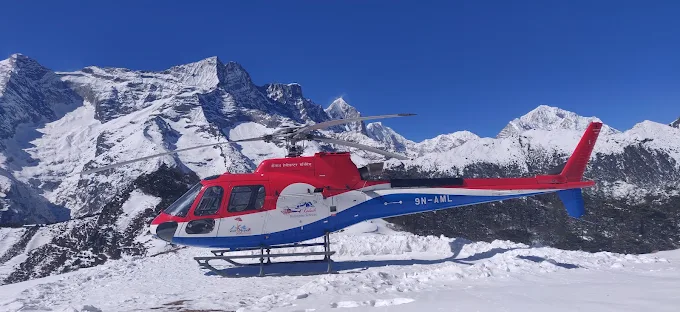
13 Days /
Heli Return
in
Nepal
Everest Base Camp Trek with Heli Return to Lukla or Kathmandu – 13 days
Experience the legendary Everest Base Camp trek, breathtaking Himalayan landscapes, Sherpa culture, and a scenic helicopter return from the heart of the Khumbu.

11 Days /
Heli Return
in
Nepal
Annapurna Base Camp with Heli Return – 11 days
A beautiful Himalayan trek with Poon Hill sunrise, Annapurna Base Camp, and a helicopter ride back.
Price from USD 1,888
08 Days /
Heli Return
in
Nepal
Langtang Valley Trek with Heli Return – 08 days
Experience mountain trails, local culture, high-altitude landscapes, and the peaceful atmosphere of the Langtang Valley, with a scenic helicopter ride providing an exciting finish to the journey.