A beautiful Himalayan trek with Poon Hill sunrise, Annapurna Base Camp, and a helicopter ride back.
Annapurna Base Camp with Heli Return – 11 days
USD 1,888PP
Why book with us?
- Local Guides & Porters
- 98% Success Trip Rate
- Comfort Priority and Saftey Trip
- Satisfied Client
-
Group Size Discounts
Discounts are solely based on your group size. We don’t add anyone to the group.
No. of people Price per person 1 pax USD 2200 2-5 pax USD 1888

Send Quick Email

Duration
11 Days

Max Alitiude
4,130 m at Annapurna Base Camp

Transportation
Flight, Shared Jeep, and Helicopter

Trip Grade
Moderate to Challenging

Activity
Heli Return

Start/End Point
Hille / Annapurna Base Camp

Best Season
Spring (March - April) & Autumn (October- November)

Meals
Full board during trek (Breakfast, Lunch, Dinner)

Accommodation
Hotels (Kathmandu), Teahouses during trek
Trip Overview
The Annapurna Base Camp with Helicopter Return is an exciting 11-day trekking adventure in Nepal that combines Himalayan trekking, mountain culture, scenic landscapes, and the comfort of a helicopter return. The journey takes you from the historic streets of Kathmandu to the peaceful lakeside city of Pokhara, through traditional mountain villages and beautiful forests, and finally to the spectacular Annapurna Base Camp at 4,130 m.
Annapurna Base Camp with Heli Return overview
The 11-day trek to Annapurna Base Camp with Heli return starts in Kathmandu and continues by scenic flight to Pokhara, the main gateway to the Annapurna region. From Pokhara, a jeep takes you to Hille, where the trek begins towards Ulleri. The trail then leads through Ghorepani and Poon Hill, where you will wake early to enjoy a spectacular sunrise over the Himalayan ranges. From there, the trail continues through Chuile and Chhomrong, gradually taking you deeper into the Annapurna Sanctuary.
As you move higher, the surroundings change from green forests and hillside villages to rugged mountain landscapes. The trail passes waterfalls, streams, small settlements, and quiet valleys, with views of Annapurna South, Machhapuchhre (Fishtail), Hiunchuli, and other Himalayan peaks along the way. From Himalaya, you continue through Deurali and Machhapuchhre Base Camp before reaching Annapurna Base Camp at 4,130 m. Standing there with the mountains rising all around you is the moment that makes the entire journey worthwhile.
One of the major highlights of this Annapurna Base Camp trek is the helicopter return. The following morning, instead of retracing the entire trail on foot, you will take a helicopter flight from Annapurna Base Camp to Pokhara. This scenic flight offers a completely different perspective on the landscapes you explored during the trek, with incredible aerial views of the mountains, valleys, forests, and trekking trails below.
After your helicopter flight to Pokhara, you can relax the rest of the day or enjoy the peaceful lakeside atmosphere. The next day, fly back to Kathmandu and spend your final evening at leisure.
Overall, this 11-day Annapurna Base Camp trek with helicopter return brings together the best of Nepal in one memorable journey. From the vibrant streets of Kathmandu and the peaceful beauty of Pokhara to the scenic mountain trails, sunrise at Poon Hill, and the breathtaking Annapurna Base Camp at 4,130 m, every day offers a new experience. The helicopter flight back to Pokhara adds a special touch to the adventure, making this an ideal choice for travelers looking to explore the Annapurna region with a mix of adventure, comfort, and unforgettable Himalayan views.
If you have been dreaming of experiencing the Himalayas, this is your chance to turn that dream into a journey you will remember for a lifetime. Pack your bags, take the first step, and let the Annapurna mountains become part of your story.
Trip Highlights
- Enjoy a spectacular sunrise from Poon Hill at 3,210 m with panoramic views of the Annapurna and Dhaulagiri ranges.
- Trek through beautiful forests, traditional mountain villages, and scenic Himalayan landscapes.
- Experience the peaceful and dramatic Annapurna Sanctuary.
- Reach Annapurna Base Camp at 4,130 m, surrounded by towering Himalayan peaks.
- Enjoy close-up views of Annapurna, Machhapuchhre (Fishtail), Annapurna South, and Hiunchuli.
- Experience a scenic helicopter flight from Annapurna Base Camp to Pokhara.
- Explore the lakeside city of Pokhara and enjoy a relaxing end to your mountain adventure.
When to visit
J
F
M
A
M
J
J
A
S
O
N
D
- Average time to visit
- Best time to visit
- Good time to visit
Outline Itinerary
- Day 01: Arrive at Tribhuvan International Airport and transfer to the hotel.
- Day 02: Fly to Pokhara.
- Day 03: Drive to Hille by jeep and trek to Ulleri.
- Day 04: Trek to Ghorepani.
- Day 05: Early in the morning, hike to Poon Hill viewpoint (3210M), and trek to Chuile (2,300m).
- Day 06: Trek to Chhomrong.
- Day 07: Trek to Himalaya.
- Day 08: Trek to Annapurna Base Camp.
- Day 09: Fly back to Pokhara by helicopter.
- Day 10: Fly back to Kathmandu.
- Day 11: Departure
Trip Itinerary
-
Day 01
Arrive at Tribhuvan International Airport and transfer to the hotel.
Welcome to Nepal!
Upon your arrival at Tribhuvan International Airport in Kathmandu, our representative will meet you at the airport and welcome you to the country. After completing the necessary immigration and baggage formalities, you will be transferred to your hotel in Kathmandu.
Depending on your arrival time and energy level, you can spend the rest of the day resting or taking a short walk around the nearby area.
Overnight in Kathmandu.
-

Max. Altitude: 1,400m (4,593 feet)
-

Accommodation: Standard or 3-star Hotel
-
Meals: Dinner
-
-
Day 02
Fly to Pokhara.
After breakfast, you will be transferred to the airport for your scenic flight from Kathmandu to Pokhara. The short flight offers spectacular aerial views of Nepal’s mountains, hills, and valleys, and on a clear day, you may catch glimpses of the Himalayan ranges.
Upon arrival in Pokhara, you will be transferred to your hotel, check in, and have some time to relax. Pokhara is a beautiful lakeside city and the main gateway to the Annapurna region.
If the weather is clear, you may get your first distant views of the Annapurna and surrounding mountain ranges. In the evening, you can enjoy a peaceful walk around the lakeside area or rest and prepare for the trek ahead.
Overnight in Pokhara.
-
Max. Altitude: 822m (2,697 feet)
-
Accommodation: Standard or 3-star Hotel
-
Meals: Breakfast, Lunch, Dinner
-

Flight Duration: 25 to 30 minutes by flight
-
-
Day 03
Drive to Hille by jeep and trek to Ulleri.
After breakfast, your Annapurna adventure officially begins. You will leave Pokhara and travel by jeep toward Hille. The drive takes approximately 2–3 hours, depending on road and traffic conditions.
Along the way, you will pass through small villages, terraced fields, green hills, and winding mountain roads. As you get closer to Hille, the surroundings become quieter and more rural, giving you a first real taste of life in the Himalayan foothills.
From Hille, you will begin your first trek toward Ulleri. The trail gradually climbs through beautiful hillside landscapes, passing traditional villages, farmland, and forested sections. You will also encounter some stone steps along the way, so take your time and settle into a comfortable walking pace.
The trek takes approximately 2–3 hours. Since this is your first trekking day, there is no need to rush. Your guide will help you maintain a steady pace and make stops whenever needed to rest, take photographs, or enjoy the scenery.
After reaching Ulleri, a charming mountain village surrounded by green hills, you will check into a local teahouse or lodge and have time to relax.
Overnight in Ulleri.
-
Max. Altitude: 2,050m (6,725 feet)
-
Accommodation: Teahouse or Lodge
-
Meals: Breakfast, Lunch, Dinner
-
Drive duration: 2-3 hours’ drive
-

Trek Duration: 2-3 hours trek
-
-
Day 04
Trek to Ghorepani.
After breakfast, you will continue your trek from Ulleri to Ghorepani, following one of the beautiful sections of the Annapurna trail. Today, you will gradually gain altitude as you walk through peaceful mountain forests, traditional villages, and terraced hillsides.
The trail includes several stone steps, but you can take your time and walk at a comfortable pace. Along the way, you will pass through lush forests, particularly areas of rhododendron and oak. This trail is especially beautiful during the spring season when the rhododendrons are in bloom.
As you climb higher, the surrounding landscape begins to open up, and you may catch impressive views of the mountains through the trees.
After approximately 4–5 hours of trekking, you will reach Ghorepani, a popular mountain settlement and an important stop on the Annapurna trekking route. This beautiful village is located at around 2,874 m (9,429 ft) and offers beautiful views of the surrounding Himalayan peaks and hills.
Once you arrive, you will check into your teahouse or lodge and have time to rest and enjoy the peaceful mountain atmosphere. In the evening, your guide will brief you about the following morning, when you will make an early start for the famous Poon Hill viewpoint.
Overnight in Ghorepani.
-
Max. Altitude: 2,874m (9,429 feet)
-
Accommodation: Teahouse or Lodge
-
Meals: Breakfast, Lunch, Dinner
-
Trek Duration: 4-5 hours trek
-
-
Day 05
Early in the morning, hike to Poon Hill viewpoint (3210M), and trek to Chuile (2,300m).
Today is one of the most scenic days of your Annapurna journey. You will wake up early, before sunrise, and begin the short but uphill hike from Ghorepani to Poon Hill, one of the most famous viewpoints in the Annapurna region.
The early start is well worth it. As you reach Poon Hill at 3,210 m (10,531 ft), you can watch the first rays of sunlight brighten the Himalayan peaks. On a clear morning, you may see spectacular views of Dhaulagiri, Annapurna South, Annapurna I, Hiunchuli, Machhapuchhre (Fishtail), and other surrounding mountains. You can take your time to enjoy the panorama and capture photographs. Then, you will walk back to Ghorepani and have breakfast.
After breakfast, you will continue your trek toward Chuile. The trail takes you through beautiful rhododendron and oak forests, with sections of stone steps, gentle climbs, and descents along the way. You will pass through small mountain settlements and enjoy changing views of the surrounding hills and Himalayan landscape.
The day’s trekking is approximately 6–7 hours, including the early-morning hike to Poon Hill. Although it is a longer day, the combination of the sunrise viewpoint, forest trails, traditional villages, and mountain scenery makes it one of the most memorable sections of the trek.
After reaching Chuile at around 2,300 m (7,546 ft), you will check into your teahouse or lodge and have time to relax.
Overnight in Chuile.
-
Max. Altitude: 3,210m (10,531 feet)
-
Accommodation: Teahouse or Lodge
-
Meals: Breakfast, Lunch, Dinner
-
Trek Duration: 6-7 hours trek
-
-
Day 06
Trek to Chhomrong.
After breakfast, you will continue your trek from Chuile to Chhomrong, following a beautiful trail through the lush hills of the Annapurna region. Today’s walk takes you deeper into the mountains, with a mix of forest trails, stone steps, small settlements, and scenic mountain viewpoints.
The trail begins with a gradual descent and ascent through dense forests and hillside villages. Along the way, you will pass through peaceful rural landscapes and terraced farmland, where you can see how local communities live and work in the mountains. Depending on the weather and visibility, you may also enjoy views of the surrounding Himalayan peaks.
As you continue, the trail eventually leads toward Chhomrong, one of the most important villages on the Annapurna Base Camp trekking route. Chhomrong, situated at approximately 2,170 m (7,119 ft), is located on a hillside with impressive views toward Machhapuchhre (Fishtail), Annapurna South, and Hiunchuli.
Overnight in Chhomrong.
-
Max. Altitude: 2,170m (7,119 feet)
-
Accommodation: Teahouse or Lodge
-
Meals: Breakfast, Lunch, Dinner
-
Trek Duration: 4-5 hours trek
-
-
Day 07
Trek to Himalaya.
After breakfast, you will leave Chhomrong and continue your journey deeper into the Annapurna Sanctuary toward Himalaya. From today onward, the landscape begins to change noticeably as you move higher into the mountains.
The trail starts with a descent through the village before crossing the Chhomrong Khola. From there, you will gradually climb through beautiful forests filled with rhododendron, bamboo, and oak. As you continue walking, you will pass through small settlements and trekking stops such as Sinuwa, Bamboo, and Dovan.
The trail becomes increasingly rugged as you move farther into the valley, but the surrounding scenery becomes more dramatic. The steep green hills rise on either side of the trail, and you may start to witness impressive rocky cliffs and snow-covered peaks in the distance. Eventually, you will reach the Himalaya.
Later, in the evening, your guide will also brief you about the next day’s trek to Annapurna Base Camp, which will take you through Deurali and Machhapuchhre Base Camp before reaching the main destination at 4,130 m.
Overnight in the Himalaya.
-
Max. Altitude: 2,920m (9,580 feet)
-
Accommodation: Teahouse or Lodge
-
Meals: Breakfast, Lunch, Dinner
-
Trek Duration: 4-5 hours trek
-
-
Day 08
Trek to Annapurna Base Camp.
Today is the highlight of your Annapurna journey as you make your way from Himalaya to the legendary Annapurna Base Camp (ABC). You will start after breakfast and gradually ascend deeper into the Annapurna Sanctuary, where the surrounding landscape becomes increasingly dramatic and alpine.
The trail leads through Deurali and continues toward Machhapuchhre Base Camp (MBC). As you gain altitude, the dense forests gradually become thinner, and the landscape opens into a rugged mountain valley surrounded by towering peaks. You will have magnificent views of Machhapuchhre (Fishtail), Annapurna South, Hiunchuli, Annapurna I, and other Himalayan mountains.
After reaching Machhapuchhre Base Camp, you will take some time to rest and enjoy the spectacular surroundings. From here, the trail gradually enters the heart of the Annapurna Sanctuary.
The final section of the trail takes you across the high mountain landscape to Annapurna Base Camp at 4,130 m (13,550 ft).
Once you arrive, you can take your time to explore the base camp area, enjoy the panoramic mountain views, and capture photographs. On a clear evening, the changing colors of the mountains as the sun sets can create an incredible Himalayan scene.
After exploring the area, you will spend the night at a local teahouse or lodge at Annapurna Base Camp.
Overnight in Annapurna Base Camp.
-
Max. Altitude: 4,130m (13,550 feet)
-
Accommodation: Teahouse or Lodge
-
Meals: Breakfast, Lunch, Dinner
-
Trek Duration: 5-6 hours trek
-
-
Day 09
Fly back to Pokhara by helicopter.
After an unforgettable night at Annapurna Base Camp, you will wake up to spectacular views of the surrounding Himalayan peaks. You will enjoy your breakfast and prepare for your helicopter flight back to Pokhara.
The helicopter journey offers a completely different perspective of the Annapurna region. As you fly away from the base camp, you can look down over the valleys, glaciers, forests, and rugged mountain terrain that you have traveled through on foot over the previous days. On a clear day, the flight provides fantastic aerial views of the Annapurna range and surrounding landscapes.
The helicopter flight from Annapurna Base Camp to Pokhara generally takes around 20–30 minutes, depending on weather, flight conditions, and the exact operational arrangements. After landing in Pokhara, you will be transferred to your hotel and have the rest of the day to relax.
You can spend the afternoon enjoying the peaceful atmosphere of Pokhara. If you feel energetic, you may take a leisurely walk around the lakeside area, enjoy a meal at a local restaurant, or relax at the hotel.
Overnight in Pokhara.
Important: Helicopter operations are weather-dependent. Flights may be affected by visibility, wind, weather conditions, landing conditions, air traffic, and other operational requirements. If conditions are unsuitable, the flight may be delayed, rescheduled, or require an alternative arrangement.
Your safety is the priority, so the final decision regarding flight operations rests with the helicopter operator and relevant aviation authorities.
-
Max. Altitude: 822m (2,697 feet)
-
Accommodation: Standard Hotel
-
Meals: Breakfast
-
Flight Duration: 20-30 minutes Heli return
-
-
Day 10
Fly back to Kathmandu.
After breakfast, you will prepare for your flight from Pokhara to Kathmandu, marking the final travel day of your Annapurna adventure. Depending on your flight schedule, you will be transferred to Pokhara Airport for your domestic flight.
The flight usually takes around 25–30 minutes and offers a beautiful aerial perspective of the hills, valleys, and, weather permitting, the Himalayan ranges you have recently explored on foot.
After landing in Kathmandu, you will be transferred to your hotel and have the rest of the day free to relax. You can use this time to explore the nearby streets, visit local shops, or enjoy a quiet afternoon at the hotel.
Overnight in Kathmandu.
-
Max. Altitude: 1,400m (4,593 feet)
-
Accommodation: Standard Hotel
-
Meals: Breakfast
-
Flight Duration: 25 minutes flight
-
-
Day 11
Departure
Today marks the end of your memorable Annapurna Base Camp with Helicopter Return adventure. After breakfast at the hotel, you will have some free time to relax, do any last-minute shopping, or make any preparations before your departure.
Depending on your flight schedule, our representative will arrange your transfer to Tribhuvan International Airport.
Thank you for traveling with us, and we hope you return home with wonderful memories of Nepal, its mountains, and the people you met along the way.
Have a safe journey home, and we hope to welcome you back to Nepal for another adventure!
-
Meals: Breakfast
-


Trip notes
This trek reaches Annapurna Base Camp at 4,130 m (13,550 ft) and involves several days of walking on uneven mountain trails, stone steps, and changing elevations. A reasonable level of fitness and proper trekking preparation are recommended.
Weather and trail conditions in the mountains can change quickly. The helicopter return from Annapurna Base Camp to Pokhara is weather-dependent and may be delayed, rescheduled, or changed if conditions are unsuitable. Safety will always be the priority.
Accommodation during the trek is in basic teahouses or lodges, and facilities such as hot showers, Wi-Fi, and battery charging may be limited or available at an additional cost.
Trekking times are approximate and may vary depending on your pace, weather, trail conditions, and rest stops. Travel insurance covering trekking and emergency evacuation is strongly recommended. Please follow your guide’s instructions throughout the trek and inform them immediately if you feel unwell at higher elevations.
Cost Includes
- Airport pick-up and drop-off.
- All necessary trekking permits (ACAP, TIMS, or equivalent).
- Hotel accommodation in Kathmandu and Pokhara (standard tourist category, twin sharing).
- Helicopter return from Annapurna Base Camp to Pokhara as specified in the itinerary.
- Kathmandu–Pokhara–Kathmandu round-trip airfare.
- Teahouse/Lodge accommodation during the trek.
- Three meals a day (breakfast, lunch, dinner) during the trek.
- Professional trekking guide and porter (1 porter for two trekkers).
- Guide and porter insurance, salary, food, and lodging.
- All government and local taxes.
Cost Excludes
- International airfares.
- Nepal entry visa fees.
- All personal expenses, including alcohol & other beverages, trekking equipment, travel insurance, and more.
- Extra expenses during the trek, like hot shower charges, battery charging, Wi-Fi, and any others.
- Tips for the trekking guides and porters.
- Additional hotel stays in Kathmandu or Pokhara, if not on the planned itinerary.
- Any expenses not mentioned in the “Includes” section.
Additional information
Understanding the Trek Difficulty
This is a moderate-to-challenging trek. Although the itinerary is not extremely long, you will encounter stone steps, uphill and downhill sections, uneven mountain trails, and increasing elevation as you approach Annapurna Base Camp.
The Poon Hill morning hike and the walk from Himalaya to ABC are particularly important sections to prepare for. Trekking times are approximate and can change according to your walking pace, weather, trail conditions and rest breaks.
You do not need to be an experienced mountaineer, but a reasonable level of fitness and some preparation before the trip will make the trek much more comfortable.
Preparing for the Trail
Begin preparing several weeks before your departure. Regular walking, stair climbing, hiking, cycling and other cardiovascular activities can help build endurance.
If possible, include some uphill walks while carrying a light daypack. This will help your legs and shoulders become accustomed to several hours of walking.
You do not need to walk quickly. A steady pace with regular breaks is generally more useful than trying to cover the trail as fast as possible.
Altitude and Acclimatization
Although Annapurna Base Camp is lower than some of Nepal’s major high-altitude trekking destinations, 4,130 meters is still high enough for altitude-related problems to occur.
The itinerary gains elevation progressively rather than taking you directly from low altitude to ABC. Even so, listen to your body throughout the trek.
Drink enough water, walk slowly, eat properly and tell your guide immediately if you feel unusually unwell. The current trip notes specifically recommend following the guide’s instructions and reporting problems at higher elevations.
Food and Hydration
Full-board meals are provided during the trekking section, with breakfast, lunch and dinner included. Mountain teahouses generally provide simple but filling meals suitable for trekkers.
Dal bhat, rice, noodles, pasta, soups, momos, eggs and other common trekking dishes are generally available along established routes.
Carry enough water for the day’s walk and use suitable purification methods when necessary. Staying hydrated becomes increasingly important as you climb higher.
Teahouse Accommodation
Accommodation during the trekking section is in local teahouses or lodges. Facilities become simpler as you travel farther into the mountains.
Private rooms may be available in some villages, while shared facilities can be more common at higher elevations. Hot showers, Wi-Fi and battery charging may be limited or require additional payment.
The focus at higher elevations is mainly on having a warm, safe place to sleep and recover for the next day’s trek.
What to Pack
You do not need technical climbing equipment, but proper trekking clothing is important.
Useful items include:
- Comfortable, broken-in trekking boots
- Trekking trousers
- Thermal base layers
- Fleece or warm mid-layer
- Warm down or insulated jacket
- Waterproof and windproof outer layer
- Warm socks
- Gloves
- Beanie and sun hat
- Sunglasses
- Headlamp
- Trekking poles
- Water bottles or hydration system
- Sunscreen and lip balm
- Personal toiletries
- Basic first-aid supplies
- Personal medication
- Power bank
- Small daypack
- Backpack rain cover
- Sleeping bag suitable for the season
Keep frequently used items in your daypack so you do not need to access your main luggage during the day.
Porter Support and Baggage
The package includes a professional trekking guide and porter support at a ratio of one porter for two trekkers. Guide and porter insurance, salary, food and accommodation are also included.
You should still keep your personal day-use items with you. Water, snacks, camera equipment, warm layers, sunscreen, medication and important documents should be easily accessible.
Avoid packing unnecessary items because carrying a lighter daypack makes the trek more comfortable.
Weather and Trail Conditions
Mountain weather can change quickly. Sunny conditions in the lower villages do not necessarily mean that conditions will remain the same near ABC.
Rain can make stone steps and forest trails slippery, while colder conditions are common at higher elevations. Snow can also affect the upper section during colder periods.
The trekking schedule should therefore be treated as approximate rather than fixed. Your guide can adjust the walking pace and daily plan according to actual trail conditions.
The Helicopter Return
The helicopter return is one of the defining features of this itinerary. After spending the night at Annapurna Base Camp, you fly directly toward Pokhara rather than walking the entire route back. The helicopter flight generally takes around 20–30 minutes, although the actual duration can vary with weather, flight conditions and operational arrangements.
From the air, you can see the valleys, forests, glaciers, mountain slopes and trekking trails that you experienced on foot.
Helicopter Weather and Safety
The helicopter flight is weather-dependent. Visibility, wind, landing conditions, air traffic and other operational factors can affect the flight.
If conditions are unsuitable, the flight may be delayed, rescheduled or changed to an alternative arrangement. The helicopter operator and relevant aviation authorities make the final decision on flight operations, with safety taking priority.
For this reason, avoid scheduling an important international connection immediately after the planned helicopter return, and allow some flexibility.
Pokhara After the Trek
After landing in Pokhara, you have the rest of the day to relax. You can take a gentle walk around Lakeside, enjoy a meal, spend time beside Phewa Lake or simply recover at the hotel after the trek.
This is also a good opportunity to enjoy the contrast between the quiet mountain environment of ABC and the more relaxed atmosphere of Pokhara.
Kathmandu Flight and Departure
The following day, you fly from Pokhara back to Kathmandu. The flight generally takes about 25–30 minutes and offers another aerial view of the hills and valleys.
Because domestic flights can be affected by weather and operational conditions, it’s sensible to keep some flexibility in your onward travel plans.
Electricity, Wi-Fi and Connectivity
Connectivity and electricity facilities become less reliable as you climb higher.
Wi-Fi and charging may be available at teahouses, but these services can be limited or charged separately. The current package specifically excludes extra costs for hot showers, battery charging and Wi-Fi.
A good power bank is therefore useful, especially if you plan to take photographs or videos throughout the trek.
Money and Personal Expenses
Carry enough Nepalese cash for personal expenses during the trek.
Small purchases such as snacks, drinks, hot showers, Wi-Fi, charging, and other optional services may require additional payment. Do not rely on card and digital payment facilities throughout the mountain section.
It is better to organize your cash before heading deeper into the Annapurna region.
Travel Insurance and Emergency Preparedness
Travel insurance is strongly recommended for this trek and should include suitable trekking and emergency evacuation coverage.
The package does not include personal travel insurance. The current page specifically lists insurance among the exclusions and recommends coverage appropriate for the trekking conditions.
Before departure, check your policy carefully and make sure you understand the emergency procedures and coverage limits.
Photography Along the Trail
This trek offers a wide range of photography opportunities, from traditional villages and stone stairways to rhododendron forests, mountain rivers, waterfalls and dramatic Himalayan peaks.
Poon Hill is particularly popular for sunrise photography, while Machhapuchhre Base Camp and Annapurna Base Camp provide impressive mountain surroundings.
Keep spare batteries or a power bank with you, and protect electronic equipment from rain, snow and cold temperatures.
Local Villages and Mountain Culture
The trail passes through communities where traditional mountain life remains an important part of everyday life.
Villages such as Ulleri, Ghorepani and Chhomrong provide opportunities to observe local architecture, farming, hospitality and daily routines.
Be respectful when photographing people or entering local spaces. A friendly greeting and willingness to respect local customs can make interactions much more meaningful.
Responsible Trekking
The Annapurna region is a popular trekking destination, so responsible travel helps protect its natural environment and local communities.
Carry your rubbish until you reach an appropriate disposal point, avoid unnecessary plastic use, and do not damage plants or disturb wildlife.
Stay on established trails where possible and respect local water sources, forests and cultural sites.
Supporting local teahouses, shops and community businesses also helps ensure that tourism benefits the people living along the route.
Tipping Guides and Porters
Tips are not included in the package. Tipping is generally a personal way to recognize the work of your guide and porter.
If you are satisfied with their support, you can ask your trekking company or guide about customary tipping practices before the end of the trek.
Best Time for the Trek
The current package lists spring, particularly March and April, and autumn, particularly October and November, as the best seasons.
These periods can offer favorable trekking conditions and better opportunities for mountain views.
Winter can bring colder temperatures and snow around the higher sections, while the monsoon season can bring rain, slippery trails, clouds and reduced mountain visibility.
Who Is This Trek Suitable For?
This trek can suit travelers who want to experience Annapurna Base Camp but prefer not to walk the entire route back after reaching the destination.
It is particularly suitable for:
- Travelers with reasonable trekking fitness
- People interested in Himalayan scenery
- Trekkers who want to experience Poon Hill and ABC together
- Travelers who prefer a helicopter return
- Photographers
- First-time Himalayan trekkers who are prepared for moderate-to-challenging walking
- Travelers looking for a shorter return journey from ABC
Previous high-altitude trekking experience is helpful but is not essential if you prepare properly and follow your guide’s advice.
A Few Things to Keep in Mind
The Annapurna Base Camp with Heli Return trek combines a genuine mountain trekking experience with a faster and more scenic return from the Himalayas.
View the helicopter as an added convenience, not a guarantee of a fixed departure time. Mountain weather can change quickly, so keep your plans flexible.
Most importantly, do not rush the trail. Enjoy the forests, villages, Poon Hill sunrise, changing landscapes and the dramatic surroundings of the Annapurna Sanctuary.
Reaching Annapurna Base Camp is only one part of the experience. The journey through the communities, forests and mountain valleys—and the flight back over the landscape afterward; is what makes this itinerary distinctive.
FAQs for this trip
General
-
How many days is the Annapurna Base Camp with Heli Return?
The complete trip takes 11 days, starting and ending in Kathmandu. The trekking portion takes you from Hille through the Annapurna region to ABC, followed by a helicopter flight to Pokhara and a domestic flight back to Kathmandu.
-
What are the main highlights of this trek?
The main highlights include the sunrise at Poon Hill, traditional mountain villages, rhododendron and bamboo forests, Annapurna Sanctuary, Machhapuchhre Base Camp, Annapurna Base Camp, and the helicopter flight from ABC to Pokhara.
-
Is this trek suitable for first-time trekkers?
It can suit first-time trekkers with good fitness who prepare properly. However, the trek is graded Moderate to Challenging, reaches 4,130 meters, and includes several days of uphill and downhill walking.
-
Why choose the helicopter return option?
The helicopter return allows you to experience Annapurna Base Camp without retracing the entire trail on foot. It also gives you a beautiful aerial perspective of the mountains, valleys, forests, and trekking route before returning to Pokhara.
Difficulty and Physical Fitness
-
How difficult is the Annapurna Base Camp with Heli Return Trek?
The trek is graded Moderate to Challenging. You will walk on stone steps, forest trails, uneven mountain paths, and steep sections while gradually gaining altitude toward Annapurna Base Camp.
-
Do I need previous trekking experience?
Previous trekking experience is helpful but not essential. If you are physically prepared and comfortable with several hours of walking each day, you can undertake the trek with proper guidance and pacing.
-
How physically fit should I be?
A reasonable level of fitness and good walking endurance are recommended. Training with regular walking, hiking, stair climbing, and uphill exercises before the trip can make the trek more comfortable.
-
How many hours do I walk each day?
Trekking durations vary by day. Several sections take around 4–5 hours, while the trek from Himalaya to Annapurna Base Camp takes approximately 5–6 hours. Your actual walking time depends on your pace, rest breaks, weather, and trail conditions.
-
Is the Poon Hill climb difficult?
The early-morning hike to Poon Hill involves an uphill climb and stone steps. It can be tiring, particularly because it starts early, but the spectacular sunrise and mountain views make it one of the major highlights of the trek.
Altitude and Health
-
What is the highest altitude reached during the trek?
The highest point is Annapurna Base Camp at 4,130 meters (13,550 feet). Poon Hill is reached at approximately 3,210 meters, while Machhapuchhre Base Camp is also an important high-altitude point on the route.
-
Is altitude sickness possible on this trek?
Yes. Although ABC is lower than some of Nepal’s extreme high-altitude trekking destinations, altitude-related symptoms are still possible above 3,000 meters. Trek at a steady pace, stay hydrated, rest properly, and inform your guide if you feel unwell.
-
How does the itinerary help with altitude?
The route gradually gains elevation as you move from Hille and Ghorepani toward the Annapurna Sanctuary. The trekking schedule allows your body time to adjust while you move through different elevations rather than reaching ABC immediately.
-
What should I do if I feel sick at high altitude?
Inform your trekking guide immediately if you develop unusual or worsening symptoms. Do not ignore serious symptoms or continue ascending simply to stay on schedule; your guide can help determine the safest option.
-
Should I see a doctor before the trek?
If you have concerns about high-altitude travel or any existing health issues, consult a qualified medical professional before the trek. Travel insurance that covers trekking and emergency evacuation is also strongly recommended.
Route and Itinerary
-
What is the trekking route?
The trek begins with a drive from Pokhara to Hille and continues on foot through Ulleri, Ghorepani, Poon Hill, Chuile, Chhomrong, Himalaya, Deurali, Machhapuchhre Base Camp, and finally Annapurna Base Camp. The return journey is by helicopter from ABC to Pokhara.
-
What is the day-by-day itinerary?
The journey begins with arrival in Kathmandu, followed by a flight to Pokhara. From Pokhara, you drive to Hille and trek through Ghorepani, Poon Hill, Chuile, Chhomrong, and Himalaya before reaching Annapurna Base Camp. The next morning, you fly by helicopter to Pokhara, then return to Kathmandu by domestic flight before departing Nepal.
-
How long is the Kathmandu to Pokhara journey?
The current itinerary uses a flight between Kathmandu and Pokhara. The flight provides a quick connection to the Annapurna gateway and avoids the longer overland journey.
-
How long does it take to drive from Pokhara to Hille?
The jeep journey from Pokhara to Hille takes approximately 2–3 hours, depending on traffic and road conditions. From Hille, the trekking portion begins toward Ulleri.
-
How long is the trek to Annapurna Base Camp?
The itinerary reaches Annapurna Base Camp on Day 8 after trekking from Himalaya through Deurali and Machhapuchhre Base Camp. This section takes approximately 5–6 hours according to the itinerary.
-
Can the itinerary change?
Yes. Mountain weather, trail conditions, individual health, road conditions, and helicopter operations can affect the schedule. Any changes should prioritize safety and practical travel conditions.
Accommodation
-
What type of accommodation is provided?
Accommodation includes standard or 3-star hotels in Kathmandu and Pokhara, while teahouses or lodges are used during the trek. Mountain accommodation is generally simple and designed primarily for trekkers.
-
What are teahouses like?
Teahouses provide basic rooms and common dining areas where trekkers can eat and rest. Facilities become simpler as you move deeper into the Annapurna Sanctuary.
-
Will I have a private room?
Room arrangements in teahouses depend on availability and the property. Twin or shared rooms are common along trekking routes, especially during the busy spring and autumn seasons.
-
Is accommodation included in the package?
Yes. The package includes hotel accommodation in Kathmandu and Pokhara as well as teahouse or lodge accommodation during the trek.
-
Are hot showers and Wi-Fi available?
They may be available at some teahouses but are not guaranteed. In higher and more remote areas, hot showers, Wi-Fi, and charging facilities may be limited or available for an additional charge.
Food and Drinks
-
Are meals included during the trek?
Yes. The trek is operated on a full-board basis, with breakfast, lunch, and dinner included during the trekking portion.
-
What kind of food is available?
Teahouses along the Annapurna route generally serve Nepali, Tibetan-style, Asian, and simple international meals. Dal bhat, noodles, soups, rice dishes, pasta, eggs, momos, and other trekking-friendly foods are commonly available.
-
Can I get vegetarian food?
Yes. Vegetarian meals are widely available along the Annapurna trekking route. If you have dietary restrictions or allergies, inform the trekking company and guide in advance.
-
Is drinking water available during the trek?
Yes. Water can be obtained at settlements and teahouses along the route. Carry a reusable bottle and use an appropriate purification method or treated water when necessary.
-
Are drinks included?
The three daily meals are included during the trek, but personal beverages, alcoholic drinks, and additional drinks are generally not included. These can be purchased separately.
Weather and Best Time
-
What is the best time for the Annapurna Base Camp Trek?
The page recommends spring, particularly March and April, and autumn, particularly October and November. These periods generally offer favorable trekking conditions and good opportunities for mountain views.
-
Can I do the trek during winter?
Winter trekking is possible with appropriate preparation, but temperatures can become very cold at higher elevations. Snow and icy conditions may also make some sections more challenging.
-
Can I trek during the monsoon?
It is possible, but the monsoon can bring heavy rainfall, slippery trails, cloudy mountain views, and difficult road conditions. The trekking experience can be less predictable during this period.
-
What is the weather like at Annapurna Base Camp?
Temperatures at ABC can be significantly colder than in Pokhara and the lower villages. Conditions can change quickly, so warm layers and proper trekking clothing are essential.
-
Will I always get clear mountain views?
No. Mountain visibility depends on weather and atmospheric conditions. Clear mornings during favorable seasons generally offer better opportunities for views, but visibility cannot be guaranteed.
Permits and Regulations
-
Are trekking permits included?
Yes. The package includes the necessary trekking permits, including ACAP, TIMS, or equivalent permits applicable to the route.
-
Do I need an Annapurna Conservation Area Permit?
Yes, the Annapurna region is protected under the Annapurna Conservation Area, and the package includes the applicable conservation permit.
-
Do I need to arrange the permits myself?
No. The trekking company arranges the necessary permits as part of the trekking package. You will need to provide the required personal and identification information.
-
Are there rules I should follow inside the Annapurna Conservation Area?
Yes. Trekkers should follow conservation and local regulations, avoid littering, respect local communities, and follow their guide’s instructions. Protecting the natural environment is especially important in the Annapurna region.
Flights and Transportation
-
How do I reach the Annapurna trekking region?
Fly from Kathmandu to Pokhara, then take a shared jeep from Pokhara to Hille. The trek starts from Hille and continues on foot toward Annapurna Base Camp.
-
Is the Kathmandu–Pokhara flight included?
The itinerary includes the flight from Kathmandu to Pokhara and the return flight from Pokhara to Kathmandu as part of the planned transportation arrangements.
-
Is the helicopter return included?
Yes. The package includes a helicopter flight from Annapurna Base Camp to Pokhara.
-
How long is the helicopter flight from ABC to Pokhara?
The flight generally takes around 20–30 minutes, depending on weather, visibility, flight conditions, and operational arrangements.
-
Is the helicopter flight guaranteed?
No. Helicopter operations are dependent on weather, visibility, wind, landing conditions, air traffic, and aviation requirements. If conditions are unsuitable, the flight may be delayed, rescheduled, or require an alternative arrangement.
-
What happens if the helicopter cannot fly?
The helicopter operator and relevant aviation authorities make the final decision based on safety and operating conditions. Your trekking company can then arrange the most appropriate alternative depending on the circumstances.
Equipment and Packing
-
What should I pack for this trek?
Bring good trekking boots, comfortable trekking trousers, warm layers, a waterproof jacket, gloves, warm socks, sunglasses, sunscreen, a hat, a daypack, and personal medication. Because the trek reaches 4,130 meters, proper cold-weather clothing is important.
-
Do I need specialized trekking equipment?
The trek usually doesn’t require technical climbing equipment, but proper trekking gear is essential. Good footwear, layered clothing, rain protection, and warm sleeping equipment are particularly important.
-
Should I bring trekking poles?
Trekking poles are recommended, especially for the stone steps, steep climbs, and descents along the route. They can provide additional balance and reduce strain on your knees.
-
Do I need a sleeping bag?
A warm sleeping bag is recommended because nights at higher elevations can be very cold. The appropriate sleeping bag rating depends on the season of your trek.
-
What should I carry in my daypack?
Carry water, snacks, sunscreen, sunglasses, extra layers, personal medication, a camera, documents, and other items you may need during the day’s walk.
-
What should I wear for the Poon Hill sunrise?
Temperatures can be cold during the early-morning hike to Poon Hill. Wear warm layers, gloves, a hat, and comfortable trekking shoes so you can stay comfortable while waiting for sunrise.
Connectivity and Electricity
-
Is mobile connectivity available during the trek?
Mobile coverage varies along the route. Connectivity is generally better around larger villages but can become weak or intermittent in more remote sections of the Annapurna Sanctuary.
-
Is Wi-Fi available in the teahouses?
Some teahouses may provide Wi-Fi, but availability and connection quality vary. Wi-Fi may also involve an additional charge, particularly at higher elevations.
-
Can I charge my phone and camera?
Charging facilities are available at some teahouses but may be limited or require an additional payment. A power bank is strongly recommended.
-
Can I use a Nepalese SIM card?
A local SIM can be useful in areas where network coverage is available. However, you should expect periods without reliable connectivity during the higher and more remote parts of the trek.
Guides and Porters
-
Is a trekking guide included?
Yes. The package includes a professional trekking guide who assists with navigation, daily trekking arrangements, safety, and general support throughout the route.
-
Are porters included?
Yes. The package includes porter service at a ratio of one porter for two trekkers. The package also includes guide and porter insurance, salary, food, and accommodation.
-
What does the trekking guide help with?
The guide helps manage the daily route, accommodation arrangements, trekking pace, and general safety. They can also share information about local villages, culture, the environment, and mountain conditions.
-
Can I trek without a porter?
The standard package includes porter support, but you can discuss your preference with the company before booking. If you choose to carry your own luggage, confirm the arrangement in advance.
-
Are guides and porters insured?
Yes. The package states that guide and porter insurance, salary, food, and lodging are included.
Cost and Booking
-
What is included in the trek package?
The package includes airport pickup and drop-off, necessary trekking permits, Kathmandu and Pokhara hotel accommodation, teahouse accommodation during the trek, full-board meals during trekking, professional guide and porter services, guide and porter costs, the helicopter return from ABC to Pokhara, and applicable government and local taxes.
-
What is not included in the package?
International airfare, Nepal visa fees, personal expenses, alcoholic and other beverages, trekking equipment, travel insurance, hot showers, Wi-Fi, battery charging, tips, additional hotel nights, and expenses not specifically listed under the inclusions are excluded.
-
How much does the trek cost?
The page currently lists USD 2,200 per person for a solo traveler and USD 1,888 per person for groups of 2–5 people. The price is based on the stated group size and package arrangements.
-
Does the price change according to group size?
Yes. Silver Moon Adventure offers group-size pricing, with the current listed rate being lower for groups of 2–5 travelers than for a solo traveler. The company states that discounts are based solely on group size, and travelers are not added to the group.
-
Is travel insurance required?
Travel insurance is not included in the package, but it is strongly recommended. Choose a policy that covers trekking at the required altitude as well as emergency medical treatment and evacuation.
-
How early should I book this trek?
Advance booking is recommended, particularly during spring and autumn. Booking early helps with arranging domestic flights, accommodation, permits, trekking staff, and helicopter logistics.
Photography and Experience
-
Is this trek good for photography?
Yes. The Annapurna Base Camp route offers excellent opportunities for mountain, landscape, village, and cultural photography. Poon Hill sunrise, Annapurna Sanctuary, Machhapuchhre, Annapurna South, Hiunchuli, and ABC are major photographic highlights.
-
What are the best photography locations?
Poon Hill is one of the best sunrise viewpoints, offering panoramic Himalayan scenery. Machhapuchhre Base Camp and Annapurna Base Camp provide dramatic close-up views of the surrounding peaks, while the forests and traditional villages offer a different side of the region.
-
Can I take photographs at Annapurna Base Camp?
Yes. ABC is one of the trek’s main highlights and offers spectacular photo opportunities. Be considerate of other trekkers and local visitors while taking pictures.
-
Is the helicopter return good for photography?
Absolutely. The helicopter flight from ABC to Pokhara provides a completely different perspective of the Annapurna region. You can see the valleys, forests, trails, glaciers, and mountains from above, subject to flight and weather conditions.
-
What kind of experience can I expect from this trek?
Expect a mix of adventure, mountain scenery, local culture, forest trails, traditional villages, and a memorable high-altitude experience. The helicopter return adds comfort and a unique aerial experience to the classic Annapurna Base Camp adventure.







USD 1,888PP
Why book with us?
- Local Guides & Porters
- 98% Success Trip Rate
- Comfort Priority and Saftey Trip
- Satisfied Client
-
Group Size Discounts
Discounts are solely based on your group size. We don’t add anyone to the group.
No. of people Price per person 1 pax USD 2200 2-5 pax USD 1888
Send Quick Email
Similar trips
View all trips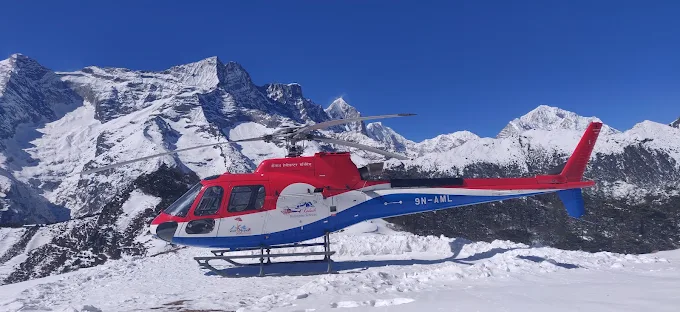
13 Days /
Heli Return
in
Nepal
Everest Base Camp Trek with Heli Return to Lukla or Kathmandu – 13 days
Experience the legendary Everest Base Camp trek, breathtaking Himalayan landscapes, Sherpa culture, and a scenic helicopter return from the heart of the Khumbu.

15 Days /
Heli Return
in
Nepal
Everest Base Camp and Gokyo Lakes Trek with Heli Return – 15 days
A 15-day Himalayan adventure combining Everest Base Camp, Kala Patthar, Cho La Pass, and the beautiful Gokyo Lakes, with a scenic helicopter return to Kathmandu.

08 Days /
Heli Return
in
Nepal
Langtang Valley Trek with Heli Return – 08 days
Experience mountain trails, local culture, high-altitude landscapes, and the peaceful atmosphere of the Langtang Valley, with a scenic helicopter ride providing an exciting finish to the journey.