Manaslu Circuit Trek After the October 2026 Floods: Trail Conditions, Safety and Travel Updates
Share:
 Read Time
This blog has 2827 words .This blog has 19172 characters.This blog take 9 minutes to read.
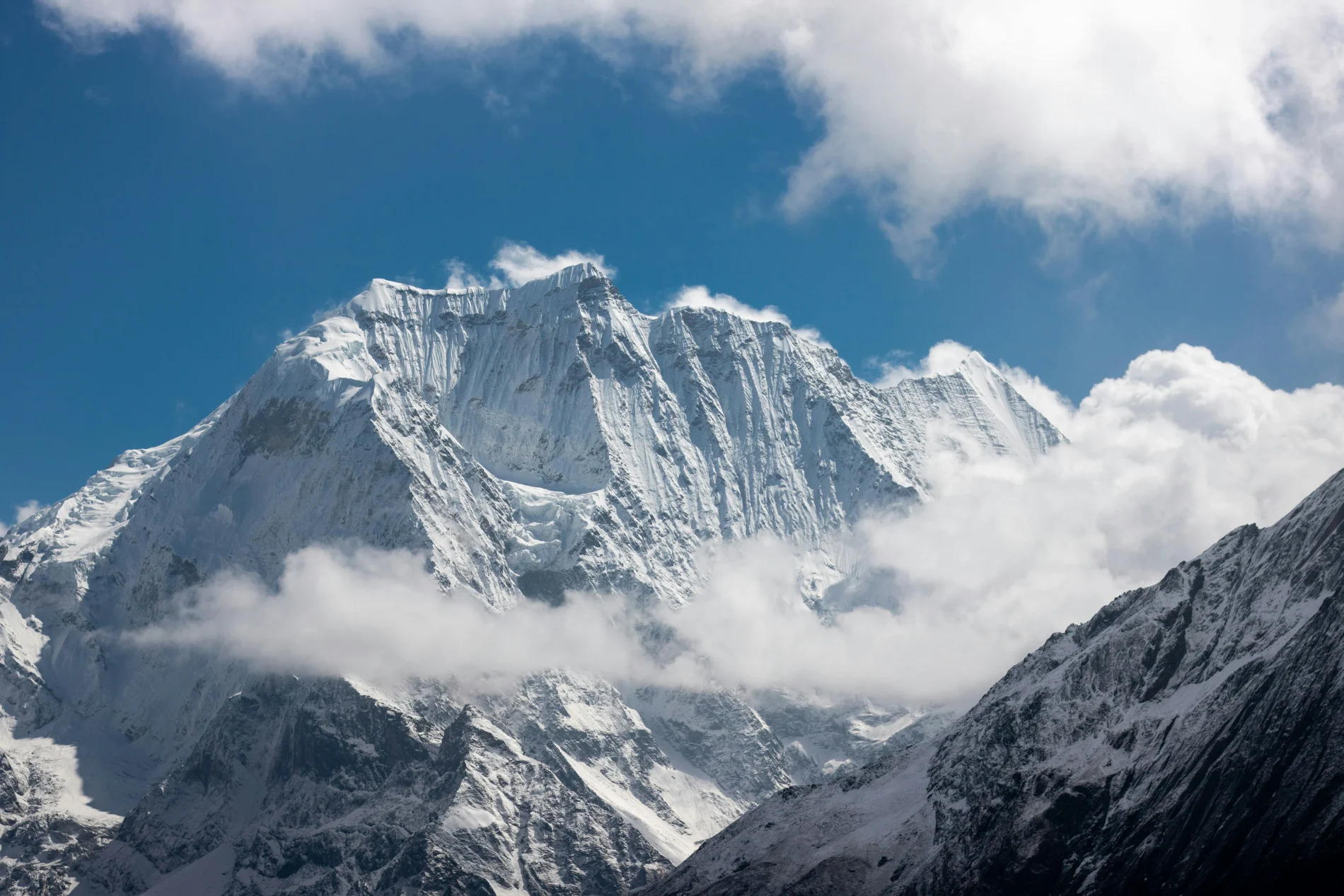
The Manaslu Circuit Trek is one of Nepal’s most rewarding Himalayan journeys, taking trekkers through traditional mountain villages, deep river valleys, Buddhist monasteries and dramatic high-altitude landscapes beneath Mount Manaslu. October is normally a popular month for this adventure, but the situation changed dramatically after flash flooding struck the Budhi Gandaki River valley on 11 October 2026.
The disaster damaged trekking trails, destroyed bridges and affected settlements in the Manaslu region of Gorkha district. Rescue teams were deployed, local communities were affected, and foreign trekkers found themselves stranded in different parts of the region. The incident has raised an important question for anyone planning an autumn trekking holiday in Nepal: is the Manaslu Circuit Trek safe to undertake right now?
This guide explains what has been reported, which travel conditions require particular attention, how trekkers should prepare, and what to verify before making a decision. Because the situation is developing, the information below reflects reports available as of 13 October 2026. It should not be treated as confirmation that any particular section of the trekking route has reopened.
What Happened in the Manaslu Region in October 2026?
On 11 October 2026, a major flash flood swept through the Budhi Gandaki River valley in Gorkha district. Preliminary reports linked the event to a landslide that blocked a watercourse before the accumulated water and debris surged downstream.
The flood damaged infrastructure, affected settlements and disrupted access through parts of the Manaslu and Tsum Valley regions. Bridges and trekking trails were among the infrastructure affected, while rescue and relief operations were complicated by the remote geography of the area.
According to reports published on 12 October, more than 100 foreign trekkers were stranded in the affected region at different points. Authorities were carrying out rescue operations, and five local residents were reported missing at that time. The exact situation can change as authorities complete their assessments. Reuters reported on the stranded trekkers and rescue efforts.
This was not simply a case of muddy paths following heavy rain. Floodwater can undermine trail foundations, remove sections of riverbank, destroy suspension bridges and leave apparently intact paths unsafe to cross. Even after the water level falls, hidden damage may remain.
For trekkers, the most important lesson is that the condition of a mountain route cannot be judged by the weather or appearance of the trail alone. The entire access route must be assessed.
Manaslu Circuit Trek Trail Conditions After the Floods
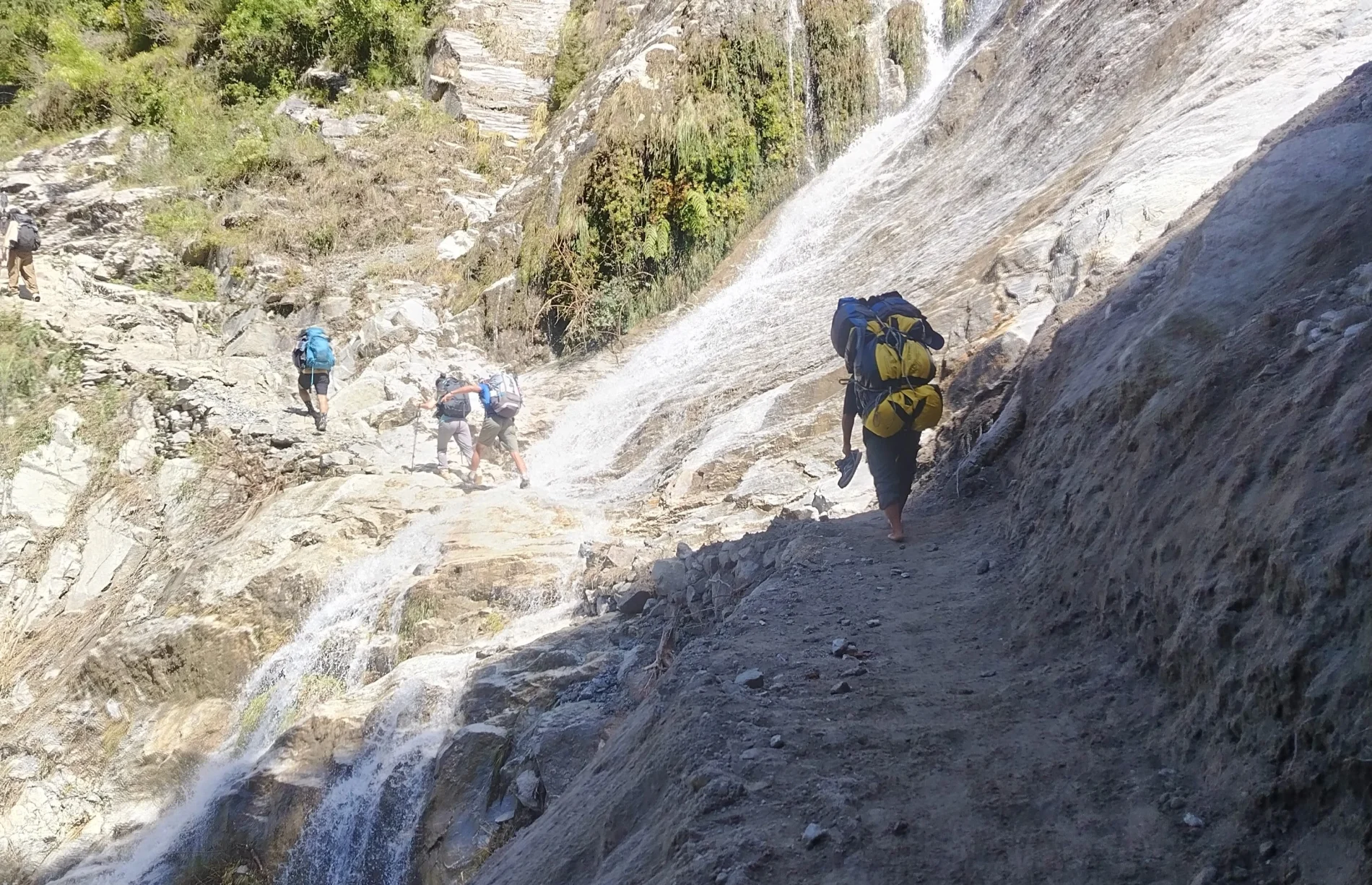
As of 13 October 2026, reports confirm damage to trekking infrastructure in the Budhi Gandaki valley. However, a complete, independently verified assessment of every section of the standard Manaslu Circuit route is not available here.
This distinction matters because the Manaslu Circuit is a long route passing through several settlements and different types of terrain. Damage in one section can interrupt access to areas beyond it, even if those distant trails have not suffered direct damage.
1. Lower Budhi Gandaki Valley
The lower river valley is an important part of the approach to the Manaslu Circuit. Trekkers commonly travel through the region around Soti Khola and Machha Khola before continuing toward Jagat, Deng and the higher villages.
Flood damage to bridges, roads and trails in the wider valley may affect access to these settlements and the movement of trekkers, guides, porters and supplies.
A road being open does not necessarily mean the walking route is safe. Similarly, a trail that appears passable on a map may be interrupted by a missing bridge or an unstable river crossing.
Before travelling toward the trailhead, obtain confirmation of road access and trekking conditions from the relevant local authorities and a responsible trekking operator.
2. Jagat and Philim
Jagat and Philim are important settlements along the Manaslu trekking corridor. They are also located within the wider river system affected by the recent disaster.
Reports following the flood described damage to bridges and other infrastructure in the surrounding area, including a crossing near Nakchet connecting the settlement with Philim. The precise condition of individual approaches and alternative crossings must be checked locally.
Do not assume that a route can be crossed simply because local people have used a temporary path. Conditions may differ depending on river levels, erosion and the stability of the surrounding ground.
3. Higher Villages and Remote Sections
Villages farther into the Manaslu region depend on a limited network of trails, bridges and local infrastructure. When a critical crossing is damaged, reaching a settlement or returning from it can become difficult.
Some trekkers may be staying safely in local accommodation while awaiting updated information or assistance. Others may be in locations where the available exit route has been disrupted.
The status of one village should not be used to determine the status of the entire circuit. Each affected section requires its own assessment, particularly where rivers, landslide-prone slopes or temporary crossings are involved.
4. Larkya La Pass
Larkya La Pass, at approximately 5,106 metres, is one of the main highlights of the Manaslu Circuit Trek. However, it is important to distinguish the high mountain pass from the lower river-valley areas affected by flooding.
The reports available as of 13 October do not establish the current condition of every section leading to the pass. Even if the higher trail has not sustained direct flood damage, trekkers must still be able to reach it safely and leave the region afterward.
Snowfall, strong winds, freezing temperatures and other mountain hazards may create additional challenges. A decision to proceed must consider the whole itinerary, not only the condition of the pass itself.
Is the Manaslu Circuit Trek Open Now?
As of 13 October 2026, I cannot verify an official reopening notice covering the route affected by the 11 October flood.
The Nepal Tourism Board had announced on 11 September that an earlier restriction following damage near Namrung had been lifted after repairs. However, that announcement concerned a previous incident. It does not confirm that the route is safe following the new October flood.
Travellers should check the Nepal Tourism Board’s Manaslu trekking route updates and seek current information from the District Administration Office in Gorkha and the Manaslu Conservation Area Project.
Before departing, obtain clear answers to these questions:
– Has the specific section affected by the flood been inspected?
– Are the necessary bridges and trail crossings safe to use?
– Is access available from the planned starting point?
– Are there any active restrictions or evacuation instructions?
– Can the itinerary be completed safely, including the planned exit route?
– Are local guides and rescue services able to support travel in the area?
If these questions cannot be answered reliably, postpone the trek rather than relying on an old itinerary or an informal social media update.
What Are the Main Safety Risks for Trekkers?
The October flood has created several concerns that go beyond ordinary trekking difficulty.
Damaged Bridges and River Crossings
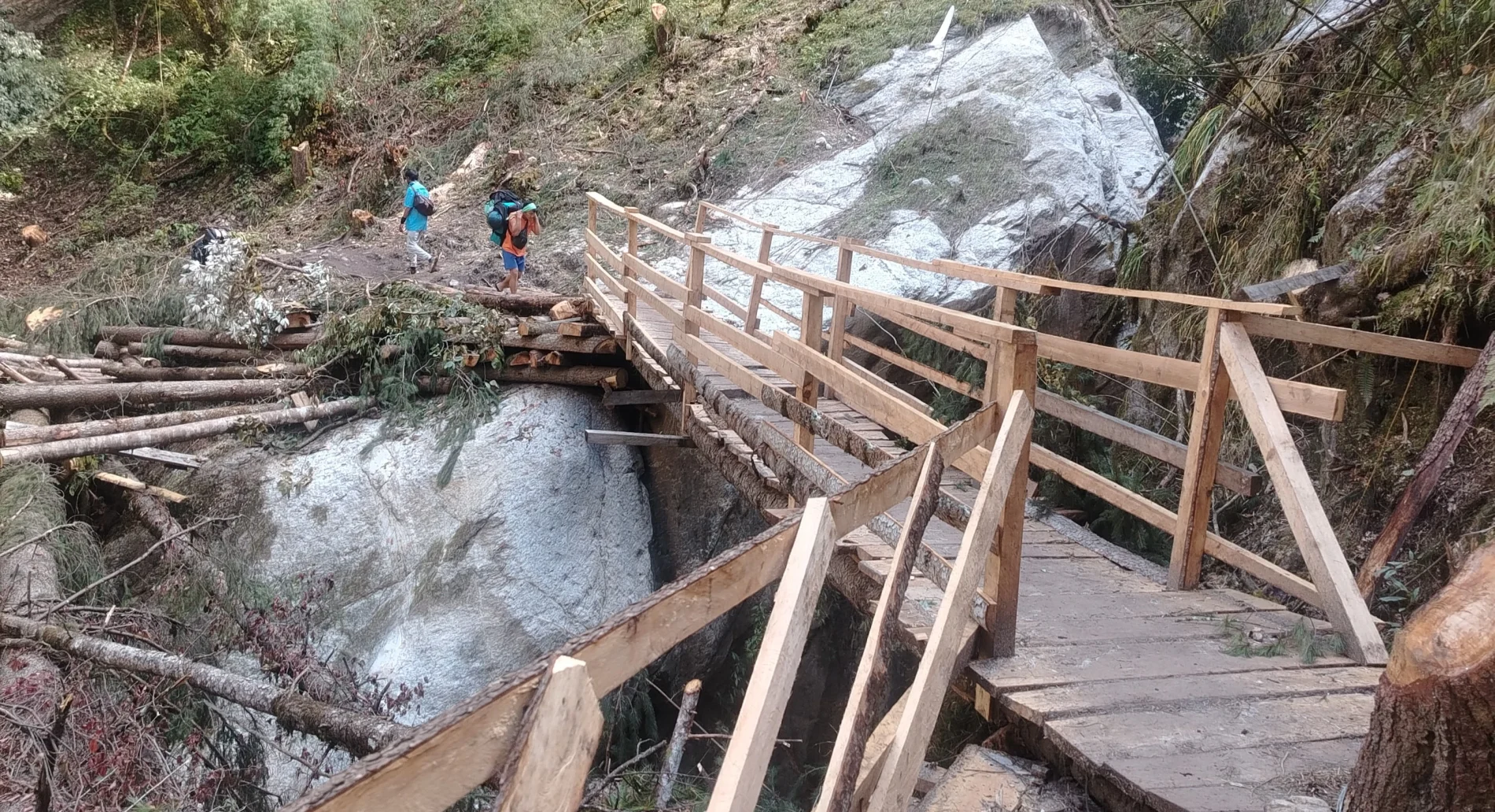
A suspension bridge can be an essential link between two sections of a Himalayan trail. When it is washed away, the river may become an impassable obstacle.
Do not attempt to cross a swollen river, walk across unstable debris or use a damaged bridge. A crossing that appears manageable from the bank can become dangerous within minutes if the water rises or the riverbed shifts.
Use a replacement crossing only when local authorities or qualified personnel have confirmed that it is safe.
Landslides and Unstable Slopes
Heavy rain and floodwater can loosen soil, rock and vegetation. Slopes may remain unstable after rainfall stops, and additional debris can fall without much warning.
Pay particular attention to freshly exposed ground, cracked trail edges, loose rocks and areas where water is flowing through a slope.
Avoid stopping beneath unstable cliffs or attempting to pass through an active landslide area.
Further Rainfall and Rising Water Levels
A clear morning does not guarantee safe conditions throughout the day. Rainfall higher in the mountains can affect river levels downstream, even when the weather appears calm where you are standing.
Trekkers should monitor local weather information and follow warnings from authorities. If conditions deteriorate, follow your guide’s safety instructions and move away from exposed riverbanks when directed.
Communication and Emergency Access
Remote mountain settlements can have limited mobile coverage, and damaged infrastructure may complicate emergency response. Rescue aircraft can also be affected by poor visibility, wind and other weather conditions.
Travellers should not assume that helicopter evacuation will be immediately available. Carry essential personal medication, suitable clothing, a charged phone and the emergency equipment recommended by your guide.
Travel insurance should explicitly cover the altitude and activities planned, including emergency evacuation where applicable.
Should You Postpone Your Manaslu Circuit Trek?
For travellers scheduled to start immediately after the 11 October flood, postponement is the safest decision unless the relevant authorities provide a clear, current confirmation that the intended route is safe and accessible.
This is not a statement that the entire Manaslu region will remain closed indefinitely. It is a practical response to a rapidly changing situation in which bridges, trails and access routes have sustained damage.
Your decision should depend on the official status of the exact itinerary, not on general statements that Nepal is open for tourism or that other trekking destinations are operating.
If your departure is several weeks away, keep monitoring updates before making a final decision. Infrastructure repairs may restore access to some sections sooner than others, and a reopening announcement may apply only to a specific location.
If you are already in the Manaslu region, do not independently attempt to reach a different trailhead or exit through an unverified alternative route. Contact your guide, trekking agency and local authorities, and follow official instructions.
For anyone still deciding whether to book, the sensible approach is to wait until route access, accommodation availability and safety conditions can be confirmed.
What Should Trekkers Do Before Travelling to Manaslu?
Good preparation is especially important after a natural disaster. Before leaving Kathmandu or another starting point, take the following steps.
Check Official Updates Close to Departure
Review current notices from the Nepal Tourism Board, district authorities and the Manaslu Conservation Area Project. Check the date and location covered by each announcement.
A notice issued before 11 October should not be treated as confirmation of conditions after the latest flood.
Speak Directly With Your Trekking Operator
Ask your operator to confirm the status of the starting route, the affected settlements, bridge crossings and planned exit. Request specific information rather than a general assurance that the trek is possible.
A responsible operator should be prepared to explain what is confirmed, what remains uncertain and what would cause the trip to be postponed.
Review Your Itinerary and Emergency Plan
Your guide should know where the group can obtain local assistance, which sections require special attention and how the group will respond if the route becomes inaccessible.
Avoid tight schedules that leave no flexibility for unexpected delays. Do not assume that a longer walking day or an improvised detour will solve an infrastructure problem.
Carry Appropriate Equipment
Normal trekking essentials remain important, including sturdy footwear, warm layers, waterproof clothing, a first-aid kit, drinking-water treatment supplies and a charged phone.
A power bank and an offline map can be useful, but neither makes an unsafe crossing safe. Follow your guide’s instructions and do not use navigation technology as a substitute for current local information.
Check Insurance and Travel Arrangements
Confirm that your travel insurance covers trekking at the intended altitude and the emergency assistance you may need. Review cancellation conditions with your airline, accommodation provider and trekking operator.
Keep copies of important documents and emergency contact details accessible offline.
Can You Choose Another Trek in Nepal Instead?
Possibly, but another destination should not automatically be considered safe simply because it is outside the Manaslu region. The wider Himalayan region has also experienced disruptive weather and infrastructure damage during the 2026 autumn season.
Before switching plans, check the current conditions for the entire alternative itinerary, including road transfers, trail access, bridges, accommodation and any high passes.
The Everest Base Camp Trek and Mardi Himal Trek are options worth investigating if their current access and trail conditions suit your dates. Neither should be treated as a confirmed alternative without a fresh safety check.
If you have already booked the Manaslu Circuit, discuss your options with your operator before purchasing replacement flights or making non-refundable arrangements.
The objective should be to enjoy a rewarding Himalayan experience without taking unnecessary risks or placing additional pressure on local rescue teams.
What Does the Flood Mean for Nepal’s Autumn Trekking Season?
October is traditionally one of Nepal’s most popular trekking months because post-monsoon conditions can bring clearer skies and impressive mountain views. However, favourable seasonal averages do not guarantee that every route will be safe in a particular year.
The recent Manaslu disaster demonstrates how a single landslide and sudden surge of water can disrupt an entire valley. The effects extend beyond trekking trails to local homes, bridges, power infrastructure, supply routes and the communities that depend on tourism.
It is also important to remember that the Manaslu region is home to local residents, guides, porters, lodge owners and other workers. The priority after a disaster must be the safety of affected communities and the restoration of essential access.
Travellers can support responsible tourism by following official instructions, respecting temporary restrictions and avoiding the spread of unverified claims. Waiting for reliable information is not a failure of adventure; it is part of responsible mountain travel.
Final Travel Advice
The October 2026 floods have seriously disrupted parts of the Manaslu trekking region, with reported damage to bridges, trails and other infrastructure along the Budhi Gandaki valley. Rescue and assessment operations were ongoing in the latest reports available on 13 October.
At present, the key question is not simply whether the Manaslu Circuit Trek is normally open in October. It is whether every essential section of your planned route is safe and accessible following the latest disaster.
Do not begin the trek on the strength of outdated reopening notices, social media photographs or assurances that do not identify the affected locations. Wait for current confirmation from the relevant authorities and a responsible local operator.
The Himalayas will still be there when conditions improve. Making a careful decision now can protect trekkers, guides, porters and the communities that make the Manaslu Circuit such a special journey.
Frequently Asked Questions
1. Is the Manaslu Circuit Trek open after the October 2026 floods?
As of 13 October 2026, I cannot verify an official reopening notice covering all sections affected by the 11 October flood. Check the latest local-authority and Nepal Tourism Board updates before travelling.
2. When did the October 2026 Manaslu flood occur?
The major flash flood occurred on 11 October 2026, affecting the Budhi Gandaki River valley in Gorkha district.
3. Which areas of the Manaslu region were affected?
Reports describe damage to settlements, bridges, trekking trails and other infrastructure in the wider Budhi Gandaki valley and parts of the Manaslu and Tsum Valley regions. The precise condition of individual trail sections requires local verification.
4. Are trekkers stranded in the Manaslu region?
Reports published on 12 October confirmed that more than 100 foreign trekkers were stranded at different locations. Rescue and assistance operations were underway, and the situation may have changed since those reports.
5. Is Larkya La Pass safe to cross after the flood?
Its current condition and the safety of the approach routes must be confirmed locally. Even if the pass itself has not been directly affected by floodwater, damaged access trails and changing mountain weather can make the overall journey unsafe.
6. Can I start the Manaslu Circuit Trek later in October 2026?
Possibly, but there is no guarantee. Check the official status of your specific route shortly before departure and proceed only when authorities confirm that the necessary sections are safe and accessible.
7. What should I do if I am already trekking in Manaslu?
Contact your guide, trekking operator and local authorities. Follow their instructions, avoid damaged bridges and river crossings, and do not attempt unverified alternative routes.
8. Do I need a guide for the Manaslu Circuit Trek?
The Manaslu restricted area has specific permit and guide requirements. Confirm the current rules with a registered trekking operator and the relevant authorities before travelling.
9. Can I change to the Everest Base Camp or Mardi Himal trek?
You can investigate these alternatives, but first verify current trail conditions, transport access, weather and any local restrictions. Do not assume another region is safe without checking.
10. Where can I find reliable Manaslu trekking updates?
Start with the Nepal Tourism Board , the Gorkha District Administration Office and the Manaslu Conservation Area Project. Ask your trekking operator to verify the latest conditions for your specific itinerary before departure.

Similar Blogs
View all
13/10/2026
Your Nepal Trek Is Booked, but the Trail Is Closed: What Now?
Imagine arriving in Nepal with your trekking boots ready, your flights booked, your bags packed, and...
Read more
12/10/2026
Why Are Floods Hitting Nepal Again? The Bhotekoshi Disaster Explained
Nepal has witnessed another devastating flood, raising a difficult question: why do destructive floods keep happening...
Read more