Standard vs Luxury Everest Base Camp Trek: Which Is Right for You?
Share:
 Read Time
This blog has 2710 words .This blog has 18439 characters.This blog take 9 minutes to read.
Reaching Everest Base Camp is the same goal whether you choose a simple teahouse journey or a more comfort-focused Himalayan adventure. The difference is what happens around the walking.
Where do you sleep? How much privacy do you want? How much support do you expect? Do you want a classic mountain experience, or would you rather have better accommodation and more personalized services whenever the route allows?
These are the questions worth asking when comparing a Standard vs Luxury EBC Trek.
The important thing to understand is that luxury in the Everest region does not mean a five-star hotel every night. The trail passes through remote Himalayan settlements, and accommodation becomes increasingly basic as you climb higher. Even premium itineraries must work within the realities of the mountain environment. Recent 2026 accommodation guides also point out that the greatest difference between standard and luxury options is generally found at lower elevations, particularly around Lukla and Namche Bazaar.
So which option makes more sense for you? The answer depends less on the label and more on the kind of trekking experience you want.
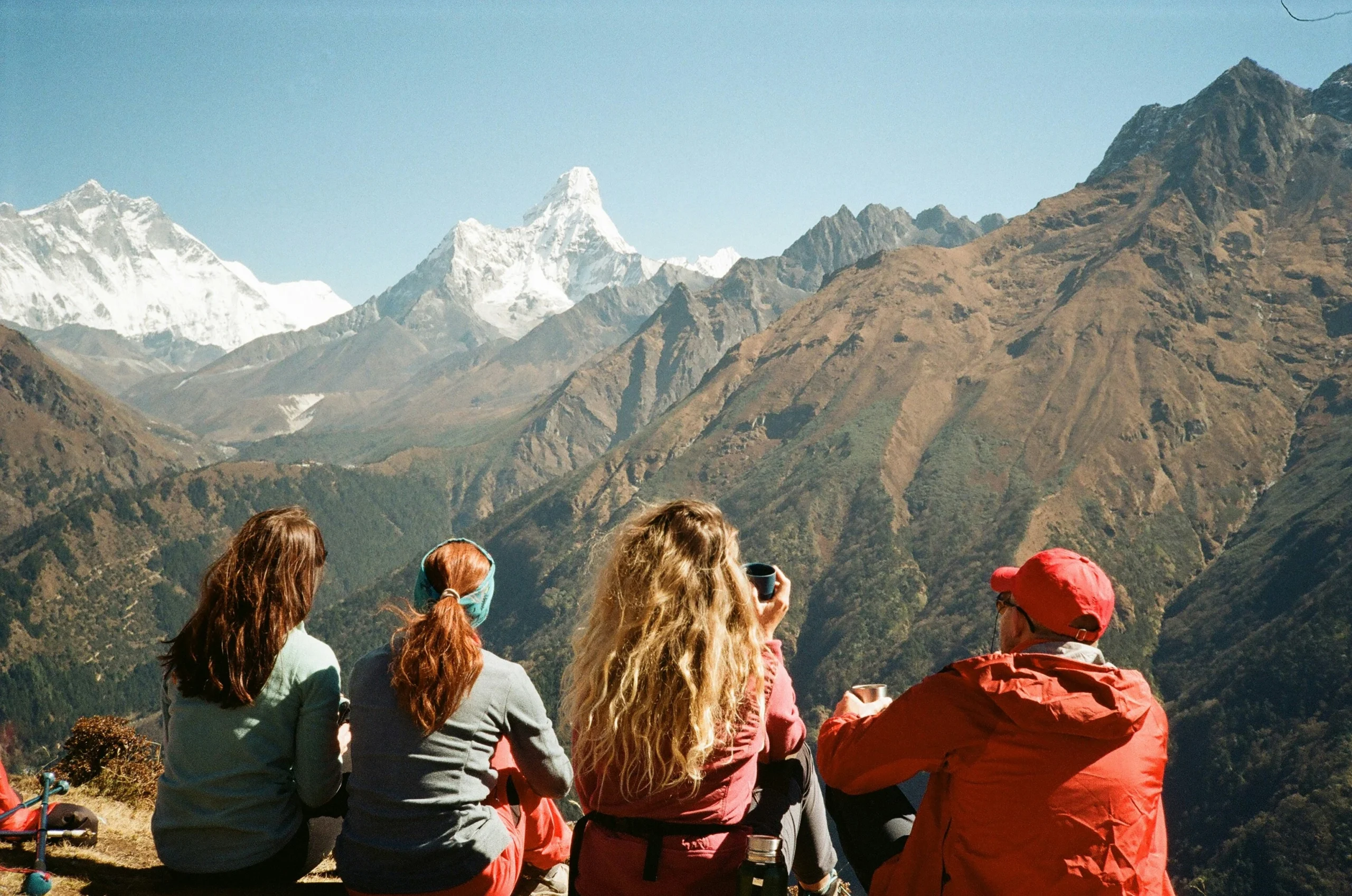
What Is a Standard EBC Trek?
A standard Everest Base Camp trek follows the classic teahouse trekking model used by most visitors to the Khumbu region.
You normally stay in local teahouses or mountain lodges, sharing rooms with another trekker or traveling companion. Rooms are generally simple, with beds, mattresses, blankets and basic facilities. Bathrooms may be shared, particularly at higher elevations.
The advantage is that you experience the Everest region in the traditional way.
After several hours on the trail, you arrive at a mountain village, leave your backpack in the room and head to the dining room. You eat a hot meal, talk with other trekkers, watch the stove gradually warm the room and prepare yourself for the next day’s walk.
That simplicity is part of the attraction.
Silver Moon Adventure’s current 14-day Everest Base Camp Trek follows this traditional model, with hotel accommodation in Kathmandu and teahouse accommodation during the trekking portion. The package includes full-board meals, a guide and porter support, permits and domestic transportation according to the itinerary.
For many travelers, this is enough.
A Standard vs Luxury EBC Trek comparison should therefore not treat the standard option as an inferior version of the journey. It is the classic way of experiencing the route.
What Is a Luxury EBC Trek?
A luxury Everest Base Camp trek is designed around comfort and personalized service wherever the geography of the route makes that possible.
This can include better-selected lodges, private rooms where available, more comfortable accommodation in Kathmandu and additional transportation or support services depending on the package.
Silver Moon’s current luxury EBC itinerary, for example, describes its approach as using the best available accommodation, private support, a comfortable pace, quality meals and carefully planned services. It also makes an important point: luxury does not mean expecting five-star facilities in remote Himalayan villages.
That distinction matters.
The lower sections of the route offer more accommodation choices. Namche Bazaar, for example, has a much wider range of lodges than the remote settlements farther up the valley. At places such as Lobuche and Gorak Shep, choices become much more limited because of altitude, remoteness and the practical difficulties of building and operating accommodation there.
Therefore, a Standard vs Luxury EBC Trek is really a comparison of the overall experience rather than a promise of luxury every night.
Standard vs Luxury EBC Trek: The Main Differences
The easiest way to understand the difference is to look at the parts of the journey that actually change.
The exact inclusions vary between operators, so it is important to compare the actual itinerary and inclusions rather than choosing a package simply because it contains the word “luxury.”
Accommodation: Where You Notice the Biggest Difference
Standard Accommodation
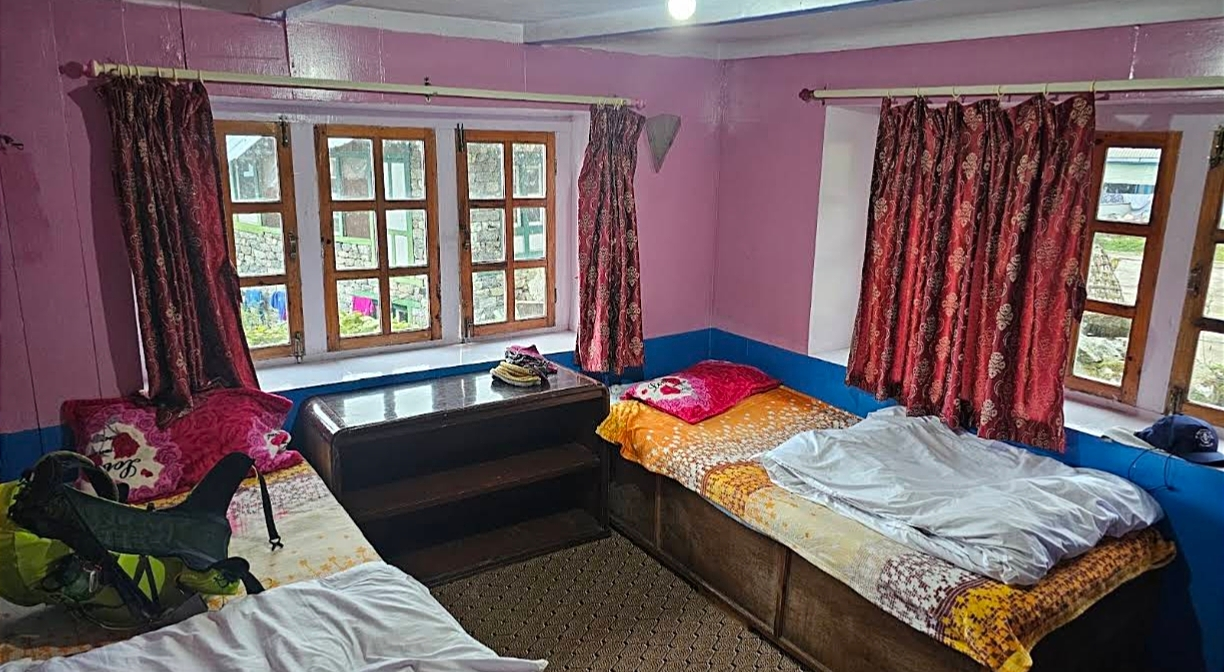
Standard EBC accommodation is simple, comfortable and practical. You will usually stay in local teahouses with twin-sharing rooms, basic beds and shared bathrooms. It is a traditional Himalayan experience where the focus is more on the journey than luxury.
Luxury Accommodation
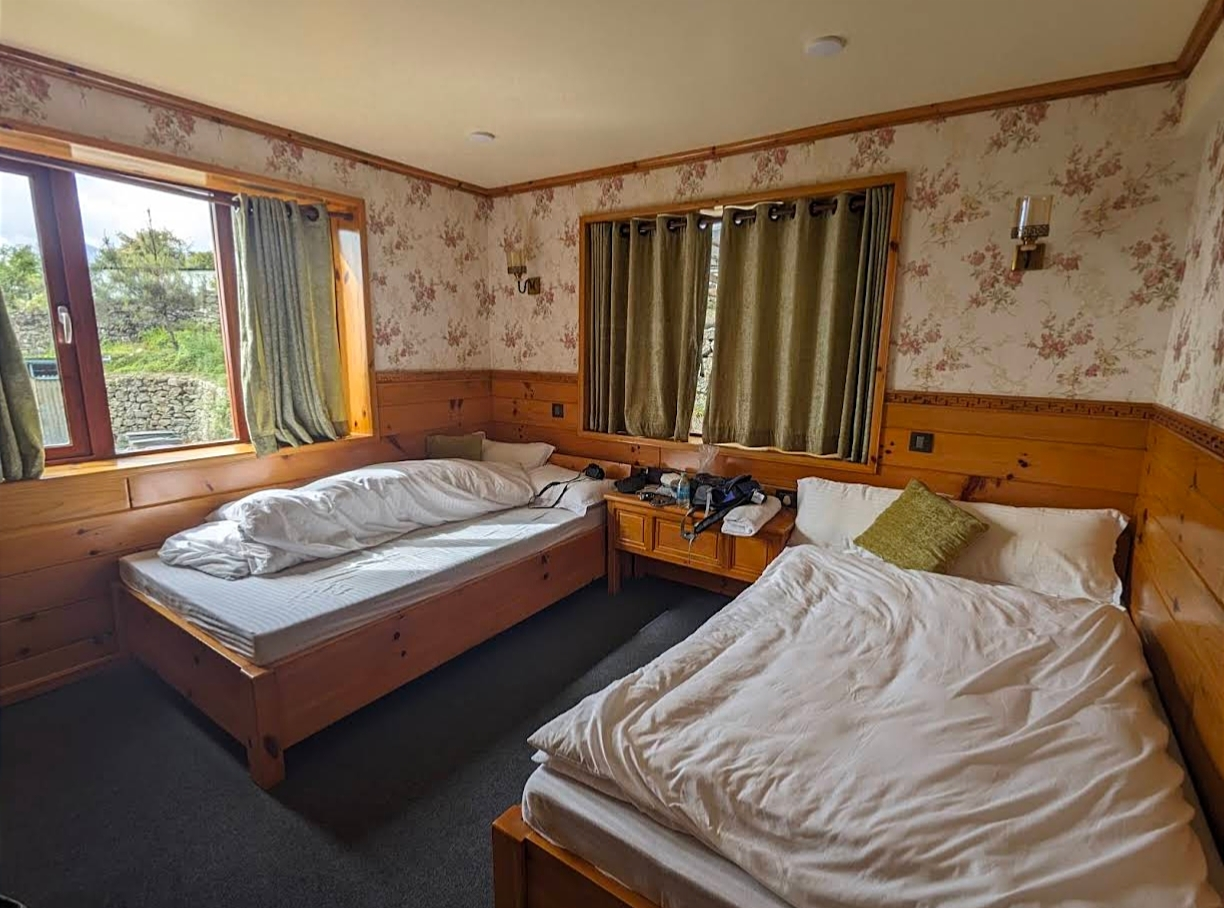
Luxury EBC accommodation offers a more comfortable stay wherever the route allows. You can expect better-selected lodges, upgraded rooms and private bathrooms in some locations, along with more personalized service. Higher on the trail, however, facilities naturally become more basic because of the remote mountain environment.
Meals and Dining
Food is another part of the experience where expectations should be realistic.
Standard teahouse trekking generally provides breakfast, lunch and dinner, with menus built around familiar trekking meals such as dal bhat, noodles, rice, pasta, soups, potatoes, eggs and other simple dishes.
The dining room often becomes the social center of the lodge.
On a luxury itinerary, meals may receive greater attention, with better-selected accommodation and dining options where available. Depending on the operator and package, travelers may also receive more flexibility around meals and dining arrangements.
But you are still eating in the Himalayas.
The difference is usually about quality, choice and service rather than having a completely different cuisine every night.
Privacy and Personal Space
This is one area where travelers often notice the difference immediately.
A standard trek normally uses twin-sharing accommodation. That works well for couples, friends and travelers who do not mind sharing a room.
A luxury itinerary can provide private rooms where accommodation allows it.
If you are someone who sleeps lightly, values personal space or simply wants to close the door after a long day of walking, this can make a significant difference.
However, private rooms are not guaranteed everywhere on the high route. Accommodation availability becomes more limited as you approach Everest Base Camp.
That is one of the most important things to understand when considering a Standard vs Luxury EBC Trek.
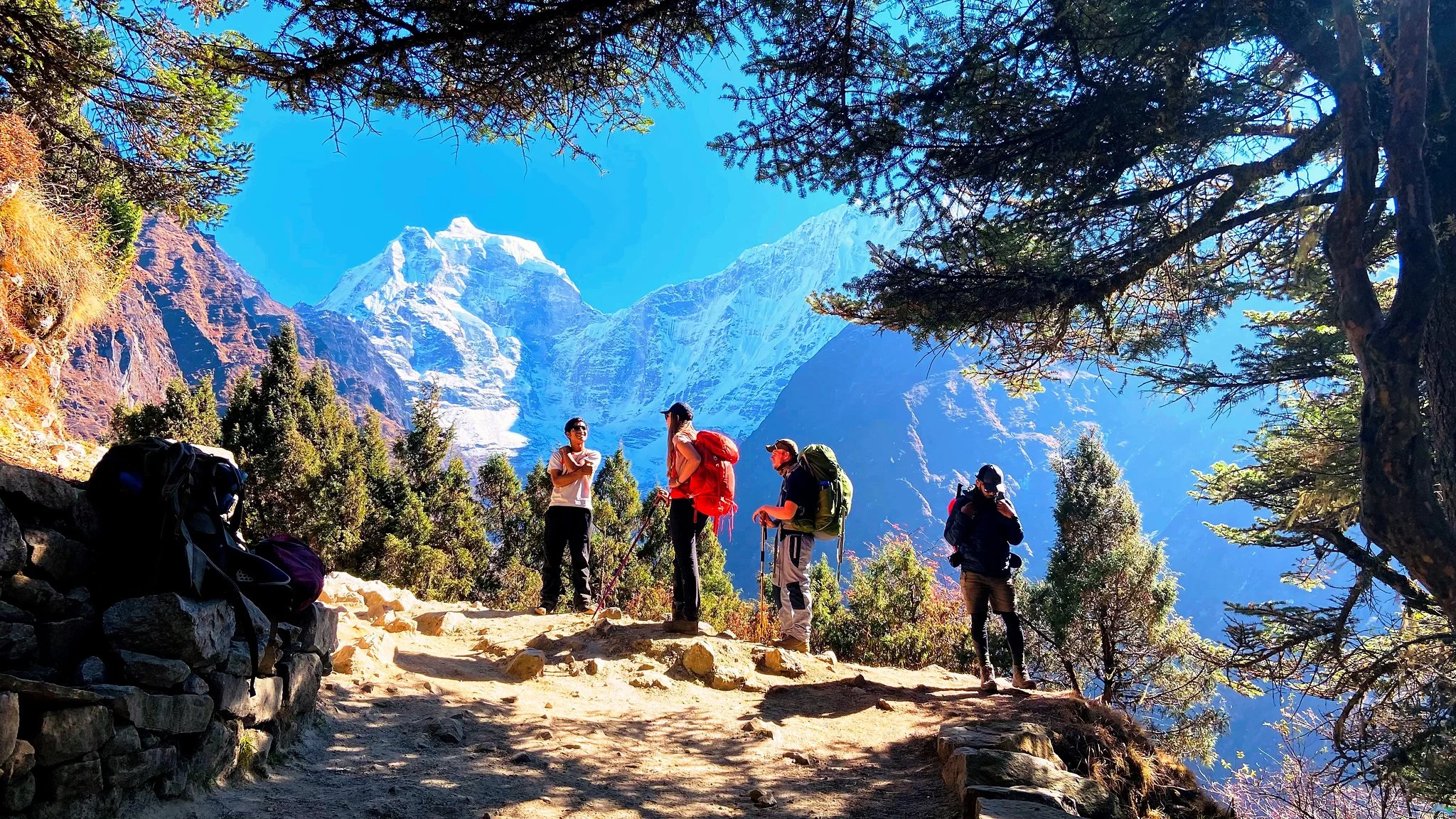
The Trekking Route Does Not Suddenly Become Easier
Choosing luxury accommodation does not make the mountain physically easier.
You still walk through the Khumbu Valley.
You still cross suspension bridges.
You still climb steep sections.
You still deal with cold temperatures and thinner air.
And you still need proper acclimatization.
The classic route passes through Phakding, Namche Bazaar, Tengboche, Dingboche, Lobuche and Gorak Shep before reaching Everest Base Camp. Standard itineraries normally include acclimatization days, particularly around Namche Bazaar and Dingboche. Nepal’s official tourism itinerary also includes these acclimatization stops.
Silver Moon’s current standard itinerary similarly includes an acclimatization day in Namche and another in Dingboche.
This means the luxury option is not an alternative to trekking.
It is a more comfortable way of supporting the trekking experience.
What About Altitude?
Altitude is one of the biggest factors in deciding between a Standard vs Luxury EBC Trek, but neither package eliminates altitude-related challenges.
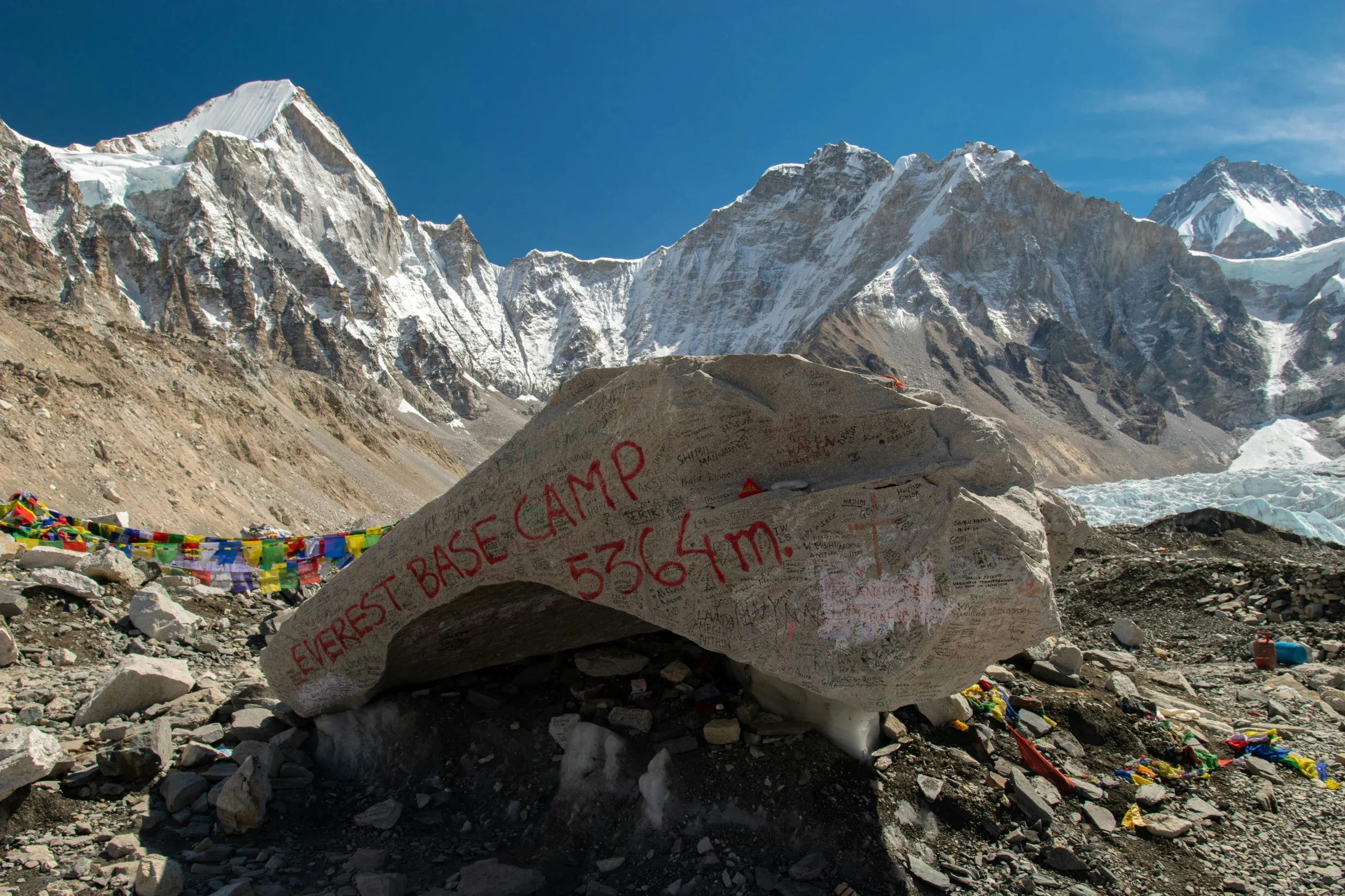
Everest Base Camp sits at about 5,364 meters, while Kala Patthar rises to around 5,555 meters on Silver Moon’s standard itinerary.
As you ascend, the environment becomes colder and facilities become more limited.
This is why itinerary design matters more than simply paying for a better room.
A responsible trek should allow your body time to adjust. Acclimatization days, gradual elevation gain, hydration, appropriate pacing and communication with your guide all remain important regardless of the accommodation category.
If you are comparing a Standard vs Luxury EBC Trek, look carefully at the itinerary before looking at the room category.
Which One Costs More?
A luxury trek generally costs more because you are paying for upgraded accommodation where available, more personalized services and potentially additional transportation or support.
However, price should not be compared using the package name alone.
Two luxury EBC packages can have very different inclusions. One might include upgraded Kathmandu accommodation and premium lodges, while another might add helicopter transportation or private services.
Likewise, two standard packages may have different guide-to-client ratios, accommodation standards, meal arrangements and transportation.
Before comparing prices, check:
* Accommodation category
* Room-sharing arrangements
* Kathmandu hotel
* Guide and porter services
* Domestic flights
* Meals
* Permits
* Private transportation
* Helicopter services, if included
* Travel insurance requirements
* Extra nights and contingency arrangements
* Hot showers, Wi-Fi and charging costs
Silver Moon’s standard EBC package currently lists hotel accommodation in Kathmandu, teahouse accommodation during the trek, full-board meals, permits, guide and porter support and transportation among its inclusions.
Who Should Choose a Standard Trek?
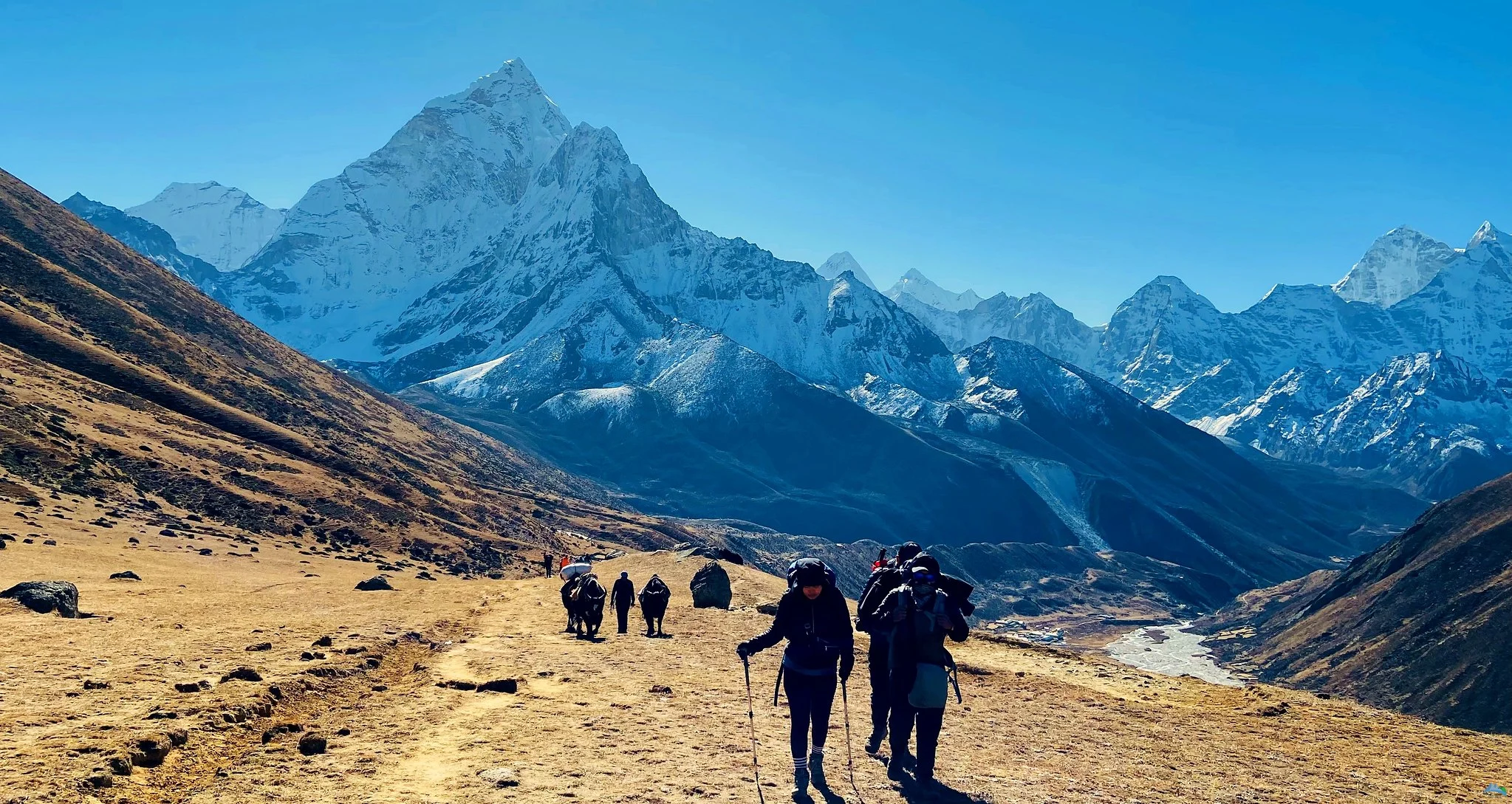
A standard trek can suit travelers who want the classic Everest experience without making accommodation the main focus of the trip.
It may be particularly suitable if you:
* Enjoy traditional teahouse trekking
* Are comfortable sharing a room
* Want to experience local mountain lodges
* Prefer to keep the overall trip cost lower
* Care more about the trail and scenery than upgraded accommodation
* Enjoy meeting other trekkers
* Want a straightforward classic EBC itinerary
There is something satisfying about finishing a long walking day and sitting around a teahouse stove with other trekkers who have just come down from the same trail.
You do not need luxury to make that experience memorable.
Who Should Choose a Luxury Trek?
A luxury option may suit travelers who place greater importance on comfort, privacy and personalized service.
You may prefer it if you:
* Want better accommodation whenever possible
* Prefer private rooms
* Value comfort after long trekking days
* Want higher-category hotels in Kathmandu
* Prefer private or more personalized support
* Are traveling as a couple or private group
* Have limited trekking experience and want additional support
* Want to combine the trek with upgraded transportation or other premium services
A luxury trek can also make sense for travelers who are visiting Nepal for a special occasion and want the Everest journey to feel more personalized.
Standard vs Luxury EBC Trek for First-Time Trekkers
First-time trekkers sometimes assume luxury is automatically the safer option.
That is not quite how it works.
Safety comes primarily from proper acclimatization, experienced guides, appropriate pacing, weather awareness, suitable equipment and a sensible itinerary.
A more expensive room does not prevent altitude sickness.
At the same time, greater comfort can make the overall experience easier to manage. Better rest, more privacy and reduced logistical stress may be valuable to some travelers.
So when comparing a Standard vs Luxury EBC Trek for your first Himalayan adventure, think about the type of support you personally value.
Can You Have a Mix of Standard and Luxury?
Yes, and this is often a practical way to think about the trip.
Instead of imagining two completely separate worlds, consider where an upgrade actually matters.
You might prefer a better hotel in Kathmandu, a more comfortable lodge in Namche and standard teahouses farther up the route.
This approach recognizes a simple reality: luxury accommodation becomes harder to provide at extreme altitude.
For many travelers, the most noticeable comfort improvements happen before reaching the highest settlements.
That makes a mixed approach worth discussing when planning a private itinerary.
The Experience Beyond the Room
One thing both options have in common is that accommodation is only a small part of the Everest experience.
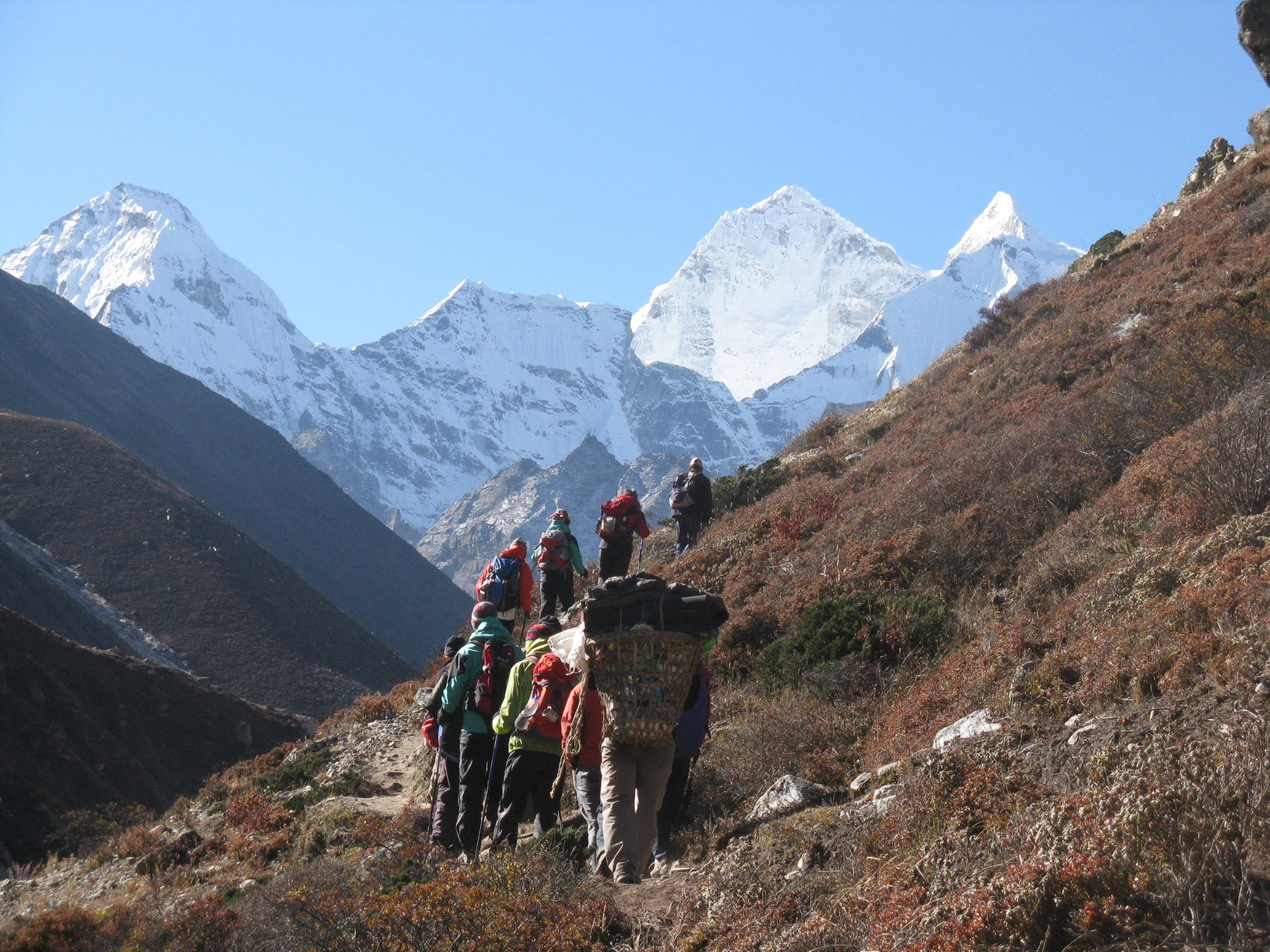
The trail takes you through Sherpa villages, forests, suspension bridges, monasteries and high mountain valleys. Namche Bazaar provides an important acclimatization stop, while Tengboche introduces trekkers to one of the region’s most important Buddhist monasteries.
Higher on the route, the landscape becomes increasingly rugged.
Eventually, the trail reaches Gorak Shep and continues toward Everest Base Camp at 5,364 meters. Kala Patthar provides another major viewpoint, with panoramic mountain scenery that includes Everest and surrounding Himalayan peaks.
Whether your room has a private bathroom or a shared one, you are still walking beneath some of the world’s highest mountains.
That is something neither package can improve upon.
So, Which EBC Trek Should You Choose?
There is no universal answer to the Standard vs Luxury EBC Trek question.
If you want the traditional Himalayan experience, are comfortable with simple teahouses and would rather put your budget toward the overall adventure, the standard approach may suit your travel style.
If privacy, upgraded accommodation, personalized service and additional comfort matter strongly to you, a luxury itinerary may make more sense.
The most important point is to understand what “luxury” actually means on the Everest route.
It means better available accommodation, more comfort and more personalized services where the environment allows it. It does not mean five-star facilities from Lukla to Everest Base Camp.
At the highest settlements, everyone has to respect the mountain.
For that reason, the best Standard vs Luxury EBC Trek is ultimately the one that matches your expectations, budget, preferred level of comfort and reason for coming to Nepal.
And whichever option you choose, the most important part remains the same: a well-planned itinerary, sensible acclimatization, experienced local support and enough time to enjoy the journey rather than simply racing toward the destination.
Frequently Asked Questions
1. What is the main difference between a Standard vs Luxury EBC Trek?
The main difference is the level of accommodation, privacy, comfort and personalized service. Both options still involve the same high-altitude trekking environment and require proper acclimatization.
2. Is a luxury EBC trek worth the extra cost?
That depends on how much value you place on privacy, upgraded accommodation and personalized services. Luxury can provide greater comfort where facilities are available, but it cannot provide five-star accommodation throughout the entire route.
3. Can I get a private room on the Everest Base Camp trek?
Private rooms are available at some lower-altitude lodges, but availability becomes more limited at higher elevations. A private room should therefore be requested in advance rather than assumed to be available everywhere.
4. Are meals better on a luxury EBC trek?
Luxury packages may provide higher-quality or more carefully selected dining options, depending on the itinerary and accommodation. Standard teahouses also provide substantial meals suitable for long trekking days.
5. Does a luxury trek make Everest Base Camp easier?
No. You still have to walk at high altitude, and the physical demands of the route remain. Luxury mainly improves comfort and logistics.
6. Is a standard EBC trek comfortable?
Standard teahouse trekking provides a bed, meals and basic facilities, but conditions become simpler as you gain altitude. Travelers should be prepared for shared bathrooms, cold rooms and limited facilities at higher settlements.
7. Can I bring my own sofa to Everest Base Camp for maximum luxury?
No. Unless your sofa has trekking poles, a porter and a serious relationship with altitude, it is probably staying in Kathmandu. Even on a luxury EBC trek, the higher sections of the route have limited accommodation and facilities, so comfort has to work within the realities of the Himalayas.
8. Can I combine standard and luxury accommodation?
Yes. A customized itinerary can focus upgrades on locations where better accommodation is available while using standard teahouses in higher settlements.
9. Does the luxury trek include Everest Base Camp and Kala Patthar?
This depends on the specific itinerary. Silver Moon’s current luxury EBC itinerary is designed around the Everest Base Camp experience and includes Kala Patthar among its highlights.
10. How should I choose between standard and luxury?
Compare the actual inclusions rather than the package name. Look at accommodation, room arrangements, meals, guide and porter support, transportation, acclimatization days and additional services before making your decision.
Similar Blogs
View all
13/10/2026
Manaslu Circuit Trek After the October 2026 Floods: Trail Conditions, Safety and Travel Updates
The Manaslu Circuit Trek is one of Nepal’s most rewarding Himalayan journeys, taking trekkers through traditional...
Read more
13/10/2026
Your Nepal Trek Is Booked, but the Trail Is Closed: What Now?
Imagine arriving in Nepal with your trekking boots ready, your flights booked, your bags packed, and...
Read more