Photography Tips for Trekking in Nepal: Capture the Journey
Share:
 Read Time
This blog has 3487 words .This blog has 20856 characters.This blog take 12 minutes to read.
There is something about taking a camera into the Himalayas that sounds much easier before you actually do it. At home, you imagine yourself walking along a beautiful mountain trail, stopping whenever the light looks perfect, taking a few photographs and continuing on your way like some kind of professional adventure photographer.
Then the trek begins, and you realize that the camera has quietly become another responsibility. Now you are not only thinking about your backpack, water, lunch, altitude and where your next cup of tea is coming from.
You are also wondering whether the camera is safe, whether the lens is clean, whether the battery is charged and whether that strange sound inside your bag was actually your camera moving around.
When you trek the camera usually becomes part of the journey in a way you did not expect. You carry it through forests, villages, suspension bridges, rocky trails and cold mountain mornings.
You take it out when the mountains appear, put it away when the weather changes and take it out again five minutes later because the clouds have suddenly moved.
Somewhere along the way, you stop treating it like an expensive piece of equipment and start treating it almost like a small, slightly demanding member of the trekking group. And honestly, that is where the fun begins.
The camera becomes another thing you have to look after
The first few days, you are probably very careful with it. Every time you put your backpack down, you remember that your camera is inside. If it starts raining, you immediately think about the camera before thinking about yourself. If the trail gets dusty, you start wondering whether the dust is somehow finding its way into the lens. If someone drops their backpack nearby, you look at your own bag as if you have just witnessed an attempted murder.
After a while, you get used to it, but you never completely stop worrying. Trekking in Nepal means dealing with changing weather, dust, moisture, cold temperatures and plenty of uneven trails. Your camera is experiencing all of that with you, except it does not get to complain over dinner. Keeping it somewhere protected and easily accessible makes a huge difference. You do not want to bury the camera so deeply inside your backpack that you need to unpack half your life every time you see a beautiful view. At the same time, you do not want it hanging outside your bag where every branch, rock and unexpected shower gets a chance to introduce itself.
The trick is finding that annoying middle ground where the camera is protected but still close enough that you will actually use it.
You are going to miss photographs, and that is completely normal
One of the funniest things about mountain photography is how quickly a perfect moment can disappear. You can be walking along a trail with absolutely nothing happening, and then suddenly the clouds move, the sunlight hits a mountain and everything looks incredible. Your brain immediately says, “Take the camera out.”
So you stop.
You open the bag.
You take out the camera.
You remove the lens cap.
You turn it on.
You look up.
The mountain is gone.
The cloud has moved directly in front of it as if someone backstage has pulled a curtain across the Himalayas.
You stand there holding your camera, wondering whether the mountain has a personal problem with you.
It happens. Sometimes the photograph comes easily, and sometimes the best moment lasts about eight seconds and disappears before you have even found the right setting. That is one reason you should not become too obsessed with getting every photograph perfectly. If you spend the whole trek trying to control every little detail, you can end up missing the experience itself.
Then there are your fingers
Cold weather and camera buttons are not particularly good friends. You might think wearing gloves will solve the problem, and technically they do keep your hands warm. The problem begins when you actually try to operate the camera.
Your gloves make your fingers feel like you are trying to operate a television remote while wearing boxing gloves. You press the wrong button, change something you did not mean to change, take a completely accidental photograph or somehow end up in a menu you have never seen before. Then you take the gloves off because you really need to press that one tiny button.
For a few seconds, everything works.
Then your fingers start freezing.
You take the photograph anyway because the mountain looks fantastic.
And somewhere in the back of your mind, there is a quiet voice asking why you thought bringing a camera to a freezing Himalayan viewpoint was such a good idea.
It is worth learning the basic controls of your camera before the trek so you are not trying to remember which button does what while standing in the cold. Keep things simple. Know how to change the basic settings you use most often, and do not make yourself learn a complicated new setup halfway up a mountain.
The Himalayas are already giving you enough challenges.
Do not photograph only the mountains
Of course, you want photographs of the mountains. Nobody travels halfway around the world to Nepal and comes home saying, “I deliberately avoided photographing the Himalayas.”
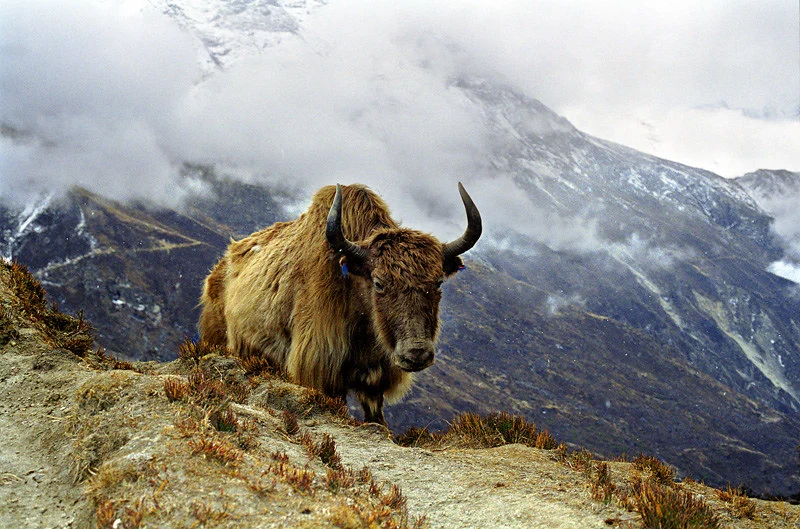
But after a few days, you may notice that the smaller things around you can be just as interesting. A cup of tea sitting beside a window while snow falls outside can tell a story. So can a pair of muddy trekking boots outside a teahouse, prayer flags moving above a village, a porter walking along a narrow trail or the steam coming from a bowl of hot food after several hours of walking.
These photographs are sometimes the ones you appreciate most later.
The big mountain photograph tells you what you saw. The little photographs often remind you what it felt like to be there.
Maybe you will forget exactly which hill you were standing on when you took a photograph of your breakfast. But you probably will not forget being completely exhausted, sitting in a cold teahouse, drinking something hot and thinking that food had never tasted so good.
That is a photograph worth having.
Let people become part of the photograph
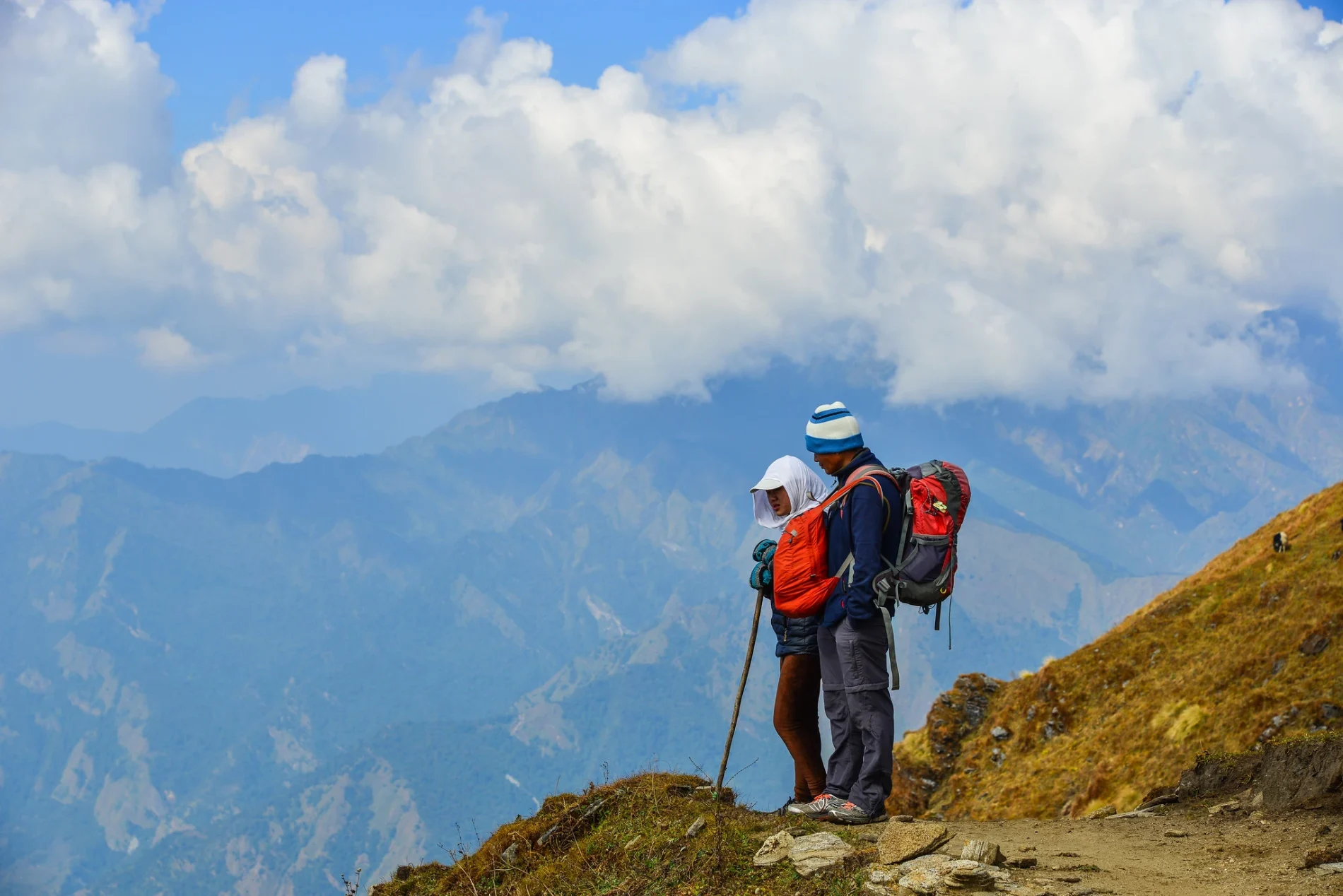
The Himalayas are enormous, and that can actually make mountain photographs difficult. A mountain can look huge when you are standing beneath it, but when you look at the photograph later, it sometimes loses that sense of scale. Put a person on the trail and suddenly the size of the landscape becomes obvious.
You do not need to make everyone pose like they are starring in a trekking advertisement. Sometimes a person simply walking along the trail is enough. Someone crossing a suspension bridge, standing beside a prayer flag or looking toward a mountain can give the photograph a sense of scale without making it feel staged.
And when you are photographing local people, remember that you are travelling through their home. If you want a portrait, ask. A simple conversation can make a much better photograph than quietly pointing a camera at someone from a distance. Sometimes the best photographs happen after you have already talked to someone for a few minutes and they are comfortable around you.
The photograph becomes less about “look at this interesting person I found” and more about “this was someone I met on my journey.”
There is a big difference.
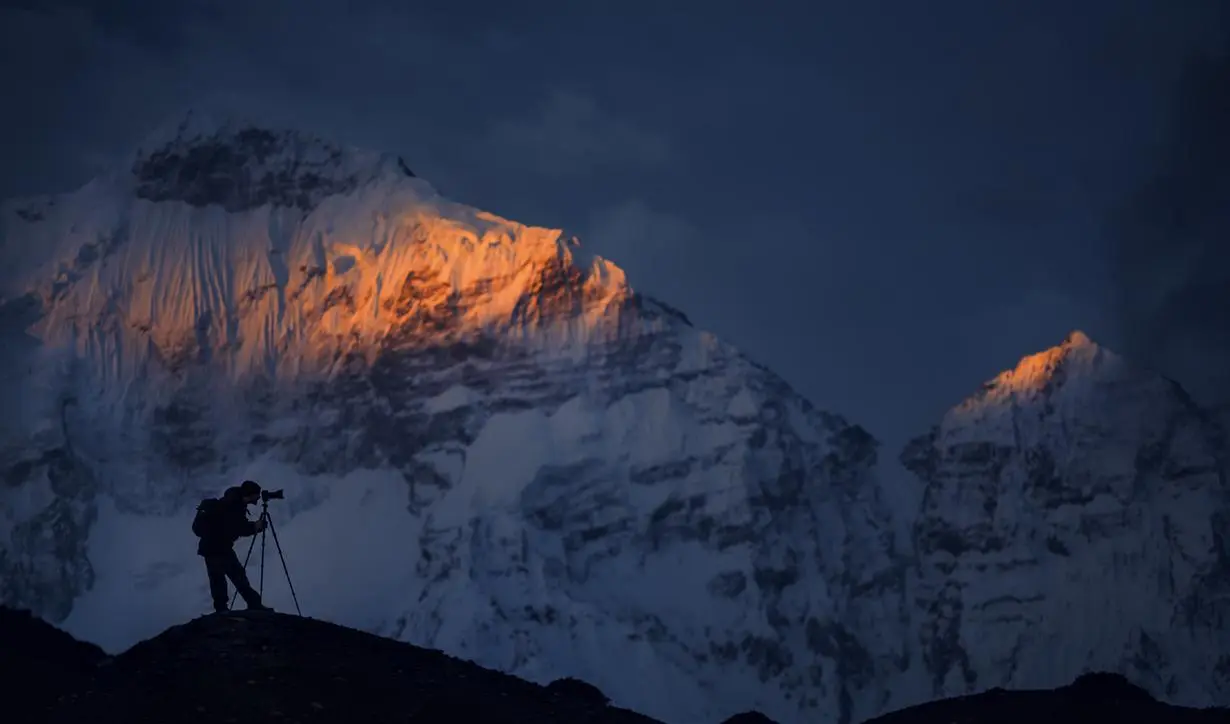
The morning light is worth losing some sleep for
There is a reason trekkers are constantly being told to wake up early for mountain views. It is not because trekking companies secretly enjoy watching people crawl out of warm sleeping bags before sunrise.
The light really is different.
Early in the morning, the mountains can catch the first sunlight while the valleys remain dark and cold. Peaks that looked ordinary the afternoon before can suddenly become dramatic. Clouds may sit below you, the sky can change quickly and the whole landscape can feel quieter before everyone starts moving along the trail.
So if your guide says that getting up early will give you a better chance of seeing the mountains, there is probably a reason.
You will complain.
You will wonder why you agreed to this.
You will probably look at your sleeping bag and think it is the most beautiful thing you have ever seen.
Then you step outside and see the first sunlight touching the mountains.
Suddenly you are glad you got up.
At least until you remember that your fingers are about to freeze while you try to operate the camera.
Do not wait for perfect weather
Blue skies are wonderful for mountain photography, but Nepal does not promise you blue skies just because you carried an expensive camera all the way there.
Clouds can appear quickly. Mist can move through a forest. Rain can turn the trail into something completely different. Snow can make a familiar village look like another place entirely.
Sometimes you will spend the whole morning hoping for clear mountains and end up with nothing but clouds. Then, just when you have put the camera away, the clouds open for a few seconds and give you the exact photograph you wanted.
Other times, the clouds themselves make the photograph.
Mist moving through a forest can create a completely different atmosphere from a clear day. Dark clouds behind a mountain can make the landscape feel dramatic. Rain on a stone trail can add texture and reflections that you would never get under bright sunshine.
So do not automatically think bad weather means bad photographs. Sometimes the mountains look more interesting when they are being slightly difficult.
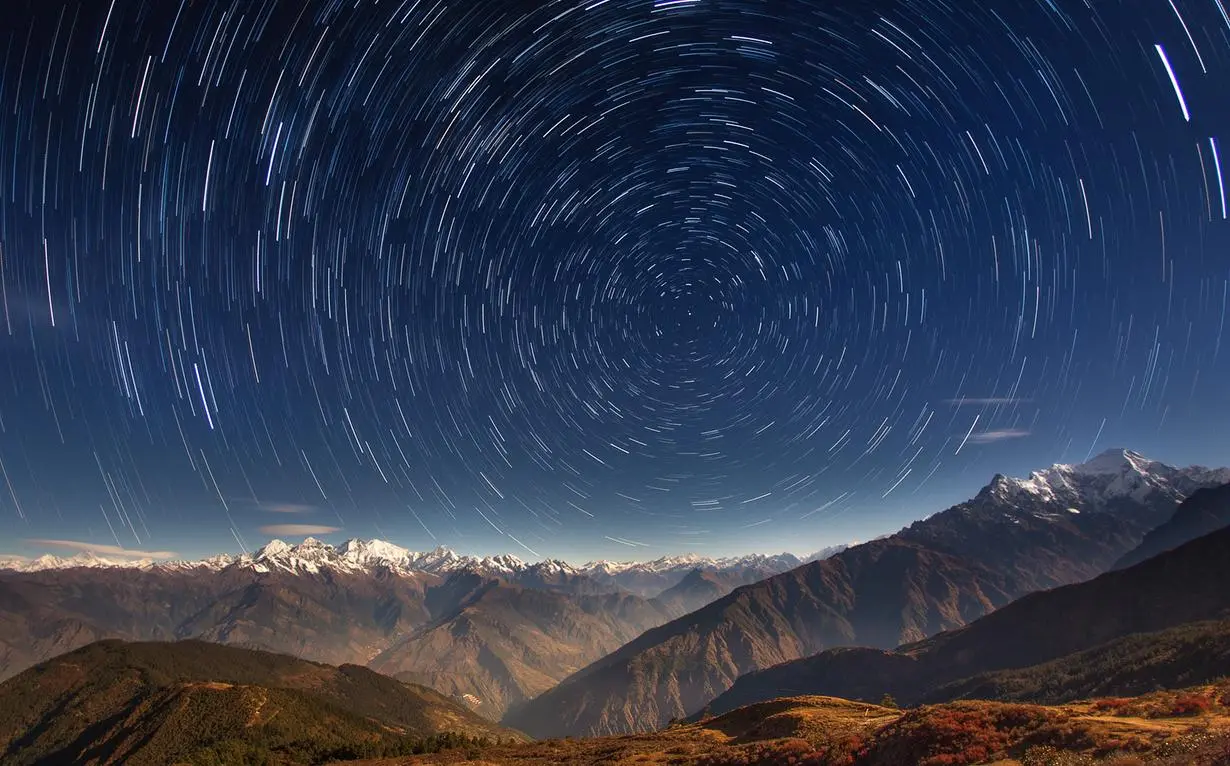
Carry the camera, but do not carry your entire house
There is a strange thing that happens when preparing for a trek. At home, every piece of camera equipment seems necessary.
One lens might be useful.
Another lens might be useful.
A tripod could be useful.
Extra filters might be useful.
Another battery definitely sounds useful.
Suddenly you have enough equipment to open a small photography shop, and then you remember that you are going to carry all of it uphill.
This is where reality becomes important.
You do not necessarily need the biggest collection of equipment to get good photographs in Nepal. A camera and a lens that you are comfortable using can be more useful than several pieces of equipment sitting at the bottom of your backpack because you were too tired to take them out.
Every extra item becomes something you have to carry, protect and think about. On a long trekking day, even a small amount of extra weight can become surprisingly annoying.
The best camera on the trek is often the one you are actually willing to take out of your bag.

Starts from
USD 1,997
Annapurna Circuit Luxury Trek – 13 days
The Annapurna Circuit Luxury Trek offers a comfortable and well-paced way to explore one of Nepal’s most iconic mountain...
Duration:
13 days
Max altitude:
5,416m at Thorong La Pass
Take care of your batteries
Cold weather has a particularly annoying relationship with camera batteries. You can start the morning feeling confident, look at the battery indicator and think you have plenty of power, only to discover later that the cold has made your battery behave like it has suddenly decided to retire.
Keeping spare batteries somewhere warm can help, especially in colder sections of a trek. Your jacket pocket is often a much happier place for a spare battery than the coldest corner of your backpack.
And remember that your phone is probably using power too. You may be taking photographs, checking maps, communicating with people and occasionally staring at the battery percentage like it personally betrayed you.
Power management is not the most exciting part of photography, but running out of battery just as the mountains appear is an experience you only need once.
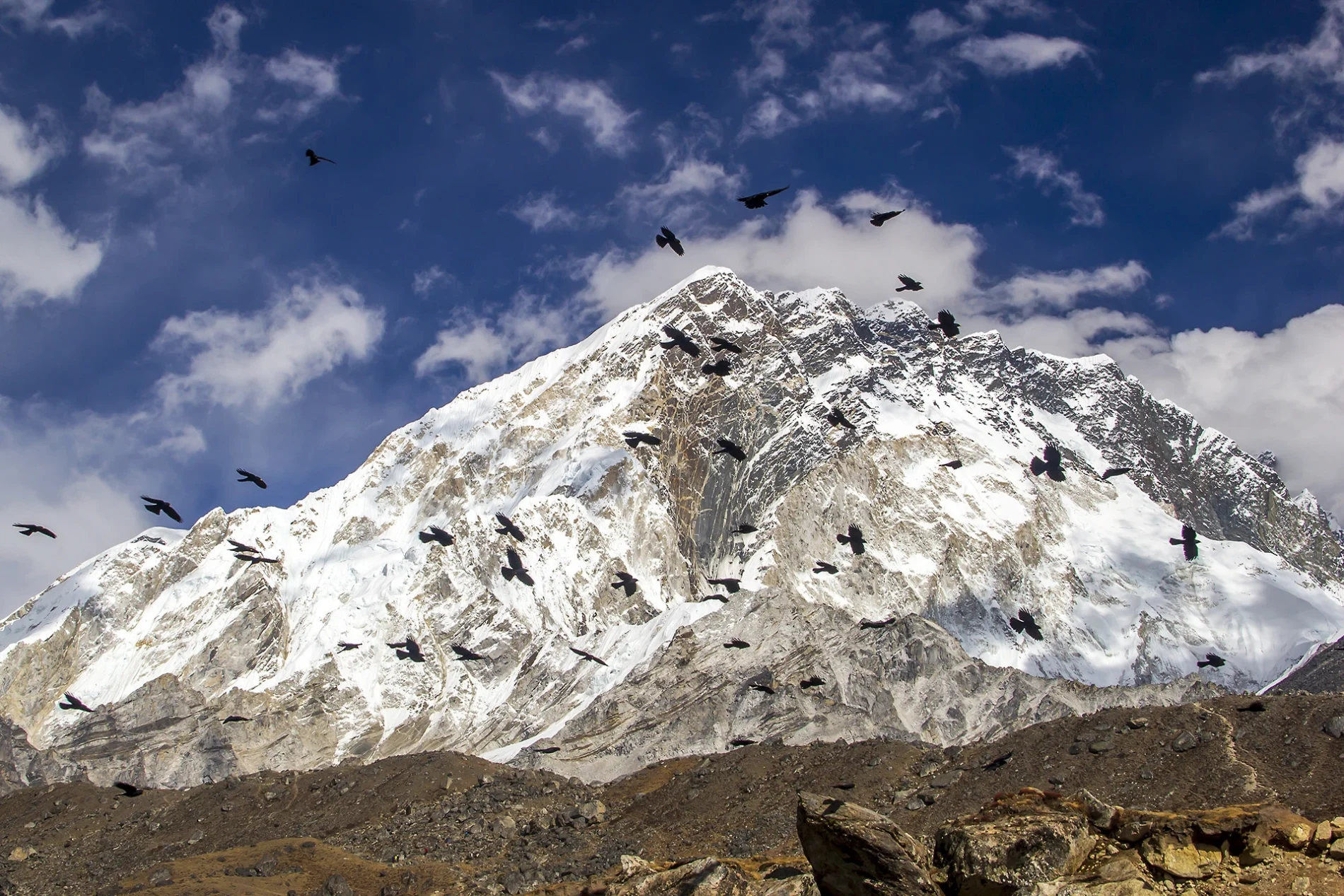
Some of your best photographs will happen when you are not trying
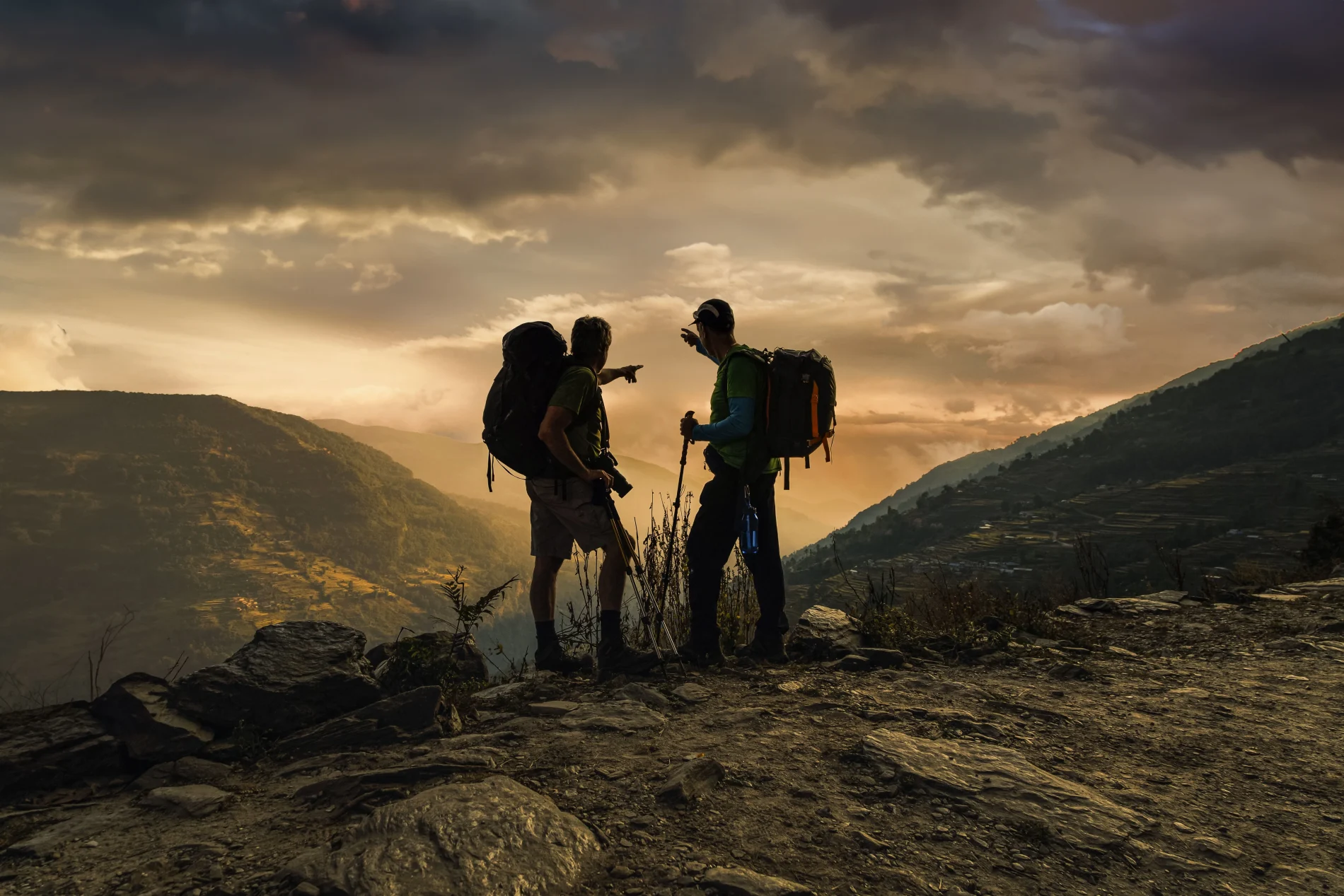
One of the nice things about trekking is that you are constantly moving through changing scenes. You are not standing in one place waiting for a landscape to become interesting. The landscape is changing around you.
Maybe you are walking through a forest and suddenly see sunlight coming through the trees. Maybe someone in your group is laughing after a difficult climb. Maybe your guide is standing ahead on the trail waiting for everyone to catch up. Maybe you are sitting outside a teahouse and notice the evening light falling across the village.
These moments often make better photographs than the ones you planned.
You may have gone outside specifically to photograph a mountain and come back with a photograph of someone’s muddy boots that you like much more.
That is part of the fun.
And sometimes you should just put the camera away
This might be the most important photography tip for trekking in Nepal.
Put the camera away sometimes.
Not because the photograph is unimportant, but because you are there too.
You can spend an entire day looking for photographs and still feel strangely disconnected from the place you are photographing. You reach a viewpoint, immediately take pictures, check the screen, take another picture, change the angle, take another one and then look at the screen again.
Meanwhile, the mountain is standing there waiting for you to actually look at it.
Take the photograph.
Then stop.
Look around.
Listen to the wind.
Have your tea.
Talk to the people walking with you.
Watch the clouds.
Let yourself be tired.
You do not need photographic evidence of every second of your trek.
Some moments can simply belong to you.
You will probably come home with some terrible photographs
There will be photographs that are too dark. Some will be blurry. Someone will walk through the frame at exactly the wrong moment. You will accidentally photograph the floor. You will forget to change a setting and discover later that your camera has been doing something completely ridiculous for the last twenty minutes.
There will probably be one photograph where you were absolutely certain you had captured the perfect mountain, only to open it later and realize you somehow focused on a rock in the foreground.
Do not delete everything immediately.
Those imperfect photographs are part of the story too.
Years later, you may not remember the exact settings you used, but you will remember that freezing morning, the person who was laughing beside you, the ridiculous amount of clothing you were wearing and the moment you finally reached that viewpoint.
That is what photographs are really good at.
They bring back the feeling.
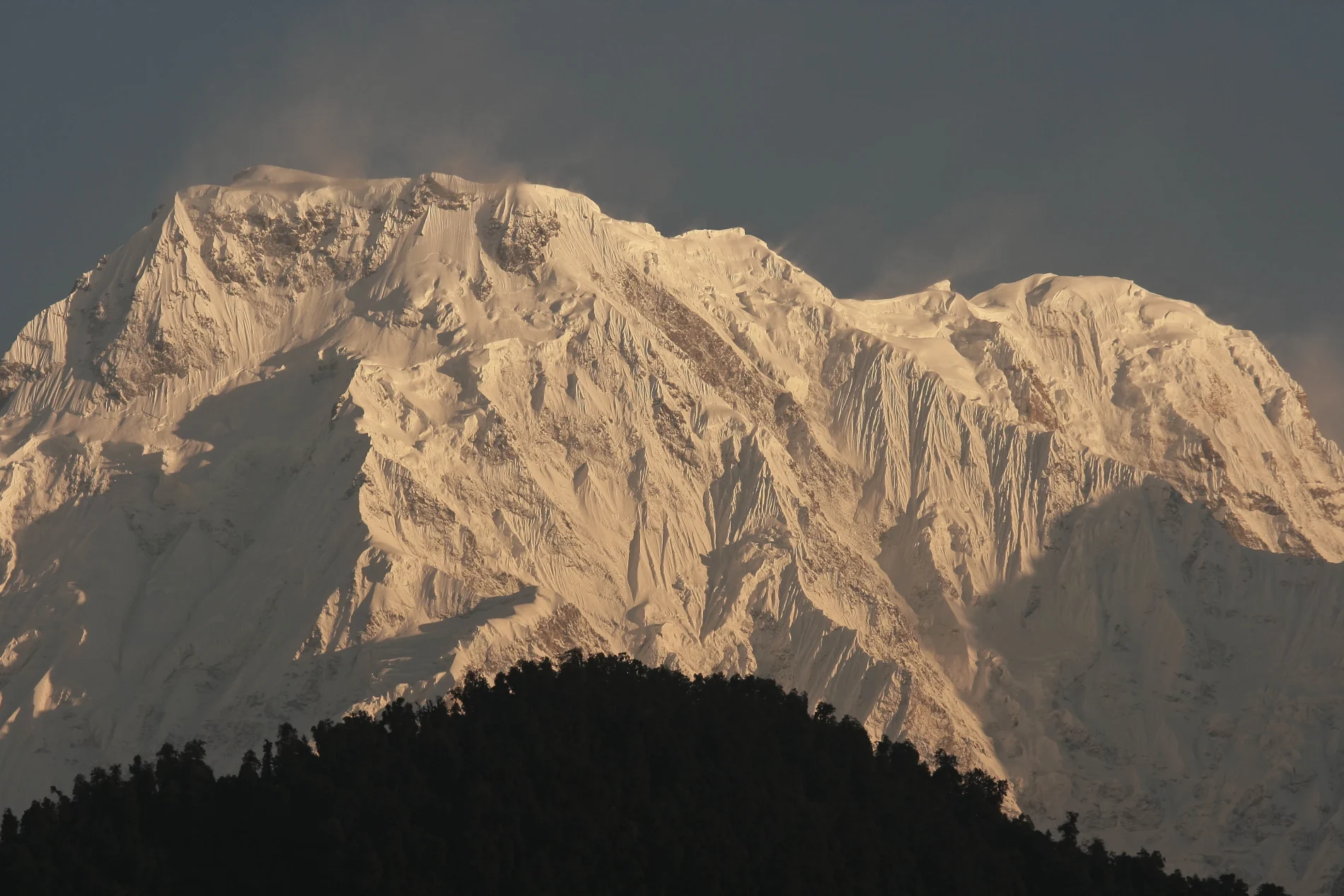
The photograph is not the whole journey
After a trek in Nepal, you may return home with hundreds or even thousands of photographs. Some will be beautiful. Some will be average. Some will make you wonder what the hell you were thinking when you pressed the shutter.
Keep them.
Because eventually you will realize that photography while trekking is not really about getting the perfect mountain photograph. It is about collecting little pieces of the journey.
The mountain you stopped to photograph.
The tea you drank afterward.
The trail that seemed endless that morning.
The village where you stayed.
The person you met for five minutes but somehow remembered for years.
The snow that arrived unexpectedly.
The gloves that made operating your camera nearly impossible.
The photograph you missed because you were too slow.
And the photograph you never took because, for once, you simply stood there and looked.
That is the strange thing about carrying a camera through the Himalayas. You spend the entire trek trying to preserve the moments, but some of the moments you remember most clearly are the ones you never photographed.
So take the camera with you.
Look after it like a slightly expensive baby.
Keep your batteries warm, protect it from the weather, learn the basic controls before you start walking and accept that you are going to mess something up.
You will miss shots.
You will press the wrong button.
Your fingers will freeze.
The clouds will arrive at the worst possible moment.
And at some point, after carrying that camera uphill for hours, you may look at the mountain, look at the camera and quietly think, “Fuck, I could have taken a better photograph.”
Then take a breath.
The mountain is still there.
And so are you.
That is the photograph that matters most.
Final Thoughts
Photography while trekking in Nepal is not really about coming home with a perfect collection of mountain photographs. It is about having something that brings the journey back to you later. A photograph of a huge Himalayan peak is wonderful, but sometimes the photograph that means the most is the one of a muddy trail, a cup of tea, a tired friend laughing at the end of the day or your ridiculous frozen face while trying to operate a camera with gloves on.
You will make mistakes. You will miss photographs. You will probably take far too many pictures of the same mountain. You may even carry your camera for hours only to realize that the best moment happened while it was safely inside your bag. That is all part of it.
So take your camera, look after it, use it when you want to and put it away when you need to. The Himalayas are not going anywhere just because you missed one photograph. Sometimes the best memory from a trek is not the photograph you brought home, but the moment you were actually there to experience.
Frequently Asked Questions
1. What camera is best for trekking in Nepal?
The best camera is one you are comfortable carrying and using. A DSLR, mirrorless camera or even a good smartphone can produce excellent photographs. You do not need the most expensive camera to capture the Himalayas.
2. Should I bring a camera on a Nepal trek?
Yes, if you enjoy photography. Nepal offers mountains, villages, people, wildlife, forests, rivers and constantly changing weather, so there is plenty to photograph. Just remember that the camera becomes another piece of equipment you need to protect and carry.
3. How do I protect my camera while trekking in Nepal?
Keep your camera protected from rain, dust and accidental bumps. A rain cover or dry bag can be useful, especially when the weather changes suddenly. Keep the camera accessible enough that you will actually use it rather than leaving it buried at the bottom of your backpack.
4. Does cold weather affect camera batteries?
Yes. Cold temperatures can reduce battery performance, particularly at higher elevations and in very cold conditions. Carrying a spare battery and keeping it somewhere relatively warm, such as an inside jacket pocket, can help.
5. What should I photograph besides the mountains?
Photograph the small details that make the trek feel like a journey: teahouses, food, prayer flags, villages, trails, suspension bridges, trekking boots, people and everyday moments. These photographs often become some of the most memorable ones when you look back at the trek.
6. Is it difficult to take photographs while wearing gloves?
It can be. Small camera controls become surprisingly difficult to operate with thick gloves, especially when your fingers are already cold. Learning your camera’s basic controls before the trek can save you from fighting with the wrong button while a perfect mountain view disappears.
7. Should I wake up early for photography during a trek?
If you want mountain photography, early morning is often worth it. The light can be beautiful, the air is frequently clearer and the mountains can look completely different from later in the day. Just remember that getting out of a warm sleeping bag at altitude may feel like a personal attack.
8. Should I take photographs of local people during a trek?
You can, but be respectful. If you want a close portrait, ask permission first. People are part of the landscape and culture of the Himalayas, but they are not simply photographic subjects placed there for trekkers.
9. What if the weather is cloudy or rainy?
Take photographs anyway. Clouds, mist, rain and snow can create some of the most atmospheric images in the Himalayas. Waiting for perfect blue skies can sometimes mean missing the character that changing weather gives the landscape.
10. If I photograph Everest from far away, does Everest know I took its picture?
Probably not. But if it does, hopefully it appreciates the effort, because you carried a camera up a mountain, froze your fingers trying to use it and probably took about 47 photographs just to get one that was straight. So technically, Everest owes you a decent photograph.

Similar Blogs
View all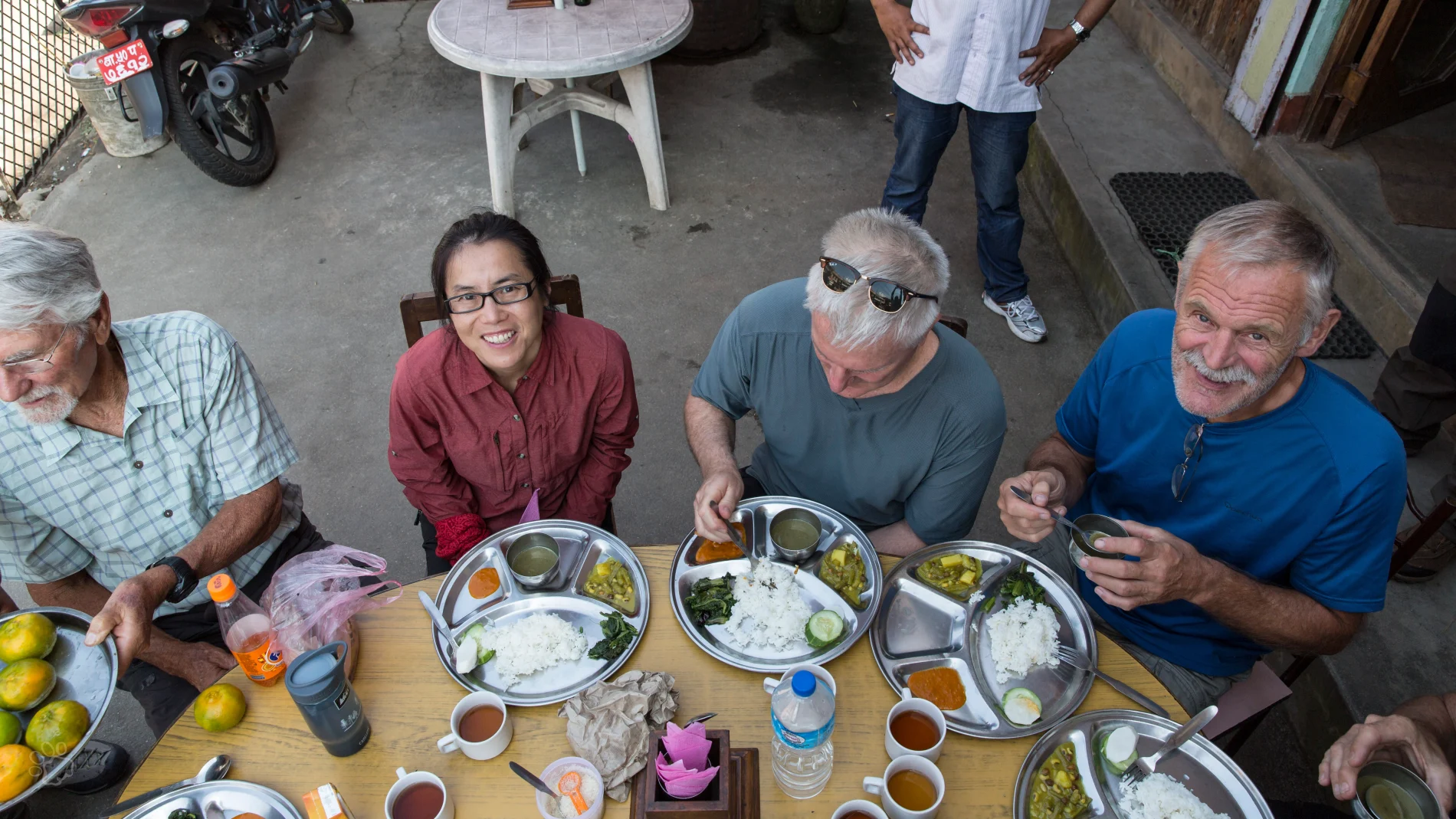
13/10/2026
Manaslu Circuit Trek After the October 2026 Floods: Trail Conditions, Safety and Travel Updates
The Manaslu Circuit Trek is one of Nepal’s most rewarding Himalayan journeys, taking trekkers through traditional...
Read more
13/10/2026
Your Nepal Trek Is Booked, but the Trail Is Closed: What Now?
Imagine arriving in Nepal with your trekking boots ready, your flights booked, your bags packed, and...
Read more