Who Are the Raute People? Discover Nepal’s Last Nomadic Hunter-Gatherer Community (2026 Guide)
Share:
 Read Time
This blog has 2867 words .This blog has 19664 characters.This blog take 10 minutes to read.
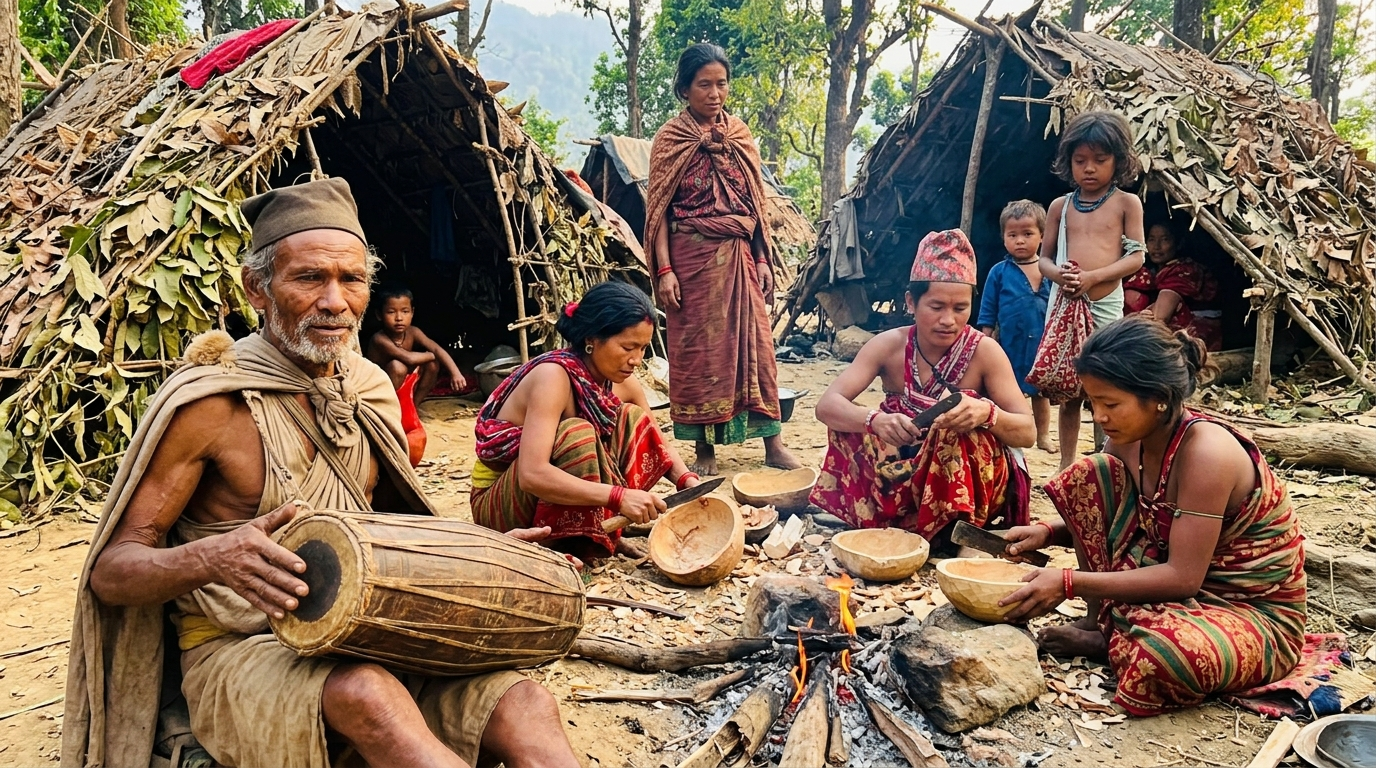
The Raute people are one of Nepal’s most unique Indigenous communities and are widely known as the country’s last nomadic hunter-gatherer group. Unlike most people in Nepal, the Raute do not live in permanent houses or practice farming. Instead, they move from one forest area to another, following a traditional lifestyle that has been preserved for generations.
Today, the Raute mainly travel through the forests of western Nepal, especially in districts such as Surkhet, Dailekh, Jajarkot, Salyan, and nearby areas. They earn their living by making handcrafted wooden utensils, collecting forest resources, and trading with nearby villages. Although the Government of Nepal provides financial support and basic services, many Raute families continue to protect their customs, language, and nomadic way of life.
The Raute are not only an important Indigenous community but also a living symbol of Nepal’s rich cultural heritage. Their deep connection with nature, unique traditions, and determination to preserve their identity continue to attract researchers, photographers, and travelers from around the world. Learning about the Raute offers a rare opportunity to understand one of the world’s few remaining nomadic communities and appreciate a remarkable part of Nepal’s cultural diversity.
Who Are the Raute People?
The Raute are an Indigenous ethnic community of Nepal and are widely recognized as the country’s last nomadic hunter-gatherer people. For generations, they have chosen to live in temporary camps instead of permanent settlements, moving through the forests of western Nepal according to the seasons and the availability of natural resources.
Unlike most communities in Nepal, the Raute have traditionally avoided farming, owning land, and permanent employment. Instead, they rely on their traditional skills, especially crafting wooden bowls, plates, cups, and other household items, which they exchange with nearby villages for food and daily necessities. This way of life reflects their strong connection to nature and their desire to preserve their ancestral traditions.
The Raute have their own language, customs, and social system that distinguish them from other Indigenous groups in Nepal. Although modernization has brought many changes to the country, the Raute continue to protect their unique identity and cultural heritage. Today, they are considered one of Nepal’s most valuable Indigenous communities and an important part of the nation’s cultural diversity.
History and Origin of the Raute
The exact origin of the Raute people is not fully documented, but historians and researchers believe they have lived in the forests of western Nepal for centuries. According to Raute oral traditions, their ancestors chose a nomadic lifestyle to remain independent and protect their culture from outside influence. Instead of settling in villages, they continued moving through forests, relying on nature for food, shelter, and survival.
Over time, the Raute became known for their exceptional woodworking skills and deep knowledge of the forest. They crafted wooden utensils from softwood trees and exchanged them with nearby communities for grains, clothing, and other essential items. Although Nepal has undergone rapid social and economic changes, the Raute have continued to preserve many of their traditional beliefs and customs.
Today, the Raute are recognized as one of Nepal’s most unique Indigenous communities. Their history reflects resilience, cultural pride, and a strong commitment to protecting a way of life that has been passed down through generations.
Where Do the Raute Live?
The Raute people mainly live in the forests of western Nepal, where they move from one place to another throughout the year. They are most commonly found in districts such as Surkhet, Dailekh, Jajarkot, Salyan, Achham, and Kalikot. Instead of building permanent homes, they set up temporary camps made from wooden poles, bamboo, and tarpaulin, staying in one location for a few weeks or months before moving again.
Their movements depend on the availability of forest resources, weather conditions, and opportunities to trade their handmade wooden products with nearby villages. Even today, many Raute families prefer this traditional nomadic lifestyle because they believe it helps preserve their culture, independence, and close relationship with nature.
Although the Government of Nepal provides support and basic services, the Raute continue to travel within the forests of western Nepal, making them one of the few remaining nomadic Indigenous communities in the world.
Why Are the Raute Nomadic?
The Raute people have followed a nomadic lifestyle for generations because it is an important part of their identity and cultural beliefs. They believe that living in one permanent place could weaken their traditions and reduce their independence. By moving from one forest to another, they continue the way of life passed down by their ancestors.
The forests provide the Raute with many of the resources they need for daily life. They collect wood to make traditional household items, gather forest products, and trade their handmade goods with nearby communities. Seasonal movement also allows them to use natural resources responsibly without depending on a single location.
Although modern life has brought new opportunities and challenges, many Raute families still choose to remain nomadic. Their commitment to preserving their culture and maintaining a close connection with nature is one of the main reasons they continue this unique lifestyle today.
Culture and Traditions
The Raute people have a rich cultural heritage that has been preserved through generations. Their traditions are passed down orally, as they do not have a written history. Family and community play a central role in their daily lives, and elders are highly respected for their knowledge and guidance.
The Raute are well known for making handcrafted wooden bowls, cups, plates, and storage containers, which they traditionally exchange with nearby villagers for food and other necessities. They celebrate important life events and perform rituals based on their customs and beliefs, keeping their cultural identity strong despite outside influences.
One of the Raute’s unique traditions is relocating their camp after the death of a community member. This practice reflects their spiritual beliefs and their long-standing nomadic lifestyle. Even as Nepal continues to modernize, the Raute remain committed to protecting their customs, language, and way of life, making their culture one of the most distinctive in the country.
Language and Religion
The Raute people speak the Raute language, which belongs to the Sino-Tibetan (Tibeto-Burman) language family. It is mainly spoken within the community and is passed down orally from one generation to the next. Because there is no widely used written form, the language is considered endangered, making its preservation increasingly important.
The Raute follow traditional animistic beliefs, respecting nature and honoring the spirits of their ancestors. They believe that forests, rivers, and natural elements have spiritual significance and perform rituals to seek protection, good health, and prosperity. These customs continue to play an important role in their daily lives and community gatherings.
Although some Raute have had contact with modern society, they continue to preserve their language, beliefs, and traditions. Their religion and oral heritage remain key parts of their identity, helping them maintain a unique cultural legacy within Nepal.
Daily Life and Occupation
The daily life of the Raute people revolves around their nomadic lifestyle and the forests where they live. Men usually collect wood, make traditional wooden utensils, and handle trading with nearby villages, while women take care of cooking, collecting firewood, raising children, and managing household tasks. Children learn practical skills from their parents and elders from an early age.
The Raute are especially known for their handcrafted wooden products, including bowls, cups, plates, and small containers. They carve these items using simple hand tools and exchange them for rice, vegetables, clothes, and other daily necessities. In the past, hunting and gathering were important parts of their livelihood, but today they depend more on woodworking, forest resources, and government support.
Despite the changes brought by modernization, the Raute continue to value self-reliance and their traditional way of life. Their knowledge of the forest, craftsmanship, and strong community bonds help preserve a culture that has survived for generations.
Marriage and Family
Marriage is an important tradition in the Raute community, and most marriages take place within the Raute population to preserve their cultural identity. However, they avoid marriages between close relatives and follow traditional community rules when choosing a life partner. Marriage ceremonies are simple and are celebrated according to their customs rather than elaborate religious rituals.
The Raute live in close-knit family groups where cooperation and mutual support are highly valued. Elders play an important role in making decisions, settling disputes, and passing traditional knowledge to younger generations. Parents teach their children essential life skills, including woodworking, forest knowledge, and community traditions from an early age.
Family is at the heart of Raute society. By maintaining strong family bonds and respecting their customs, the Raute continue to preserve their unique culture and nomadic lifestyle despite the challenges of the modern world.
Education and Healthcare
Traditionally, the Raute people have relied on practical knowledge passed down through generations rather than formal education. Children learn essential skills such as woodworking, forest survival, and community traditions from their parents and elders. In recent years, however, the Government of Nepal and various organizations have made efforts to provide basic education while respecting the Raute’s unique lifestyle and cultural values.
Healthcare has also changed over time. In the past, the Raute mainly depended on medicinal plants and traditional healing practices found in the forest. Today, government health workers and local organizations regularly provide vaccinations, medical check-ups, maternal care, and treatment for common illnesses. When serious health problems arise, Raute families are encouraged to visit nearby health centers or hospitals.
Although access to education and healthcare has improved, balancing modern services with the preservation of the Raute’s traditional way of life remains an ongoing challenge. Many families continue to value their customs while gradually accepting support that improves their overall well-being.
Government Support
The Government of Nepal recognizes the Raute as a highly endangered Indigenous community and has introduced several programs to help protect their culture and improve their quality of life. Many Raute families receive a monthly social security allowance, while government agencies and local organizations provide access to basic healthcare, education, and essential supplies.
Officials also work with the community to ensure they can continue their traditional lifestyle without unnecessary interference. Health camps, vaccination programs, and awareness activities are organized regularly, especially for women and children. At the same time, efforts are made to respect the Raute’s customs, beliefs, and freedom to move between forest areas.
Despite this support, the Raute continue to face challenges from deforestation, modernization, and changing social conditions. For this reason, the government, researchers, and conservation organizations continue working together to preserve the Raute’s unique cultural heritage while helping improve their living conditions.
Challenges Facing the Raute
Although the Raute people have preserved their traditional way of life for centuries, they face many challenges in the modern world. Deforestation, road construction, and the loss of natural forests have reduced the resources they once depended on for survival. As their traditional environment changes, maintaining a nomadic lifestyle has become increasingly difficult.
Modernization has also influenced younger generations. Greater contact with nearby communities, access to modern goods, and changing lifestyles can make it harder to preserve the Raute language, customs, and traditional knowledge. At the same time, balancing government support with cultural preservation remains a sensitive issue, as the Raute value their independence and ancestral traditions.
Despite these challenges, the Raute continue to show remarkable resilience. With respectful support from the government, local communities, and cultural organizations, there is hope that their unique heritage and way of life can be preserved for future generations.
Can Tourists Visit the Raute Community?
Yes, tourists can learn about the Raute community, but visits should always be respectful and responsible. Since the Raute move between temporary camps in western Nepal, there are no fixed villages or tourist attractions to visit. Their privacy and cultural traditions should always be respected.
If you have the opportunity to meet the Raute, it is important to seek permission before taking photographs or interacting with community members. Visitors should avoid disturbing their daily activities, entering their shelters without permission, or offering gifts that could affect their traditional way of life. Responsible tourism helps protect both the community and its unique cultural heritage.
Travelers interested in Indigenous cultures are encouraged to visit through experienced local guides or organizations that follow ethical tourism practices. By respecting the Raute’s customs and traditions, visitors can gain a meaningful understanding of one of Nepal’s most remarkable Indigenous communities while supporting the preservation of their cultural identity.
Interesting Facts About the Raute
- The Raute are widely recognized as Nepal’s last nomadic hunter-gatherer Indigenous community.
- They live in temporary camps and move from one forest area to another instead of building permanent homes.
- The Raute are skilled at making handcrafted wooden bowls, cups, plates, and other household items, which they trade with nearby villages.
- They speak their own Raute language, a member of the Sino-Tibetan (Tibeto-Burman) language family.
- Traditionally, they do not practice farming or own agricultural land, choosing instead to maintain their ancestral nomadic lifestyle.
- Nature plays an important role in their beliefs, and they have a deep respect for forests and ancestral spirits.
- The Government of Nepal provides monthly financial assistance and basic healthcare while working to preserve their unique culture.
- The Raute are one of the smallest Indigenous communities in Nepal, making the protection of their language and traditions especially important.
- Their culture has been passed down orally for generations, without a widely used written tradition.
- The Raute are considered a valuable part of Nepal’s cultural heritage because they continue to preserve a way of life that has become increasingly rare in the modern world.
Conclusion
The Raute people are one of Nepal’s most remarkable Indigenous communities, preserving a nomadic lifestyle that has survived for centuries. Their deep connection with nature, traditional woodworking skills, unique language, and rich cultural heritage make them an important part of the country’s identity. Despite the pressures of modernization, the Raute continue to protect their customs and pass their knowledge from one generation to the next.
Today, the Raute face challenges such as deforestation, changing social conditions, and the gradual loss of traditional practices. However, with support from the Government of Nepal and growing awareness of Indigenous rights, efforts are being made to safeguard their culture while respecting their independence and way of life.
Learning about the Raute is more than discovering a unique community—it’s an opportunity to appreciate Nepal’s cultural diversity and understand the importance of preserving Indigenous traditions for future generations. Their story is a reminder that cultural heritage is a valuable treasure that deserves respect, protection, and recognition.
FAQs
1. Who are the Raute people?
The Raute are an Indigenous community of Nepal, widely recognized as the country’s last nomadic hunter-gatherer people. They preserve a traditional lifestyle and continue to live in temporary forest camps.
2. Where do the Raute live?
The Raute mainly move through the forests of western Nepal, particularly in districts such as Surkhet, Dailekh, Jajarkot, Salyan, Achham, and Kalikot.
3. Why are the Raute nomadic?
The Raute believe that living a nomadic life helps preserve their culture, traditions, and independence. They move seasonally in search of forest resources and suitable places to stay.
4. What language do the Raute speak?
They speak the Raute language, which belongs to the Sino-Tibetan (Tibeto-Burman) language family.
5. What religion do the Raute follow?
The Raute mainly practice traditional animistic beliefs, worshipping nature and honoring the spirits of their ancestors.
6. What is the main occupation of the Raute?
The Raute are famous for making handcrafted wooden bowls, cups, plates, and other household items, which they trade with nearby communities.
7. Do the Raute practice farming?
Traditionally, no. The Raute have avoided farming and permanent settlement, choosing to maintain their nomadic way of life.
8. How many Raute people are there in Nepal?
The Raute population is very small, with recent estimates placing it at around 150–170 people, making them one of Nepal’s smallest Indigenous communities.
9. Does the Government of Nepal support the Raute?
Yes. The government provides monthly financial assistance, healthcare services, and educational support while respecting their traditional lifestyle.
10. Can tourists visit the Raute community?
Yes, but visits should be respectful and responsible. Visitors should seek permission before taking photographs or interacting with community members.
11. What makes the Raute unique?
The Raute are unique because they continue to follow a traditional nomadic lifestyle, speak their own language, and preserve customs that have existed for centuries.
12. What challenges do the Raute face today?
The community faces challenges such as deforestation, modernization, cultural change, and the gradual loss of traditional knowledge.
13. Do the Raute children attend school?
Some Raute children now have access to basic education through government and community programs, although traditional learning remains an important part of their upbringing.
14. Why are the Raute important to Nepal?
The Raute are an important part of Nepal’s Indigenous heritage. Their traditions, language, and lifestyle reflect the country’s rich cultural diversity.
15. How can people help preserve the Raute culture?
People can help by respecting the Raute’s traditions, supporting ethical tourism, raising awareness about Indigenous cultures, and encouraging efforts to preserve their language and heritage.

Similar Blogs
View all
13/10/2026
Manaslu Circuit Trek After the October 2026 Floods: Trail Conditions, Safety and Travel Updates
The Manaslu Circuit Trek is one of Nepal’s most rewarding Himalayan journeys, taking trekkers through traditional...
Read more
13/10/2026
Your Nepal Trek Is Booked, but the Trail Is Closed: What Now?
Imagine arriving in Nepal with your trekking boots ready, your flights booked, your bags packed, and...
Read more