

What Is a Tea House in Nepal? A Complete Guide for Trekkers
Share:

 Read Time
This blog has 4135 words .This blog has 26938 characters.This blog take 14 minutes to read.
What Is a Tea House in Nepal?
A tea house in Nepal is a small, locally operated accommodation where trekkers can eat, rest, and spend the night while exploring the Himalayan trails. Although the name may sound like a simple place to drink tea, a tea house is much more than that. In fact, tea houses are one of the main reasons trekking in Nepal can be comfortable without carrying camping equipment.
Most tea houses are found along established trekking routes, particularly in the Everest, Annapurna, Langtang, and Manaslu regions. Usually, a local family operates the lodge, so staying in a tea house also gives trekkers an opportunity to experience mountain life more closely. Depending on the location, a tea house may provide twin-sharing rooms, a common dining area, bathrooms, hot showers, electricity, and sometimes Wi-Fi.
However, facilities can vary from one place to another. Lower-elevation tea houses generally offer more facilities, whereas accommodation at higher elevations can be simpler because transportation and supplies become more difficult. Nevertheless, trekkers can usually expect a bed, warm meals, and a comfortable place to relax after several hours of walking.
Therefore, when people talk about tea house trekking in Nepal, they mean trekking from village to village while staying in these local lodges rather than carrying tents and camping equipment. This makes tea house trekking particularly popular because it combines Himalayan adventure with convenient accommodation.
For many trekkers, however, the real charm of a tea house is not luxury. It is the opportunity to sit in a warm dining room, meet fellow travelers, enjoy traditional Nepali food, and experience the genuine hospitality of Nepal’s mountain communities.
Why Are Tea Houses Common on Nepal’s Trekking Routes?
Tea houses are common on Nepal’s trekking routes because many Himalayan trails pass through villages where local communities have traditionally welcomed travelers. Instead of building large hotels in remote mountain areas, local families have developed small tea house lodges that provide basic accommodation and meals for trekkers. As a result, visitors can travel through the mountains without carrying tents, cooking equipment, and large quantities of food.
Another important reason is the geography of Nepal. Many popular trekking routes pass through settlements at different elevations, so trekkers can regularly stop for lunch or spend the night in a nearby village. For example, on routes such as the Everest Base Camp Trek, Annapurna Base Camp Trek, and Langtang Valley Trek, tea houses are an important part of the trekking experience.
Moreover, tea houses benefit both trekkers and local communities. While travelers receive a place to sleep, eat, and rest, local families earn income by providing accommodation, food, drinks, and other basic services. Therefore, tea house trekking in Nepal also contributes directly to the economy of mountain communities.
However, tea houses are not the same everywhere. Their facilities depend on altitude, location, accessibility, and local conditions. Although some modern tea houses offer private bathrooms, hot showers, charging facilities, and Wi-Fi, others remain quite basic, particularly in remote and high-altitude areas.
Ultimately, the popularity of tea houses comes from their simplicity and practicality. They make long-distance trekking easier because trekkers can walk with a lighter backpack, stay in local villages, and experience Nepal’s mountain culture along the way.
What Is Inside a Typical Tea House?
A typical tea house in Nepal is usually a simple mountain lodge designed to provide trekkers with the basic things they need after a long day on the trail. Although the design differs according to the trekking region, most tea houses have several guest rooms, a dining area, a kitchen, and shared facilities. Therefore, you should think of a tea house as a combination of a small guesthouse and local family-run restaurant.
The dining room is often the heart of the tea house. Trekkers gather here to eat, drink tea or coffee, warm themselves, and talk with other travelers. In colder areas, the dining room may have a central stove or heater, making it one of the most comfortable places to spend the evening.
Guest rooms are generally basic, with beds, mattresses, pillows, and blankets. Most rooms are designed for two people, although arrangements can vary depending on the lodge and availability. At higher elevations, rooms can become noticeably simpler because transporting construction materials and supplies is difficult.
Tea houses also normally have toilets and washing facilities, although these can be shared. Some lodges offer hot showers and more modern bathrooms, while others provide only basic facilities. Electricity may also be available for lighting and charging devices, although charging can sometimes cost extra.
Furthermore, many tea houses have a small reception or common area where trekkers can arrange meals, settle their bills, or ask the lodge owner about the trail ahead. Some even provide Wi-Fi, but connectivity is not guaranteed, particularly in remote areas.
Overall, a tea house is not designed to provide luxury. Instead, it provides a practical place to sleep, eat, recharge, and experience local mountain hospitality while trekking through Nepal.
What Are Tea House Rooms Like?
Tea house rooms in Nepal are generally simple, clean, and practical, rather than luxurious. Their main purpose is to give trekkers a comfortable place to sleep after walking for several hours. Although the exact room standard varies from one trekking region to another, most tea houses provide basic accommodation that is suitable for a trekking journey.
In many popular trekking areas, rooms usually have two single beds, along with mattresses, pillows, and blankets. Because tea houses are often family-run lodges, the rooms may be quite small, with limited furniture and storage space. You will rarely find the same facilities that you would expect in a city hotel; however, the basic requirements for a good night’s rest are normally available.
Most tea house rooms have shared bathrooms, particularly at higher elevations. Some newer or better-equipped lodges offer attached bathrooms, although these are not available everywhere. Similarly, hot showers may be available for an additional charge, while some remote tea houses may have more limited washing facilities.
During busy trekking seasons, rooms can fill quickly, especially along popular routes such as the Everest Base Camp and Annapurna Base Camp treks. Therefore, trekkers traveling during spring or autumn should plan their accommodation carefully. Although guides and trekking agencies regularly help arrange rooms, independent trekkers may need to arrive earlier to secure their preferred accommodation.
At higher elevations, keeping warm becomes particularly important. Rooms may not have individual heating, so a good sleeping bag and warm trekking clothing remain essential even when staying in a tea house.
Overall, tea house rooms are best understood as basic mountain accommodation. They may not offer luxury, but they provide a warm bed, shelter from changing Himalayan weather, and a quiet place to recover before continuing the next day’s trek.
What Do You Eat and Drink at a Tea House?
Food is an important part of the tea house experience in Nepal because trekkers need regular, nutritious meals after spending several hours walking in the mountains. Most tea houses have their own kitchen and dining area, where meals are prepared according to the available ingredients and local cooking traditions. Although the menu can vary depending on the trekking region and altitude, you will usually find several familiar options.
The most popular meal is Dal Bhat, a traditional Nepali combination of rice, lentil soup, vegetables, and other side dishes. It is especially popular among trekkers because it provides plenty of energy for another day on the trail. Besides Dal Bhat, tea houses commonly serve noodles, pasta, fried rice, soups, momo, potatoes, eggs, Tibetan bread, pancakes, and simple snacks.
Drinks are equally important, particularly in colder Himalayan areas. You can usually order black tea, milk tea, lemon tea, ginger tea, coffee, hot chocolate, and other hot beverages. Drinking enough water and warm fluids is especially useful during high-altitude trekking, although trekkers should also follow proper hydration practices.
However, food choices can become more limited as you climb higher. This happens because ingredients have to be transported into remote mountain settlements, often by porters, mules, or other local transport. Consequently, prices may increase while the menu becomes smaller.
Another important point is that tea house meals are generally prepared for trekkers from different countries, so many menus include both Nepali and international dishes. Nevertheless, food availability can depend on the season, location, and supply situation.
Overall, tea house food in Nepal is simple, filling, and practical. Rather than expecting restaurant-style dining, trekkers should enjoy the opportunity to eat warm local meals while experiencing the hospitality and culture of Nepal’s mountain communities.
Are Bathrooms, Hot Showers, and Toilets Available in Tea Houses?
Yes, most tea houses in Nepal provide toilets and basic washing facilities, although the standard can vary considerably depending on the trekking route, altitude, and location. In popular and lower-altitude areas, some tea houses have relatively modern bathrooms, while remote and higher-altitude lodges usually offer simpler facilities.
Many tea houses have shared toilets located outside or along the hallway. Some newer lodges may provide private or attached bathrooms, but these should not be expected everywhere. At higher elevations, toilets can be particularly basic because maintaining water and sanitation facilities becomes more challenging in cold and remote environments.
Hot showers are also available in many tea houses, especially on well-established trekking routes. However, they are commonly charged separately from the room price. Depending on the location, hot water may be heated using gas, solar power, electricity, or traditional systems. As you gain altitude, hot showers can become less reliable and more expensive because heating water requires additional fuel and energy.
It is therefore a good idea to carry your own toiletries, quick-drying towel, toilet paper, and hand sanitizer. A small packet of wet wipes can also be useful when a proper shower is unavailable or when you simply want to freshen up after a long trekking day.
Furthermore, water availability can change according to the season and location. Although most established tea houses provide water for washing, trekkers should use water responsibly, particularly in high-altitude areas where resources are limited.
In short, tea houses provide the basic bathroom facilities needed for trekking, but they should not be compared with city hotels. The higher and more remote you travel, the more basic the facilities are likely to become.
Do Tea Houses Have Electricity and Wi-Fi?
Yes, many tea houses in Nepal have electricity and Wi-Fi, but the availability and reliability of these facilities depend on the trekking region, altitude, weather, and local infrastructure. While modern facilities are increasingly common on popular trekking routes, trekkers should still be prepared for limited connectivity, particularly in remote mountain areas.
Electricity is generally available for lighting and charging electronic devices in most established tea houses. However, charging your phone, camera, or power bank may sometimes require an additional payment. At higher elevations, electricity can also be less reliable because some villages depend on small hydropower systems, solar power, or other local sources.
Wi-Fi is available in many tea houses along popular routes such as the Everest, Annapurna, and Langtang regions. Nevertheless, the connection may be slow or intermittent. Therefore, you should not expect the same internet speed you would normally have in Kathmandu or other major cities. Weather conditions, network infrastructure, and the number of people using the connection can all affect performance.
For this reason, carrying a power bank is highly recommended. A fully charged phone can be useful not only for taking photographs and communicating with family but also for accessing maps, permits, booking information, or emergency contacts when necessary.
Mobile network coverage is also available in many trekking areas, although it varies by location and altitude. Some remote sections may have little or no signal, so trekkers should avoid depending entirely on their phones for communication.
Overall, electricity and Wi-Fi make modern tea house trekking in Nepal more convenient, but these facilities should be considered a bonus rather than a guarantee. The higher and more remote you go, the more important it becomes to prepare for limited power and connectivity.
How Much Does a Tea House Cost in Nepal?
The cost of staying in a tea house in Nepal varies depending on the trekking region, altitude, season, facilities, and the individual lodge. Generally, tea houses are considered an affordable form of accommodation because they are designed primarily for trekkers rather than luxury travelers. However, prices can increase as you travel farther into remote and high-altitude areas.
In many trekking regions, the room itself can be relatively inexpensive, while food and additional services make up a larger part of the daily cost. A basic room normally includes a bed and mattress, although blankets or other facilities may vary. Meals, hot showers, Wi-Fi, charging, and bottled or treated water may be charged separately.
For example, tea houses along popular routes such as the Annapurna and Langtang regions can offer different prices depending on the village and facilities available. Similarly, accommodation becomes more expensive in higher settlements on routes such as the Everest Base Camp Trek because supplies have to be transported over difficult terrain.
Another important factor is the trekking season. During spring and autumn, Nepal’s main trekking seasons, popular tea houses can become busy. Therefore, accommodation availability can sometimes be more important than finding the cheapest room. Booking through a trekking agency or traveling with a guide can make this process easier.
It is also worth remembering that prices can change over time. Transportation costs, food supplies, fuel, local regulations, and seasonal demand can all influence the final amount you pay. Consequently, it is better to check the latest prices for your specific trekking route before departure rather than relying on an old price list.
Overall, tea house accommodation in Nepal remains one of the most practical ways to explore the Himalayas. Although prices rise with altitude and remoteness, the combination of accommodation, meals, local hospitality, and convenient trail access makes tea houses an essential part of Nepal’s trekking experience.
What Is Tea House Trekking?
Tea house trekking in Nepal is a style of trekking where travelers walk from one mountain village to another and stay overnight in locally operated tea houses instead of carrying tents and camping equipment. Because accommodation and meals are available along many established trails, trekkers can travel with a lighter backpack while still experiencing the Himalayan landscape and local culture.
The concept is quite simple. During the day, you follow the trekking trail toward your next destination, and after several hours of walking, you arrive at a village with tea houses. You choose or have a room arranged, enjoy a warm meal, relax in the dining area, and then spend the night before continuing the trek the following morning.
This style of trekking is especially popular on routes such as the Everest Base Camp Trek, Annapurna Base Camp Trek, Annapurna Circuit Trek, and Langtang Valley Trek. Although facilities differ between regions, the basic idea remains the same: accommodation, food, and local hospitality are available along the trail.
Unlike camping treks, tea house trekking does not normally require trekkers to carry a tent, sleeping mattress, cooking equipment, or large quantities of food. Therefore, it can be a more convenient option for travelers who want to focus on walking and enjoying the scenery.
However, tea house trekking does not mean luxury trekking. Facilities can become increasingly basic as the trail reaches higher elevations or more remote settlements. Nevertheless, the experience can be more culturally immersive because trekkers stay within local communities rather than in isolated camps.
For this reason, tea house trekking in Nepal has become one of the country’s most popular ways to explore the Himalayas. It combines adventure, local food, mountain hospitality, and overnight stays in remote villages, making the journey itself an important part of the trekking experience.
What Is It Like to Stay in a Tea House?
Staying in a tea house in Nepal is often one of the most memorable parts of a Himalayan trek. Rather than simply providing a place to sleep, tea houses allow trekkers to slow down after a long day, meet local people, enjoy warm food, and share stories with travelers from different parts of the world.
A typical day usually begins early. After breakfast, trekkers leave the tea house and continue toward the next destination. By afternoon, they gradually arrive at another mountain village and check into a tea house. The room is usually simple, with basic beds and blankets, while the dining room becomes the main place to relax during the evening.
As temperatures drop, especially at higher elevations, trekkers often gather around a heated dining-room stove. This creates a friendly atmosphere because guides, porters, local hosts, and travelers can sit together, drink tea, eat dinner, and discuss the next day’s trail. Although the facilities may be basic, this shared experience is something many travelers remember long after returning home.
However, staying in a tea house also requires flexibility. You may have to share bathrooms, pay separately for hot showers or device charging, and occasionally deal with limited electricity or Wi-Fi. Furthermore, rooms can become scarce during busy trekking seasons, so planning ahead is useful.
At higher elevations, the experience can become even more basic. Nights are colder, facilities may be limited, and the importance of a warm sleeping bag increases. Nevertheless, the simplicity is part of the adventure.
Ultimately, staying in a Nepal tea house means choosing experience over luxury. You may not have every modern convenience, but you gain something different: local hospitality, mountain culture, warm meals, and the unique feeling of spending the night in a Himalayan village.
What Should You Expect at High-Altitude Tea Houses?
As you trek higher into the Himalayas, tea house facilities in Nepal generally become simpler. This is mainly because high-altitude villages are remote, and transporting food, fuel, construction materials, and other supplies becomes increasingly difficult. Therefore, trekkers should adjust their expectations as they gain elevation.
At lower elevations, tea houses may feel similar to basic guesthouses, with comfortable rooms, hot showers, electricity, Wi-Fi, and a wider selection of food. However, above the higher mountain settlements, rooms can become smaller and heating may be limited to the common dining area. Private bathrooms are also less common, while shared toilets are more typical.
Hot water can become an important consideration at high altitude. Although some tea houses provide hot showers, they may cost more because heating water requires fuel or electricity. Similarly, charging electronic devices may involve an additional fee, and electricity can sometimes be limited.
Food choices may also become narrower. Since supplies must travel long distances to reach remote villages, tea houses usually focus on practical meals made from ingredients that can be stored or transported relatively easily. Nevertheless, trekkers can generally find filling options such as Dal Bhat, noodles, soup, rice, potatoes, eggs, and hot drinks.
Another noticeable difference is the temperature. Bedrooms may not have individual heating, so a warm sleeping bag, thermal clothing, and suitable trekking layers are essential. After sunset, the dining room may be the warmest place in the tea house.
Despite these limitations, high-altitude tea houses play a crucial role in Himalayan trekking. They provide shelter, food, and a place to recover before continuing toward higher destinations. Although the facilities may be basic, the experience offers trekkers a genuine glimpse into life in Nepal’s remote mountain communities.
Tips for Staying in a Tea House in Nepal
Staying in a tea house in Nepal is straightforward, but a few practical preparations can make your trekking experience much more comfortable. Because facilities vary between villages, especially as you move toward higher elevations, it is better to prepare for basic conditions rather than expect hotel-style services.
1. Carry a good sleeping bag.
Even when blankets are provided, nights can become very cold at higher elevations. A suitable sleeping bag helps you stay warm and sleep comfortably.
2. Carry a power bank.
Electricity may be limited or charging may cost extra. Therefore, a power bank is useful for keeping your phone, camera, and other devices ready.
3. Bring basic toiletries.
Carry toilet paper, toothbrush and toothpaste, hand sanitizer, a small towel, and other personal items because facilities can be limited in remote villages.
4. Keep some cash with you.
Many tea houses accept cash more reliably than cards, particularly in remote areas. Therefore, carrying enough Nepali rupees for accommodation, meals, showers, charging, and other expenses is advisable.
5. Respect the local community.
Most tea houses are family-run businesses. Being polite to hosts, respecting local customs, and keeping shared spaces clean can make your stay more pleasant for everyone.
6. Do not expect luxury.
A tea house provides essential trekking accommodation rather than five-star hotel facilities. Although some lodges are surprisingly comfortable, higher-altitude tea houses can be very basic.
7. Book ahead during busy seasons.
Spring and autumn are particularly popular trekking periods. Therefore, arranging accommodation through a guide or trekking agency can help reduce the risk of arriving at a full lodge.
Final Words
A tea house in Nepal is much more than a simple place to spend the night. It is an important part of the Himalayan trekking experience, combining basic accommodation, local food, warm hospitality, and a genuine connection with mountain communities. Although facilities can become simpler as you travel to higher elevations, tea houses provide the essential comfort trekkers need after a long day on the trail.
Whether you are planning the Everest Base Camp Trek, Annapurna Base Camp Trek, Annapurna Circuit Trek, or Langtang Valley Trek, staying in tea houses allows you to travel with less camping equipment while experiencing Nepal more closely. Therefore, if you are preparing for your first trek, understanding what a tea house is can help you know what to expect and pack accordingly.
At Silver Moon Adventure and Tour, we believe that the best Himalayan journeys are not only about reaching a destination but also about enjoying every experience along the way. From peaceful mountain villages to a warm cup of tea after a long trekking day, tea house stays can become some of the most memorable moments of your adventure in Nepal.
FAQs
1. What is a tea house in Nepal?
A tea house is a small, locally operated lodge that provides accommodation, meals, and basic facilities for trekkers along Nepal’s trekking routes.
2. Are tea houses the same as hotels?
No. Tea houses are generally more basic than hotels. However, some modern tea houses provide comfortable rooms, private bathrooms, hot showers, Wi-Fi, and electricity.
3. Do tea houses provide beds and blankets?
Yes, most tea houses provide beds, mattresses, pillows, and blankets. However, carrying a suitable sleeping bag is still recommended, especially for high-altitude treks.
4. Can I get food at a tea house?
Yes. Most tea houses serve meals such as Dal Bhat, noodles, pasta, momo, soup, rice, potatoes, eggs, and pancakes, along with tea and other hot drinks.
5. Do tea houses have private bathrooms?
Some do, but shared bathrooms are more common, particularly at higher elevations and on remote trekking routes.
6. Can I take a hot shower?
Many tea houses offer hot showers, although availability varies. Hot showers are commonly charged separately.
7. Is Wi-Fi available in tea houses?
Many tea houses on popular routes provide Wi-Fi, but the connection can be slow or unreliable, particularly in remote and high-altitude areas.
8. Can I charge my phone at a tea house?
Usually, yes. However, charging may cost extra, and electricity can be limited in remote locations.
9. Are tea houses warm?
The common dining area is often heated, while bedrooms may have little or no heating. Therefore, warm clothing and a good sleeping bag are important.
10. How much does a tea house cost?
Prices vary according to the trekking route, altitude, season, facilities, and location. Food and services such as hot showers or charging may also cost extra.
11. Do I need to book a tea house in advance?
It depends on the route and season. During busy periods, booking ahead is recommended because popular tea houses can become full.
12. Are tea houses available on every trek in Nepal?
No. Tea houses are common on established trekking routes, but some remote and restricted areas have limited accommodation and may require camping arrangements.
13. Is tea house trekking suitable for beginners?
Yes. Tea house trekking in Nepal can be suitable for beginners because accommodation and meals are available along established routes. However, trekkers still need proper preparation for altitude and physical demands.
14. What should I bring when staying in a tea house?
Essential items include a sleeping bag, warm clothing, toiletries, power bank, headlamp, water bottle, and cash in Nepali rupees.
15. Why are tea houses important in Nepal trekking?
Tea houses make long-distance trekking more practical because they provide trekkers with places to sleep, eat, rest, and experience local mountain culture without requiring a full camping setup

Similar Blogs
View all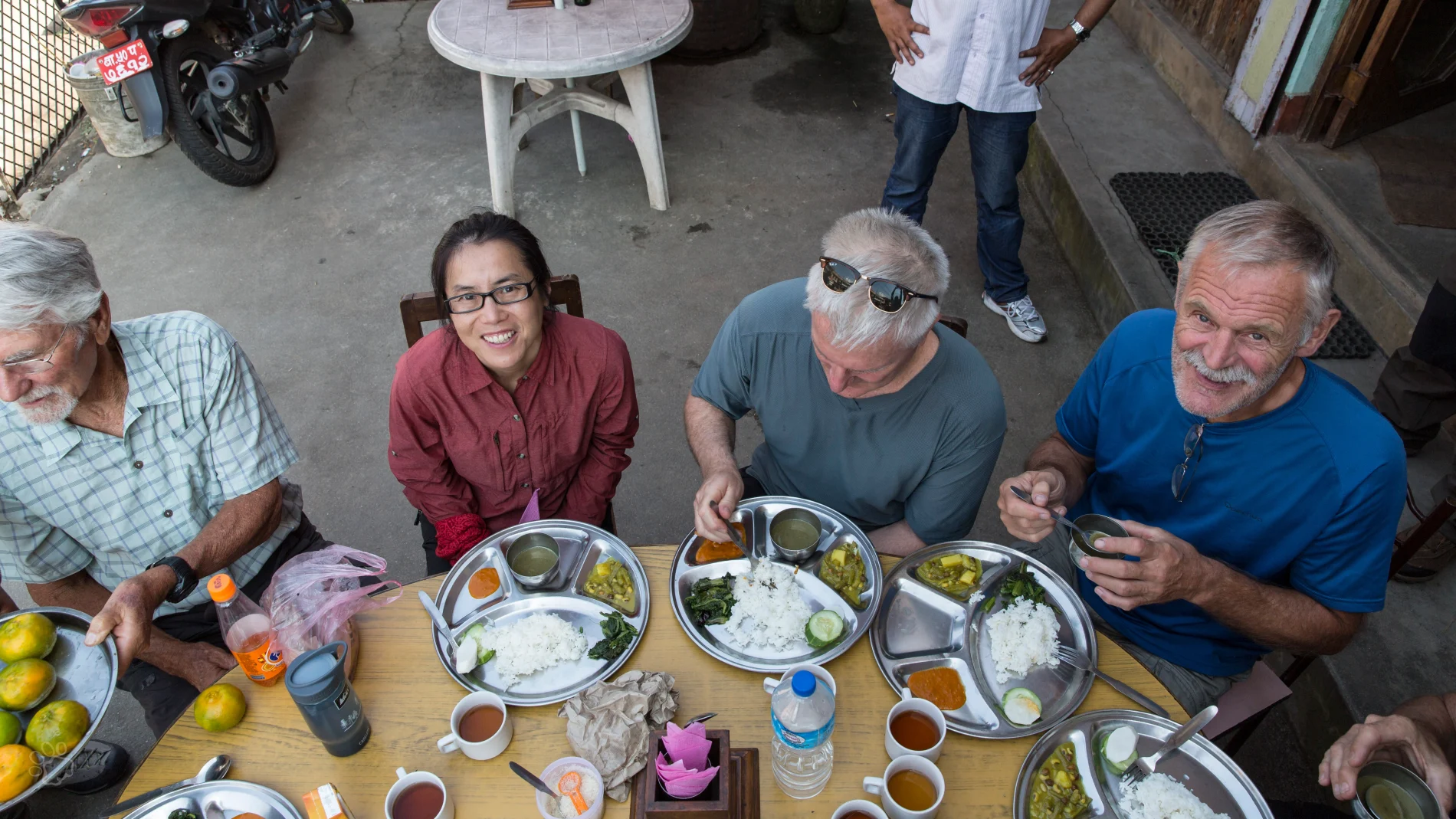
13/10/2026
Manaslu Circuit Trek After the October 2026 Floods: Trail Conditions, Safety and Travel Updates
The Manaslu Circuit Trek is one of Nepal’s most rewarding Himalayan journeys, taking trekkers through traditional...
Read more
13/10/2026
Your Nepal Trek Is Booked, but the Trail Is Closed: What Now?
Imagine arriving in Nepal with your trekking boots ready, your flights booked, your bags packed, and...
Read more