Pashupatinath Temple
Share:
 Read Time
This blog has 2811 words .This blog has 19449 characters.This blog take 9 minutes to read.
Introduction
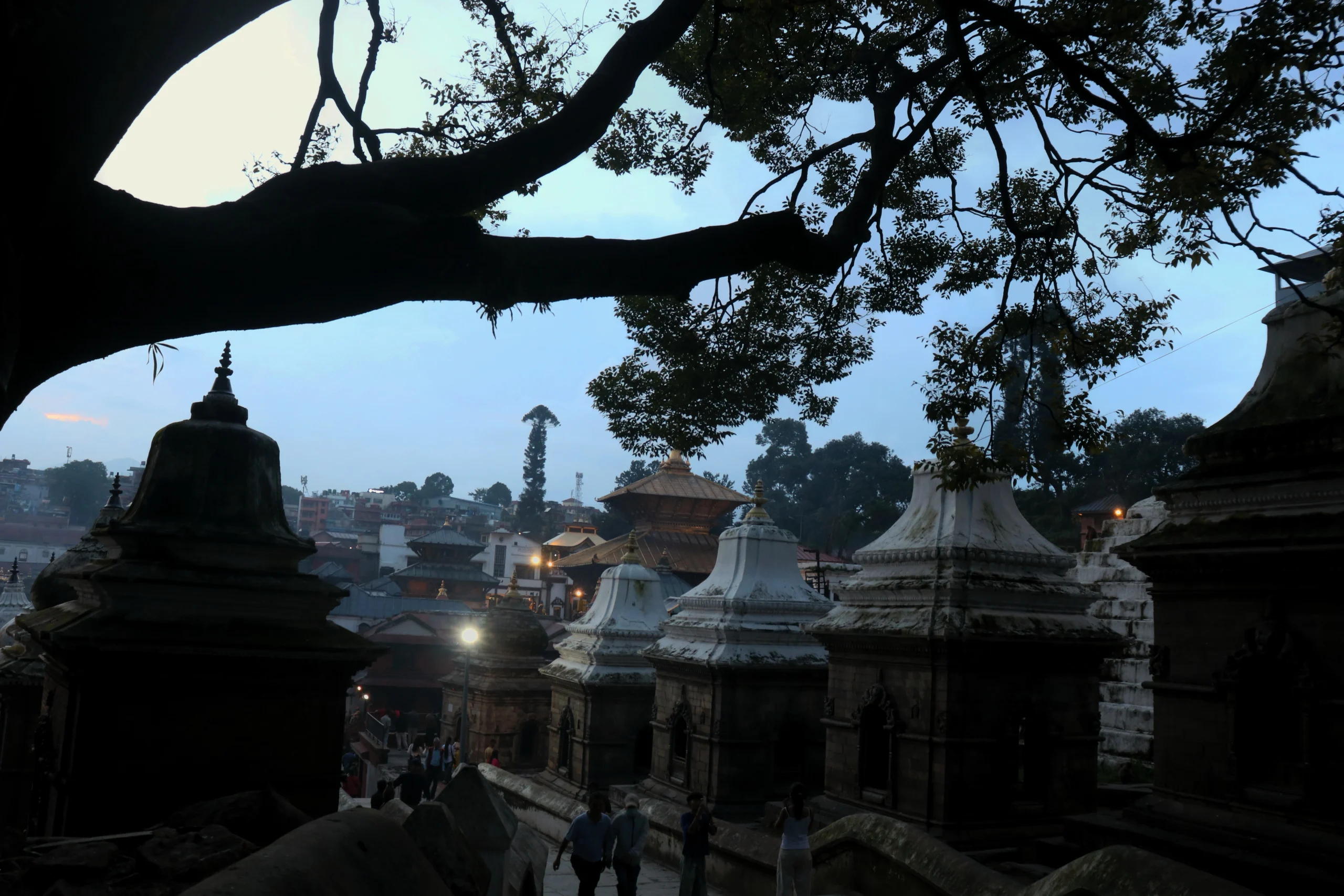
Pashupatinath Temple is one of the most important religious and cultural landmarks in Nepal. Located beside the sacred Bagmati River in Kathmandu, the temple is deeply connected with Hindu faith, ancient traditions, architecture, festivals and daily religious life. At the same time, the surrounding Pashupati area offers visitors an opportunity to see historic temples, ghats, sculptures, forests and religious ceremonies within one heritage site.
For travelers visiting Kathmandu, Pashupatinath Temple can be much more than a quick sightseeing stop. The sound of bells, the flow of the Bagmati River, temple architecture and daily rituals create an atmosphere that is different from ordinary tourist attractions. Although the main temple is a sacred Hindu shrine, visitors of other faiths can still experience the surrounding heritage area and observe the main temple from designated areas.
The site is also part of the Kathmandu Valley UNESCO World Heritage property and has been recognized for its religious, cultural and architectural importance.
Where Is Pashupatinath Temple?
Pashupatinath Temple is located on the eastern side of Kathmandu, approximately 5 km from the city center. The temple complex stands along the Bagmati River, which is considered sacred in Hindu tradition.
The area is relatively easy to reach from central Kathmandu by taxi, private vehicle or local transportation. Visitors can also combine a visit to Pashupatinath with other attractions through a Kathmandu Valley Tour, depending on their itinerary.
The location is particularly interesting because the temple area is not isolated from the life of Kathmandu. Instead, religious activity, traditional neighborhoods, riverside ghats and everyday city life exist around the heritage site.
Why Is Pashupatinath Temple Important?
Pashupatinath Temple is dedicated to Lord Shiva and is regarded by the Nepal Tourism Board as the most revered Hindu temple in Nepal. It is also one of the major pilgrimage destinations for Hindu devotees from Nepal and India.
The importance of the site extends beyond the main shrine. The larger Pashupati area contains numerous temples, monuments, statues, ghats and religious spaces. Nepal Tourism Board describes the area as a combination of religion, art and culture, while UNESCO recognizes Pashupati as one of the monument zones within the Kathmandu Valley World Heritage property.
For travelers interested in Nepalese culture, the site provides an opportunity to observe how religion remains part of everyday life. Visitors may see devotees praying, priests performing rituals and people gathering around the Bagmati River.
History of Pashupatinath Temple
The history of Pashupatinath Temple reaches far into Nepal’s religious and cultural past. According to Nepal Tourism Board, chronicles indicate that a temple existed at the site before 400 A.D. The present complex, however, has developed and changed over many centuries.
The Pashupati area contains monuments from different historical periods, making it more than a single temple building. UNESCO documentation describes the Pashupati Protected Monument Zone as an extensive heritage area containing hundreds of temples and other significant structures.
Ancient Origins and Religious Traditions
The origins of Pashupatinath are closely associated with Hindu traditions surrounding Lord Shiva. The name Pashupati is commonly understood as referring to Shiva as the lord of animals or living beings.
Over generations, the site developed into an important pilgrimage destination. Temples, shrines, monasteries, sculptures and ghats were added around the main temple, creating the large religious landscape that visitors see today.
The Present Heritage Area
The wider Pashupati area includes numerous temples and monuments extending around the Bagmati River. Nepal Tourism Board states that the site covers about 246 hectares and includes a large collection of temples, monuments and ashrams.
The area was designated as part of the Kathmandu Valley UNESCO World Heritage property in 1979.
Pashupatinath Temple Architecture
The architecture is one of the reasons Pashupatinath Temple attracts not only pilgrims but also travelers interested in history and art.
The main temple is a two-tiered pagoda-style structure. Its doors are covered with silver sheets, while the temple has a golden pinnacle. The surrounding area contains different architectural styles, sculptures and religious structures.
Look carefully around the complex and you can find stone, metal and wooden sculptures, carved pillars, smaller shrines and traditional temple structures.
This makes the area particularly interesting for photographers and architecture enthusiasts. However, photography restrictions apply in important parts of the complex, so visitors should always follow the site’s rules rather than treating it like an ordinary sightseeing location.
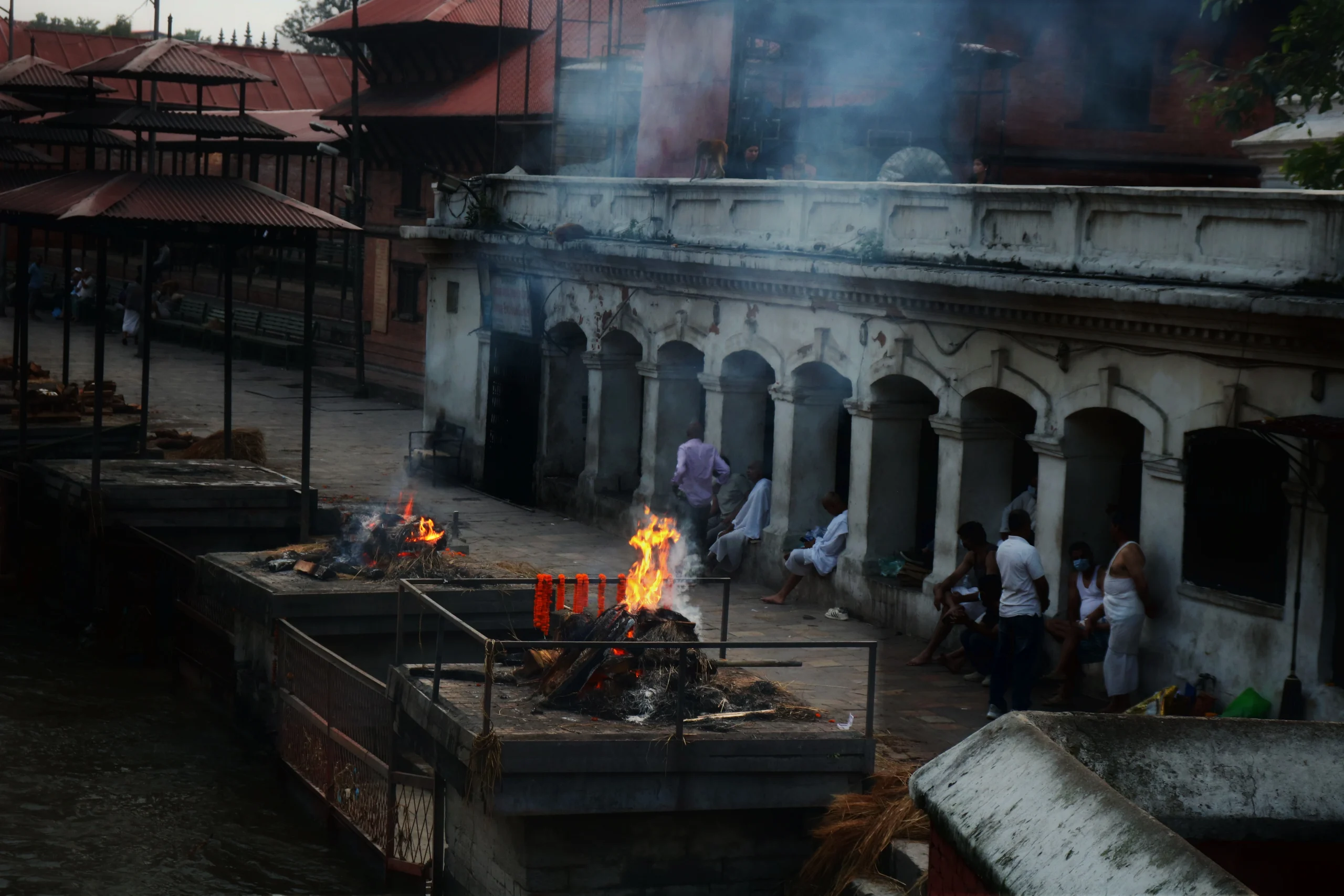
Traditional Hindu cremation ceremonies taking place at Masanghat along the Bagmati River in Pashupatinath.
What Can You See Around Pashupatinath Temple?
A visit to Pashupatinath Temple does not have to focus only on the main shrine. The surrounding heritage area contains several places and features worth seeing.
The Main Temple
The main temple is the spiritual center of the complex and is dedicated to Lord Shiva. Its distinctive pagoda architecture, silver-covered doors and golden roof make it one of the most recognizable religious structures in Nepal.
Bagmati River
The Bagmati River flows beside the temple and has deep religious importance. The river is closely connected with ceremonies, pilgrimage and cremation traditions in the area.
Ghats Along the Bagmati
The riverside ghats are an important part of the cultural landscape. They are used for religious activities and traditional cremation ceremonies.
Visitors should behave respectfully because these are active religious and cultural spaces rather than entertainment areas.
Guhyeshwari Temple
Guhyeshwari is another important religious site near Pashupatinath. It is recognized as one of Nepal’s famous Shakti Peeths and is located beside the Bagmati River. Non-Hindus are not permitted to enter the temple.
Sleshmantak Forest
The surrounding Sleshmantak forest adds another dimension to the Pashupati area. The Nepal Tourism Board notes the presence of monkeys and deer in the area.
Can Tourists Enter Pashupatinath Temple?
One of the most important things to know before visiting Pashupatinath Temple is that the main temple complex is open only to Hindus.
Non-Hindu visitors cannot enter the main temple complex. However, they can observe the temple and surrounding activities from designated areas across the Bagmati River. This means international travelers can still experience the architecture, surrounding heritage and religious atmosphere without entering the inner temple area.
If you are unsure about whether you can enter a particular shrine, it is better to ask locally or follow posted instructions rather than assuming that every temple in the complex has the same rules.
Pashupatinath Temple Rules and Etiquette
Because Pashupatinath Temple is an active place of worship, visitors should approach it respectfully.
Some important rules include:
- Follow instructions from temple authorities and security personnel.
- Dress respectfully when visiting the temple area.
- Remove shoes where required.
- Do not enter restricted areas.
- Do not photograph inside prohibited areas.
- Do not photograph people during religious ceremonies without permission.
- Avoid loud conversations around worshippers.
- Do not touch religious objects unless invited to do so.
- Avoid pointing your feet toward religious objects or people.
- Respect cremation ceremonies and grieving families.
- Do not treat religious rituals as staged performances.
The Nepal Tourism Board specifically states that photography is strictly prohibited within the main temple complex and that leather items, including shoes, belts and cameras, are not permitted inside.
Best Time to Visit Pashupatinath Temple
There is no single perfect time to visit Pashupatinath Temple, because different times offer different experiences.
Early Morning
Morning is a good option if you want to experience a quieter atmosphere and observe devotees beginning their daily religious activities.
Evening
Evening can be especially interesting because of the Bagmati Aarati. The riverside becomes more active as devotees and visitors gather for the ceremony.
During Festivals
Major Hindu festivals can transform the entire area. Shivaratri is particularly important, attracting large numbers of devotees and pilgrims. Teej and important Ekadashi observances also bring many worshippers to the temple.
However, festival periods can also be extremely busy. Therefore, travelers who prefer a calmer sightseeing experience may want to visit outside major festival days.
Experience the Pashupatinath Bagmati Aarati
The Pashupatinath Bagmati Aarati is one of the most recognizable evening rituals associated with the site.
The ceremony takes place on the opposite side of the Bagmati River from the main temple. According to the Nepal Tourism Board, three priests conduct the ritual using oil lamps, lanterns and other religious elements while sacred mantras and devotional songs are performed. The Nepal Tourism Board currently lists the Aarati as beginning at 6:00 PM every evening.
The ceremony is open for people to observe, making it one of the experiences available to visitors who cannot enter the main temple complex.
Because schedules can change during special occasions, it is sensible to check current local information before planning your visit around a specific ceremony.
Pashupatinath During Maha Shivaratri
Maha Shivaratri is one of the most important festivals celebrated at Pashupatinath Temple.
The festival is dedicated to Lord Shiva and attracts devotees and pilgrims from Nepal and neighboring countries. The Nepal Tourism Board notes that sadhus and ascetics also gather at Pashupatinath during the festival.
During this period, the atmosphere around the temple becomes significantly busier. Religious ceremonies, gatherings and devotional activities continue throughout the area.
For travelers, Maha Shivaratri can provide an opportunity to witness an important part of Nepal’s Hindu cultural tradition. At the same time, visitors should remember that the festival is primarily a religious occasion for devotees, so respectful behavior is especially important.
How to Visit Pashupatinath Temple as a Tourist
If you are planning to visit Pashupatinath Temple, a little preparation can make the experience easier.
1. Dress Respectfully
Choose comfortable clothing that is also appropriate for a religious environment.
2. Carry Only What You Need
Since certain items are prohibited inside the main temple complex, avoid carrying unnecessary belongings.
3. Follow Photography Rules
Do not assume that photography is allowed simply because you are in an outdoor heritage area. The main temple complex has strict photography restrictions.
4. Allow Enough Time
Do not rush through the area. The Pashupati site includes many temples, monuments and cultural features.
5. Visit the Bagmati Aarati
If your schedule allows, consider visiting the Bagmati riverside in the evening to observe the Aarati.
6. Respect Local Traditions
Remember that people visiting Pashupatinath may be there for prayer, pilgrimage, cremation rituals or personal religious reasons. Give them space and behave accordingly.
Pashupatinath Temple Opening Hours and Entry Information
Exact daily schedules can vary because the temple operates according to religious rituals and special occasions. Therefore, visitors should verify current information before visiting.
The Nepal Tourism Board’s current heritage-fee information lists NPR 1,000 per day per entry for the Pashupatinath Temple visitor category shown on its official fee table and notes that tourists can view the temple from the back premises. Because entry rules and fees can change, checking the current official information before your trip is recommended.
For current visitor information, including access restrictions and other important details, travelers can check the official Pashupatinath Temple information from the Nepal Tourism Board.
How to Reach Pashupatinath Temple
Pashupatinath Temple is around 5 km east of central Kathmandu.
The easiest options for most travelers are:
Taxi: Convenient for visitors staying in central Kathmandu.
Private vehicle: Useful if Pashupatinath is part of a larger Kathmandu sightseeing day.
Local transportation: Buses, microbuses and tempos operate toward the Gaushala area.
Walking: Possible from nearby areas, although the distance and traffic should be considered.
The Nepal Tourism Board specifically notes that taxis, microbuses and tempos can take visitors to Gaushala, from where it is a short walk to the temple.
Why Pashupatinath Temple Should Be Part of a Nepal Trip
Nepal is known internationally for the Himalayas, trekking routes and mountain landscapes. However, the country’s identity is also deeply connected with religion, architecture, festivals and living traditions.
A visit to Pashupatinath Temple allows travelers to experience another side of Nepal. Instead of only seeing mountains, visitors can explore an ancient religious landscape within Kathmandu itself. Travelers who want to explore more of Kathmandu’s heritage can also consider a Kathmandu UNESCO Heritage Site Day Tour. Another option for travelers interested in Kathmandu’s cultural heritage is the Kathmandu Heritage and Nagarkot Sunrise Tour.
The combination of the Bagmati River, temples, sculptures, ghats, rituals and surrounding heritage makes the area particularly valuable for travelers interested in culture.
If you are already planning a trek in Nepal, spending time in Kathmandu before or after your trek can provide a useful cultural contrast to the mountain experience.
You can also explore Silver Moon Adventure’s Everest Base Camp Trek or learn more about the Annapurna Base Camp Trek as part of a wider Nepal itinerary.
Why Choose Silver Moon Adventure?
A Nepal trip can combine trekking with cultural experiences, allowing travelers to understand more than just the country’s mountain landscapes.
Silver Moon Adventure can help travelers organize a Nepal itinerary that combines trekking, sightseeing and cultural experiences according to their available time and interests. For travelers visiting Kathmandu before or after a trek, places such as Pashupatinath can be included alongside other major heritage attractions.
The goal is to make the journey practical while giving travelers enough time to experience Nepal beyond the trekking trail.
In Summary
Pashupatinath Temple is a major religious and cultural landmark in Kathmandu and one of Nepal’s most important Hindu pilgrimage sites. Located beside the Bagmati River, the wider Pashupati area combines temples, monuments, sculptures, forests, ghats and religious traditions.
Although non-Hindus cannot enter the main temple complex, visitors can still observe the temple from designated areas and experience much of the surrounding cultural landscape. The Bagmati Aarati, historic architecture and surrounding heritage make the area especially interesting for travelers exploring Kathmandu.
Most importantly, remember that Pashupatinath is an active place of worship rather than simply a tourist attraction. Respecting religious customs, photography restrictions and local traditions will make your visit more meaningful and considerate.
Frequently Asked Questions About Pashupatinath Temple
1. What is Pashupatinath Temple famous for?
Pashupatinath Temple is famous as one of Nepal’s most important Hindu temples dedicated to Lord Shiva. It is also known for its pagoda architecture, religious traditions, festivals and location beside the Bagmati River.
2. Where is Pashupatinath Temple located?
Pashupatinath Temple is located beside the Bagmati River, about 5 km east of central Kathmandu in Nepal.
3. Can foreigners enter Pashupatinath Temple?
Non-Hindus cannot enter the main temple complex. However, foreign visitors can observe the temple from designated areas across the Bagmati River and explore accessible parts of the wider heritage area.
4. Is Pashupatinath Temple a UNESCO World Heritage Site?
Pashupatinath is part of the Kathmandu Valley UNESCO World Heritage property, which includes several important historic and religious monument zones.
5. Can tourists take photos at Pashupatinath Temple?
Photography is strictly prohibited inside the main temple complex. Visitors should also follow instructions regarding photography around religious ceremonies and people.
6. What should I wear to Pashupatinath Temple?
Visitors should wear respectful and reasonably modest clothing because Pashupatinath is an active religious site. Comfortable clothing is also useful because you may spend time walking around the wider complex.
7. What is the Bagmati Aarati at Pashupatinath?
The Bagmati Aarati is an evening Hindu worship ceremony performed beside the Bagmati River near Pashupatinath. The ritual includes lamps, sacred chants and devotional songs. Nepal Tourism Board currently lists the ceremony as beginning at 6:00 PM.
8. Can non-Hindus watch the Pashupatinath Aarati?
Yes. The Bagmati Aarati takes place on the riverside opposite the main temple, allowing visitors to observe the ceremony without entering the restricted main temple complex.
9. When is the best time to visit Pashupatinath Temple?
Early morning can provide a calmer experience, while evening is useful if you want to observe the Bagmati Aarati. Festival periods such as Maha Shivaratri offer a very different and much busier experience.
10. What is Maha Shivaratri at Pashupatinath Temple?
Maha Shivaratri is a major Hindu festival dedicated to Lord Shiva. Pashupatinath attracts large numbers of devotees and pilgrims during the festival, including sadhus and ascetics.
11. How far is Pashupatinath Temple from Kathmandu?
The temple is approximately 5 km east of central Kathmandu. Travel time depends on traffic and your starting point.
12. What else can I see near Pashupatinath Temple?
Visitors can explore the wider Pashupati heritage area, including the Bagmati River, ghats, Guhyeshwari Temple, Sleshmantak forest and numerous smaller temples and monuments.
13. Is Guhyeshwari Temple near Pashupatinath?
Yes. Guhyeshwari Temple is located near Pashupatinath along the Bagmati River and is an important Shakti Peeth in Nepal. Non-Hindus are not permitted to enter the temple.
14. How much time should I spend at Pashupatinath Temple?
Around 1–3 hours can work for a general visit, depending on whether you only observe the main area or explore the wider heritage surroundings and attend the Bagmati Aarati.
15. Is Pashupatinath Temple worth visiting during a Nepal trip?
Pashupatinath offers an opportunity to experience an important part of Nepal’s religious and cultural heritage in Kathmandu. For travelers interested in history, architecture, Hindu traditions and local culture, it can complement a Himalayan trekking itinerary.

Similar Blogs
View all

13/10/2026
Manaslu Circuit Trek After the October 2026 Floods: Trail Conditions, Safety and Travel Updates
The Manaslu Circuit Trek is one of Nepal’s most rewarding Himalayan journeys, taking trekkers through traditional...
Read more
13/10/2026
Your Nepal Trek Is Booked, but the Trail Is Closed: What Now?
Imagine arriving in Nepal with your trekking boots ready, your flights booked, your bags packed, and...
Read more