Ghorepani
Share:
 Read Time
This blog has 2332 words .This blog has 15823 characters.This blog take 8 minutes to read.
Ghorepani is one of the best-known mountain villages in Nepal’s Annapurna region. Surrounded by forested hills, traditional settlements and views of the Himalayas, it is a popular stop for trekkers heading towards Poon Hill. Many visitors spend a night here before waking early to watch the sunrise over the Annapurna and Dhaulagiri mountain ranges.
The village is more than just a place to sleep before a sunrise hike. Its rhododendron forests, mountain atmosphere, local teahouses and position along the Annapurna trekking trails make it an enjoyable destination in its own right. Whether you are visiting Nepal for your first Himalayan trek or exploring the Annapurna region again, Ghorepani offers a rewarding combination of nature, culture and mountain scenery.
Ghorepani Quick Facts
Where Is Ghorepani?
Ghorepani lies in the Annapurna region of north-central Nepal, within the foothills of the Himalayas. It is commonly visited on trekking routes that begin around Pokhara and pass through villages such as Hile and Ulleri.
The village sits along a forested mountain ridge at approximately 2,860–2,874 metres above sea level. Its position makes it a convenient overnight stop for trekkers planning to visit Poon Hill, one of the region’s best-known sunrise viewpoints.
Most visitors travel from Kathmandu to Pokhara before continuing by road to a trailhead such as Hile. From there, the journey continues on foot through settlements, stone staircases, terraced farmland and forest paths. The exact starting point depends on the route and current road conditions.
Ghorepani is also connected to longer trekking journeys through the Annapurna foothills. Trekkers may continue towards Tadapani and Ghandruk or incorporate the village into a wider Annapurna itinerary.
What Makes Ghorepani Special?
Ghorepani brings together several experiences that make trekking in Nepal memorable. The village is surrounded by green hills and woodland, while its elevated position offers opportunities to see the Himalayan landscape when the weather is clear.
One of its biggest attractions is the nearby Poon Hill viewpoint. Trekkers often stay overnight in Ghorepani so they can begin walking before dawn and reach the viewpoint around sunrise. Watching the first light spread across the mountains is a major reason this route attracts visitors from around the world.
The surrounding forests are another highlight, especially during spring when rhododendrons bloom. The village also has established teahouses where travellers can eat, rest and meet other trekkers after a day on the trail.
Unlike a destination reached only for a single viewpoint, Ghorepani allows visitors to experience the journey itself. Walking through forests, passing small settlements and spending time in a mountain village are all part of its appeal.
Poon Hill Sunrise and Himalayan Views
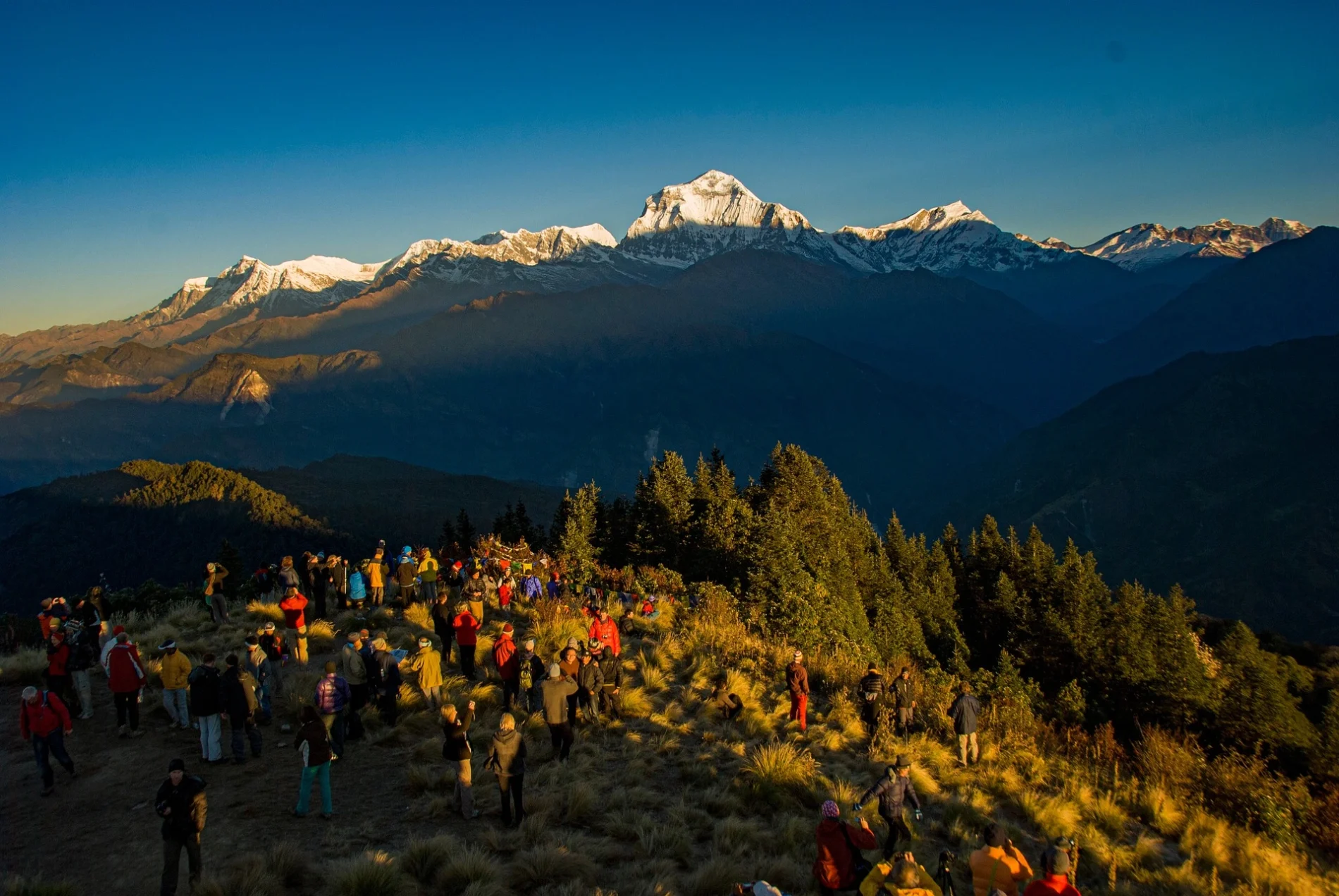
Poon Hill is the main attraction associated with Ghorepani. At approximately 3,210 metres above sea level, the viewpoint provides a broad panorama of the Annapurna and Dhaulagiri ranges on clear days.
Most trekkers start from Ghorepani before sunrise. The walk generally takes around 45–90 minutes each way, depending on walking pace, trail conditions and the starting point. The route climbs uphill, and the early-morning cold can make the short hike feel more demanding than expected.
At the viewpoint, visitors gather to watch the changing colours of the Himalayan peaks as daylight reaches the mountains. Depending on visibility, prominent peaks in the panorama can include Dhaulagiri, Annapurna South, Hiunchuli and Machhapuchhre, also known as Fishtail.
The experience is particularly popular among travellers who want impressive Himalayan scenery without undertaking a much longer expedition to a high-altitude base camp.
However, a clear sunrise is never guaranteed. Clouds, haze, rain or snowfall can affect visibility. Staying an extra night in Ghorepani, when your itinerary allows, may provide another opportunity to enjoy the mountain views.
Rhododendron Forests and Natural Beauty
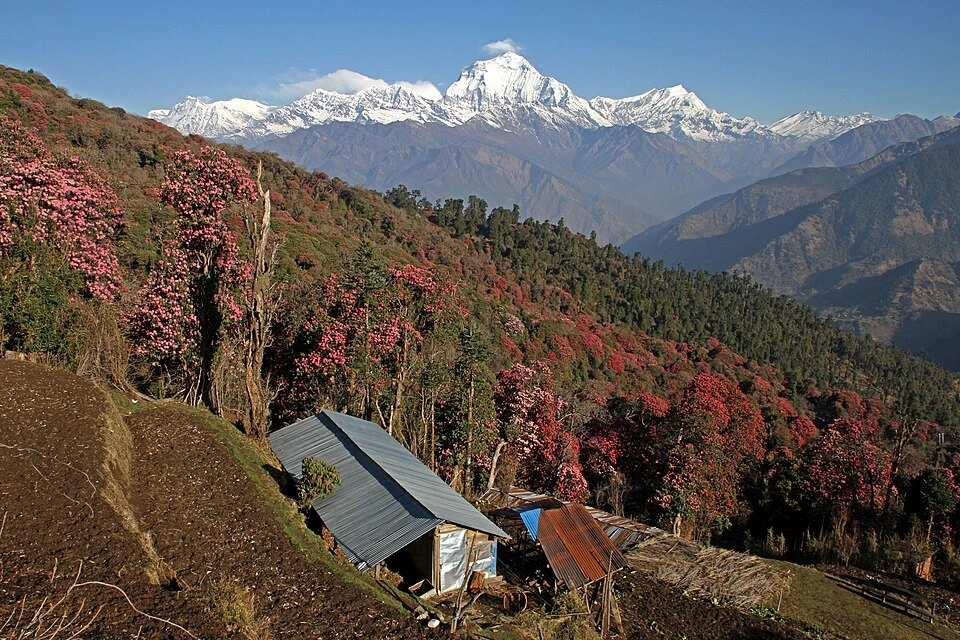
The forests around Ghorepani are among the natural highlights of the trekking route. Rhododendrons grow alongside oak and other Himalayan vegetation, creating a changing landscape as the trail climbs through the hills.
Spring, particularly around March and April, is a popular time to see rhododendron flowers. The exact flowering period varies with altitude, temperature and seasonal weather. Some sections may bloom earlier or later than others, so colourful forests should not be expected on every visit.
Outside the flowering season, the forest trails remain attractive. Autumn often brings clear conditions and pleasant daytime temperatures, while the monsoon months can make the vegetation especially lush. Winter may bring cold mornings and occasional snow, depending on conditions.
Birdlife, shaded walking paths and glimpses of the surrounding hills add to the experience. Trekkers should stay on established trails, avoid disturbing wildlife and carry their rubbish back to appropriate disposal points.
For travellers interested in Nepal’s natural landscapes, Ghorepani offers a chance to enjoy forest scenery as well as the mountain panorama from Poon Hill.
Local Culture and Village Life
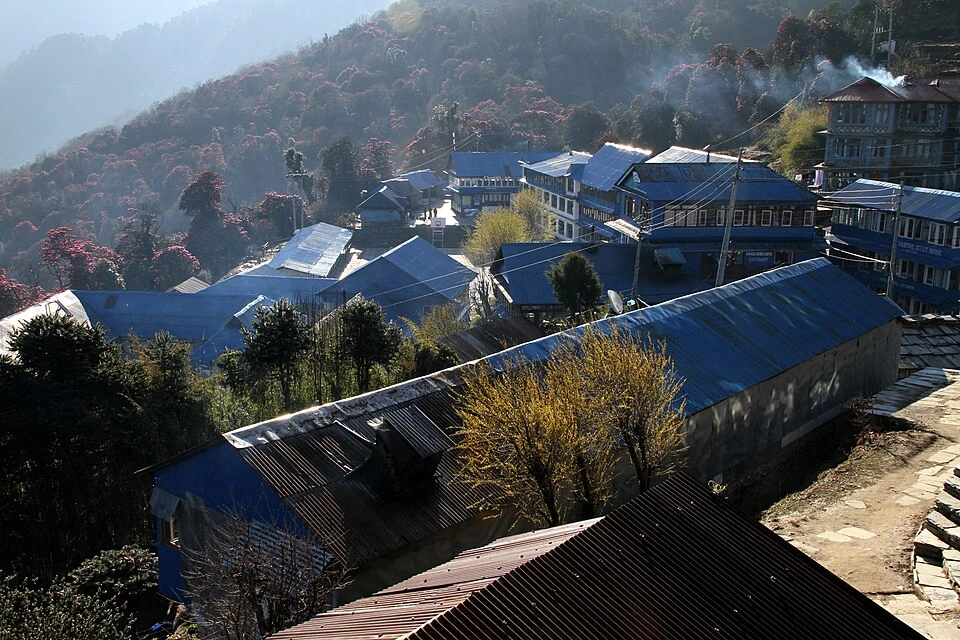
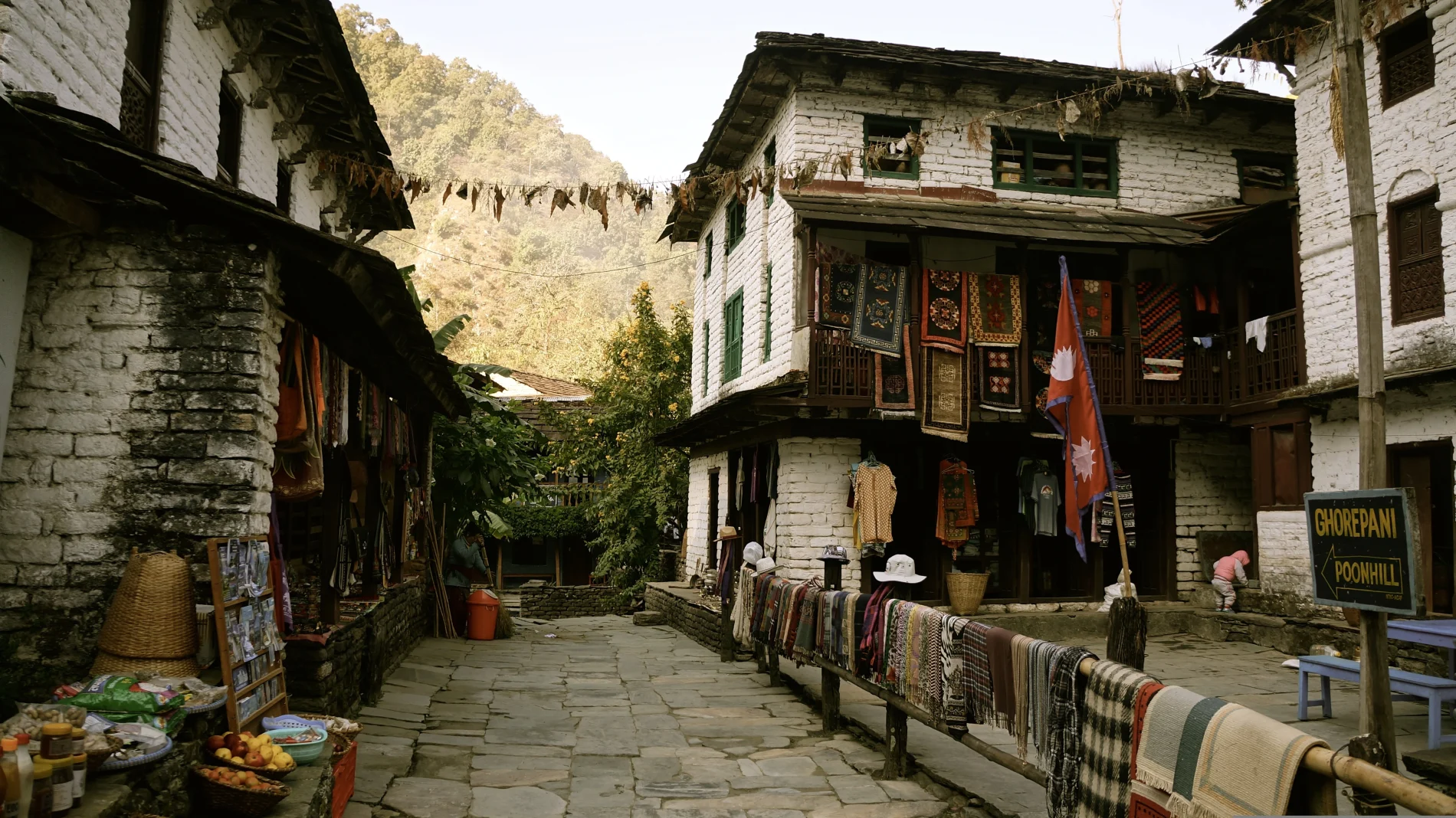
Ghorepani is part of a region with a rich mix of mountain communities, including Magar and Gurung communities in the wider Annapurna area. Traditions, languages and everyday practices vary between villages, so visitors should approach local culture with curiosity and respect rather than assuming every settlement is the same.
The village’s teahouses and lodges are an important part of the trekking experience. They provide meals, accommodation and gathering places where trekkers can relax after walking. Conversations with local hosts can offer insight into life in the mountains and the role tourism plays in the local economy.
Visitors may see traditional architecture, local clothing on special occasions and everyday activities connected with mountain living. Ask permission before photographing people, homes or private spaces.
Choosing locally run accommodation and eating at village establishments can help support the communities along the trail. Small gestures, such as greeting hosts politely and respecting local customs, also help make visits more meaningful.
How to Reach Ghorepani
The most common approach is to travel to Pokhara and continue by road to a trekking trailhead. From there, Ghorepani is reached on foot.
From Kathmandu: Travellers can reach Pokhara by road or domestic flight. Road journeys take longer and depend on traffic and road conditions, while flights are usually much shorter but can be affected by weather and schedules.
From Pokhara: A road transfer takes trekkers towards a starting point such as Hile. The driving time depends on the chosen route, traffic and road conditions.
From Hile or Ulleri: The journey continues uphill through villages, stone steps and forested sections. Trekkers commonly pass through Ulleri or join the trail from another suitable access point before continuing towards Ghorepani.
The walking time varies with the starting point, fitness, weather and breaks. From Ulleri, the ascent to Ghorepani commonly takes around 4–6 hours, although some trekkers need longer.
The trail includes sustained uphill walking and stone staircases, so comfortable trekking shoes, drinking water and a steady pace are important.
For travellers planning this route, Silver Moon Adventure & Tours offers the 5 Days Ghorepani Poon Hill Trek, which combines the village with the region’s famous sunrise viewpoint.
Nearby Attractions Around Ghorepani
Ghorepani is well positioned for exploring other villages and natural attractions in the Annapurna foothills.
Ulleri
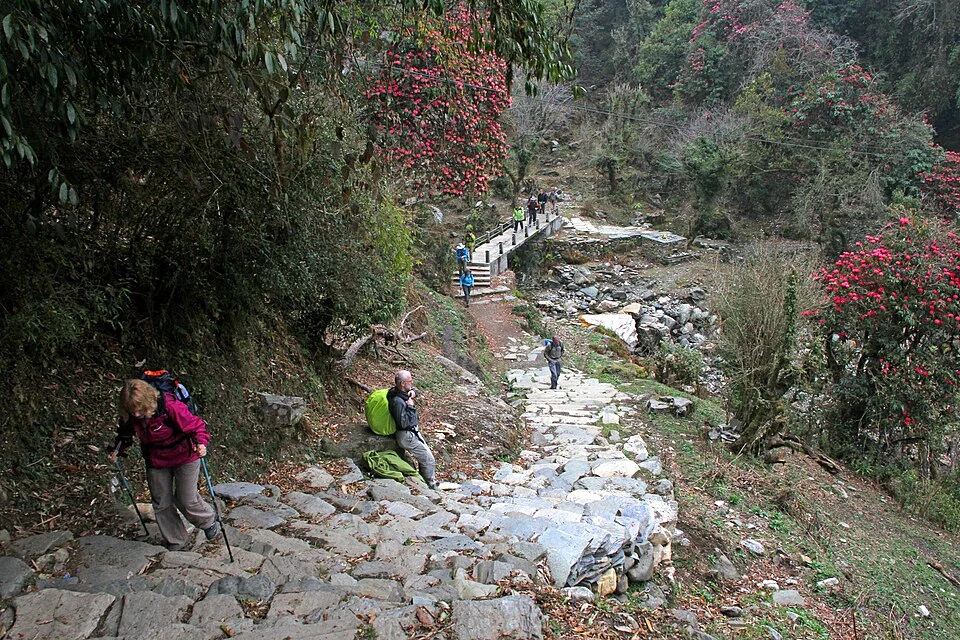
Ulleri is a mountain village known for its long stone staircases and traditional settlement. It is a familiar stop on the approach to Ghorepani, and the climb between the two villages passes through forested hills and smaller resting points.
Travellers can learn more in our [Ulleri attraction guide](https://silvermoonadventure.com/attractions/ulleri/).
Tadapani
Tadapani is another popular stop on trekking routes through the Annapurna region. The surrounding forests and mountain scenery make it a natural place to rest after visiting Poon Hill. It also provides a connection towards Ghandruk and other sections of the trekking network.

Starts from
USD 650
Ghorepani Ghandruk Trek- 09 days
The Ghorepani Ghandruk Trek is one of the most popular trekking routes in the Annapurna region of Nepal. This...
Duration:
09 days
Max altitude:
2,874 meters at Ghorepani
Ghandruk
Ghandruk is a well-known village associated with Gurung culture, traditional homes and views of the Annapurna mountains. It can be included in itineraries that continue beyond Ghorepani rather than returning along the same trail.
Travellers interested in combining these destinations can explore the Ghorepani Ghandruk Luxury Trek.
Annapurna Mountain Landscapes
The wider Annapurna region offers a variety of trekking experiences, from short village walks to longer journeys towards mountain base camps. Ghorepani can form part of a broader route depending on the time available, the desired difficulty and current trail conditions.
Visitors planning a longer journey can also explore the Annapurna Base Camp Trek via Ghandruk.
Best Time to Visit Ghorepani
Ghorepani can be visited throughout much of the year, but the experience changes with the seasons.
Spring (March–May): Spring is a popular time for trekking because rhododendrons bloom in the surrounding forests. Temperatures generally become milder, and the landscape can be especially colourful. Flowering and mountain visibility depend on the weather.
Autumn (September–November): Autumn is another favourite season. After the monsoon begins to withdraw, clearer skies often provide good conditions for mountain views. October and November can be busy on the Poon Hill route, so booking accommodation in advance is sensible during peak periods.
Winter (December–February): Winter brings colder nights and early mornings. Clear days can provide excellent views, but frost, snow or icy trail sections may occur. Warm clothing and updated local trail information are important.
Monsoon (June–August): The hills become green and the forests lush, but rain, cloud, leeches on some trails and slippery paths can affect walking conditions. Mountain views may be limited, and road access can be disrupted by heavy rain or landslides.
For most first-time visitors prioritising comfortable trekking and the chance of clear Himalayan views, spring and autumn are strong choices.
Accommodation and Food in Ghorepani
Ghorepani has teahouses, guesthouses and trekking lodges that cater to visitors travelling through the Annapurna region. Facilities vary by property, but accommodation commonly includes a bed, blankets and shared or private bathroom options depending on availability and the lodge.
During busy trekking seasons, rooms can fill up quickly. Booking ahead or arranging accommodation through a trekking operator can make planning easier, particularly for groups.
Meals generally include familiar trekking staples such as dal bhat, noodles, soups, rice dishes, eggs, potatoes and some Western-style options. Menu choices may be more limited than in Pokhara, and availability depends on the lodge and season.
Hot drinks are widely appreciated in the cold mountain mornings. Carry some cash for small purchases, and do not assume every lodge will accept card payments or have reliable mobile connectivity.
Electricity, charging facilities, hot showers and internet access may be available, sometimes for an additional fee. Services can vary, so it is useful to confirm what is included when booking.
Practical Tips for Visiting Ghorepani
A little preparation makes the journey more comfortable.
- Bring warm layers for early-morning temperatures, especially when hiking to Poon Hill before sunrise.
- Wear sturdy shoes with good grip for stone steps, forest paths and potentially slippery sections.
- Carry a headlamp or torch for the pre-dawn walk to Poon Hill.
- Pack water and snacks, and take regular breaks during uphill sections.
- Check the weather forecast and ask local guides or lodge staff about trail conditions.
- Keep some Nepali cash available for meals, accommodation extras and small purchases.
- Protect yourself from the sun with sunscreen, sunglasses and a hat, even when the air feels cold.
- Respect local communities, ask before taking photographs and carry out any rubbish.
- Walk at a comfortable pace and allow time to adjust to the elevation.
- If you develop symptoms such as a worsening headache, nausea or dizziness, do not ignore them. Seek advice from your guide or a medical professional and descend if altitude illness is suspected.
Ghorepani is accessible to many people with reasonable fitness, but the route still involves uphill walking and a high enough elevation that visitors should take preparation seriously.
Plan Your Visit to Ghorepani
Ghorepani is an excellent destination for travellers who want to experience Nepal’s mountain scenery, forest trails and village hospitality within a relatively short trekking journey. Its connection to Poon Hill makes it especially appealing, but the surrounding forests, nearby settlements and time spent in the village are equally valuable parts of the experience.
With the right season, suitable clothing and a realistic walking plan, a visit to Ghorepani can become one of the highlights of an Annapurna trip.
If you are planning to visit, explore Silver Moon Adventure & Tours’ Ghorepani Poon Hill trekking options to find a route that fits your schedule and travel preferences.
Frequently Asked Questions
Q1. What is Ghorepani famous for?
Ghorepani is best known as the overnight village for the Poon Hill sunrise hike. It is also popular for rhododendron forests, mountain scenery and its position on trekking routes in the Annapurna region.
Q2. How high is Ghorepani?
Ghorepani is approximately 2,860–2,874 metres (9,383–9,429 feet) above sea level. Elevations may vary slightly between maps and references.
Q3. How long does it take to reach Poon Hill from Ghorepani?
The uphill walk usually takes around 45–90 minutes each way, depending on your pace and trail conditions. Many trekkers leave before sunrise to reach the viewpoint in time for the first light.
Q4. When is the best time to visit Ghorepani?
Spring (March–May) is popular for rhododendron flowers, while autumn (September–November) often offers favourable trekking conditions and clear mountain views. Weather can change at any time of year.
Q5. Can beginners visit Ghorepani?
Yes. Ghorepani is a common choice for first-time trekkers, but the route includes sustained uphill walking, stone steps and high-altitude sections. Basic fitness, appropriate footwear and a manageable itinerary are recommended.