Dashain Festival in Nepal: Culture, Traditions and Autumn Travel
Share:
 Read Time
This blog has 2675 words .This blog has 17894 characters.This blog take 9 minutes to read.
Imagine arriving in Nepal during autumn. The monsoon clouds are clearing, the hills are turning fresh and green, colourful kites are flying above the rooftops, and families are travelling across the country to reunite with their loved ones. Homes are filled with the smell of traditional food, and elders prepare to bless younger family members. This is Dashain, Nepal’s biggest and one of its most meaningful festivals.
For international visitors, Dashain offers more than an opportunity to see a celebration. It provides a glimpse into Nepal’s family values, spiritual beliefs, traditions and everyday life. It also takes place around the beginning of the popular autumn trekking season, when many travellers head towards the Himalayas.
Whether you are planning a cultural holiday in Kathmandu or preparing for a mountain adventure, understanding Dashain can help you experience Nepal beyond its famous landscapes.
What Is Dashain Festival in Nepal?
Dashain is the biggest Hindu festival celebrated in Nepal. It honours Goddess Durga and symbolises the victory of good over evil. The festival brings together religious ceremonies, family reunions, traditional food, blessings and public holidays.
Although Dashain has deep religious roots, its importance extends beyond religious practice. For many Nepalis, it is the time of year when family members return home, relatives reconnect, children receive blessings from elders, and people take a break from their regular responsibilities.
Dashain is celebrated by Nepali communities in different parts of the world, too. Customs vary by region, community and family, so not everyone observes every ritual in exactly the same way.
For a foreign visitor, one of the easiest ways to understand Dashain is to think of it as a combination of a major religious festival, a family reunion and a nationwide holiday, all connected through Nepali culture.
How Long Does Dashain Last?
Dashain traditionally lasts for 15 days, beginning with Ghatasthapana and concluding with Kojagrat Purnima. It usually falls in September or October, although the exact dates change each year according to the Nepali lunar calendar. Nepal Tourism Board also describes Dashain as a time of worship, family gatherings and blessings.
The entire festival has its own rhythm. The first days focus on religious preparation, the middle period includes important ceremonies, and the tenth day is when many families gather for the well-known tika and jamara blessings. Celebrations and visits to relatives continue in the days that follow.
Not every day is a large public celebration. Some are quieter and more spiritual, while others involve travelling, visiting relatives, preparing meals or attending family gatherings.
Important Days of Dashain
– Ghatasthapana: The first day, when families begin the festival’s rituals and sow seeds for jamara, the sacred shoots used later in the celebrations.
– Phulpati: An important day marked by traditional ceremonies and the arrival of sacred offerings in some communities.
– Maha Ashtami: A day dedicated to Goddess Durga, with special worship and offerings.
– Maha Navami: The ninth day, associated with further worship and traditional rituals.
– Vijaya Dashami: The main day for receiving tika and jamara blessings from elders.
– Kojagrat Purnima: The full-moon day that marks the traditional conclusion of the 15-day festival.
These days help explain why Dashain is more than a single holiday. It is a sequence of traditions that gradually brings families and communities together.
Why Is Dashain Celebrated? The Spiritual Meaning
Dashain has several religious stories associated with it, but one of the best-known is the victory of Goddess Durga over Mahishasura, a powerful demon who threatened the world.
According to Hindu tradition, the gods combined their powers to create Goddess Durga, who fought against Mahishasura and defeated him. Her victory represents the triumph of good over evil and the restoration of balance.
Another tradition connects the festival with Lord Rama’s victory over Ravana, a story widely associated with the Hindu epic Ramayana. Different communities may emphasise different stories and practices, but the central theme of victory over evil remains important.
For devotees, Dashain is a time to worship divine power, seek blessings and express gratitude. Temples become important places of prayer, and families perform rituals according to their traditions.
The festival also reflects the belief that strength should be used to protect life, overcome destructive forces and restore harmony. This is why Goddess Durga is often associated with courage, protection and power.
For visitors unfamiliar with Hinduism, understanding this spiritual background makes the festival’s rituals easier to appreciate. What might look like a series of colourful ceremonies is, for many families, an expression of faith, hope and gratitude.
The Practical Meaning of Dashain: Family, Harvest and a Fresh Start
The spiritual meaning of Dashain is only one part of its significance. The festival also has a strong social and seasonal role in Nepali life.
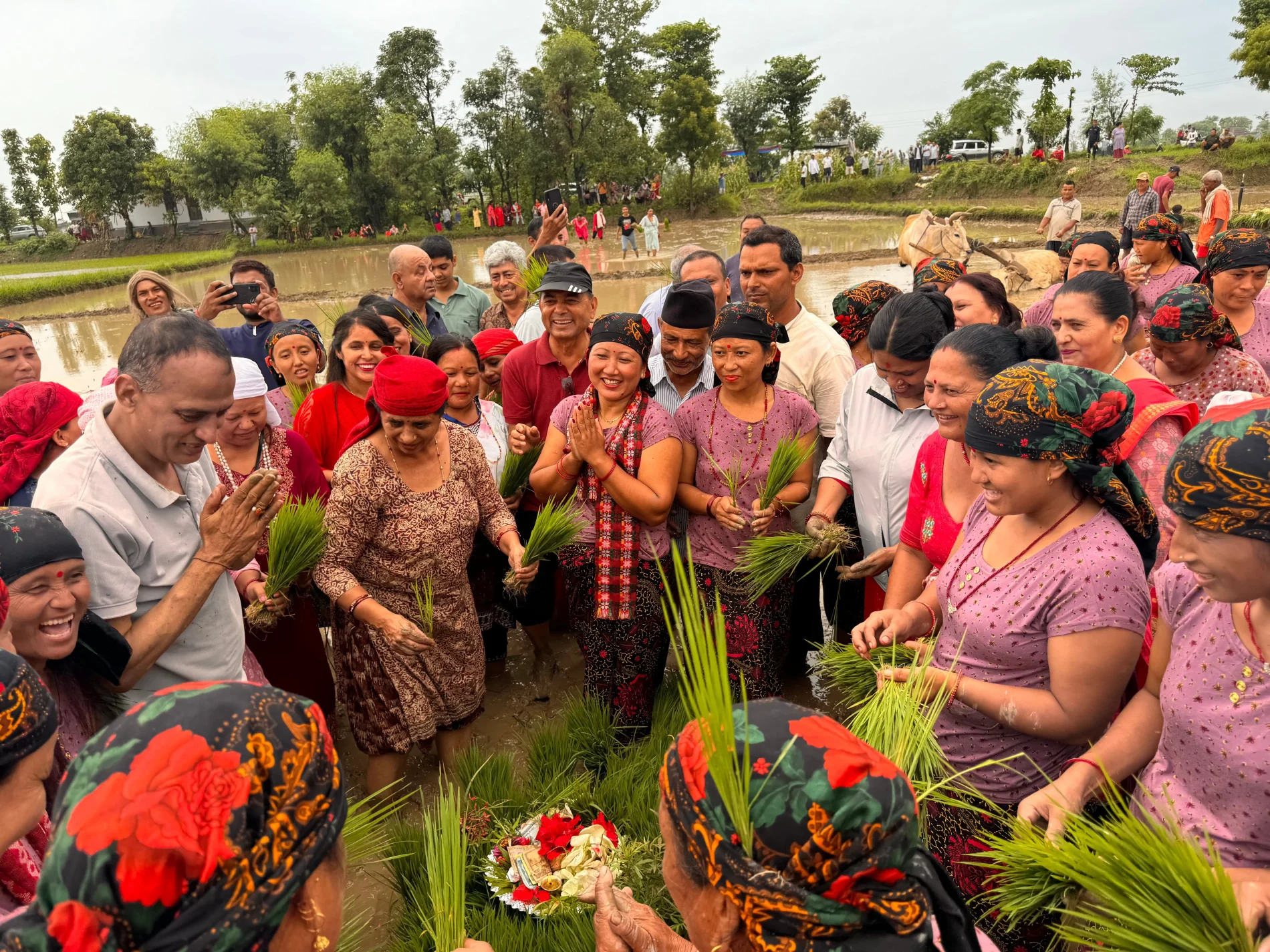
Traditionally, Dashain has been associated with the agricultural calendar and the harvest season. Nepal has long depended on farming, and the period following the monsoon has been an important time for communities to gather, celebrate and prepare for the months ahead.
Today, the meaning of Dashain is broader than agriculture, but its connection with the season remains noticeable. The rains begin to retreat, the weather often becomes more comfortable, and many people look forward to travelling home after months of work or study.
Family reunions are one of the festival’s most important features. People living in cities return to their hometowns and villages, while Nepalis working abroad may make special efforts to visit their families. Elders bless younger relatives, children receive gifts or new clothes, and family members share meals.
There is also a practical social meaning behind these traditions. Family gatherings create opportunities to maintain relationships, care for older relatives, share resources and pass cultural knowledge from one generation to the next.
In this sense, Dashain brings together spiritual beliefs and everyday human needs. Faith gives the festival its religious meaning, while family connection, rest, gratitude and community give it lasting importance in people’s lives.
How Do Nepali People Celebrate Dashain?
Dashain is celebrated differently across Nepal, but several traditions are widely recognised. Some take place inside the home, while others bring people into temples, streets and public spaces.
Tika and Jamara: Receiving Blessings from Elders
One of the most recognisable Dashain traditions is receiving tika and jamara from elders.
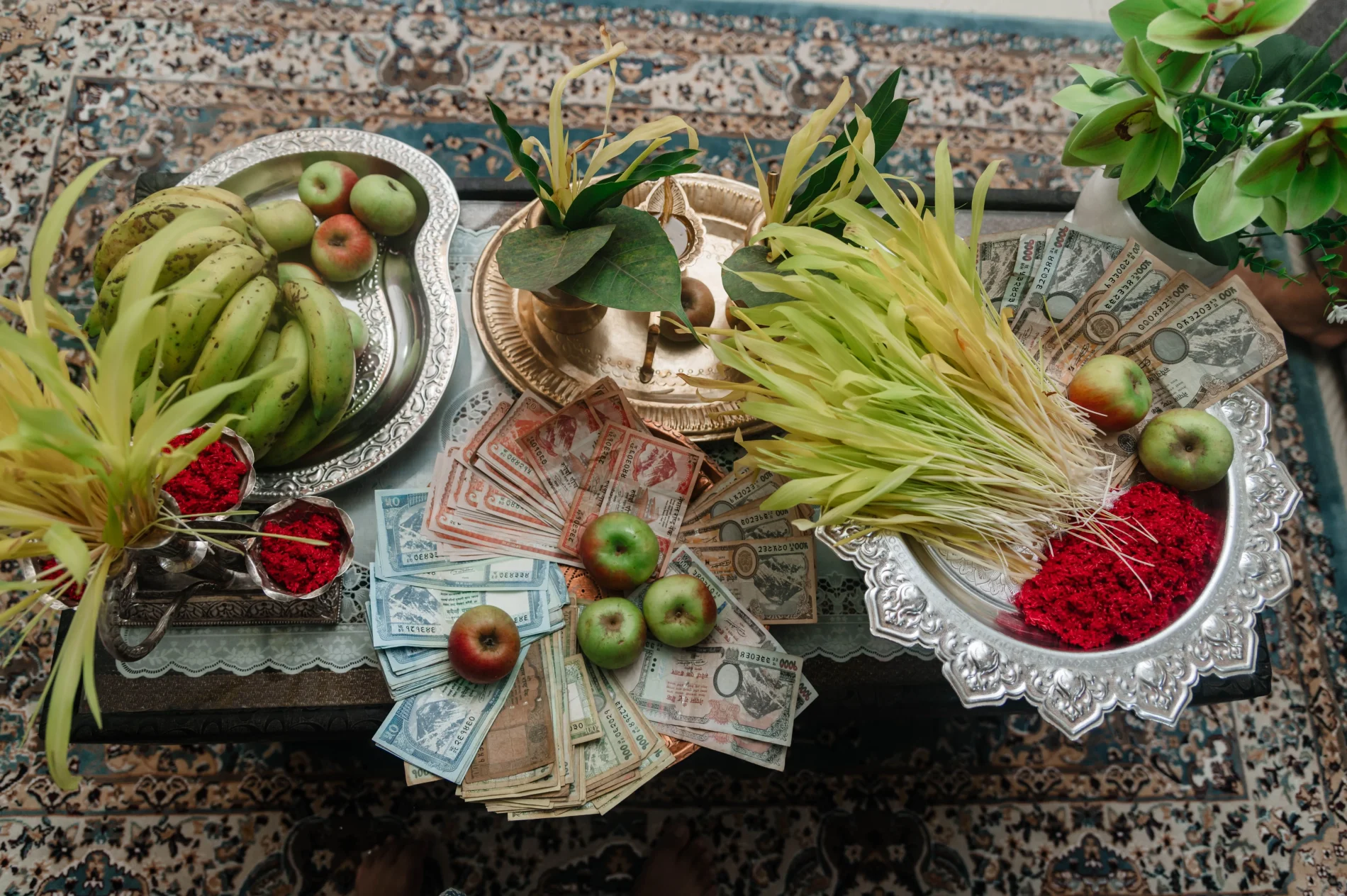
Tika is a mixture commonly made with rice, red vermilion powder and yoghurt, although family practices vary. It is placed on the forehead as part of a blessing. Jamara consists of sacred shoots grown from seeds, often barley, that are planted at the beginning of the festival and kept away from direct sunlight so they develop their characteristic yellow colour.
During the blessing ceremony, elders place tika and jamara on younger family members and offer good wishes for health, happiness, protection and prosperity. Younger relatives may bow or show respect, depending on their family customs.
For someone visiting Nepal for the first time, the meaning is important: tika is not simply decorative colour, and jamara is not just a plant. Together, they are part of a meaningful family blessing.
Family Feasts and Traditional Food
Food plays a major role in Dashain. Families prepare special meals, invite relatives and spend time eating together.
Common dishes can include rice, lentils, vegetable curries, meat dishes, pickles and homemade sweets. The exact menu depends on regional traditions, family preferences and dietary practices.
In many households, the preparation of a festive meal is a shared activity. People cook, serve guests and make sure relatives have something special to enjoy. For visitors, food can offer a wonderful introduction to Nepali hospitality, although it is best to follow the host’s customs and ask before assuming a meal is vegetarian or contains meat.
New Clothes, Gifts and Family Visits
Dashain is also associated with wearing new clothes, giving gifts and visiting relatives. Children may receive money or presents from older family members, while adults exchange greetings and blessings.
These customs reflect the festival’s emphasis on renewal and family relationships. For people who have spent much of the year away from home, visiting relatives during Dashain can be one of the most anticipated parts of the celebration.
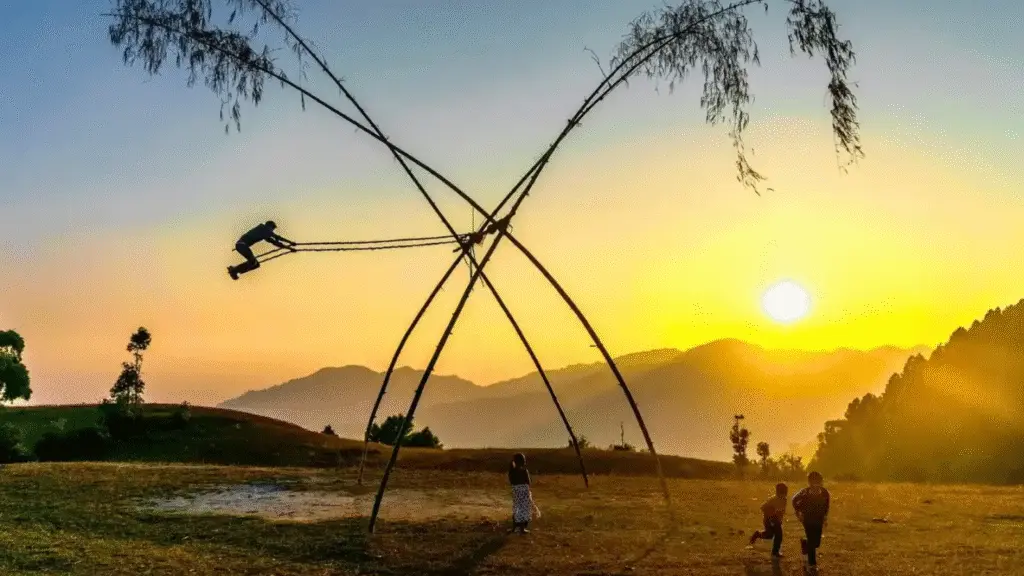
Kites and Traditional Bamboo Swings
Look up during Dashain and you may see colourful kites flying above neighbourhoods. Kite flying has become a familiar seasonal activity, particularly in urban areas.
In some communities, large traditional bamboo swings known as ping are also set up during the festival. Children and adults take turns swinging high above the ground, creating a lively atmosphere in villages and neighbourhoods.
These activities show the more playful side of Dashain. Alongside prayers and family ceremonies, the festival is also a time for enjoyment, shared memories and a break from everyday routines.
Temple Visits and Religious Offerings
Many people visit temples and worship Goddess Durga during Dashain. Religious observances can include prayers, offerings and ceremonies, with particular practices varying between communities.
Some traditions involve animal sacrifice, while others follow different forms of worship. Visitors should approach these practices respectfully and understand that customs may differ from their own beliefs.
You do not need to participate in a religious ceremony to appreciate its cultural importance. Observing respectfully, following instructions and asking permission before photographing people or rituals are good ways to experience the festival.
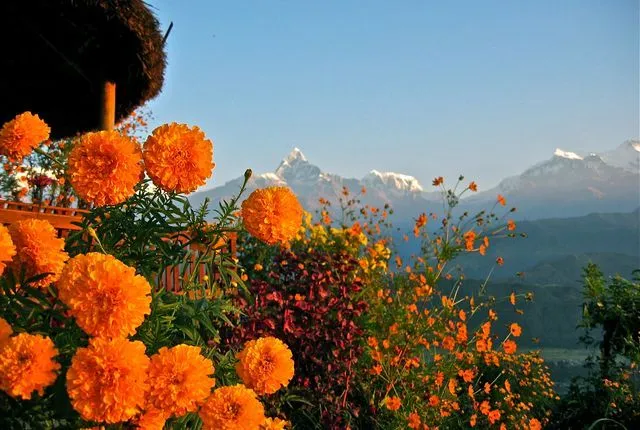
Dashain and Autumn in Nepal: Saying Goodbye to the Monsoon
Dashain usually arrives around the transition from the summer monsoon to autumn. After months of rain, the landscape can look fresh and green, while clearer skies begin to create better conditions for sightseeing and mountain travel.
The timing is one reason autumn is so popular with visitors. Lower-elevation destinations can feel pleasant during the day, and many Himalayan trekking routes enter their main autumn season. However, weather is never guaranteed, and conditions vary with location and altitude.
Dashain itself is not a celebration of winter arriving. Rather, it falls during a seasonal transition when the heavy rains are often ending and cooler mornings and evenings gradually become more noticeable.
For travellers, this can be a particularly rewarding time to experience Nepal’s two sides: its living culture and its mountain landscapes. You might spend time learning about Dashain traditions in Kathmandu before heading towards the Himalayas for a trek.
If you are interested in mountain scenery, the Annapurna Base Camp Trek takes you through villages, forests and mountain terrain towards the dramatic Annapurna Sanctuary.
The Everest Base Camp Trek offers a different experience, following trails through the Khumbu region towards the world’s highest mountain. For those seeking a shorter Himalayan journey, the Mardi Himal Trek offers forest trails and high viewpoints overlooking the Annapurna range.
Autumn is popular for these treks, but the right choice depends on your available time, fitness, experience and preferred level of challenge. Plan your trekking dates around the festival, and arrange transport and accommodation ahead of time.
Can Foreign Tourists Experience Dashain in Nepal?
Yes. International visitors can experience Dashain by observing the seasonal atmosphere, visiting suitable cultural sites, learning about local customs and, where invited, joining a family celebration.
Kathmandu and Pokhara can be useful starting points for travellers who want to combine cultural experiences with outdoor activities. In Kathmandu, you may notice kite flying, festive shopping, temple visits and changes in the normal pace of city life. In smaller towns and villages, family traditions may be more visible, although celebrations differ from place to place.
If a Nepali friend, host or guide invites you to join a family gathering, it can be a valuable opportunity to learn what Dashain means to them. Ask what is appropriate before joining a ritual, and follow your host’s guidance on clothing, greetings, food and photography.
Keep in mind that Dashain is also a major holiday period. Many people travel to their home districts, which can make public transport busy before and after the main festival days. Some businesses and services may close or operate on reduced schedules.
Plan ahead rather than assuming everything will run as usual. If your trip includes trekking, confirm transport, guides, accommodation and any necessary arrangements in advance.
Travel Tips for Visiting Nepal During Dashain
A little planning can make your visit smoother, especially if you want to combine the festival with trekking.
– Book transport early: Buses and other transport services can be busy as people travel home for the holiday.
– Confirm opening hours: Shops, restaurants, offices and cultural sites may operate differently during major festival days.
– Respect family traditions: Tika and jamara are blessings with cultural and religious meaning. Wait for an invitation before taking part.
– Ask before taking photographs: Some people welcome photos, while others may prefer privacy, especially during family or religious ceremonies.
– Prepare for changing temperatures: Autumn days can be warm in lower areas, while evenings and high-altitude locations can be cold.
– Arrange trekking logistics in advance: Confirm your itinerary, transport, accommodation and guide arrangements before leaving for the mountains.
– Allow flexibility: Festival travel can affect schedules. A little extra time in your itinerary can help avoid unnecessary stress.
For further seasonal planning, see our guide to Nepal in October.
Experience Nepal Beyond the Mountains
Nepal is famous for its Himalayan peaks, trekking routes and dramatic landscapes, but its culture is just as important to understanding the country.
Dashain offers a chance to see how faith, family, food and community come together in everyday life. Its stories of good overcoming evil give it spiritual meaning, while its family reunions and seasonal traditions help keep relationships and cultural practices alive.
For international travellers, visiting during Dashain can add another layer to a Nepal journey. You can learn about local traditions, experience the festive atmosphere and, if your schedule allows, head into the mountains during the autumn trekking season.
The most rewarding approach is to travel with curiosity and respect. Rather than seeing Dashain only as a holiday, take time to understand what it means to the people celebrating it. That is often where the most memorable travel experiences begin.
Frequently Asked Questions About Dashain Festival in Nepal
1. What is Dashain Festival in Nepal?
Dashain is Nepal’s biggest Hindu festival. It honours Goddess Durga and celebrates the victory of good over evil, while bringing families together for blessings, meals and traditional ceremonies.
2. How long does Dashain last?
Dashain traditionally lasts 15 days, from Ghatasthapana to Kojagrat Purnima. The exact dates change each year according to the lunar calendar.
3. When is Dashain celebrated in Nepal?
Dashain usually falls in September or October. Check the Nepali calendar for the exact dates for your travel year.
4. What is tika during Dashain?
Tika is a mixture commonly made from rice, red vermilion powder and yoghurt. Elders place it on younger relatives’ foreheads as part of a blessing.
5. What is jamara, and why is it important?
Jamara is sacred grain shoots grown at the beginning of Dashain. It is offered alongside tika during blessings and symbolises auspiciousness and prosperity.
6. Why do Nepali people celebrate Dashain?
The festival celebrates the victory of good over evil, particularly through stories about Goddess Durga. It is also a time for family reunions, gratitude and cultural traditions.
7. Can foreigners celebrate Dashain in Nepal?
Yes. Visitors can learn about the festival, observe public traditions and join family celebrations when invited. Respect local customs and ask before participating in religious rituals.
8. Is Dashain a good time to visit Nepal?
It can be an excellent time for cultural experiences and autumn travel. However, transport can be busy and some businesses may close during the holiday period.
9. Is Dashain a good time for trekking in Nepal?
October is generally a popular trekking month because the monsoon often begins to retreat and mountain views can improve. Weather varies, so check current conditions and plan your route carefully.
10. What should tourists know before visiting Nepal during Dashain?
Book transport and accommodation in advance, check opening schedules, dress appropriately for cultural sites and respect local religious and family traditions.
Similar Blogs
View all
13/10/2026
Manaslu Circuit Trek After the October 2026 Floods: Trail Conditions, Safety and Travel Updates
The Manaslu Circuit Trek is one of Nepal’s most rewarding Himalayan journeys, taking trekkers through traditional...
Read more
13/10/2026
Your Nepal Trek Is Booked, but the Trail Is Closed: What Now?
Imagine arriving in Nepal with your trekking boots ready, your flights booked, your bags packed, and...
Read more