Best Time for the Annapurna Base Camp Trek: Complete Seasonal Guide (2026)
The Annapurna Base Camp Trek is a popular adventure in Nepal. Many people trek here every year to see the mountains, different landscapes and rich culture.The trek is in the Annapurna Conservation Area.The trail goes through villages, forests, waterfalls and farmlands before reaching Annapurna Base Camp (4,130 m).At Annapurna Base Camp you are under the peaks of the Annapurna Massif.
On the way you pass Machhapuchhre Base Camp (3,700 m).From here you can see Machhapuchhre (Fishtail) Annapurna South, Hiunchuli, Gangapurna and Annapurna I.People often ask, “When is the best time to trek to Annapurna Base Camp?”
The best time depends on what you want from your trek.You can trek here all year round. Each season is different.In the spring the rhododendron forests bloom. The temperatures are nice.Autumn has skies and stable weather.Winter makes the trail a peaceful snow-covered landscape.The monsoon season makes the trails lush and green and less crowded.
The trekking season you choose can make a difference.Weather affects how well you can see the mountains, trail conditions and how comfortable you are.Understanding each season helps you pick the timeDo you want to see the mountainsDo you want a trail?Do you want an experience?
This guide tells you everything about the time for the Annapurna Base Camp Trek.It covers the four trekking seasons.It talks about the weather, temperature and trail conditions.Whether you are trekking in the Himalayas for the time or coming back, to Annapurna this guide helps you pick the perfect time. You can have a fun and memorable adventure.
Why Choose the Annapurna Base Camp Trek?
The Annapurna Base Camp Trek is one of Nepals rewarding trekking adventures. It offers a combination of beautiful Himalayan scenery different landscapes, rich cultural heritage and a well-established teahouse trekking experience.The journey takes you into the heart of the Annapurna Sanctuary.
Towering snow-capped peaks surround you from every direction.Whether you’re trekking for the time or you’re an experienced mountain enthusiast,the Annapurna Base Camp Trek delivers an unforgettable experience that combines natural beauty, adventure and authentic local culture.One of the treks highlights is its remarkable diversity.
The trail begins in the hills of the Annapurna region.It winds through Gurung and Magar villages like Ghandruk and Chhomrong.Then it enters rhododendron, bamboo and oak forests.As you gain altitude the landscape gradually changes into alpine terrain with rivers, dramatic cliffs and rugged mountain scenery.This constant transformation keeps every day of the trek rewarding.The journey culminates at Annapurna Base Camp, 4,130 meters.Its located within the Annapurna Sanctuary.Standing at the base of some of the worlds mountains is an experience unlike any other.
You see Annapurna Base Camp Trek, Annapurna I, 8,091 metersthe highest mountain in the world along with Annapurna South, 7,219 meters,Machhapuchhre 6,993 meters Hiunchuli, 6,441 meters,Gangapurna, 7,455 meters and several surrounding Himalayan peaks.Sunrise at the base camp is particularly memorable.The first rays of sunlight illuminate the snow-covered mountains in shades of gold and orange.
The Annapurna Base Camp Trek remains one of Nepals popular trekking routes.It’s easily accessible.The trek is easily reached from Pokhara, Nepals adventure capital.A short drive takes you to the trailhead.Compared to Himalayan destinations that require domestic flights,reaching the Annapurna region is relatively convenient.
This makes trip planning simpler and more reliable throughout the year.The trek offers a cultural experience.The Annapurna region is home to the Gurung and Magar communities.Their traditions have shaped the areas identity for generations.Along the route trekkers encounter stone-built villages,Buddhist prayer flags, monasteries, chortens and terraced farmland.They enjoy Nepalese hospitality in family-run teahouses.These cultural encounters add depth to the journey.They provide insight into life in Nepals mountain communities.The Annapurna Base Camp Trek has trekking infrastructure.
Comfortable teahouses are available in villages like Jhinu Danda,Chhomrong, Sinuwa, Bamboo, Dovan, Himalaya, Deurali,Machhapuchhre Base Camp and Annapurna Base Camp.They allow trekkers to complete the journey without camping.Prepared meals, comfortable accommodation,and well-established trails make the trek suitable for independent trekkersas well as those traveling with guides and porters.The trek can be enjoyed in every season.Spring transforms the forests with rhododendron blossoms.Autumn offers crystal- skies and outstanding mountain visibility.Winter rewards trekkers with snow-covered landscapes.
The monsoon season brings greenery and vibrant waterfalls.Each season provides a trekking experience.Visitors can choose the time that best suits their interests and expectations.The Annapurna Base Camp Trek reaches an altitude of 4,130 meters.Its considered a challenging trek rather than an extreme expedition.The trail does not require climbing or mountaineering skills.It’s achievable for trekkers with a level of physical fitness and proper preparation.
A paced itinerary, gradual ascent and sufficient acclimatizationhelp minimize the risk of altitude sickness.They allow trekkers to fully appreciate the beauty of the Annapurna Sanctuary.The Annapurna Base Camp Trek offers an adventure.It combines trails, diverse landscapes, rich cultural heritage,and world-class mountain scenery.This continues to make it one of the trekking destinations, in the Himalayas.The trek provides Himalayan panoramas,vibrant mountain forests, authentic village life,rewarding trekking challenges or one of Nepals most iconic base camp experiences.
Annapurna Base Camp Trek via Poon Hill – 12 days
The Annapurna Base Camp Trek via Poon Hill is the kind of journey that unfolds naturally over time. This...
Annapurna Base Camp Trek in Autumn
The Annapurna Base Camp Trek is really amazing in the autumn. This is because the weather is great and you can see the mountains clearly. The autumn season is from September to November. During this time the sun shines a lot. It is not too hot or too cold. You can see the mountains and the hills well because the rain has washed away the dust.
Lots of people like to trek in the autumn. The paths are easy to walk and it does not rain much. The Annapurna Base Camp Trek is good for everyone. You can go with your family or friends or even by yourself. The trek is not too hard so beginners can do it too.
The trek starts from a place called Nayapul or Jhinu Danda or Ghandruk. You will see nice villages and forests and waterfalls. You will also see big mountains like the Annapurna mountain. The trek takes you to a place called Machhapuchhre Base Camp. Then to the Annapurna Base Camp.
The autumn season is also a time to learn about the culture of Nepal. There are big festivals in September, October and November. You can see how the local people celebrate these festivals. They decorate their villages. They are very welcoming to visitors.
In the part we will tell you more about what it is, like to trek in September, October and November. We will tell you about the weather and the mountains and how many people are trekking. This will help you decide which month is the best for you to do the Annapurna Base Camp Trek.
Annapurna Base Camp Trek in September
September marks the beginning of the autumn trekking season. Early in the month, occasional post-monsoon showers may still occur, particularly in the lower elevations around Jhinu Danda, Chhomrong, and Bamboo. However, as the month progresses, rainfall decreases significantly, skies become clearer, and trekking conditions improve rapidly.
The landscape is at its greenest after the monsoon, with rivers flowing strongly, waterfalls at their fullest, and forests appearing fresh and vibrant. Although morning clouds are still possible during early September, the second half of the month usually offers outstanding mountain views and excellent photography opportunities.
Temperatures:
- Lower elevations: 18°C to 25°C
- Annapurna Base Camp: 2°C to 10°C
Best for: Trekkers looking for lush landscapes, fewer crowds than October, and improving weather conditions.
Annapurna Base Camp Trek in October
October is considered the best month for the Annapurna Base Camp Trek and is often recommended by trekking professionals throughout Nepal. Stable weather, dry trails, comfortable temperatures, and spectacular visibility create ideal conditions for exploring the Annapurna Sanctuary.
The skies remain brilliantly clear throughout most days, offering uninterrupted views of Annapurna I, Machhapuchhre, Hiunchuli, Annapurna South, and Gangapurna. The trails are lively but well organized, and teahouses along the route provide a welcoming atmosphere filled with trekkers from around the world.
October also coincides with Nepal’s biggest festivals, giving visitors the opportunity to experience local traditions while trekking through mountain villages.
Temperatures:
- Lower elevations: 15°C to 24°C
- Annapurna Base Camp: -2°C to 8°C
Best for: First-time trekkers, photographers, families, and anyone seeking the best overall trekking conditions.
Annapurna Base Camp Trek in November
November continues the excellent trekking conditions established in October while offering slightly quieter trails toward the end of the month. The weather remains dry and stable, with exceptionally clear mountain views, although mornings and evenings become noticeably colder, especially above Deurali and Machhapuchhre Base Camp.
The forests gradually transition into warm autumn colors, adding another dimension to the already spectacular scenery. With fewer trekkers after the peak October rush, November is an excellent choice for those seeking a more peaceful trekking experience without sacrificing mountain visibility.
Temperatures:
- Lower elevations: 10°C to 20°C
- Annapurna Base Camp: -5°C to 6°C
Best for: Trekkers who enjoy clear skies, cooler temperatures, and a quieter Himalayan experience.
Why Choose the Annapurna Base Camp Trek in Autumn?
Autumn is the time to go trekking. You will find that the trails are dry and the weather is stable. The temperature is right during the day.. The view of the Himalayas is really something special. This is why most people like to go trekking in Autumn.
The scenery is amazing. The local festivals are a lot of fun. The people who run the treks are very good at their job. All of these things together make for an adventure from start to finish.
If you are new to trekking in the Himalayas or if you have done it before and are coming back to Nepal, the Annapurna Base Camp Trek in Autumn is a choice. You will get to have some excitement and also be comfortable.. You will see some really beautiful natural things.
If you want to go trekking in Autumn it is an idea to book with a company like Silver Moon Adventure and Tour. They are from around here. They know what they are doing. They will help you with all the details. Make sure you have a good guide. They will plan out your trip so you can just enjoy the trek. This way you can have a time on one of the best treks, in Nepal.
Annapurna Base Camp Trek in Spring
The Annapurna Base Camp Trek in Spring is really something. It happens from March to May. During Spring the Annapurna region is very beautiful. You will see a lot of rhododendron trees blooming. The greenery is very fresh. The mountains are also very clear. The weather is nice and warm during the day. It is also very stable. The days are longer. This makes it a great time for people who like to trek. Whether you are going to the Himalayas for the time or you have been to the Annapurna Sanctuary before Spring is a great time to go.
As the snow melts the trails become dry and easy to walk on. The forests near Ghandruk, Chhomrong, Sinuwa, Bamboo and Deurali are very colorful. You will see a lot of rhododendron trees and other wildflowers. This makes the Annapurna Base Camp Trek in Spring very popular with people who like taking pictures and nature. The Annapurna Base Camp Trek in Spring is also very popular because of the forests, waterfalls and snow-covered mountains.
The trek takes you through villages. You will see the Annapurna I mountain, which’s 8,091 meters high. You will also see Machhapuchhre, which is also called Fishtail. The Annapurna Base Camp Trek in Spring is a time to see the sunrise over the mountains. The mornings are usually clear which makes it a great time to take pictures.
The Annapurna Base Camp Trek in Spring is a time. A lot of people from around the world come to trek. The teahouses are very welcoming and lively. Even though it can get busy the weather is great. The mountains are beautiful. This makes Spring a great time to do the Annapurna Base Camp Trek.
You can trek in March, April or May. Below is some information to help you choose which month is best, for you.
Annapurna Base Camp Trek in March
March marks the beginning of the spring trekking season and is one of the best months to visit the Annapurna region. The weather gradually becomes warmer after winter, while higher elevations often remain covered with fresh snow, creating dramatic Himalayan scenery. Lower sections of the trail begin to turn green, and the first rhododendron blossoms appear, signaling the arrival of spring.
Mountain visibility is generally excellent, especially during the morning hours, allowing trekkers to enjoy uninterrupted views of the Annapurna Massif. Since the main trekking season is just beginning, trails are relatively peaceful compared to April, making March ideal for those seeking a quieter trekking experience.
Temperatures:
- Lower elevations: 10°C to 20°C
- Annapurna Base Camp: -6°C to 8°C
Best for: Trekkers who prefer fewer crowds, snow-covered mountain scenery, and cool but comfortable trekking conditions.
Annapurna Base Camp Trek in April
April is widely considered the best month for the Annapurna Base Camp Trek in Spring. The region reaches its peak natural beauty as rhododendron forests bloom across the hillsides, covering the landscape with vibrant shades of red, pink, white, and purple. Combined with stable weather and comfortable temperatures, April provides some of the finest trekking conditions of the entire year.
The trails are dry, visibility is outstanding, and the surrounding mountains appear remarkably clear. From Machhapuchhre Base Camp to Annapurna Base Camp, trekkers enjoy breathtaking panoramic views of towering Himalayan peaks against deep blue skies. Due to its popularity, April is one of the busiest months on the trail, so booking accommodation in advance is highly recommended.
Temperatures:
- Lower elevations: 15°C to 24°C
- Annapurna Base Camp: -2°C to 10°C
Best for: First-time trekkers, photographers, families, and anyone wanting to experience the Annapurna region at its most colorful.
Annapurna Base Camp Trek in May
May brings warmer temperatures and longer days, making trekking comfortable throughout much of the route. During the first half of the month, weather conditions remain stable with excellent mountain views, while the second half may experience occasional afternoon clouds or brief pre-monsoon showers.
The forests remain lush and colorful, although the rhododendron bloom gradually fades toward the end of the month. Morning departures are recommended, as mountain visibility is usually at its best before afternoon cloud formation. Despite slightly warmer conditions, May continues to be one of the most rewarding months for the Annapurna Base Camp Trek.
Temperatures:
- Lower elevations: 18°C to 27°C
- Annapurna Base Camp: 0°C to 12°C
Best for: Trekkers seeking warm weather, longer daylight hours, and excellent trekking conditions before the arrival of the monsoon season.
Why Choose the Annapurna Base Camp Trek in Spring?
Spring combines nearly everything trekkers look for in a Himalayan adventure. Comfortable temperatures, blooming rhododendron forests, stable weather, dry trails, and spectacular mountain views make it one of the most popular seasons for the Annapurna Base Camp Trek. The colorful landscapes contrast beautifully with the snow-covered Annapurna range, creating unforgettable scenery throughout the journey.
Whether you’re an avid photographer, a nature enthusiast, or a first-time visitor to Nepal, the Annapurna Base Camp Trek in Spring offers an exceptional trekking experience that showcases the Annapurna region at its vibrant best. For those planning their spring adventure, Silver Moon Adventure and Tour can help organize a well-planned itinerary, experienced local guides, and reliable trekking support, ensuring you make the most of one of Nepal’s finest trekking seasons.
Annapurna Base Camp Trek in Winter
The Annapurna Base Camp Trek in Winter offers a completely different Himalayan experience from the busy spring and autumn seasons. Running from December to February, winter transforms the Annapurna Sanctuary into a peaceful wonderland of snow-covered mountains, frozen landscapes, and crisp mountain air. Although temperatures are considerably colder, especially at higher elevations, the reward is unmatched tranquility, spectacular mountain panoramas, and an opportunity to experience the Himalayas without the crowds.
For trekkers who enjoy solitude and dramatic winter scenery, the Annapurna Base Camp Trek in Winter is an excellent choice. The trails are much quieter, allowing you to fully appreciate the natural beauty of the Annapurna region. Fresh snowfall often blankets villages such as Deurali, Machhapuchhre Base Camp (3,700 m), and Annapurna Base Camp (4,130 m), creating breathtaking scenery unlike any other season.
The journey follows the same scenic route through Ghandruk, Chhomrong, Sinuwa, Bamboo, Dovan, Himalaya, and Deurali before reaching the heart of the Annapurna Sanctuary. On clear winter mornings, trekkers are rewarded with stunning views of Annapurna I (8,091 m), Machhapuchhre (Fishtail), Annapurna South, Hiunchuli, Gangapurna, and numerous surrounding peaks, often appearing even more striking against the brilliant blue winter sky.
Although winter trekking requires warmer clothing and careful preparation, the trails generally remain accessible. Heavy snowfall may occasionally affect higher sections near Machhapuchhre Base Camp and Annapurna Base Camp, but experienced guides closely monitor weather conditions to ensure safe trekking. For those prepared for colder temperatures, winter offers one of the most peaceful and rewarding ways to experience the Annapurna region.
Annapurna Base Camp Trek in December
December marks the beginning of the winter trekking season. The first half of the month often enjoys stable weather with excellent visibility, while colder temperatures gradually settle across the Annapurna region. Snow begins accumulating at higher elevations, adding a magical winter atmosphere to the trek without significantly affecting accessibility.
The trails remain relatively quiet compared to autumn, making December an excellent month for trekkers who prefer peaceful hiking conditions while still enjoying favorable weather.
Temperatures:
- Lower elevations: 8°C to 18°C
- Annapurna Base Camp: -10°C to 5°C
Best for: Trekkers seeking clear mountain views, light snowfall, and fewer crowds before the coldest part of winter arrives.
Annapurna Base Camp Trek in January
January is the coldest month of the year and offers the most authentic winter trekking experience. Snow-covered landscapes dominate the higher sections of the trail, creating spectacular scenery throughout the Annapurna Sanctuary. Morning skies are often exceptionally clear, providing breathtaking panoramic views of the surrounding Himalayan giants.
Nighttime temperatures can drop well below freezing at Machhapuchhre Base Camp and Annapurna Base Camp, making high-quality winter trekking gear essential. While heavy snowfall can occasionally delay travel or temporarily close the upper trail, most treks operate successfully when weather conditions remain stable.
Temperatures:
- Lower elevations: 5°C to 15°C
- Annapurna Base Camp: -15°C to 3°C
Best for: Experienced trekkers, winter photography enthusiasts, and travelers looking for a peaceful Himalayan adventure away from the peak-season crowds.
Annapurna Base Camp Trek in February
February marks the transition from winter to spring. While snow still covers much of the higher trail, daytime temperatures begin to rise gradually, making trekking more comfortable than in January. By the end of the month, the first signs of spring start appearing at lower elevations, with fresh greenery and early rhododendron buds emerging along the trail.
Mountain visibility remains excellent throughout February, and the combination of snow-covered peaks with the approaching spring season creates particularly beautiful landscapes. The trails remain relatively uncrowded, allowing trekkers to enjoy a relaxed and peaceful journey.
Temperatures:
- Lower elevations: 8°C to 18°C
- Annapurna Base Camp: -10°C to 6°C
Best for: Trekkers who want to enjoy winter scenery with slightly milder temperatures and excellent mountain views.
Why Choose the Annapurna Base Camp Trek in Winter?
Winter offers a unique opportunity to experience the Annapurna region in its quietest and most pristine form. Snow-covered trails, peaceful teahouses, crisp mountain air, and outstanding Himalayan panoramas create an unforgettable trekking experience that differs significantly from the busy spring and autumn seasons.
Although winter trekking requires proper preparation, warm clothing, and flexibility in case of snowfall, the rewards are immense. With fewer trekkers on the trail, you’ll have more opportunities to connect with local communities, enjoy uninterrupted mountain views, and immerse yourself in the serene beauty of the Annapurna Sanctuary.
If you’re planning a winter Annapurna Base Camp Trek, choosing an experienced local trekking company such as Silver Moon Adventure and Tour can make your journey safer and more enjoyable. Their local guides monitor weather conditions closely, adjust itineraries when necessary, and ensure you’re well-prepared for trekking in Nepal’s winter mountain environment.
Annapurna Base Camp Trek in Monsoon
The Annapurna Base Camp Trek in Monsoon, also known as the summer trekking season, offers a unique Himalayan experience for trekkers who prefer lush landscapes, peaceful trails, and a quieter atmosphere. Running from June to August, the monsoon season brings regular rainfall to the Annapurna region, transforming forests, rivers, waterfalls, and terraced hillsides into vibrant shades of green. While this season presents additional challenges, it also rewards well-prepared trekkers with spectacular natural beauty and a completely different perspective of the Annapurna Sanctuary.
Unlike the busy spring and autumn seasons, the Annapurna Base Camp Trek in Monsoon sees significantly fewer visitors. The trails between Jhinu Danda, Chhomrong, Sinuwa, Bamboo, Dovan, and Himalaya become peaceful, allowing trekkers to enjoy the sounds of flowing rivers, chirping birds, and cascading waterfalls without the usual crowds. For photographers and nature lovers, the fresh mountain landscapes, mist-covered forests, and blooming vegetation create an incredibly scenic trekking environment.
The route continues through the heart of the Annapurna Conservation Area, where dense rhododendron, oak, and bamboo forests thrive during the rainy season. Waterfalls reach their peak flow, alpine meadows become greener than ever, and the surrounding valleys appear exceptionally fresh after frequent rainfall. Although cloud cover may occasionally limit long-distance mountain views, clear mornings often reveal magnificent panoramas of Annapurna I (8,091 m), Machhapuchhre (Fishtail), Annapurna South, Hiunchuli, and Gangapurna before afternoon clouds develop.
Monsoon trekking requires greater flexibility than other seasons. Rain showers are most common during the afternoon and evening, making early morning departures highly recommended. Waterproof clothing, quality trekking boots, and proper rain protection become essential for a comfortable journey. While occasional landslides and muddy sections may occur at lower elevations, the trail to Annapurna Base Camp (4,130 m) generally remains accessible with careful planning and experienced local guidance.
Below is a detailed month-by-month guide covering June, July, and August.
Annapurna Base Camp Trek in June
June marks the beginning of the monsoon season in Nepal. The first half of the month often experiences relatively stable weather with occasional showers, while rainfall gradually becomes more frequent toward the end of June. The landscapes become increasingly green as forests recover from the dry season, creating beautiful natural scenery throughout the trek.
Morning mountain views are still relatively common during early June, although afternoon clouds become more frequent as humidity increases. Trails remain manageable with proper footwear, making early June a good option for trekkers who want to avoid the larger autumn and spring crowds.
Typical temperatures:
- Lower elevations: 20°C to 28°C
- Annapurna Base Camp: 5°C to 15°C
Best for: Trekkers seeking quieter trails before the peak monsoon rainfall begins.
Annapurna Base Camp Trek in July
July is the wettest month of the year in the Annapurna region. Heavy rainfall is common, particularly in the lower sections of the trail between Jhinu Danda, Chhomrong, and Bamboo. Forest paths become muddy, stone staircases can be slippery, and leeches are often found in damp woodland areas.
Despite these challenges, July showcases the Annapurna region at its greenest. Rivers flow powerfully, waterfalls become spectacular, and the forests are full of life. Mountain views are less predictable due to cloud cover, but early mornings occasionally provide clear windows before the weather changes later in the day.
Typical temperatures:
- Lower elevations: 20°C to 27°C
- Annapurna Base Camp: 7°C to 16°C
Best for: Experienced trekkers who enjoy lush landscapes, peaceful trails, and don’t mind trekking in wet conditions.
Annapurna Base Camp Trek in August
August continues the monsoon season, although weather conditions often begin improving toward the end of the month. Rainfall gradually decreases, and clearer mornings become more frequent as Nepal slowly transitions toward autumn.
The forests remain vibrant, waterfalls continue flowing at full strength, and wildflowers bloom across many sections of the trail. With fewer trekkers on the route, August provides a peaceful trekking experience while offering increasingly better opportunities for mountain views during the final weeks of the month.
Typical temperatures:
- Lower elevations: 20°C to 27°C
- Annapurna Base Camp: 6°C to 15°C
Best for: Nature lovers, photographers, and trekkers looking for a quieter Himalayan adventure before the autumn season begins.
Why Choose the Annapurna Base Camp Trek in Monsoon?
Although the monsoon season is often overlooked, it offers a unique side of the Annapurna region that many trekkers never experience. Fresh mountain air, dense green forests, roaring waterfalls, blooming vegetation, and peaceful trails create an atmosphere that feels completely different from the peak trekking seasons.
While rainfall, slippery trails, and occasional landslides require extra preparation, the rewards include fewer crowds, lower demand for teahouse accommodation, and a more tranquil trekking experience. Trekkers who start their hikes early each morning are often rewarded with surprisingly clear views of the Annapurna Himal before clouds develop later in the day.
If you’re planning an Annapurna Base Camp Trek during the monsoon season, trekking with an experienced local company like Silver Moon Adventure and Tour is highly recommended. Their experienced guides monitor trail conditions, weather forecasts, and alternative route options to ensure a safer and more enjoyable journey, allowing you to experience the lush beauty of the Annapurna region with confidence.
Temperature on the Annapurna Base Camp Trek
The Annapurna Base Camp Trek experiences a wide range of temperatures due to its changing elevations, from the lower villages around Ghandruk and Jhinu Danda to Machhapuchhre Base Camp (3,700 m) and Annapurna Base Camp (4,130 m). Daytime temperatures are generally comfortable during the main trekking seasons, while mornings and nights become considerably colder at higher elevations. Regardless of the season, trekkers should pack layered clothing to adapt to changing mountain conditions throughout the journey.
During spring (March to May), daytime temperatures are mild and pleasant, creating excellent trekking conditions throughout the Annapurna region. Lower elevations remain warm, while higher stops such as Deurali, Machhapuchhre Base Camp, and Annapurna Base Camp experience cool days and chilly nights. Autumn (September to November) offers similar temperatures with lower humidity and outstanding mountain visibility, making it one of the most comfortable seasons for the trek.
Winter (December to February) brings freezing temperatures above 3,000 meters, especially during the night and early morning. Snowfall is common at higher elevations, and temperatures around Annapurna Base Camp often remain below freezing. In contrast, monsoon (June to August) is the warmest season at lower elevations, although frequent rainfall and higher humidity can make the trail feel cooler during wet conditions.
Annapurna Base Camp Trek Temperature
| Location | Elevation | Day Temperature | Night Temperature |
|---|---|---|---|
| Ghandruk | 1,940 m | 15–25°C | 8–15°C |
| Chhomrong | 2,170 m | 12–22°C | 5–12°C |
| Bamboo | 2,310 m | 10–20°C | 3–10°C |
| Deurali | 3,230 m | 5–15°C | -2 to 5°C |
| Machhapuchhre Base Camp | 3,700 m | 3–12°C | -5 to 2°C |
| Annapurna Base Camp | 4,130 m | 0–10°C | -10 to -3°C |
Note:These temperatures are approximate and may vary depending on the season and daily weather conditions. Checking the latest mountain forecast before starting the trek and carrying appropriate clothing will help ensure a safe and comfortable trekking experience.
Trail Conditions on the Annapurna Base Camp Trek
The Annapurna Base Camp Trek has trail conditions at different times of the year. This is because of the season and the weather and how high you’re.. Overall the Annapurna Base Camp Trek route is easy to follow and well marked. The Annapurna Base Camp Trek is one of the teahouse treks in Nepal. The Annapurna Base Camp Trek goes through villages and pretty forests and across suspension bridges. It also goes through meadows and valleys with glaciers before you get to the Annapurna Base Camp. You do not need to be a climber to do the Annapurna Base Camp Trek.. Some parts can be hard when it is raining a lot or when it is winter.
In the spring time from March to May the trails are dry and easy to walk on. There are also a lot of flowers on the rhododendron trees. This makes spring a great time to do the Annapurna Base Camp Trek. The fall time from September to November is also a time to do the Annapurna Base Camp Trek. The trails are hard and easy to walk after the rain has stopped. These two times of the year are the times to do the Annapurna Base Camp Trek. You will be safe and comfortable when you walk. You will not have to worry about the weather.
In the winter time from December to February the Annapurna Base Camp Trek can be hard. There can be snow and ice on the trail. You have to be careful when you walk on the ice. You need to wear shoes that can grip the ice. Sometimes it snows a lot. You might have to wait to go to the higher parts of the Annapurna Base Camp Trek.. Usually the Annapurna Base Camp Trek is open even in the winter.
In the summer time from June to August it rains a lot. The trails can be muddy and slippery. You have to be careful when you walk. There can be landslides and rockfalls. The rivers can be swollen. You might have to wait to cross them.. The Annapurna Base Camp Trek is usually open even in the summer. You just have to be careful and check the weather. You should also listen to your guide. Be flexible with your plans.
The Annapurna Base Camp Trek has a lot of steps and steep hills.. You can still do the Annapurna Base Camp Trek if you are in pretty good shape. Using trekking poles can help your knees. You should wear shoes and walk at a steady pace. You should also be careful on the ground. This will help you have an fun trip, to the Annapurna Base Camp. The Annapurna Base Camp Trek is a trip and you will see a lot of pretty things. You will walk through the Annapurna Base Camp Trek. See old villages and pretty forests. The Annapurna Base Camp Trek is an adventure.
Mountain Views on the Annapurna Base Camp Trek
The Annapurna Base Camp Trek is really something. One of the things about the Annapurna Base Camp Trek is the amazing mountain scenery you see all along the way. From the start of the Annapurna Base Camp Trek, when you are walking through the hills of the Annapurna region to when you finally get to the Annapurna Base Camp you are surrounded by some of the biggest and most beautiful mountains in the world. The trail is great because you get to see the landscape from lots of different angles, which makes every day of the Annapurna Base Camp Trek really exciting to look at.
You get to see the Annapurna I mountain, which’s one of the highest mountains in the world and also the Machhapuchhre mountain and the Annapurna South mountain and the Hiunchuli mountain and the Gangapurna mountain and the Annapurna III mountain and the Tent Peak mountain and lots of other mountains with snow on them that make up the amazing Annapurna Sanctuary. What is really cool about the Annapurna Base Camp Trek is that you are not just looking at the mountains from away you are actually right in the middle of them with big mountains all around you.
The best time to see the mountains on the Annapurna Base Camp Trek is in the autumn from September to November or in the spring from March to May. In the autumn the sky is really clear which makes it perfect for taking pictures of the sun rising and setting. In the spring you get to see the mountains with the rhododendron trees in bloom which makes everything look really colorful and pretty. These are the times to go on the Annapurna Base Camp Trek if you want to see the mountains really clearly.
In the winter from December to February the mountains look more amazing because they are all covered in snow. The air is cold and dry which makes the sky really clear so you can see the Annapurna Massif well.. Sometimes it snows a lot, which can make it harder to walk on the trail.
In the summer from June to August it is harder to see the mountains because of the clouds and mist.. If you get up early in the morning after it has rained at night you can sometimes see the mountains really clearly before the clouds come back. If you are patient you can see some beautiful views of the Himalayas, which is really special.
There are some great places to look at the view on the Annapurna Base Camp Trek like Ghandruk and Chhomrong and Deurali and Machhapuchhre Base Camp and finally the Annapurna Base Camp. When you get to the Annapurna Base Camp you can see around you, which is really amazing. Watching the sun come up over the Annapurna I mountain and the Machhapuchhre mountain and all the other mountains is something you will never forget. It is one of the best things, about the Annapurna Base Camp Trek.
Crowds and Trekking Experience on the Annapurna Base Camp Trek
The crowds and trekking experience on the Annapurna Base Camp Trek are really different depending on the season you choose.The Annapurna Base Camp Trek is one of Nepals popular trekking destinations.It attracts thousands of international trekkers every year.Some people like the atmosphere of the peak seasons.Others prefer quieter trails and a peaceful connection with nature.
Choosing the season can make a big difference in your overall trekking experience.During autumn from September to November the Annapurna Base Camp Trek is really busy.The clear skies, stable weather and comfortable temperatures attract trekkers from around the world.October is the peak month.Places like Chhomrong, Bamboo, Deurali, Machhapuchhre Base Camp and Annapurna Base Camp can get crowded.The teahouses often fill up quickly.But the lively atmosphere, opportunities to meet trekkers and great mountain views make autumn a favorite season for many.
Spring, from March to May is another trekking season.April is especially popular when the rhododendron forests are in bloom.The trails are lively but generally less crowded than in October.The pleasant weather, landscapes and great visibility make it a rewarding trekking experience.This is great for photographers, nature lovers and first-time trekkers.
If you prefer a journey, winter from December to February offers a different experience.Fewer trekkers mean you can enjoy trails, less crowded teahouses and uninterrupted views of the Himalayas.The snow-covered landscapes are beautiful.You need to prepare for colder temperatures and occasional snowfall.Many trekkers like the sense of solitude and the chance to experience the Annapurna Sanctuary in a settingThe monsoon season, from June to August sees the trekkers.This is because of the rainfall and unpredictable weather.The trails are quiet and accommodation is easily available.
The rain, muddy trails and occasional landslides can affect the trek.Those who don’t mind wet conditions get to enjoy lush green forests roaring waterfalls and a more authentic Himalayan atmosphere.No the season the Annapurna Base Camp Trek offers a memorable experience.You get to experience local hospitality, comfortable teahouses and breathtaking mountain scenery.If you like meeting fellow trekkers and a lively environment, spring and autumn are choices.If you want solitude, peaceful trails and a slower pace, winter and the monsoon season provide a more secluded adventure, in the Annapurna region.
Pros of the Annapurna Base Camp Trek
- Spectacular Himalayan Views: The trek offers breathtaking panoramas of Annapurna I (8,091 m), Machhapuchhre (Fishtail), Annapurna South, Hiunchuli, Gangapurna, and other surrounding peaks. Reaching Annapurna Base Camp (4,130 m) places you in the heart of the Annapurna Sanctuary with a stunning 360-degree mountain backdro
- Diverse Landscapes and Rich Culture: The trail passes through traditional Gurung and Magar villages, terraced farmlands, rhododendron and bamboo forests, waterfalls, glacial rivers, and alpine terrain, offering a perfect blend of natural beauty and local culture.
- Comfortable Teahouse Trek: Well-established teahouses throughout the route provide comfortable accommodation and freshly prepared meals, allowing trekkers to enjoy the journey without carrying camping equipment.
- Accessible and Suitable for Most Trekkers: Easily accessible from Pokhara by road, the Annapurna Base Camp Trek is a moderately challenging trek that is suitable for beginners with good fitness as well as experienced trekkers.
- Excellent Trekking Experience Throughout the Year: Every season offers a unique experience, from colorful rhododendron blooms in spring and crystal-clear mountain views in autumn to peaceful snowy landscapes in winter and lush greenery during the monsoon, allowing trekkers to choose the experience that best suits their preferences.
Cons of the Annapurna Base Camp Trek
- Long Stone Staircases: The trail includes thousands of stone steps, especially around Ulleri (if taking that route) and Chhomrong, which can be physically demanding and put extra strain on the knees during both ascents and descents.
- Risk of Altitude Sickness: Although the trek is considered moderately difficult, reaching Annapurna Base Camp (4,130 m) still carries a risk of Acute Mountain Sickness (AMS). Trekkers should maintain a steady pace, stay hydrated, and acclimatize properly to reduce the risk.
- Weather Can Change Quickly: Himalayan weather is unpredictable throughout the year. Sudden rain, snowfall, strong winds, or a rapid drop in temperature can affect trekking conditions, particularly at higher elevations near Machhapuchhre Base Camp and Annapurna Base Camp.
- Seasonal Trail Challenges: During the monsoon season (June to August), heavy rainfall can make trails muddy and slippery, while occasional landslides, rockfalls, swollen rivers, and trail washouts may temporarily disrupt the route. In winter, snow and icy trails can make trekking more challenging at higher elevations.
- Limited Modern Facilities at Higher Altitudes: While teahouses provide basic comfort, facilities become more limited as you ascend. Hot showers, Wi-Fi, charging electronic devices, and mobile network coverage may be unreliable or available only for an additional fee, especially above Deurali.
What to Pack for the Annapurna Base Camp Trek
Packing wisely is really important for the Annapurna Base Camp Trek. The Annapurna Base Camp Trek takes you through weather conditions. From warm lower hills to the cold weather at Annapurna Base Camp. You will be walking in weather and then it will be cold at Annapurna Base Camp. So you should wear clothes that you can easily change.
The best way to dress for the Annapurna Base Camp Trek is to wear clothes in layers. This means you can add or remove clothes as the weather changes during the day. You need a shirt that keeps you dry a warm jacket and a waterproof jacket to keep you dry.
You need waterproof boots for the Annapurna Base Camp Trek. The trail is not even. You will be walking on stones and rocks. You should also bring sticks to help you walk. These sticks are very helpful when you are walking down paths.
You will need an other things for the Annapurna Base Camp Trek. You need a bag that you can carry during the day. You need a cover to keep your bag dry. You need a bottle to drink water from. You need tablets to make the water clean. You need sunglasses to protect your eyes. You need cream to protect your skin from the sun. You need a stick to put on your lips. You need a light for when it’s dark. You need a box to charge your phone at the tea houses.
The time of year you go on the Annapurna Base Camp Trek is important. If you go in the spring or autumn you will need clothes for the morning and night. If you go when it is raining you will need a coat and pants that dry quickly. You will need bags to keep your things dry. If you go in the winter you will need warm clothes. You will need a sleeping bag to keep you warm at night.
No matter when you go on the Annapurna Base Camp Trek you will need a things. You need a box with medicine in case you get hurt. You need any medicine you take. You need things to clean yourself. You need copies of your papers. You need money to buy things you need. This will help you have a time, on the Annapurna Base Camp Trek.
Trekking Difficulty on the Annapurna Base Camp Trek
The Annapurna Base Camp Trek is a tough hike but it is okay for people who are new to hiking and are in good shape as well as for people who have hiked a lot before. The Annapurna Base Camp Trek does not need climbing skills but it has a lot of walking on different kinds of ground like steep hills, long ways down rocky paths, suspension bridges and a lot of stone steps. Days on the Annapurna Base Camp Trek people walk for 5 to 7 hours depending on what they plan to do and how fast they walk.
One of the parts of the Annapurna Base Camp Trek is walking up and down hills all the time, especially around Chhomrong, where the stone steps can be very tiring. As the Annapurna Base Camp Trek trail goes higher through Sinuwa, Bamboo, Dovan, Himalaya, Deurali and Machhapuchhre Base Camp the air gets thinner. It can be harder to hike even on easy parts. Getting to the Annapurna Base Camp, which’s 4,130 meters high can also make people feel sick if they go up too fast.
The Annapurna Base Camp Trek is also harder or easier depending on the time of year. In the spring from March to May and in the autumn from September to November the trails are dry the weather is nice. It is not too hot or cold so it is easier and more fun to hike the Annapurna Base Camp Trek.. In the monsoon season from June to August it can be harder because it rains a lot and the trails can be slippery and muddy and sometimes there are landslides and the trails can be washed out. In the winter from December to February there can be snow and ice on the Annapurna Base Camp Trek trail, above Deurali so it can be harder and people need to be more careful.
Getting ready before the Annapurna Base Camp Trek can make a difference. If people hike and climb stairs and do cardio exercises and strengthen their legs before they go on the Annapurna Base Camp Trek they will be able to hike without getting tired. If people walk at a pace and drink enough water and take breaks and let their bodies get used to the higher altitude the Annapurna Base Camp Trek will be safer and more fun.
Altitude and Acclimatization Tips
The Annapurna Base Camp Trek goes up to an altitude of 4,130 meters at Annapurna Base Camp. This is where the oxygen level is really low compared to sea level. Even though the Annapurna Base Camp Trek is not as high as some famous trekking routes in Nepal there is still a risk of getting Acute Mountain Sickness. This is especially true if you go up fast and do not give your body enough time to get used to the high altitude.
Most people who do the Annapurna Base Camp Trek do not have any problems.. It is very important to understand what high altitude does to your body and to follow the right steps to get used to the high altitude. The best way to avoid getting sick from the altitude is to go slow and steady the whole time you are trekking. Do not rush to get to the places. Drink a lot of water so you do not get dehydrated. Eat food that’s good for you and get enough rest at night. It is also an idea to not drink too much alcohol or smoke during the trek. These things can make it harder for your body to get used to the altitude.
You should also listen to your body. If you have a headache that will not go away feel sick to your stomach feel dizzy are really tired or have trouble breathing you should not ignore these symptoms.
- Drink plenty of water
- Eat meals
- Get enough rest
Choosing a trekking plan that allows you to go up to altitude slowly is very helpful. Most people who do the Annapurna Base Camp Trek stay overnight in villages like Chhomrong, Bamboo, Deurali or Machhapuchhre Base Camp. This gives your body a chance to get used to the altitude before you get to the Annapurna Base Camp. If you start to feel really sick from the altitude the best thing to do is to go down to a lower place right away. You may also need to get help.
It is an idea to trek with a guide who has a lot of experience. This is especially true if you have never been to the Himalayas before. A good guide can tell if you are getting sick from the altitude. They can keep an eye on you. Change the plan if they need to. They can also make decisions if there is an emergency. If you take your time and get ready the way you can safely make it to the Annapurna Base Camp. The Annapurna Base Camp Trek is one of the amazing adventures you can have in the Himalayas, in Nepal.
Permits Required for the Annapurna Base Camp Trek
To do the Annapurna Base Camp Trek you need to get the permits before you go into the protected area. These permits help take care of the trail protect the environment and support the communities in the Annapurna region. You have to carry permits with you and people may check them at several points along the way.
The first permit you need is the Annapurna Conservation Area Permit. This is because the whole trek is inside the Annapurna Conservation Area, which’s the biggest protected area in Nepal. The Annapurna Conservation Area Permit helps keep the regions animals, plants and villages safe. It also helps people visit the area in a responsible way.
You also need to get the Trekkers Information Management System Card. This card helps keep you safe on the trail by keeping track of who’s visiting the area. This way if something bad happens it is easier for people to help you.
You can get both permits from a trekking agency or from the Nepal Tourism Board offices in Kathmandu or Pokhara before you start your trek. The rules and fees for permits can change,. It is a good idea to check what you need to do before you go. If you book your trek with Silver Moon Adventure and Tour they will take care of all the permits and paperwork, for you so you can just focus on your Annapurna Base Camp Trek.
Accommodation on the Annapurna Base Camp Trek
The Annapurna Base Camp Trek has a lot of places to stay. You can stay in teahouses, which are like family-run lodges. These teahouses are in every village on the Annapurna Base Camp Trek like Ghandruk, Chhomrong, Sinuwa, Bamboo, Dovan, Himalaya, Deurali, Machhapuchhre Base Camp and Annapurna Base Camp. You do not need to bring a tent or sleeping bag unless you are planning a kind of trek.
Most teahouses on the Annapurna Base Camp Trek have rooms with two beds, mattresses, pillows and blankets. In the villages some teahouses have bathrooms with hot showers, Wi-Fi and places to charge your phone.. As you go higher up the teahouses are more basic. You might have to share a bathroom with people and you might have to pay extra for hot showers or to charge your phone.
During the season, which is in the spring from March to May and in the autumn from September to November the teahouses on the Annapurna Base Camp Trek can be fully booked. This is especially true in places like Chhomrong, Deurali, Machhapuchhre Base Camp and Annapurna Base Camp. If you want to make sure you have a place to stay you should book your trek ahead of time. Go with a good trekking company. If you go in the winter or during the season there will be fewer people and you will have a more peaceful time but some teahouses might be closed.
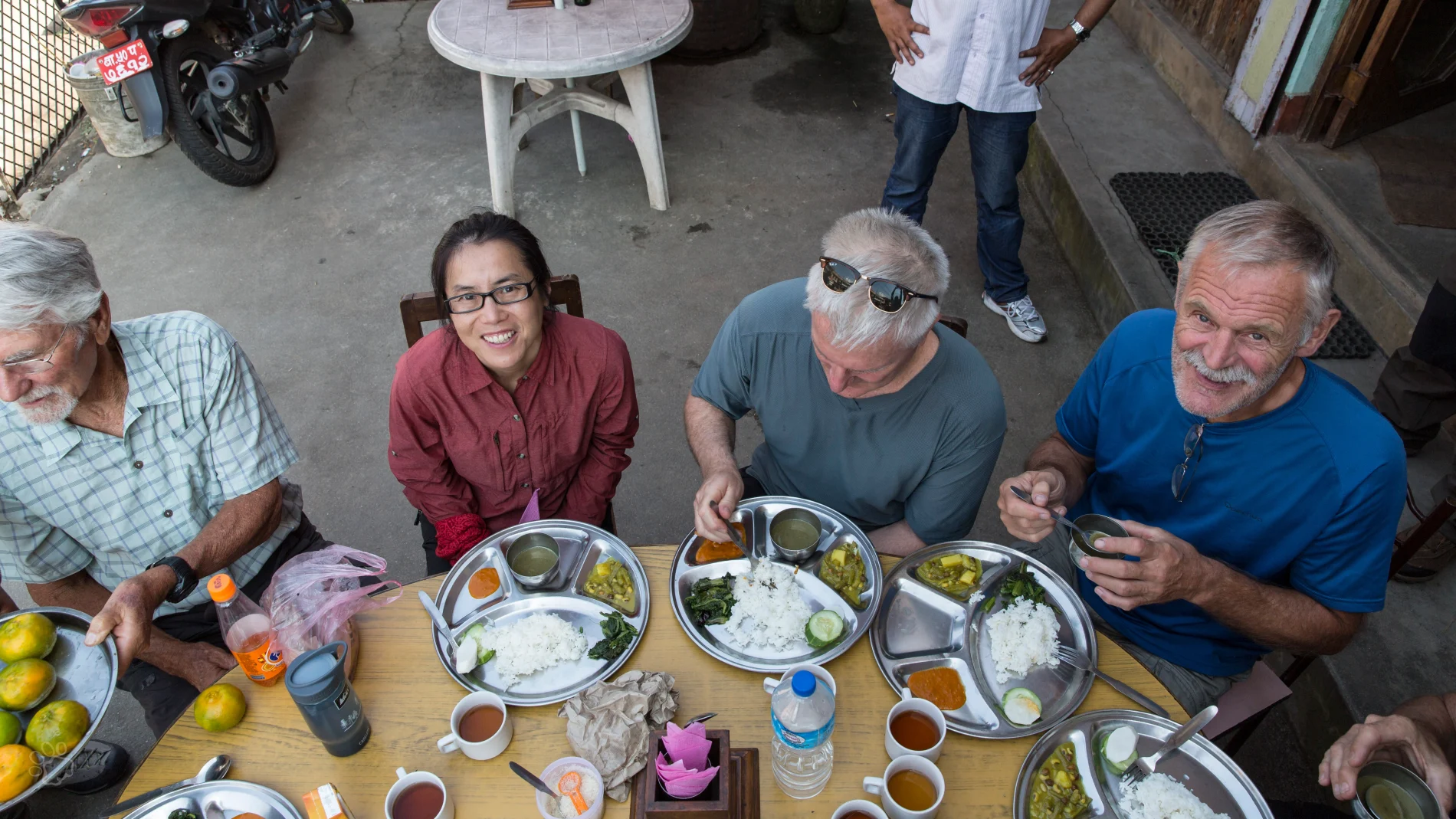
The teahouses on the Annapurna Base Camp Trek are not fancy like hotels in Pokhara or Kathmandu. They are clean and comfortable. Staying in these owned teahouses is a great way to meet the people who live in the villages like the Gurung and Magar communities. You will also be helping the economy. If you book your trek with Silver Moon Adventure and Tour they will take care of your accommodation, for the Annapurna Base Camp Trek so you do not have to worry about it.
Food on the Annapurna Base Camp Trek
Food on the Annapurna Base Camp Trek is pretty basic. It is fresh and good for you. It gives you the energy you need for days of walking. Every teahouse on the way has a lot of meals so you can try Nepali food and food from other countries. The higher you go, the food options you have because it is hard to get things there.. You will still have a lot of choices.
The popular meal is Dal Bhat, which is a traditional Nepali meal. It has rice, lentil soup, vegetables and curry. It is really good for you. It fills you up. A lot of teahouses will even give you refills. Other common meals are fried rice, noodles, pasta and momos which’re like Nepali dumplings. You can also get soups, pancakes, porridge, eggs and potatoes. Most teahouses have drinks like tea, coffee and hot chocolate which are really nice when it is cold.
As you go higher food starts to cost more because people have to carry everything. You will not find as fresh vegetables, fruits and meat. So a lot of people prefer to eat vegetarian meals because they are easier to digest. Drinking a lot of water and eating meals will help you have energy and get used to the high altitude.
If you do not eat meat or have food needs most teahouses can help you. They might not have many options near Machhapuchhre Base Camp and Annapurna Base Camp but they will try. If you go with Silver Moon Adventure and Tour your guide can tell the teahouse owners what you like to eat. This way you can have good meals, on your Annapurna Base Camp Trek.
Transportation to and from the Annapurna Base Camp Trek
Getting to the Annapurna Base Camp Trek is pretty easy. The Annapurna Base Camp Trek is not that hard to get to compared to treks in Nepal. You can get to the Annapurna Base Camp Trek by driving or taking a flight from Kathmandu to Pokhara. Pokhara is like the doorway to the Annapurna region.
From Pokhara you can take a vehicle or a local jeep to the starting point of the Annapurna Base Camp Trek. The starting point of the Annapurna Base Camp Trek is usually Nayapul, Kimche, Ghandruk or Jhinu Danda. It depends on what you want to do on the Annapurna Base Camp Trek. The drive from Pokhara to the starting point of the Annapurna Base Camp Trek takes around one and a half to three hours. On the way you can see hills and rivers and traditional villages.
When you finish the Annapurna Base Camp Trek you will probably end up at Jhinu Danda, Siwai or Nayapul. From these places you can take a jeep or a local vehicle back to Pokhara. A lot of people who do the Annapurna Base Camp Trek like to rest in Pokhara for a day or two before going to Kathmandu. You can take a tourist bus, a vehicle or a flight from Pokhara to Kathmandu.
The roads from Kathmandu to Pokhara are usually good.. The roads in the mountains that lead to the Annapurna Base Camp Trek can be bad and bumpy. This is especially true when it is raining a lot from June to August. Sometimes the rain can cause landslides. Block the roads. So it is an idea to be flexible when you are traveling during the rainy season.
If you want everything to go smoothly you can book your transportation with a company that helps people with the Annapurna Base Camp Trek. If you go with Silver Moon Adventure and Tour they can take care of all your transportation. This includes getting to and, from the airport taking the tourist bus or flight and getting to and from the starting point of the Annapurna Base Camp Trek. This way you can just focus on the Annapurna Base Camp Trek. Have a good time.
Cost of the Annapurna Base Camp Trek
The cost of the Annapurna Base Camp Trek is different for everyone. It depends on when you go what you do how many people are with you how you get around where you stay and if you hire a guide or porter. The Annapurna Base Camp Trek is a choice for people who do not want to spend a lot of money. It is also good for people who want to be comfortable when they trek.
If you do the Annapurna Base Camp Trek by yourself it will cost less. You only have to pay for permits, transportation, a place to stay, food and things you want to buy.. It is a good idea to hire a guide or porter especially if you have never done the Annapurna Base Camp Trek before. They know the area. Can help you. They can also make sure you are safe and help you find your way.
If you pay for a package to do the Annapurna Base Camp Trek it will include permits, a place to stay, meals, transportation, a guide and a porter. It will also include someone to pick you up at the airport. The package price is different for each company.. It is easier to pay for a package because someone else does all the work for you.
You will also have to pay for things like hot showers, Wi-Fi and charging your phone. You might want to buy drinks, snacks and do your laundry. You should also think about getting travel insurance.. You should tip your guide and porter. These things cost more when you are high up in the mountains. So it is an idea to bring enough money. You cannot use an ATM on the Annapurna Base Camp Trek.
If you want to do the Annapurna Base Camp Trek with a company that will take care of you you can use Silver Moon Adventure and Tour. They can help you plan your trip and make it work for your budget. They can help you whether you are traveling alone with friends or in a group. They will be honest, about how much things cost and help you on your trip. The Annapurna Base Camp Trek is an adventure and Silver Moon Adventure and Tour can help you have a good time.
Annapurna Base Camp with Mardi Himal Trek- 12 days
The Annapurna Base Camp with Mardi Himal Trek is one of Nepal’s most rewarding Himalayan journeys, combining two very...
Safety Tips for the Annapurna Base Camp Trek
The Annapurna Base Camp Trek is a safe route in Nepal but you have to be prepared and make smart decisions to have a good trip. You will be walking in mountains where the weather can change very quickly and it can be hard to get medical help when you are high up. If you follow some safety rules you can reduce the risks and have a great time on the Annapurna Base Camp Trek.
You should always walk at a pace that feels comfortable for you and not try to climb fast because you can get sick from the high altitude. This is called Acute Mountain Sickness or the Annapurna Base Camp Trek altitude sickness. Make sure to drink plenty of water eat food and watch out for signs like headache feeling sick, dizziness or being very tired. If you feel really bad you should go down the mountain away and get help instead of keeping going up.
Before you start the Annapurna Base Camp Trek check what the weather will be like and what the trail is like especially if you are going during the season, which is from June to August or during the winter, which is from December to February. When it is raining a lot it can cause landslides rocks to fall rivers to swell or the trail to be closed for a while. In the winter it can. Be icy in some places like above Deurali and Machhapuchhre Base Camp. If you start your day you can avoid the rain that usually comes in the afternoon and stay safe on the Annapurna Base Camp Trek.
You should bring the gear for the Annapurna Base Camp Trek like good boots that can get wet clothes that can be layered something to keep you dry a first aid kit tablets to make water safe to drink and a portable charger for your phone. Sometimes your phone will not work on the trail so you should tell your family what you are doing and get insurance that covers you if you need to be rescued by helicopter. This is especially important for the Annapurna Base Camp Trek.
If you have never gone on a hike before or are not used to the Himalayas it is a good idea to hire a guide who knows what they are doing. A good guide knows the trail, the weather and what to do in an emergency, which’s very important for the Annapurna Base Camp Trek. If you go with Silver Moon Adventure and Tour their guides will watch out for you the time and make sure you are safe on the Annapurna Base Camp Trek. They will check the weather, the trail and how you are doing to make sure you have an safe trip, on the Annapurna Base Camp Trek.
Our Expert Trekking Advice
The best time to go on the Annapurna Base Camp Trek is when you want to have a kind of experience. If you want to see the mountains and have good weather and comfortable temperatures the Annapurna Base Camp Trek is great during autumn, which is from September to November. If you like seeing the rhododendron trees blooming and the views and nice weather the Annapurna Base Camp Trek is also great in the spring, which is from March to May.
If you like trails and not many people, the Annapurna Base Camp Trek is a good choice in the winter. You will see the Annapurna Sanctuary in a setting but you have to be ready for very cold temperatures and sometimes snow. The Annapurna Base Camp Trek is also good in the monsoon season, which’s from June to August if you like green views and do not mind getting wet sometimes.. You have to be flexible because a lot of rain can cause problems, like landslides and rivers getting too full.
No matter when you go on the Annapurna Base Camp Trek you should get ready first. This will make your trip safer and more fun. You should get in shape before the Annapurna Base Camp Trek pack the clothes drink a lot of water and walk at a slow pace so you do not get sick from the altitude.. You should always watch the weather in the mountains because it can change quickly.
The Annapurna Base Camp Trek is safer and more fun if you go with a guide who knows the area. At Silver Moon Adventure and Tour our guides are very experienced our plans are carefully made and we help you personally. This means you can enjoy the Annapurna Base Camp Trek without worrying and just look at the Himalayan views while we take care of the other things.
Conclusion
The Annapurna Base Camp Trek is a big deal in Nepal offering an amazing mix of beautiful mountains, different landscapes, rich cultural experiences and great hiking trails. When you walk through villages like Gurung and Magar and stand under huge peaks like Annapurna I, Machhapuchhre, Annapurna South and Hiunchuli every step of the journey is special and something you’ll remember.
You can do the trek any time of the year. The best time depends on what you like. Spring, from March to May and autumn from September to November have the weather, great trail conditions and you can see the mountains really clearly. Winter is peaceful with snow-covered landscapes and monsoon is great for those who want an adventure, with lush green forests and cool waterfalls.
If you’re prepared have the gear take it easy to get used to the high altitude and plan carefully the Annapurna Base Camp Trek is possible for anyone whos reasonably fit. Whether you’re hiking for the time or coming back to explore the Himalayas again this journey promises memories that will last a lifetime and a deep love for Nepals natural beauty.
If you’re planning your adventure, Silver Moon Adventure and Tour wants to help you have a reliable and personalized trekking experience. We take care of everything from permits and transportation, to guides and comfortable teahouse accommodation so you can enjoy an unforgettable Annapurna Base Camp Trek.
FAQs
1. What is the best time for the Annapurna Base Camp Trek?
The best time for the Annapurna Base Camp Trek is during spring (March to May) and autumn (September to November). These seasons offer stable weather, clear mountain views, comfortable temperatures, and excellent trail conditions. Spring is famous for blooming rhododendron forests, while autumn provides crystal-clear Himalayan panoramas after the monsoon.
2. How difficult is the Annapurna Base Camp Trek?
The Annapurna Base Camp Trek is considered moderately difficult. It does not require technical climbing, but trekkers should be prepared to walk 5 to 7 hours daily over steep stone staircases, forest trails, and mountain paths. A reasonable level of physical fitness is recommended.
3. How many days does the Annapurna Base Camp Trek take?
Most standard Annapurna Base Camp Trek itineraries take 7 to 12 days, depending on the starting point, route, acclimatization schedule, and side trips such as Ghandruk or Poon Hill.
4. What is the highest altitude of the Annapurna Base Camp Trek?
The highest point of the trek is Annapurna Base Camp, located at 4,130 meters (13,550 feet) above sea level. Although this altitude is lower than some other Himalayan treks, proper acclimatization is still important to reduce the risk of altitude sickness.
5. Is altitude sickness common on the Annapurna Base Camp Trek?
Altitude sickness can affect anyone above 2,500 meters, including trekkers on the Annapurna Base Camp Trek. Walking at a steady pace, staying hydrated, eating well, and following a gradual ascent significantly reduce the risk of Acute Mountain Sickness (AMS).
6. What permits are required for the Annapurna Base Camp Trek?
Trekkers need an Annapurna Conservation Area Permit (ACAP) and a Trekkers’ Information Management System (TIMS) Card before starting the trek. These permits are mandatory and can be arranged through a registered trekking agency or the Nepal Tourism Board.
7. Are teahouses available throughout the Annapurna Base Camp Trek?
Yes. The route is well supported by teahouses offering basic but comfortable accommodation and freshly prepared meals. Most villages along the trail have lodges with twin-sharing rooms, dining halls, and essential facilities.
8. Can beginners do the Annapurna Base Camp Trek?
Yes. The Annapurna Base Camp Trek is suitable for beginners who are in good physical condition and prepare properly before the trek. Hiring an experienced guide is highly recommended for added safety, navigation, and local knowledge.
9. Is the Annapurna Base Camp Trek possible during the monsoon?
Yes, the trek is possible during the monsoon season (June to August), but trekkers should expect frequent rainfall, muddy trails, and occasional landslides, rockfalls, swollen rivers, and temporary trail disruptions. Flexible travel plans and proper rain gear are essential.
10. What should I pack for the Annapurna Base Camp Trek?
Essential items include waterproof trekking boots, layered clothing, a down jacket, rain gear, trekking poles, a sleeping bag (especially in winter), sunscreen, sunglasses, a reusable water bottle, a first aid kit, toiletries, and personal medications. Your packing list should also be adjusted according to the trekking season.
11. Do I need a guide for the Annapurna Base Camp Trek?
While experienced trekkers may complete the trek independently where regulations allow, hiring a licensed guide is strongly recommended. A guide enhances safety, assists with navigation, monitors altitude-related health, and provides valuable insights into the local culture, history, and Himalayan environment.
12. How much does the Annapurna Base Camp Trek cost?
The cost of the Annapurna Base Camp Trek depends on factors such as the itinerary, season, transportation, accommodation, guide and porter services, and personal expenses. Budget travelers can complete the trek at a lower cost, while all-inclusive trekking packages offer greater convenience and support.
13. Can I charge my phone and access Wi-Fi during the trek?
Yes, many teahouses offer charging facilities and Wi-Fi for an additional fee. However, internet speed and mobile network coverage become less reliable at higher elevations, particularly near Machhapuchhre Base Camp and Annapurna Base Camp.
14. Is travel insurance necessary for the Annapurna Base Camp Trek?
Yes. Comprehensive travel insurance that covers high-altitude trekking and emergency helicopter evacuation is strongly recommended. Medical treatment and emergency rescues in remote mountain areas can be expensive without proper insurance.
15. Why choose Silver Moon Adventure and Tour for the Annapurna Base Camp Trek?
Silver Moon Adventure and Tour provides experienced local guides, carefully planned itineraries, permit assistance, transportation, comfortable teahouse accommodation, and personalized support throughout the trek. Their professional team focuses on safety, responsible tourism, and creating a memorable Annapurna Base Camp Trek experience for every traveler.
Quick Links
Similar Blogs
View all
Nepal in August: Weather, Best Places to Visit, Treks & Travel Guide
Nepal in August offers a unique travel experience filled with lush landscapes, peaceful destinations, cultural discoveries,...
Nepal in April: Weather, Trekking, Places to Visit & Travel Guide
April is one of the most beautiful months to visit Nepal because the country enters the...