Annapurna Base Camp Trek Accommodation Guide
Share:
 Read Time
This blog has 2412 words .This blog has 15613 characters.This blog take 8 minutes to read.
Annapurna accommodation is an important part of planning the Annapurna Base Camp Trek, especially if this is your first Himalayan trekking experience. Unlike a normal holiday, where you may choose a hotel based on room size, facilities, and comfort, accommodation on the Annapurna trail is closely connected with the mountain environment. Most nights are spent in small local teahouses and lodges that provide the basic facilities trekkers need after a long day on the trail.
The good thing is that you normally do not need to carry camping equipment for a standard teahouse trek. Local lodges provide beds, blankets, meals, bathrooms, and a place to relax. However, facilities change as you gain altitude. Lower villages generally have more choices and better facilities, while higher settlements become simpler because transportation, electricity, water, and supplies are more difficult to manage.
Understanding Annapurna accommodation before your trek can therefore make the journey easier. Although you should not expect hotel-style comfort in the mountains, you can expect a warm meal, a place to sleep, and the unique experience of staying in Himalayan villages.
What Is Annapurna Accommodation Like?
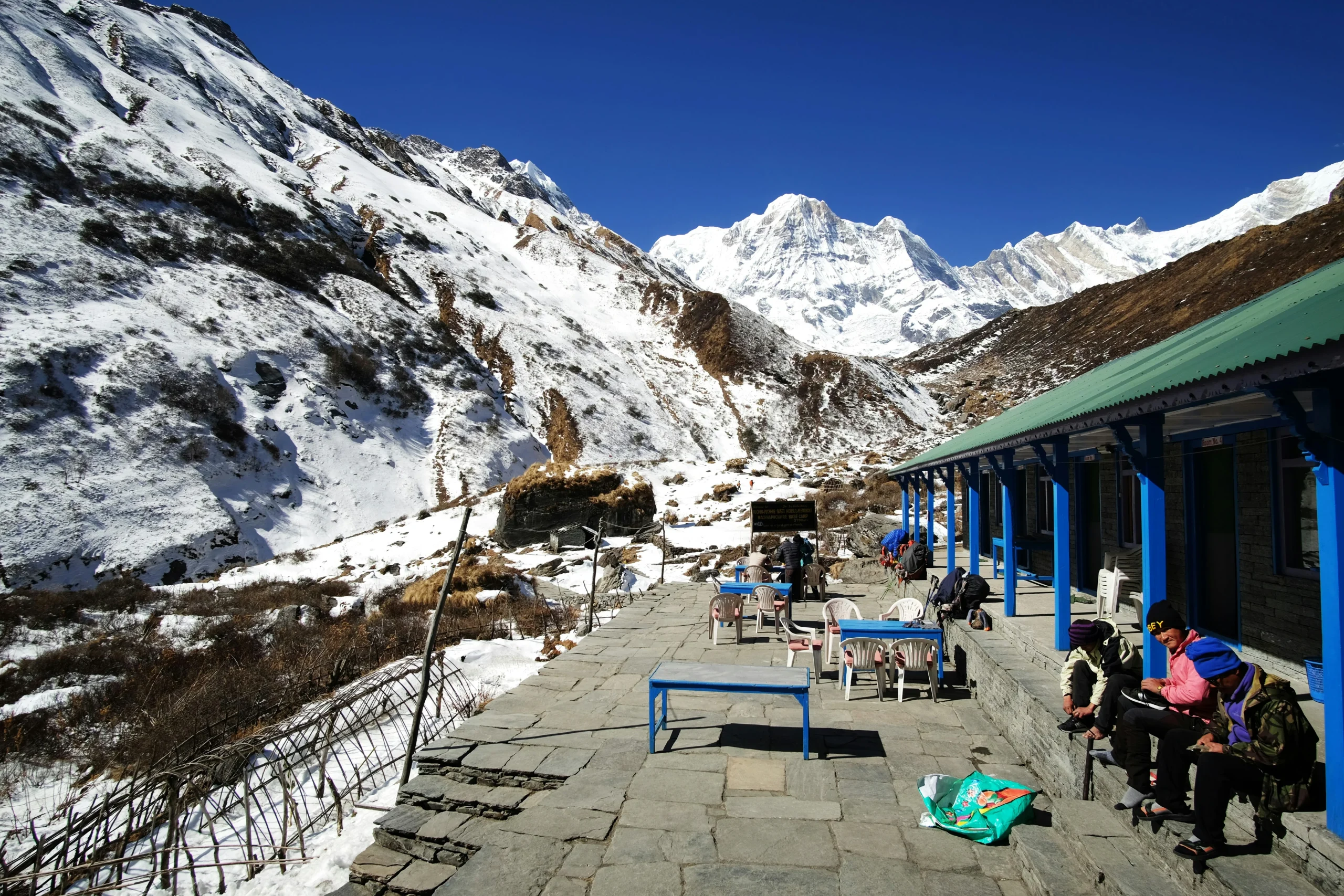
Most Annapurna accommodation is provided by locally operated teahouses and mountain lodges. These properties are usually small and may have several guest rooms, a communal dining room, and shared bathroom facilities.
The exact standard varies from village to village. Some lodges are relatively comfortable, particularly in the lower sections of the route, while others are much more basic at higher elevations. Therefore, it is better to think of teahouse accommodation as a practical place to rest rather than as a mountain hotel.
The dining room is often the heart of the lodge. Trekkers gather there in the evening to eat dinner, drink tea, charge their devices when possible, and talk about the day’s walk. During colder evenings, the dining area may also be the warmest part of the building.
The Annapurna Conservation Area has a long-established network of local lodges and teahouses supporting visitors along its trekking routes. Local communities play an important role in providing services to trekkers and maintaining tourism activity in the region.
What Are the Rooms Like on the ABC Trek?
Rooms used for Annapurna accommodation are generally simple and practical. Twin-sharing rooms are common, with two separate beds, mattresses, pillows, and blankets.
You should not expect large rooms or extensive furniture. Some rooms may have a small table or space for bags, while others are designed almost entirely around sleeping. Walls can also be thin, so you may hear movement from neighbouring rooms.
Although the rooms are basic, they serve an important purpose. After several hours of walking, having a dry and quiet place to rest becomes much more valuable than having unnecessary hotel facilities.
At lower elevations, some lodges may offer rooms with attached bathrooms. However, private bathrooms become less common as you move toward the higher sections of the trail.
Is Twin-Sharing Common?
Yes. Twin-sharing is one of the most common arrangements for Annapurna accommodation.
Two trekkers normally share a room with separate beds. This works particularly well for friends and couples travelling together, although solo trekkers may also share with another person depending on availability and the trekking arrangement.
Private rooms may sometimes be available, particularly in lower villages. However, they should not be considered guaranteed throughout the entire route.
During busy trekking periods, rooms can become more limited. For organised groups, accommodation is generally arranged as part of the trekking plan so that trekkers do not have to search for a room after arriving tired at the end of the day.
Are Bathrooms Private or Shared?
Bathroom facilities vary considerably along the route. Some Annapurna accommodation options at lower elevations have attached bathrooms, while shared bathrooms are common in many mountain lodges.
As you climb higher, facilities generally become more basic. Shared toilets are normal, and you may find both Western-style and squat toilets depending on the lodge.
This is one reason why it is useful to bring a small personal supply of toilet paper and hand sanitizer. These items take very little space in your backpack but can be extremely useful during the trek.
Rather than expecting the same bathroom facilities at every overnight stop, prepare for a mixture of private and shared facilities.
Are Hot Showers Available?
Hot showers are available at many lodges, particularly in lower and middle sections of the trek. However, hot water should be considered a convenience rather than something guaranteed every evening.
The availability of hot water can depend on the lodge, weather, energy supply, altitude, and the number of trekkers using the facilities. At higher elevations, heating water requires more resources, so showers may become less convenient.
For this reason, Annapurna accommodation should be approached with realistic expectations. Having a hot shower after a long walking day is excellent, but your trekking experience should not depend on having one every night.
A quick shower at a lower village can feel particularly refreshing before continuing toward the colder sections of the route.
Is There Heating in the Rooms?
Generally, bedrooms are not heated.
Instead, the communal dining room is usually the warmest area of the lodge. Many teahouses use a central heating stove where trekkers gather during the evening.
This creates one of the memorable parts of teahouse life. After spending the day outside in cool mountain weather, you can sit with other trekkers, enjoy dinner, drink something warm, and share stories from the trail.
Your sleeping room, however, can become cold at night, particularly at higher elevations. A good sleeping bag is therefore one of the most useful items to bring.
What Bedding Is Provided?
Most teahouses provide mattresses, pillows, and blankets as part of their Annapurna accommodation service.
However, the thickness and warmth of blankets can vary between lodges. For this reason, carrying your own sleeping bag is strongly recommended.
A sleeping bag gives you an additional layer of warmth and allows you to sleep more comfortably when temperatures drop during the night. A sleeping bag liner can also be useful if you want an extra layer or prefer additional personal comfort.
You do not need to carry excessive bedding. The goal is simply to have enough warmth for the conditions you are likely to encounter.
Is Wi-Fi Available During the Trek?
Wi-Fi is available at many lodges along the ABC route, particularly in lower and more developed villages. However, the quality of the connection can change considerably.
As the route climbs higher, internet access can become slower, less reliable, or unavailable. Weather and network coverage can also affect connectivity.
Therefore, if you need important information during the trek, download maps, travel documents, emergency contacts, and other essential files before leaving Kathmandu or Pokhara.
If you are travelling for leisure, limited connectivity can also be a positive part of the experience. Although you may occasionally want to check messages, the mountains give you plenty of reasons to put your phone away.
Can You Charge Your Phone and Camera?
Many lodges provide electricity and charging facilities, but access can vary. At lower elevations, charging is generally easier, while higher sections may have more limited facilities.
If you are taking photographs or videos throughout the trek, carrying a power bank is particularly useful. Your phone may also be using more battery than usual if you use GPS navigation, mobile photography, or offline maps.
For anyone carrying a camera, spare batteries are also worth considering. Cold temperatures can affect battery performance, so keeping batteries protected from extreme cold can help preserve their charge.
How Does Annapurna Accommodation Change With Altitude?
One of the most important things to understand about Annapurna accommodation is that facilities generally become simpler as you gain altitude.
Lower villages tend to have more accommodation choices, restaurants, shops, better access to electricity, and more reliable facilities. As the route moves deeper into the Annapurna Sanctuary, the number of choices becomes smaller.
Places such as Chhomrong have a well-developed trekking infrastructure, while higher stops such as Bamboo, Dovan, and Deurali are more focused on the basic needs of trekkers.
This does not mean that higher lodges are uncomfortable. Instead, the environment itself limits what can reasonably be provided.
At high altitude, the priority is shelter, warmth, food, and rest rather than luxury.

Starts from
USD 1,997
Annapurna Circuit Luxury Trek – 13 days
The Annapurna Circuit Luxury Trek offers a comfortable and well-paced way to explore one of Nepal’s most iconic mountain...
Duration:
13 days
Max altitude:
5,416m at Thorong La Pass
What Is Accommodation Like at Annapurna Base Camp?
Spending a night at Annapurna Base Camp is one of the most memorable parts of the trek, but the accommodation there is basic.
The higher altitude and remote location mean that facilities are more limited than in lower villages. Shared bathrooms are common, and you should not rely on having strong Wi-Fi, unlimited hot water, or hotel-style facilities.
However, the setting makes the experience special.
After reaching the sanctuary, you can rest in a simple mountain lodge surrounded by enormous Himalayan peaks. Early the next morning, stepping outside and seeing the mountains around Annapurna Base Camp can make the previous day’s long walk feel worthwhile.
The Annapurna accommodation experience is therefore part of the adventure rather than something separate from it.
Do You Need to Book Teahouses in Advance?
Whether advance booking is necessary depends on the season, group size, route, and current availability.
During busy trekking periods, popular overnight stops can become crowded. Organised trekking groups generally arrange Annapurna accommodation in advance so that trekkers can concentrate on walking instead of looking for a room at the end of the day.
However, mountain travel requires flexibility. Weather, trail conditions, health, or other unexpected circumstances can sometimes change the planned overnight stop.
This is another reason why travelling with an experienced local trekking team can make the journey easier.
What Should You Pack for Teahouse Accommodation?
You do not need to carry a huge amount of equipment for Annapurna accommodation. A few practical items can make your nights much more comfortable.
Consider packing:
* A warm sleeping bag
* Sleeping bag liner
* Warm socks
* Comfortable sleepwear
* Headlamp
* Power bank
* Small quick-dry towel
* Toilet paper
* Hand sanitizer
* Basic toiletries
* Reusable water bottle
* Earplugs
A headlamp is particularly useful because you may need to walk to a shared bathroom after dark.
Likewise, earplugs can help if you are a light sleeper because teahouses are communal buildings and you may hear people moving around.
How Can You Make Your Stay More Comfortable?
The easiest way to enjoy Annapurna accommodation is to adjust your expectations before the trek.
Do not compare a mountain teahouse with a hotel in Kathmandu or Pokhara. They serve completely different purposes.
Instead, appreciate the small comforts. A warm meal after several hours of walking, a hot drink in the evening, a clean bed, and a warm dining room can feel surprisingly satisfying in the mountains.
It is also important to respect the local environment and the people operating the lodges. Use water carefully, avoid unnecessary waste, follow lodge rules, and keep shared areas clean.
Because the teahouses are part of the local tourism economy, staying in them also provides an opportunity to interact with communities along the route.
Why Choose Silver Moon Adventure for Your ABC Trek?
Choosing an Annapurna Base Camp Trek is about more than reaching the base camp. The experience includes the villages, trails, local food, mountain lodges, changing landscapes, and the people you meet along the way.
At Silver Moon Adventure, we help international trekkers understand the practical side of the journey before they start. This includes accommodation arrangements, daily trekking plans, local logistics, and the changing conditions of the route.
Our Annapurna Base Camp Trek via Ghandruk itinerary provides a structured way to experience the Annapurna region while staying in local mountain lodges along the route.
If you are also considering other Himalayan routes, you can compare the experience with our Mardi Himal Trek or Langtang Trek, which offer different landscapes and trekking environments.
Final Thoughts on Annapurna Accommodation
Annapurna accommodation is simple, practical, and closely connected to the Himalayan trekking experience.
Most nights are spent in local teahouses where you can sleep, eat, rest, and meet other trekkers. Facilities are generally more developed at lower elevations and become simpler as you move toward the Annapurna Sanctuary.
You may have Wi-Fi at one lodge and a weaker connection at the next. You may enjoy a hot shower in one village but decide to skip it at a higher stop. Your room may have an attached bathroom one night and a shared bathroom the next.
That variation is normal.
The key is to prepare properly and understand what mountain accommodation is actually like before you begin. Bring a warm sleeping bag, keep a power bank handy, carry basic toiletries, and remain flexible.
Once you know what to expect, the simplicity of the lodges becomes part of the experience. After a long day beneath the Annapurna range, having a warm meal, a comfortable bed, and a quiet place to rest can be more than enough.
Frequently Asked Questions
1. Where do trekkers stay during the Annapurna Base Camp Trek?
Trekkers generally stay in local teahouses and mountain lodges along the route. These provide basic rooms, dining areas, and bathroom facilities.
2. Is Annapurna accommodation comfortable?
The accommodation is basic rather than luxurious. However, teahouses provide the essential facilities needed for sleeping, eating, and resting during the trek.
3. Are rooms private on the ABC Trek?
Twin-sharing rooms are common. Private rooms may be available at some lower villages, although they cannot be guaranteed throughout the route.
4. Are bathrooms shared?
Yes. Shared bathrooms are common, particularly at higher elevations. Some lower-elevation lodges may offer attached bathrooms.
5. Can I take a hot shower during the trek?
Hot showers are available at many lodges, especially at lower elevations, but availability becomes less reliable higher on the route.
6. Should I bring a sleeping bag?
Yes. A sleeping bag is recommended because bedrooms can become cold, particularly at higher elevations.
7. Is Wi-Fi available?
Wi-Fi is available at many lodges, although the connection can become weaker or unavailable as you move higher.
8. Can I charge my phone?
Charging facilities are available at many teahouses, but access can be more limited at higher elevations. A power bank is useful.
9. What should I expect at Annapurna Base Camp?
Accommodation at Annapurna Base Camp is basic because of the high and remote location. Shared facilities and limited connectivity are normal.
10. Do I need to book accommodation in advance?
During busy trekking periods, advance arrangements are useful. Organised trekking groups generally arrange accommodation as part of the itinerary, although weather and trail conditions can still require flexibility.

Similar Blogs
View all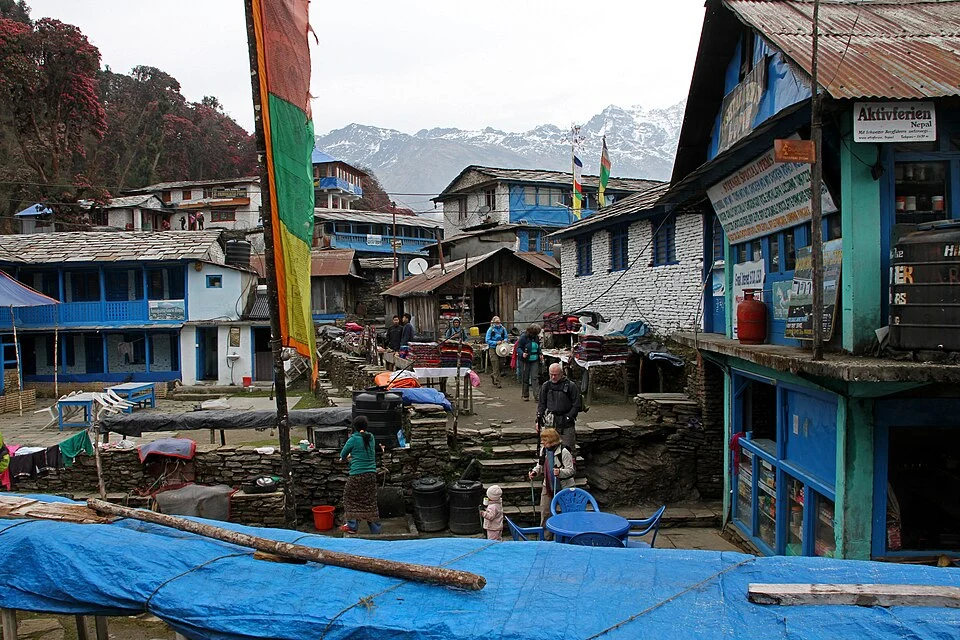
27/10/2026
Pokhara
Pokhara is one of Nepal’s most popular travel destinations, known for its beautiful lakes, Himalayan views,...
Read more
14/10/2026
What Happens If You Don’t Like Nepali Food During a Trek?
Imagine spending months planning your dream trek in Nepal. You have chosen your route, bought your...
Read more