Gokyo Valley
Share:
 Read Time
This blog has 4124 words .This blog has 28932 characters.This blog take 14 minutes to read.
Gokyo Valley is one of the most beautiful and fascinating destinations in Nepal, located in the heart of the magnificent Everest region. Surrounded by towering snow-covered mountains, sparkling turquoise lakes, and breathtaking glaciers, this valley offers an unforgettable experience for nature lovers, adventure seekers, and trekking enthusiasts. Its peaceful atmosphere and spectacular landscapes make it one of the most remarkable places to explore in the Himalayas.
Situated in the Solukhumbu district within Sagarmatha National Park, Gokyo Valley is famous for its beautiful chain of glacial lakes, commonly known as the Gokyo Lakes. These lakes are among the world’s highest freshwater lake systems and are admired for their crystal-clear blue and green waters. The reflection of surrounding Himalayan peaks on the lakes creates a magical scene that attracts visitors from around the world.
One of the major highlights of Gokyo Valley is its incredible mountain scenery. From different viewpoints, trekkers can enjoy magnificent views of some of the world’s highest mountains, including Mount Everest, Cho Oyu, Lhotse, and Makalu. The famous Gokyo Ri viewpoint (5,357 meters) provides an especially breathtaking panoramic view of the Himalayan landscape, making it a dream destination for photographers and mountain lovers.
Besides its natural beauty, Gokyo Valley is also rich in local culture and traditions. The region is home to the Sherpa community, known for their warm hospitality, unique mountain lifestyle, and deep connection with the Himalayas. Visitors can experience traditional villages, local food, Buddhist monasteries, and the peaceful lifestyle of people living in this beautiful mountain region.
Whether you are an experienced trekker or someone dreaming of exploring Nepal’s natural wonders, Gokyo Valley offers an extraordinary journey filled with adventure, beauty, and unforgettable memories. From walking beside enormous glaciers to discovering peaceful mountain lakes, every step reveals something special. Truly, Gokyo Valley is a hidden paradise that showcases the natural beauty and cultural richness of Nepal.
Where Is Gokyo Valley Located?
Gokyo Valley is located in the Solukhumbu district of Koshi Province, northeastern Nepal, within the beautiful Sagarmatha National Park. It lies in the famous Everest region, surrounded by some of the world’s highest and most spectacular mountain peaks. The valley is situated at an altitude of approximately 4,700–5,000 meters above sea level, making it one of the most remarkable high-altitude destinations in Nepal.
Geographically, Gokyo Valley lies in the upper part of the Dudh Koshi River valley, northwest of Namche Bazaar. It is surrounded by impressive Himalayan landscapes, including Mount Cho Oyu (8,188 m) and other magnificent snow-covered peaks. The region is also home to the famous Ngozumpa Glacier, the longest glacier in Nepal, which adds to the valley’s extraordinary natural beauty.
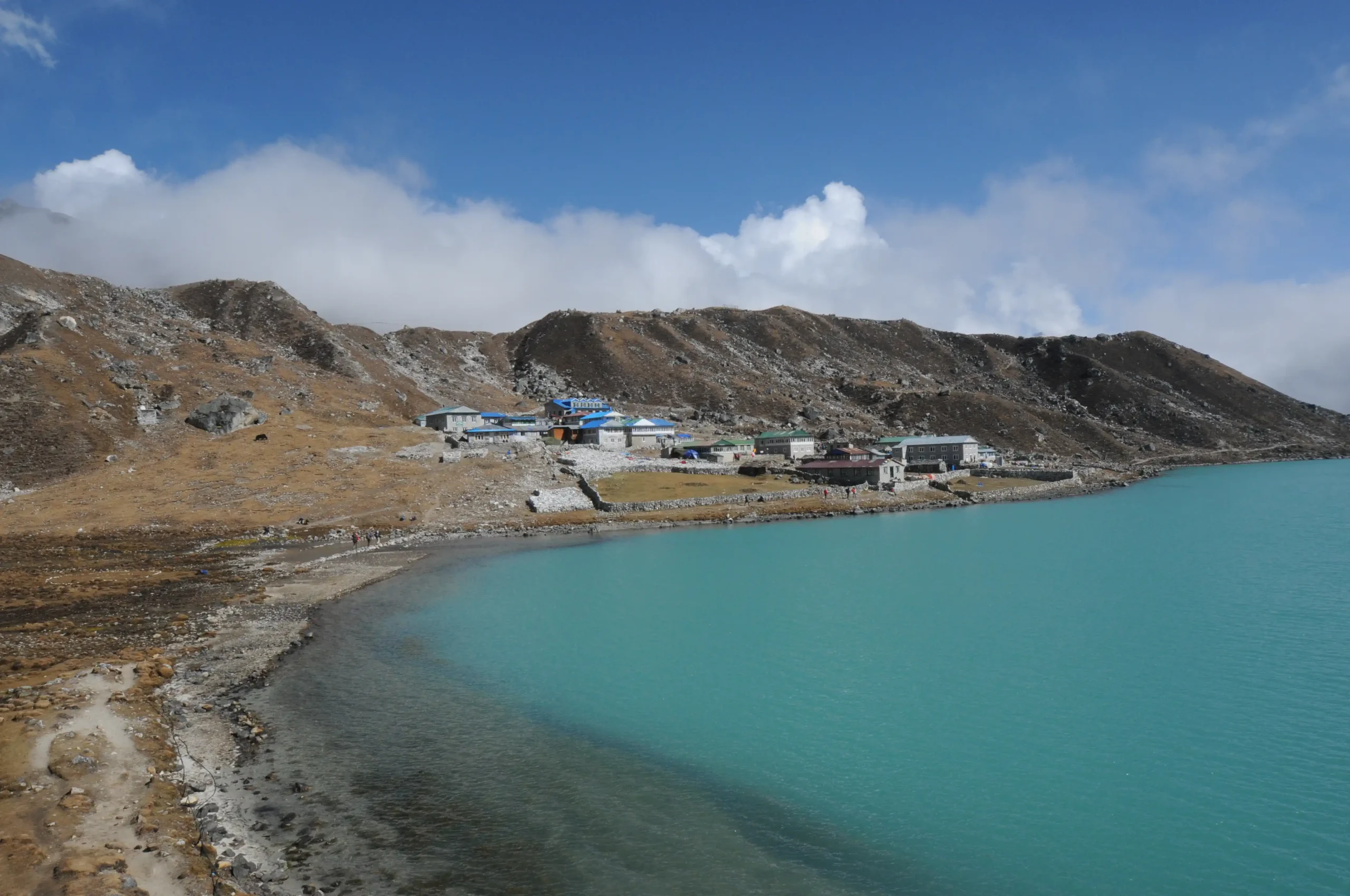
The main settlement of the valley is Gokyo Village, situated beside the beautiful third Gokyo Lake, also known as Dudh Pokhari. This small mountain village provides accommodation, food, and resting facilities for trekkers exploring the region. Despite its remote location and challenging environment, Gokyo Village welcomes visitors from different parts of the world.
To reach Gokyo Valley, most travelers begin their journey with a scenic flight from Kathmandu to Lukla. From Lukla, the trekking route passes through beautiful mountain settlements such as Phakding, Namche Bazaar, Dole, and Machhermo before reaching Gokyo. The journey offers incredible views of forests, rivers, suspension bridges, traditional Sherpa villages, and the magnificent Himalayan mountains.
Because of its unique geographical location, Gokyo Valley is one of the most spectacular trekking destinations in the Everest region. Its high-altitude lakes, massive glaciers, peaceful mountain villages, and breathtaking Himalayan scenery make it a special destination for adventure lovers and nature enthusiasts visiting Nepal.
Major Attractions of Gokyo Valley
Gokyo Valley is famous for its extraordinary natural beauty, stunning Himalayan landscapes, and unique geographical features. The valley offers several breathtaking attractions that make it one of the most popular trekking destinations in the Everest region of Nepal. From crystal-clear glacial lakes to massive glaciers and spectacular mountain viewpoints, every attraction provides visitors with a memorable experience. Some of the most remarkable attractions of Gokyo Valley are described below.
Gokyo Lakes
The Gokyo Lakes are the main attraction of Gokyo Valley and one of the most beautiful natural wonders in Nepal. This spectacular chain of six glacial lakes is located at high altitudes within the Sagarmatha National Park. Their crystal-clear turquoise and blue waters, surrounded by snow-covered mountains and rocky landscapes, create an incredible natural environment. The lakes are also considered sacred by both Hindu and Buddhist communities, making them culturally and spiritually significant.
Gokyo Ri
Gokyo Ri (5,357 meters) is one of the most famous viewpoints in the Everest region. It is a popular destination for trekkers who want to experience breathtaking panoramic views of the Himalayan mountains. From the summit, visitors can enjoy spectacular views of Mount Everest, Lhotse, Makalu, and Cho Oyu, along with the beautiful Gokyo Lakes and surrounding glaciers. Watching the sunrise or sunset from Gokyo Ri is an unforgettable experience for mountain lovers and photographers.
Ngozumpa Glacier
The Ngozumpa Glacier is another remarkable attraction of Gokyo Valley. It is recognized as the longest glacier in Nepal, extending for approximately 36 kilometers through the Everest region. This enormous glacier features impressive ice formations, rocky moraines, and dramatic mountain scenery. Trekkers can observe its massive glacial landscape from different points along the Gokyo trekking route, making it a fascinating natural attraction.
Gokyo Village
Gokyo Village is a beautiful high-altitude settlement located beside the third Gokyo Lake, also known as Dudh Pokhari. Surrounded by magnificent Himalayan peaks, the village provides a peaceful atmosphere for trekkers to rest and enjoy the natural surroundings. It offers mountain lodges, tea houses, and basic facilities for visitors. The village also provides an opportunity to experience the traditional Sherpa culture, hospitality, and mountain lifestyle.
Mount Cho Oyu
Mount Cho Oyu (8,188 meters) is the sixth-highest mountain in the world and one of the most impressive peaks visible from the Gokyo region. Located near the Nepal–China border, this magnificent mountain forms part of the spectacular Himalayan landscape surrounding Gokyo Valley. Its massive snow-covered slopes and beautiful mountain scenery make it an important attraction for trekkers, climbers, and photography enthusiasts.
Overall, these attractions make Gokyo Valley a remarkable destination for natural beauty, Himalayan adventure, and cultural exploration. Each location offers a different experience and allows visitors to appreciate the extraordinary landscapes of the Nepalese Himalayas.
Best Time to Visit Gokyo Valley
Choosing the best time to visit Gokyo Valley is important for enjoying its breathtaking mountain scenery, beautiful glacial lakes, and unforgettable trekking experiences. Located at an altitude of approximately 4,700–5,000 meters, the valley experiences cold temperatures and changing weather conditions throughout the year. Generally, spring (March to May) and autumn (September to November) are considered the best seasons for trekking in the Gokyo region because of their relatively stable weather, clear mountain views, and favorable trail conditions.
Spring Season (March–May)
Spring is one of the most beautiful seasons to explore Gokyo Valley. During this period, temperatures gradually become warmer, the weather is generally pleasant, and the skies often remain clear. At lower elevations, forests and hills become colorful with blooming rhododendron flowers and other alpine vegetation. Trekkers can enjoy spectacular views of snow-covered Himalayan peaks, including Mount Everest and Cho Oyu. Spring is an excellent choice for travelers who want to experience the natural beauty of the Everest region.
Autumn Season (September–November)
Autumn is widely regarded as one of the best seasons for trekking in Gokyo Valley. After the monsoon rainfall, the atmosphere becomes clearer, offering excellent visibility of the surrounding Himalayan mountains. The weather is generally stable, and the trails are usually in good condition. During this season, trekkers can enjoy breathtaking views of the Gokyo Lakes, Ngozumpa Glacier, and surrounding snow-covered mountains. October and November are particularly popular months for trekking in the Everest region.
Winter Season (December–February)
Winter brings extremely cold temperatures, snowfall, and challenging weather conditions to Gokyo Valley. The lakes and surrounding landscapes may become partially or completely frozen, creating a beautiful snowy environment. However, heavy snowfall, icy trails, and freezing temperatures can make trekking more difficult. Some tea houses may also close during this period. Winter trekking is generally more suitable for experienced trekkers who are properly equipped and prepared for high-altitude conditions.
Monsoon Season (June–August)
The monsoon season brings frequent rainfall, cloudy skies, and occasional landslides to different parts of the Everest region. Lower trekking trails may become muddy and slippery, while clouds can limit visibility of the beautiful Himalayan mountains. Flights to Lukla may also experience delays or cancellations because of unfavorable weather conditions. Although the landscapes become greener and more vibrant, monsoon is generally less favorable for trekking in Gokyo Valley.
Overall, spring and autumn are the best seasons to visit Gokyo Valley because they generally provide better weather, clearer mountain views, and more favorable trekking conditions. Among these seasons, April, October, and November are particularly attractive months for many trekkers. However, weather in the Himalayas can change quickly, so visitors should always check local forecasts and prepare appropriate clothing and equipment before beginning their journey.
Accommodation and Food in Gokyo Valley
Accommodation in Gokyo Valley mainly consists of traditional mountain teahouses, small lodges, and guesthouses that provide basic facilities for trekkers visiting the Everest region. These accommodations are generally managed by local Sherpa families, offering visitors a comfortable place to rest after long hours of walking through challenging mountain trails. Most teahouses provide simple rooms with beds, blankets, pillows, and shared bathroom facilities. Although the accommodation is relatively basic compared to hotels in cities, the peaceful mountain environment and warm hospitality make the experience special.
One of the most attractive aspects of staying in Gokyo Valley is the opportunity to experience traditional Sherpa hospitality. Many teahouses have common dining areas where trekkers can relax, enjoy warm meals, share travel experiences, and interact with people from different countries. During cold evenings, visitors can gather around a heated dining area, enjoy a cup of hot tea, and admire the beautiful Himalayan surroundings. This friendly atmosphere creates memorable experiences throughout the trekking journey.
When it comes to food, Gokyo Valley offers a variety of traditional Nepali, Sherpa, and international dishes. One of the most popular meals is Dal Bhat, a traditional Nepali dish consisting of rice, lentil soup, vegetables, and sometimes pickles. Other commonly available foods include noodles, fried rice, soups, potatoes, pasta, eggs, bread, pancakes, and momos. These meals provide energy and warmth, which are especially important for trekkers walking at high altitudes.
Visitors can also enjoy different hot beverages, including milk tea, ginger tea, lemon tea, black tea, and hot chocolate. Drinking enough fluids and eating nutritious meals are important during high-altitude trekking. However, food and supplies become more expensive at higher elevations because most goods must be transported along difficult mountain trails. Therefore, travelers should prepare a reasonable budget for accommodation, meals, and additional services.
Overall, the accommodation and food experience in Gokyo Valley reflects the simplicity, culture, and hospitality of the Himalayan region. Although facilities may be limited compared to urban destinations, the opportunity to stay in traditional mountain lodges, enjoy delicious local food, and experience the lifestyle of the Sherpa community makes the journey even more meaningful. It is an essential part of discovering the natural and cultural beauty of Gokyo Valley.
Culture and Lifestyle of the Sherpa Community
The Sherpa community is one of the most important cultural groups in the Everest region of Nepal. The people are well known for their rich traditions, mountain lifestyle, warm hospitality, and deep connection with the Himalayas. In the beautiful surroundings of Gokyo Valley, visitors can experience the unique culture and traditional lifestyle of Sherpa people, who have lived in the high mountain regions for generations. Their knowledge of mountain environments and strong connection with nature make them an important part of the cultural identity of the Everest region.
Buddhism plays an important role in Sherpa culture and daily life. Throughout the Everest region, visitors can find beautiful monasteries, prayer flags, mani walls, and Buddhist stupas that reflect the spiritual traditions of the local community. These religious structures are often decorated with colorful prayer flags carrying Buddhist prayers and blessings. Trekkers walking through mountain villages can experience the peaceful atmosphere created by these cultural and religious landmarks.
The traditional Sherpa lifestyle is closely connected with mountain agriculture, animal husbandry, tourism, and local trade. Many families are involved in growing potatoes and other crops, raising yaks, and operating mountain lodges and teahouses for visitors. Yaks are particularly important in high-altitude communities because they provide milk, transportation, and other essential resources. Despite the challenges of living in remote mountain settlements, Sherpa people have developed a lifestyle adapted to the difficult Himalayan environment.
Traditional Sherpa food, clothing, festivals, and hospitality are also important parts of their cultural identity. Popular traditional foods include Tsampa, Thukpa, Sherpa stew, and other locally prepared dishes. Festivals such as Mani Rimdu are celebrated with religious ceremonies, traditional dances, music, and colorful cultural performances. These celebrations provide visitors with an opportunity to understand the spiritual beliefs and cultural heritage of the Sherpa community.
Overall, the Sherpa culture and lifestyle add great cultural value to Gokyo Valley. Beyond its beautiful lakes, glaciers, and snow-covered mountains, the region offers visitors an opportunity to experience a unique Himalayan way of life. The kindness, traditions, religious beliefs, and mountain knowledge of the Sherpa people make a visit to Gokyo Valley more meaningful and unforgettable.
Gokyo Valley Trek Difficulty
The Gokyo Valley Trek is considered a moderate to challenging trekking adventure in the Everest region of Nepal. The journey takes trekkers through steep mountain trails, rocky paths, suspension bridges, and beautiful high-altitude landscapes. It requires good physical fitness, stamina, and mental preparation to complete the adventure comfortably.
One of the main challenges of this trek is the high altitude. Gokyo Village is situated at approximately 4,790 meters above sea level, while Gokyo Ri reaches 5,357 meters. As trekkers gain altitude, the amount of available oxygen decreases, making walking more physically demanding. Some visitors may experience tiredness, headaches, or other symptoms of altitude sickness.
Although previous trekking experience is helpful, beginners with proper physical preparation and a suitable itinerary can also enjoy this journey. Walking at a comfortable pace, taking sufficient rest, and following proper acclimatization practices are essential for a safe and enjoyable trekking experience.
How to Reach Gokyo Valley
Gokyo Valley is accessible through a beautiful trekking route in the Everest region of Nepal. Most travelers begin their journey in Kathmandu and take a scenic flight to Lukla, the main gateway to the Everest trekking region.
After arriving in Lukla, trekkers begin their journey toward Phakding, following beautiful mountain trails, rivers, forests, and suspension bridges. The route gradually continues toward Namche Bazaar, one of the most popular mountain settlements in the Everest region.
From Namche Bazaar, the trekking trail follows the beautiful landscapes toward Dole and Machhermo before finally reaching Gokyo Village. Along the way, visitors can enjoy breathtaking views of Himalayan mountains, traditional Sherpa settlements, and magnificent natural scenery.
The journey to Gokyo Valley is not only about reaching the destination but also about experiencing the beauty, culture, and peaceful atmosphere of the Himalayas. Every section of the trail offers something special, making the entire journey a memorable adventure.
Physical Preparation for Gokyo Valley Trek
Physical preparation is important for enjoying the Gokyo Valley Trek because the journey involves walking for several hours each day through challenging mountain terrain. Trekkers should begin preparing their bodies several weeks before starting the adventure.
Regular walking, hiking, jogging, cycling, and stair climbing can help improve physical endurance and stamina. Practicing uphill and downhill walking is also beneficial because the trekking route includes several steep sections.
Trekkers should also focus on strengthening their leg muscles and improving cardiovascular fitness. Walking with a backpack during practice hikes can help the body become familiar with the physical demands of trekking.
Mental preparation is equally important because the journey includes high-altitude environments, changing weather conditions, and remote mountain settlements. With proper preparation, a suitable itinerary, and a positive attitude, trekkers can enjoy a more comfortable and rewarding experience.
Essential Packing List for Gokyo Valley Trek
Packing the right equipment is essential for a safe and comfortable trekking experience in Gokyo Valley. The weather in the Everest region can change quickly, especially at higher elevations, so travelers should carry suitable clothing and equipment according to the season.
Clothing
- Warm down jacket.
- Thermal innerwear.
- Fleece jacket.
- Waterproof jacket and trousers.
- Trekking pants.
- Warm gloves and woolen hat.
- Comfortable trekking socks.
Footwear
- Comfortable trekking boots.
- Extra pairs of socks.
- Sandals or camp shoes.
Personal Equipment
- Trekking backpack.
- Sleeping bag.
- Trekking poles.
- Sunglasses.
- Sunscreen and lip balm.
- Reusable water bottle.
- Headlamp.
- Personal toiletries.
Health and Safety
- Personal medicines.
- Basic first-aid kit.
- Water purification supplies.
- Travel insurance documents.
- Emergency contact information.
Carrying appropriate equipment helps trekkers remain comfortable and prepared throughout the journey. It is also important to avoid unnecessary luggage and pack only the essential items required for the trek.
Altitude Sickness and Safety During the Trek
Altitude sickness is one of the most important considerations when trekking in Gokyo Valley because the route reaches elevations above 5,000 meters. As trekkers move to higher elevations, the amount of available oxygen decreases, and the body needs sufficient time to adjust to the changing environment.
Common symptoms of altitude sickness include headaches, nausea, dizziness, loss of appetite, unusual tiredness, and difficulty sleeping. These symptoms should never be ignored because altitude sickness can become serious if proper precautions are not taken.
To reduce the risk of altitude sickness, trekkers should follow a gradual ascent, take sufficient rest, drink enough fluids, and avoid rushing during the journey. Proper acclimatization days should be included in the trekking itinerary to help the body adjust to higher elevations.
If symptoms develop or become worse, trekkers should immediately inform their guide and avoid ascending further. Serious symptoms require prompt descent and medical attention. Travel insurance covering high-altitude trekking and emergency helicopter evacuation is strongly recommended.
Responsible Tourism in Gokyo Valley
Gokyo Valley is one of the most beautiful natural destinations in Nepal, and protecting its environment is everyone’s responsibility. The region is home to beautiful glacial lakes, impressive mountain landscapes, unique wildlife, and traditional Sherpa communities.
Visitors should respect the natural surroundings, local traditions, wildlife, and cultural heritage of the region. Avoiding plastic waste, carrying reusable water bottles, and keeping trekking trails clean are simple ways to protect the environment.
Supporting local teahouses, restaurants, and small businesses also helps the communities that depend on tourism. Trekkers should respect religious places, ask permission before photographing local people, and avoid disturbing wildlife during the journey.
Responsible tourism helps preserve the natural beauty and cultural richness of Gokyo Valley for future generations. Every traveler can contribute to protecting this remarkable Himalayan destination through responsible travel practices.
Conclusion
Gokyo Valley is truly one of the most remarkable trekking destinations in Nepal. Its breathtaking turquoise lakes, magnificent Himalayan mountains, enormous glaciers, peaceful villages, and rich Sherpa culture make it a dream destination for adventure lovers and nature enthusiasts.
From exploring the beautiful Gokyo Lakes to enjoying panoramic mountain views from Gokyo Ri, every moment of the journey offers something unforgettable. The peaceful atmosphere, warm hospitality of local communities, and extraordinary natural beauty make Gokyo Valley a special destination in the Everest region.
Whether you are an experienced trekker or a first-time visitor looking for an exciting Himalayan adventure, Gokyo Valley offers an experience filled with natural beauty, cultural discoveries, and unforgettable memories.
If you are dreaming of exploring the Himalayas and experiencing the incredible beauty of Nepal, Gokyo Valley is waiting for you. Let Silver Moon Adventure and Tour be your trusted travel partner and help you discover the magic of the Everest region.
FAQs
How long does the Gokyo Valley Trek take?
The Gokyo Valley Trek generally takes around 12 to 14 days, depending on the itinerary, weather conditions, and acclimatization requirements. The journey includes flights to and from Lukla, trekking through traditional Sherpa villages, exploring Gokyo Lakes, and climbing Gokyo Ri.
What is the highest altitude of the Gokyo Valley Trek?
The highest point of the standard Gokyo Valley Trek is Gokyo Ri, which stands at approximately 5,357 meters above sea level. From the summit, trekkers can enjoy breathtaking panoramic views of Mount Everest, Lhotse, Makalu, and Cho Oyu.
Is the Gokyo Valley Trek suitable for beginners?
Yes, beginners can complete the Gokyo Valley Trek if they have good physical fitness, proper preparation, and a suitable trekking itinerary. However, the high altitude and long walking days make it a challenging adventure. Beginners are advised to trek with an experienced guide and follow proper acclimatization practices.
Do I need a guide for the Gokyo Valley Trek?
Traveling with an experienced local guide is highly recommended for the Gokyo Valley Trek. A guide can help with navigation, accommodation arrangements, local culture, altitude awareness, and emergency situations. Trekkers should confirm the latest government and local trekking requirements before departure.
What permits are required for the Gokyo Valley Trek?
Trekkers generally need a Sagarmatha National Park Entry Permit and a Khumbu Pasang Lhamu Rural Municipality Entry Permit. These documents are required to enter and explore the Everest region. Permit fees and procedures may change, so visitors should confirm the latest requirements before starting their journey.
Can I see Mount Everest from Gokyo Valley?
Yes, Mount Everest can be seen from several viewpoints in the Gokyo region. Gokyo Ri is especially famous for its spectacular panoramic views of Mount Everest and other Himalayan giants. It is one of the best places in the Everest region to enjoy beautiful mountain scenery.
Is there electricity and internet available in Gokyo Valley?
Yes, some teahouses and mountain lodges provide electricity and internet services for trekkers. However, charging electronic devices and using Wi-Fi may require additional payment. Internet connectivity can be slow or unreliable because of the remote mountain location, so carrying a power bank is recommended.
Is safe drinking water available during the Gokyo Valley Trek?
Yes, drinking water is available at teahouses and lodges along the trekking route. Trekkers can purchase boiled or filtered water or use suitable water purification tablets and filters. Drinking untreated water directly from rivers and streams is not recommended.
Are ATMs available along the Gokyo Valley trekking route?
ATMs are available in some larger settlements, including Namche Bazaar, but their availability and reliability are not guaranteed. There are very limited banking facilities in higher settlements such as Dole, Machhermo, and Gokyo Village. Travelers should withdraw sufficient Nepali cash in Kathmandu or Lukla before continuing their trek.
What happens if my flight to Lukla is delayed or cancelled?
Flights to Lukla depend heavily on weather conditions and visibility. Delays and cancellations can occur, particularly during unfavorable weather conditions. If a flight is cancelled, travelers may need to wait for improved weather or arrange an alternative transportation option when available. Including extra buffer days in the travel itinerary is highly recommended.
Can I do the Gokyo Valley Trek without previous trekking experience?
Yes, previous trekking experience is not absolutely necessary, but proper physical preparation is important. Trekkers should develop good walking stamina and become comfortable with long uphill and downhill trails. Beginners should choose an appropriate itinerary with sufficient acclimatization and support from an experienced trekking guide.
Can I combine the Gokyo Valley Trek with Everest Base Camp?
Yes, it is possible to combine the Gokyo Valley Trek with the Everest Base Camp Trek. One popular route connects the Gokyo region with the Everest Base Camp trail through Cho La Pass, which is approximately 5,420 meters high. This combination offers an opportunity to explore both Gokyo Lakes and Everest Base Camp, but it requires additional days, good physical fitness, and careful preparation.
Is mobile network coverage available during the Gokyo Valley Trek?
Mobile network coverage is available in some settlements along the Everest trekking route, but connectivity becomes less reliable at higher elevations and in remote areas. Travelers may experience limited signals or no network coverage in certain locations. It is advisable to inform family members about possible communication difficulties before beginning the trek.
How much money should I carry for the Gokyo Valley Trek?
The amount of money required depends on the trekking package, personal spending habits, and additional services. Travelers should carry sufficient Nepali cash for snacks, hot drinks, charging electronic devices, Wi-Fi, hot showers, and other personal expenses. It is better to prepare extra cash because banking facilities are limited in the higher mountain settlements.
Is travel insurance necessary for the Gokyo Valley Trek?
Yes, comprehensive travel insurance is strongly recommended for the Gokyo Valley Trek. Since the journey reaches elevations above 5,000 meters, travelers should choose an insurance policy that specifically covers high-altitude trekking and emergency helicopter evacuation. Insurance should also cover medical treatment and unexpected travel disruptions.